

A review by Foresight News of publicly available information shows that since the start of 2025, at least 78 Web3 projects with more than $1.5 million in total funding have announced shutdowns. Among 69 projects with confirmed fundraising figures, combined capital raised topped $900 million. If smaller projects that never secured institutional funding and disappeared quietly are counted as well, the total climbs to more than 300.
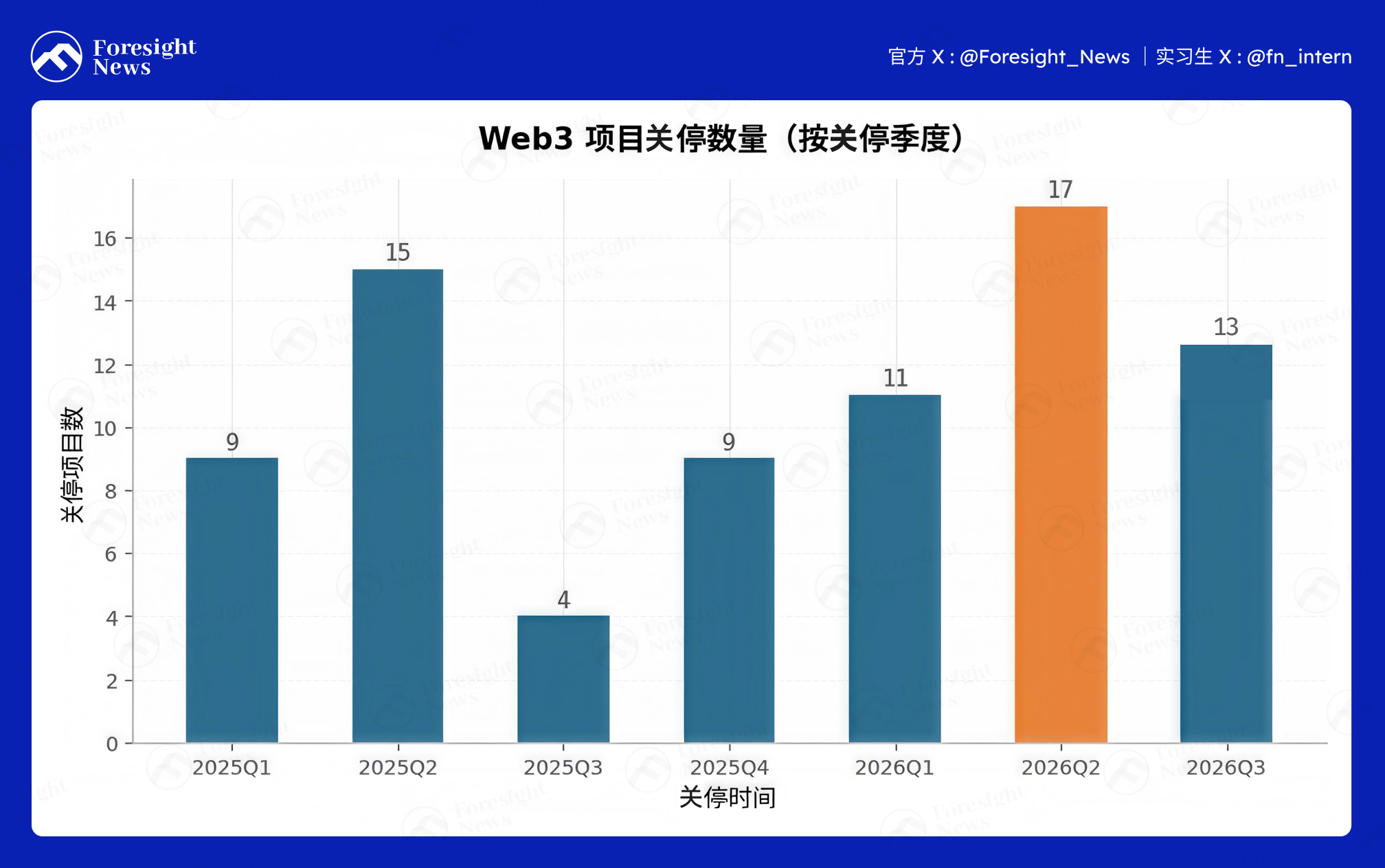
That implies that over nearly 600 days, roughly one Web3 project died every two days.
Closures picked up in 2026
In the group of 75 projects tracked by Foresight News, 37 shut down during 2025. By the halfway point of 2026, the number had already reached 41. Seventeen of those closures came in the second quarter alone, the highest quarterly total in the current round of industry consolidation.
The list includes former bull-market standouts such as DappRadar and Zapper, along with older exchanges including BitMEX and AscendEX, formerly BitMax. The report says the washout has not slowed with the market rebound. It has accelerated.
Funding shortfalls and weak demand led the reasons list
Breaking down the causes behind the 75 closures, the biggest factor was lack of funding. Thirty-one projects fell for that reason, accounting for more than 40% of the sample. Weak market demand came next, with 17 companies shutting down on that basis. Together, those two categories made up close to two-thirds of the total.
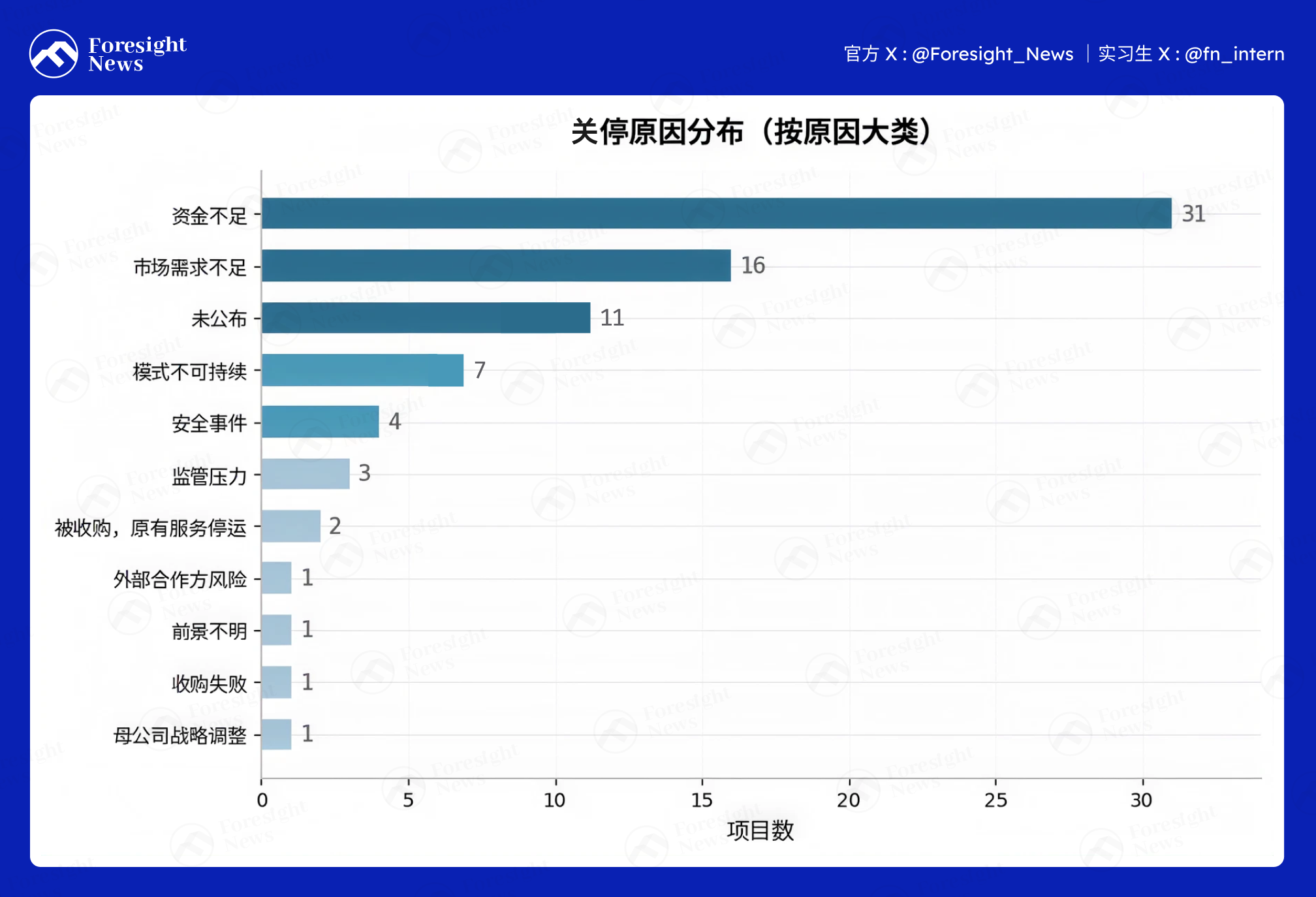
The report’s conclusion is direct: most of these projects never built an ability to sustain themselves. Many closure announcements used similar language, saying teams had tried but could not find a path to long-term sustainability.
One industry observer described the wave as 「a direct reflection of broken business models and ruptured cash runways, rather than a simple swing in market sentiment」. OSL Institute used its annual report to frame the shift as the industry moving from the first half into the second half: growth driven by rising asset prices and protocol innovation has run its course, and the market has shifted from narrative to delivery.
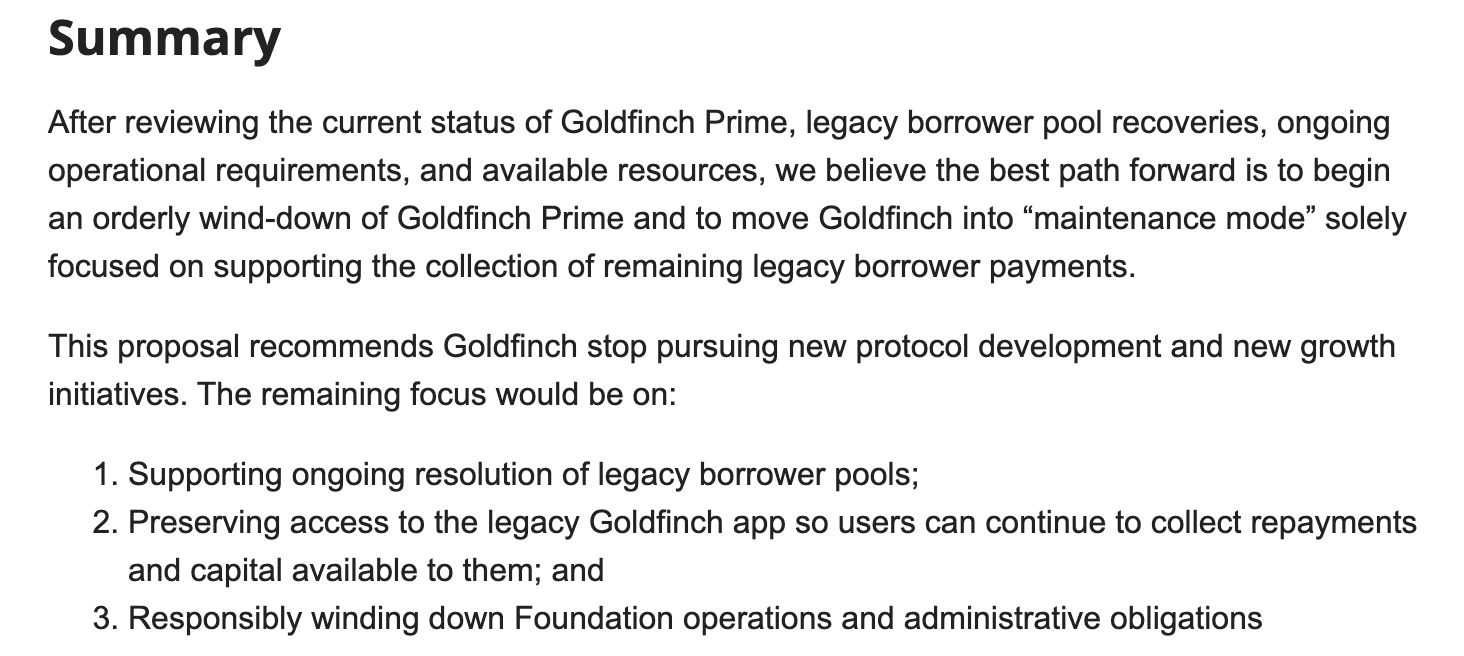
Five projects explicitly said their models were unsustainable. Goldfinch, which focused on unsecured credit lending, shut down after bad loans to businesses in emerging markets kept draining the company. fantasy.top, a social game that surged on token incentives, ran into trouble once the heat faded and the reward model could no longer hold.
Regulation also pushed some companies out. Mango Markets shut its protocol after reaching a settlement with the U.S. Securities and Exchange Commission and putting the decision to a community vote. Tokenize Xchange failed to continue after its license application was rejected.
Other projects were pulled under by partners. Crypto bank Juno was described as operationally sound on its own, but closed after fallout from the bankruptcy of a custody partner spread through the business.
Security incidents formed another distinct category. Kinto, Ctrl Wallet, formerly XDEFI, Radiant Capital and zkLend all shut down after hacks snapped already stretched finances. The report says that after an attack, Web3 teams often have to use operating funds for compensation while token prices fall and refinancing options narrow. For smaller teams, recovery usually becomes unrealistic.
DeFi took the heaviest hit
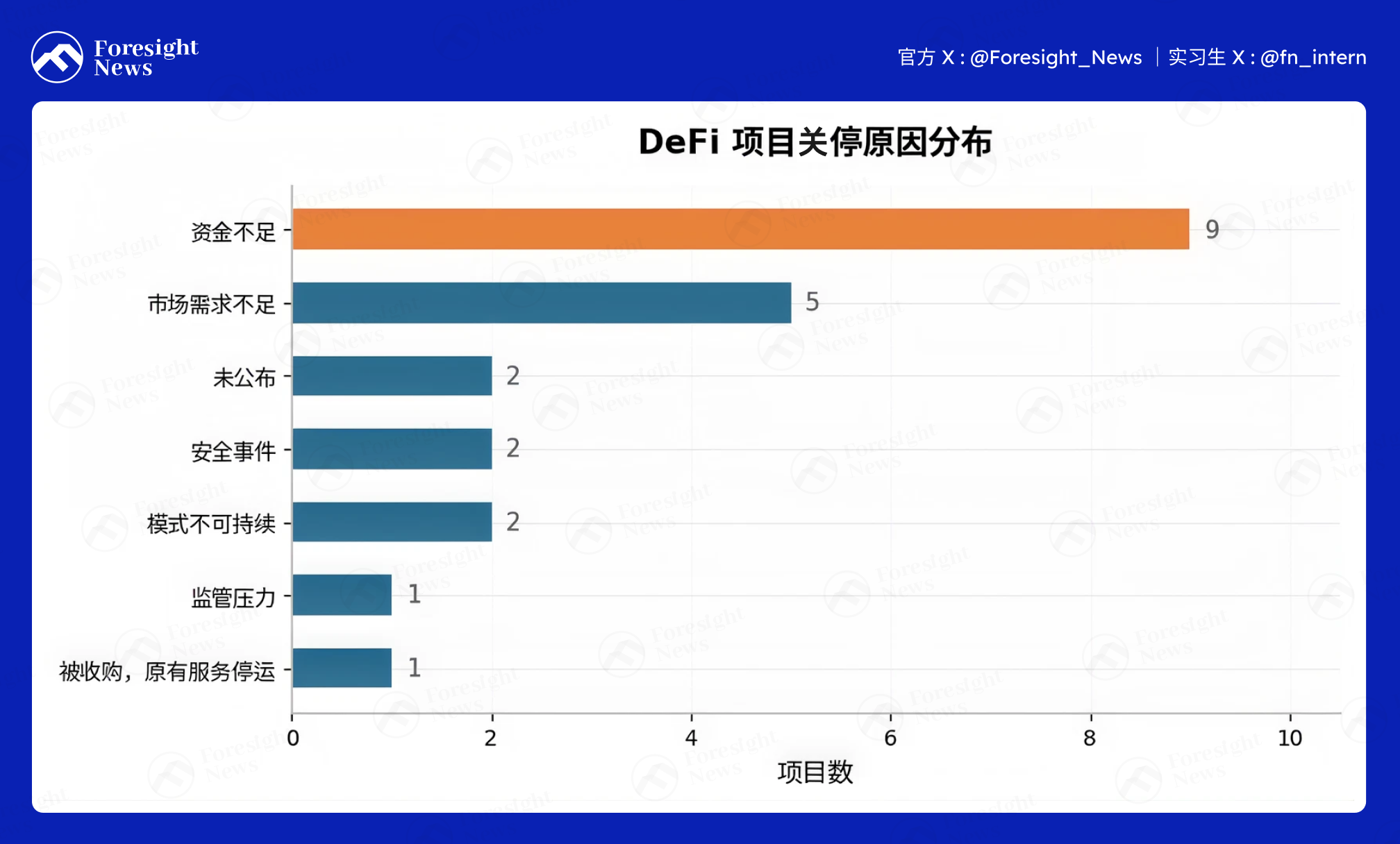
By sector, DeFi was the center of the current closure wave. It made up nearly 30% of the 75 tracked projects. Among the 22 DeFi teams that folded were stablecoin protocol Angle, derivatives protocol Polynomial and restaking protocol MilkyWay. The causes covered nearly every category in the list: capital shortages, missing demand, hacks, regulatory pressure and models that never really worked.
The report argues that this exposes a problem the industry has long preferred not to confront. Finance remains one of the few blockchain use cases with clear real-world footing, but that does not mean every financial product has enough demand, or that every such product can survive as an independent company.
As leading protocols such as Uniswap and Aave continue to absorb most of the liquidity, second-tier projects have had less and less room to operate. Many DeFi protocols are functions rather than standalone businesses. They can work as modules inside larger systems, but when spun out on their own, they carry user acquisition, security and operating costs by themselves.
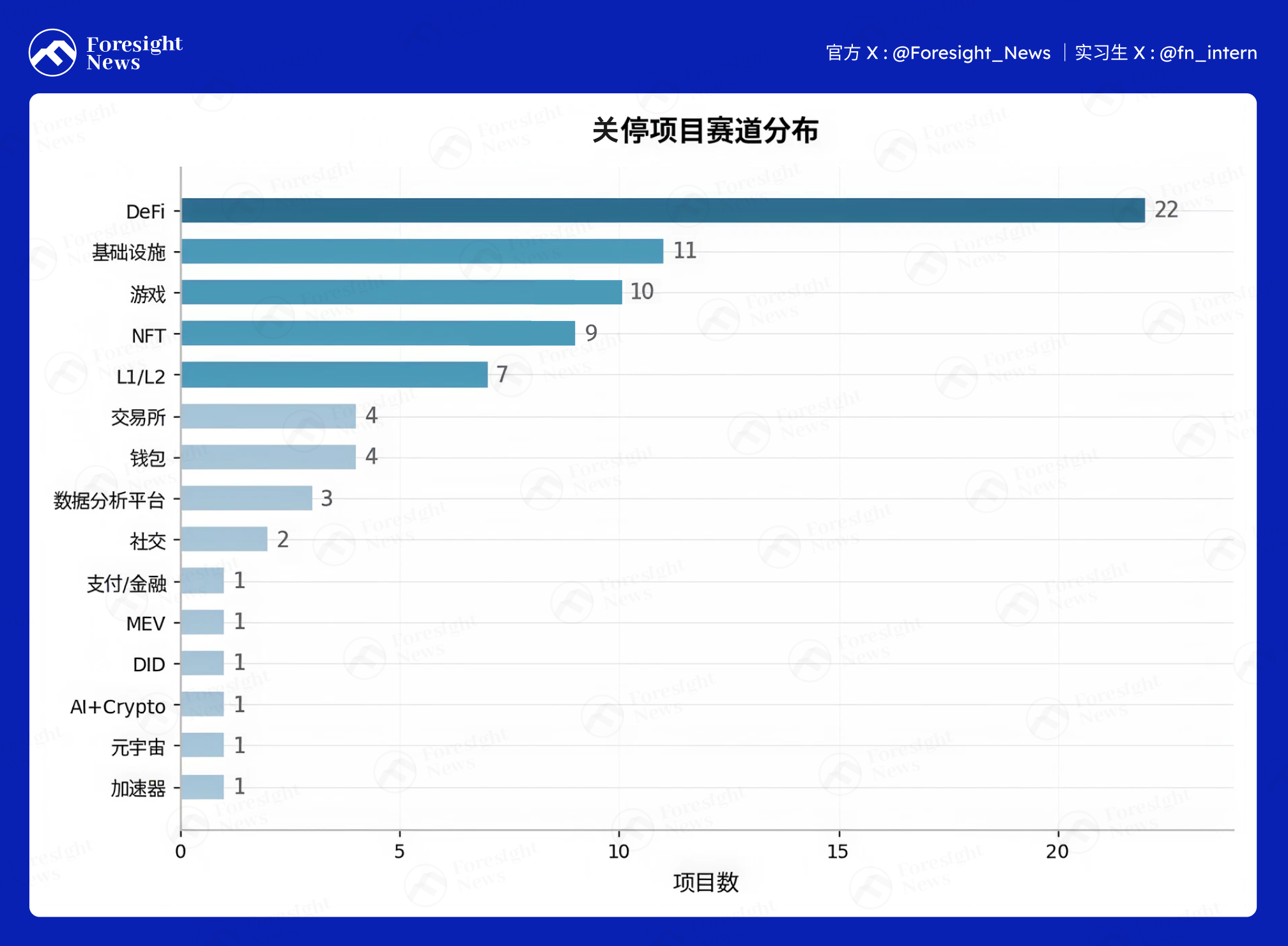
Even in DeFi, one of the few areas in Web3 with actual revenue sources, lack of funding remained the top reason for closure. The report reads that as a sign that mature DeFi capacity is already close to saturation.
Gaming, NFT, metaverse and infrastructure projects were also cleared out
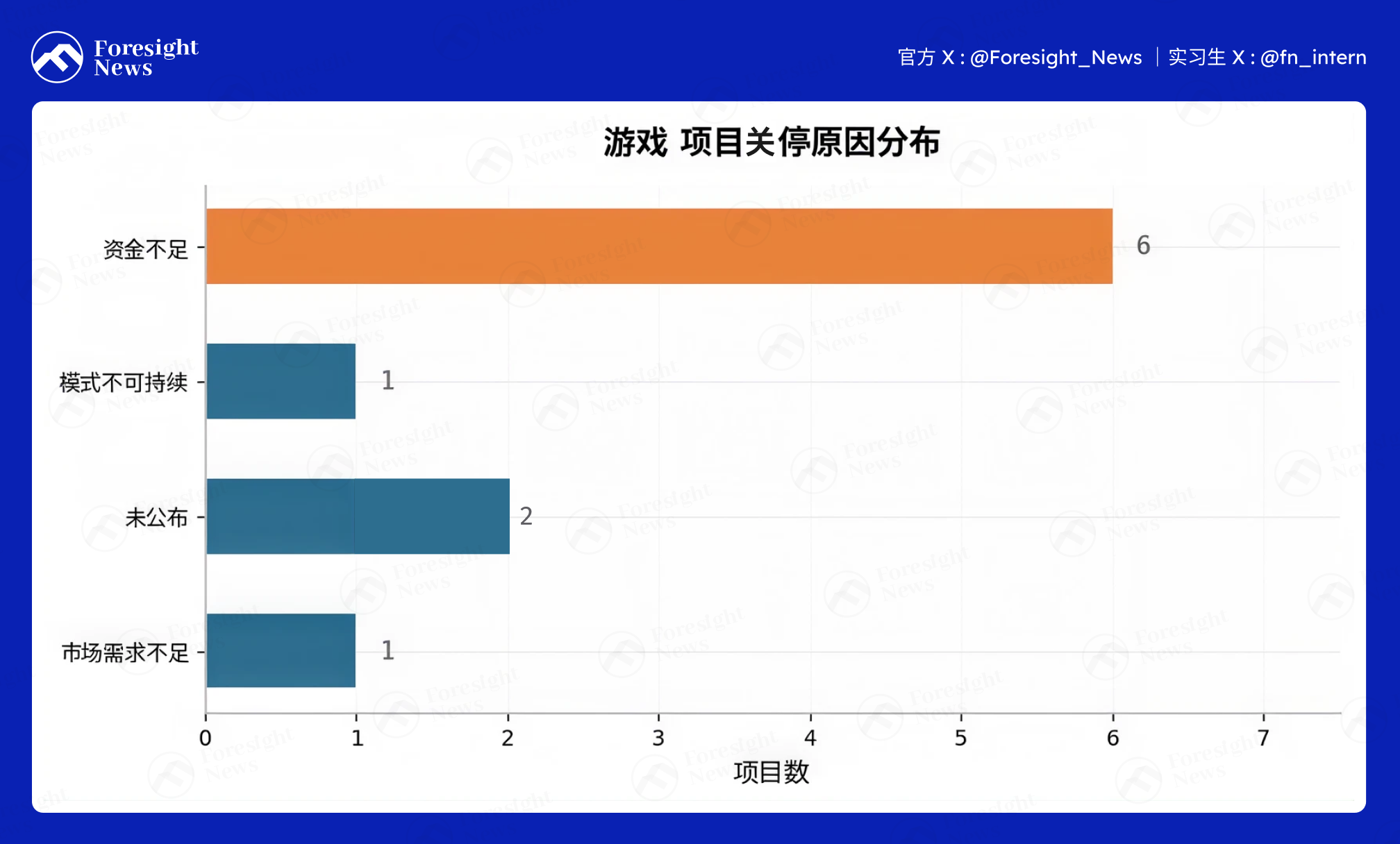
Nine gaming projects shut down, and six of them died because they could not raise the next round. The report ties that to the economics of content businesses: game development often takes years and burns cash quickly. If a blockchain gaming team tries to recreate a AAA-style experience with only a few million dollars and test metrics do not support new financing, there is often no second chance.
Among nine closures in the NFT and metaverse categories, four were blamed on disappearing demand. When X2Y2 shut down, total NFT market volume had fallen about 90% from its peak. Bloktopia collapsed as the metaverse narrative receded.
The report treats NFTs and the metaverse as two of the earliest Web3 segments to be disproven by the market. NFTs, in that framing, still barely survive. The metaverse has almost vanished from the active narrative. It also notes that Facebook rebranded to Meta in 2022 and had made the metaverse a near all-in bet.
Layer 1, Layer 2 and infrastructure closures point to a different kind of oversupply. Public blockchains were once one of the most expensive narratives in crypto fundraising, but with Ethereum Layer 2 networks already overcrowded and competing for users, a new chain without a distinct ecosystem is under pressure from the start. Kadena and Evmos were cited as older chains that exited after prolonged losses. The same logic applies in infrastructure, where cross-chain projects, sequencers and account abstraction teams are packed into every layer while actual industry transaction volume cannot support so many builders at once.
Large fundraising rounds did not provide protection
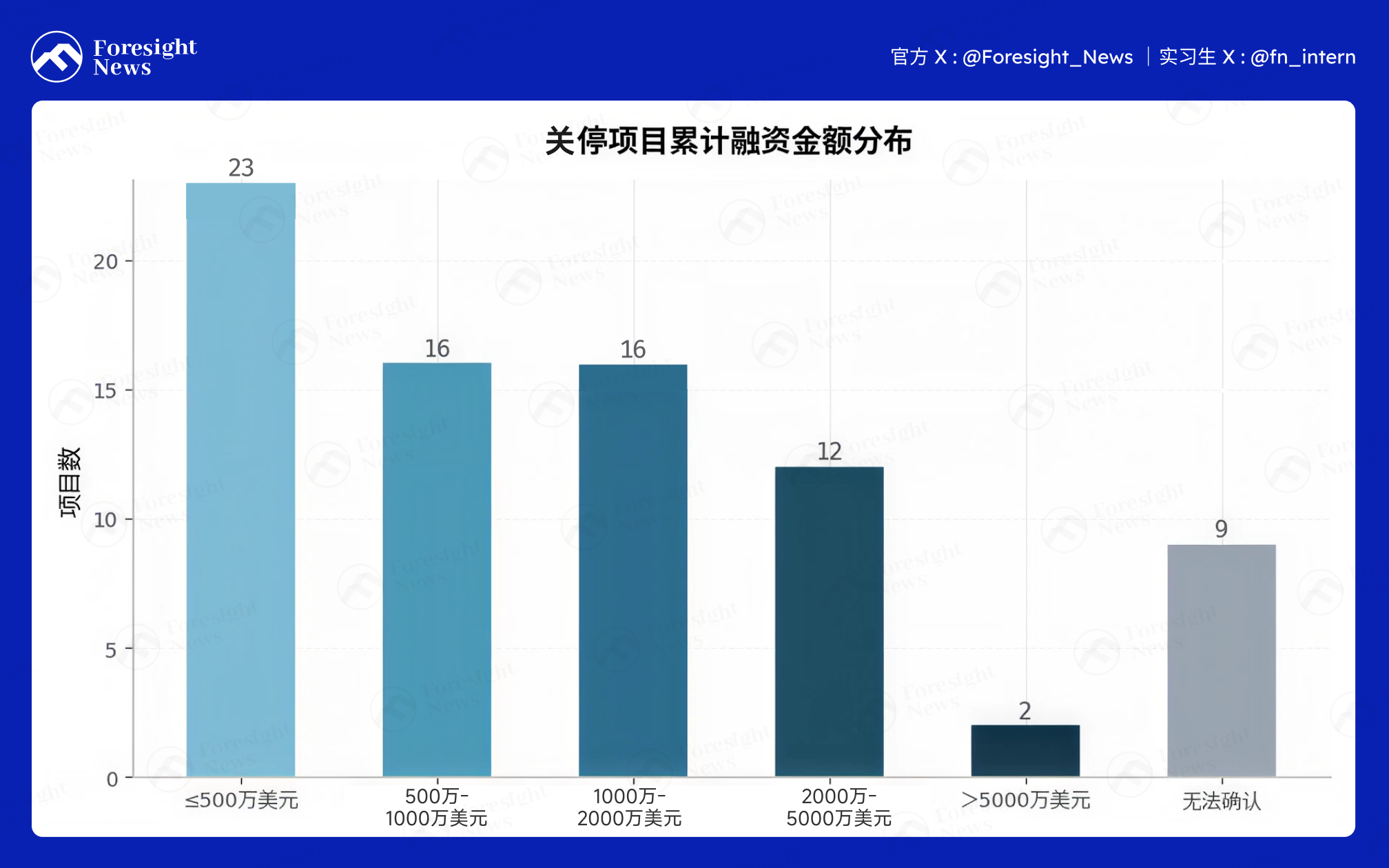
Big capital raises were not a shield. Of the 75 projects, 23 had raised more than $15 million. Mango Markets had secured $70 million, AscendEX $63 million and Loopring $45 million, yet all of them still ended up shutting down.
The report says money buys less than founders and investors often assume. Loopring was one of the earliest trading protocols on Ethereum to implement zkRollup in production. Its technology was not behind, and the team kept building, but trading volume remained weak under pressure from leading DEXs and centralized exchanges. It eventually announced a shutdown and a move toward a next-generation product.
A broader problem runs through these cases. Large funding rounds extend the time available for trial and error, but they do not raise the odds that a business model actually works. Once a project receives more money than its market really justifies, team size, marketing spend and token incentives often rise in parallel, pushing fixed costs much higher. In a colder market, that makes a turnaround harder, not easier. The report sums it up this way: large funding is sometimes not a cushion but an amplifier. It amplifies optimism during boom years and accelerates the fall when the bubble breaks. Polkadot was cited as the clearest example of this kind of loose capital allocation.
Many of the failed projects were born at the top of the last funding bubble
On a timeline basis, 45% of the closed projects were founded in 2021 or 2022, matching the top of the previous fundraising bubble. The report says annual venture funding in crypto exceeded $30 billion in those two years. Many teams were created under a “raise first, find demand later” logic, and their concentrated failures three to four years later amount to a delayed clearing process.
Older companies were not spared. Nine projects with operating histories of more than seven years shut down over the past two years, including BitMEX, founded in 2014, Loopring, founded in 2017, and Blocknative, founded in 2018. Across all 75 projects, the median lifespan was four years. Taken together, the figures suggest that the market is repricing not only speculative projects born in the bubble, but also business models that never became sustainable despite time, capital and technical credibility.
At the same time, parts of the sector are still compounding around real demand
The article cites a16z’s long-range view of the crypto price and innovation cycle. In each cycle, once prices peak, developer activity, startup formation and infrastructure investment do not disappear alongside the pullback. They settle and become the seeds of the next cycle.
Seen from that angle, the closure list from the past two years is a late cleanup of excess capacity produced by the 2021 funding boom, not a verdict on the entire industry. The report points to several pieces of fundamental data: stablecoin market capitalization has already crossed $300 billion; Pendle, which introduced the concept of yield tokenization in 2021, now has more than $10 billion in TVL and ranks among leading DeFi protocols; and Ethena’s synthetic dollar USDe at one point exceeded $14 billion in supply in 2025, making it the third-largest dollar stablecoin behind only USDT and USDC. The common trait in those examples, the report says, is that they serve real demand and have visible revenue models.
The weakening economic backdrop has also forced some newer projects to face reality quickly. DeFi platform Dango shut down less than four months after launch. In July, BitMax, BitMEX and BitMart also announced closures one after another. The report says that if even exchanges, long viewed as money-printing businesses, are struggling to continue, the downturn under the surface is clearly deepening.
The shakeout is not over
The article closes by referencing economist Steven Klepper’s research on the evolution of the U.S. auto industry. Around 1900, more than 200 car manufacturers competed in the country. Decades later, only Detroit’s Big Three remained. Klepper described this as the shakeout phase in an industry lifecycle: after a new technology emerges, the number of firms quickly swells, but once the easy gains fade and demand growth slows, most players are forced out and concentration rises sharply.
Applied to crypto, the report argues that a shakeout is not proof of death. It is the hard stage in which the industry grows up. Aave and Uniswap continue to develop. The article says Aave has become the dominant lending protocol, while Uniswap has activated its long-debated fee switch and started a UNI buyback-and-burn mechanism. Pendle and Ethena were described as standout beneficiaries, and new lending protocol Morpho now has TVL second only to Lido and Aave in that segment.
The piece also says the merger of crypto and traditional finance is picking up speed. Stablecoins have moved from being mainly trading pairs for Bitcoin toward becoming payment tools in emerging markets. Trading in financial assets such as stocks is starting to move on-chain as well, and both Nasdaq and the New York Stock Exchange have pledged that stock trading will eventually move onto blockchains.
The report frames the current phase as a necessary clearing of unreasonable projects after years of trial and error, freeing up market share, capital and users for products that can prove their value. It compares the process to China’s group-buying wars around 2010 and the shared-bike boom of 2017, arguing that once the bubble breaks, industries often finish building infrastructure and user habits on top of the wreckage. The companies that leave may be gone, but they still leave behind talent and industry infrastructure for the next group of builders.