
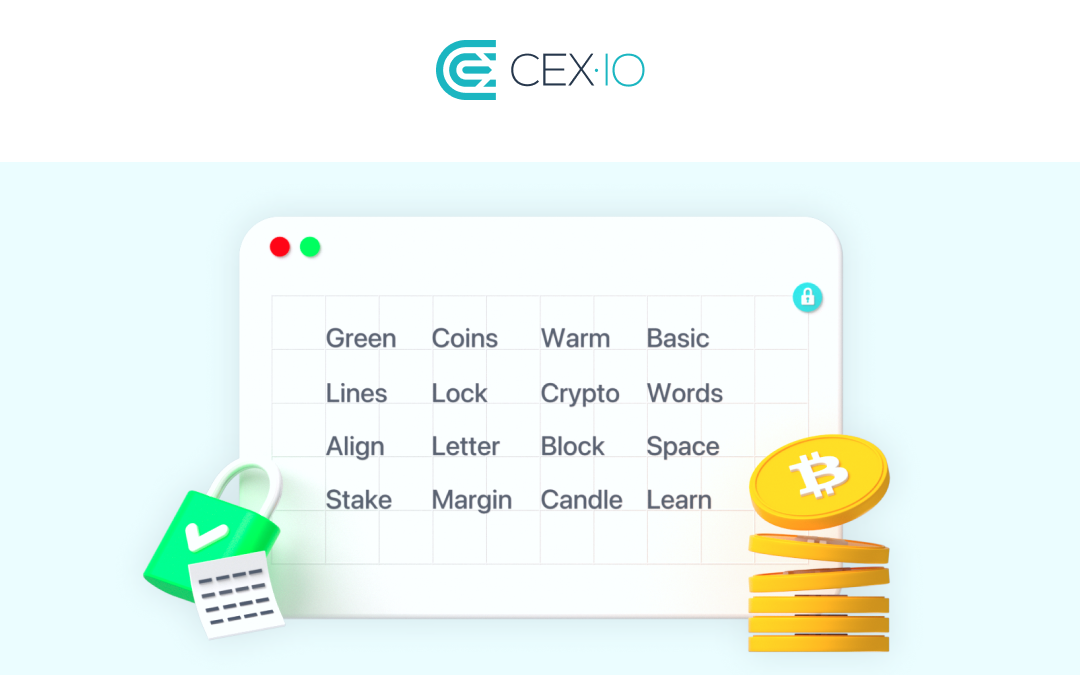
A seed phrase is a string of words generated by a crypto wallet, also called a mnemonic, backup seed, or recovery phrase. Without it, users may not be able to restore a wallet or regain control of the tokens connected to it. For self-custody wallets, it is the core backup credential.
In practical terms, a seed phrase works like a master password for the wallet. If a user deletes a wallet app, loses a hardware wallet, or replaces a phone, the wallet can still be restored on another device as long as the phrase is available. The reverse is also true. If someone else gets the phrase, control over all tokens in that wallet can be lost.
How a seed phrase is created and used
The phrase is generated automatically when a wallet is set up. It represents a long random number sequence in a format that is easier for humans to write down and store, and the wallet uses that information to generate a private key. Unlike a private key made up of letters and numbers, a seed phrase usually contains 12 to 24 common English words. That makes it easier to record, but not safe enough to rely on memory alone.
The article ties this system to the BIP39 standard introduced in 2013 for deterministic wallets, which are used by most wallets today. Under BIP39, the English word list contains 2048 words. For a phrase made of 12 random words, the theoretical number of combinations reaches 2048^12 = 2^132. The source also notes that the effective security of a 12-word BIP39 phrase is not 132 bits but 128 bits, matching the security level of Ethereum private keys.
Seed phrase versus private key
The two are related, but they are not the same thing. A private key is what enables a crypto transfer to be signed and sent. A seed phrase gives access to the wallet itself and to the set of private keys derived from it. One handles direct transaction control; the other serves as the wallet’s backup and recovery layer.
That distinction explains why users are warned not to invent their own seed phrases. Wallet software is designed to generate them automatically. If handled properly, a seed phrase can restore all private keys tied to that wallet. If exposed through hacking or phishing, the risk can extend across the entire wallet rather than a single asset.
Storage choices affect recovery options
The source outlines several storage methods. One highly secure approach is to split the seed phrase into parts and place them in deposit boxes across different locations, while also keeping an extra backup in case one site is compromised. A more common option is to write the full phrase on multiple pieces of paper and keep those copies in separate secure places. Which method a user picks depends on token holdings and the trade-off between convenience and security.
One point stays constant. If the seed phrase is still available, losing a hardware wallet or a phone with a software wallet does not mean the tokens are gone. A user can enter the phrase into another wallet and restore access. But if all copies of the phrase are lost, the assets may still exist on-chain while the owner can no longer reach them.
At a basic level, the seed phrase is not an optional feature. It is a central part of self-custody. Usually made up of 12 to 24 English words, it is used to back up a wallet, recover access, and indirectly restore the private keys and tokens linked to that wallet. Protecting the seed phrase means protecting the wallet itself.