
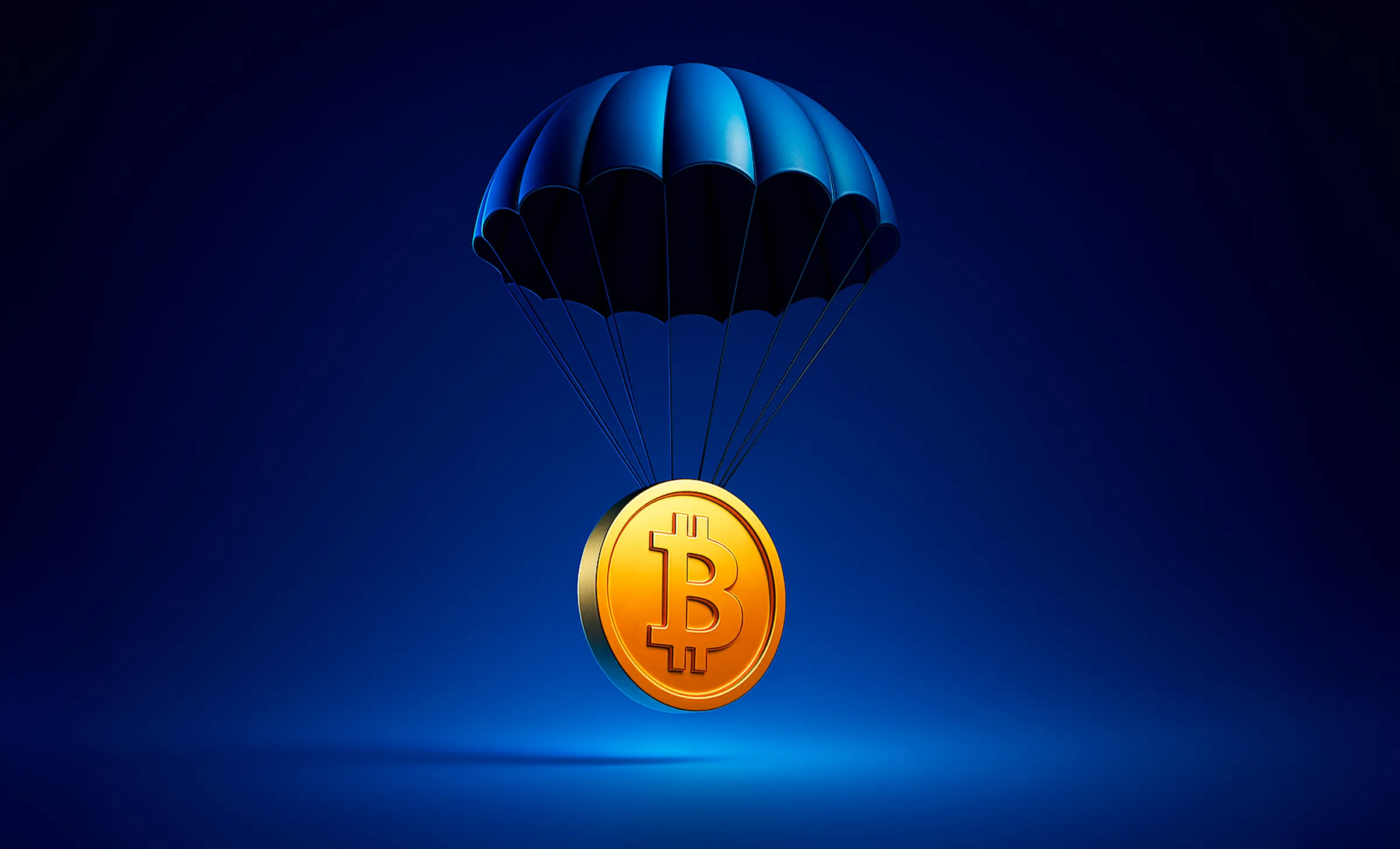
What is a crypto airdrop?
A crypto airdrop is a marketing strategy in which a blockchain project distributes free tokens to numerous wallet addresses simultaneously. Unlike conventional promotional giveaways, airdrops rely on on-chain data to automatically identify eligible recipients and execute transfers, requiring no upfront cost from users. Projects deploy airdrops primarily to decentralize token ownership, reward early adopters, expand their communities, and create market buzz.
The term originates from the military practice of dropping supplies from aircraft, perfectly capturing the idea of tokens raining down into users’ wallets. Airdrops became widely recognized in September 2020 when decentralized exchange Uniswap distributed 400 UNI tokens to every address that had ever interacted with the protocol. At its peak, this allocation was worth over $12,000 per recipient, proving that retroactive token rewards can be a game-changing growth engine. Today, projects still pursue airdrops for three core reasons:
- Decentralization — widening token distribution prevents excessive control by founding teams and venture capital investors;
- Community building — incentivizing active users and attracting newcomers to establish a vibrant platform ecosystem;
- Marketing campaigns — generating awareness and liquidity for new token launches or protocol upgrades.
Airdrops differ fundamentally from Initial Coin Offerings (ICOs) and public token sales. ICOs require participants to purchase new tokens with existing cryptocurrency, while airdrops hand out tokens for free. Similarly, staking rewards demand that users lock up assets to earn yields, whereas airdrop eligibility is based on past activity and demands no initial capital. Because of their zero-cost entry, airdrops have become one of the most democratic mechanisms for token distribution in the crypto economy.
How do crypto airdrops work?
At the technical level, airdrops hinge on the concept of a “snapshot” — a record of wallet states at a specific block height or timestamp. Projects take a snapshot of on-chain data, then analyze transaction histories, token balances, and protocol interactions to compile a list of qualified addresses. Smart contracts automatically send tokens to those addresses based on predefined rules, ensuring a transparent, human-free distribution process.
Snapshots capture genuine user behavior and prevent gaming. For instance, an L2 protocol might snapshot all addresses that bridged over 100 USDC at a certain block; only wallets meeting that criterion during the snapshot window can claim the airdrop. Claim mechanisms vary: some airdrops deposit tokens directly into eligible wallets, while others require users to visit an official portal and sign a claim transaction. These interactive claims often have strict deadlines — ranging from 30 days to several months — after which unclaimed tokens may be burned or returned to the community treasury.
Wallet compatibility is critical. Most projects mandate self-custodial wallets like MetaMask, Trust Wallet, or the Crypto.com Wallet because these give users full control over private keys. Custodial exchange addresses are almost always excluded, as users don’t directly manage those accounts. Additionally, the wallet must support the blockchain network hosting the airdrop — an Ethereum wallet, for example, is necessary to receive ERC-20 tokens. Recently, many campaigns have introduced Know Your Customer (KYC) checks for regulatory compliance, requiring users to submit government-issued ID. While this adds a layer of legitimacy, participants should remain cautious of any scheme that asks for excessive personal data. Finally, even though the tokens are free, claiming them usually incurs gas fees, which can spike on networks like Ethereum during periods of high congestion.
Real-world crypto airdrop examples
Several landmark airdrops have demonstrated just how lucrative free tokens can be:
- Uniswap UNI airdrop (September 2020) — the quintessential retroactive distribution. Every historical user received 400 UNI, a holding that peaked above $12,000. It remains the gold standard for rewarding loyal early users and set off a wave of speculative farming.
- Ethereum Name Service ENS airdrop (November 2021) — tokens were allocated proportionally to .eth domain registration length and community participation, recognizing long-term domain holders and governance contributors.
- Arbitrum ARB airdrop (March 2023) — based on transaction volume, bridging activity, and protocol interactions on the Arbitrum Layer 2. The distribution was designed to place governance power in the hands of active ecosystem users.
- Optimism OP Drops — a series of quarterly airdrops rewarding governance involvement and network usage. This ongoing model encourages sustained contributions rather than a one-off snapshot gamble.
These examples illustrate two main airdrop types: retroactive distributions, which reward past behavior without prior announcement, and promotional airdrops, where the criteria are shared in advance to drive specific actions like staking, bridging, or social media engagement. Both types have produced life-changing payouts for participants who engaged early.
How to participate in crypto airdrops (step by step)
Successfully capturing airdrop rewards requires preparation and consistent engagement. Follow these five steps to improve your chances:
Step 1: Create a compatible crypto wallet
Set up a self-custodial wallet that supports multiple blockchains. MetaMask offers broad compatibility with Ethereum and EVM chains, Trust Wallet delivers a mobile-first experience across dozens of networks, and the Crypto.com Wallet integrates trading capabilities with secure storage. Strengthen your wallet’s security by enabling two-factor authentication wherever possible, and never share your seed phrase or private key with anyone. Many experienced airdrop hunters maintain separate wallets for different activities to compartmentalize risk and simplify tracking.
Step 2: Engage with promising dApps or platforms
Identify emerging decentralized applications with strong teams, growing user bases, and reputable VC backing. Layer-2 scaling solutions, DeFi protocols, and NFT marketplaces have historically rewarded early users. Use these platforms regularly: swap tokens on decentralized exchanges, provide liquidity to pools, bridge assets across chains, and vote on governance proposals. Avoid artificial, repetitive behavior that platforms might flag as Sybil attacks. Genuine participation — especially in governance — signals long-term commitment and often carries extra weight in token distribution formulas.
Step 3: Monitor airdrop calendars and socials
Track announced and rumored airdrops through dedicated platforms like AirdropAlert and DeFiLlama, which list eligibility requirements and timeframes. Follow project Twitter accounts, Discord servers, and Telegram channels with notifications turned on. Early information often surfaces in these communities, but always verify details against official websites. A common beginner’s mistake is jumping on unverified rumors that lead to fake claim sites.
Step 4: Complete tasks or snapshot actions
When a project announces an airdrop, execute the required actions before the snapshot: connect your wallet to the official site, follow social media accounts, bridge tokens, or reach specified transaction thresholds. Keep a log of your activities to reference during the claim period. Maintain ongoing platform usage to demonstrate authentic interest, and diversify across multiple credible projects to broaden your exposure. Some protocols mandate minimum token balances or specific holdings at the time of the snapshot, so check the rules carefully.
Step 5: Claim your tokens securely
Only claim tokens through official project websites. Bookmark URLs and verify domain authenticity before connecting your wallet, as phishing pages that mimic legit claim portals are rampant. When signing transactions, double-check the recipient address, token contract, and gas fees. Remember: legitimate airdrops never ask for your seed phrase, private key, or upfront payment. After receiving your tokens, store them safely and consider any tax obligations. Research the token’s fundamentals before deciding to hold or trade.
How to find legitimate crypto airdrops
Navigating the airdrop landscape requires a skeptical eye and thorough research. Genuine projects exhibit transparency, verifiable teams, and active community engagement:
- Vet platforms — examine the official website for detailed documentation, team profiles, and a clear roadmap. Check GitHub repositories for regular, high-quality commits and review social media for consistent, authentic interactions.
- Community signals — large, organically active Discord and Telegram groups suggest real interest. Endorsements from respected industry figures on Twitter and Reddit, combined with venture capital backing or institutional partnerships, add credibility.
- Official announcements — legitimate airdrops are confirmed via project websites, verified social media handles, and official community channels. Cross-reference information across multiple official sources before taking any action.
Red flags are equally important. Any request for seed phrases, private keys, or upfront fees is a definitive scam. Guarantees of outsized returns, poor website design, spelling errors, and anonymous teams should also raise immediate suspicion. Staying safe means treating every unsolicited airdrop opportunity as potentially hostile until proven otherwise.
Are crypto airdrops safe and legal?
Participating in a legitimate airdrop carries minimal direct financial risk, but the surrounding activities demand caution. Key safety and legal considerations include:
- Scam avoidance — never disclose seed phrases, private keys, or passwords. Real airdrops will never demand a deposit or “activation fee.” Be especially wary of promises of guaranteed returns or referral-based pyramids.
- Safe wallet hygiene — dedicate a separate wallet for airdrop farming with a limited balance. Regularly revoke token approvals for unverified smart contracts, and use hardware wallets for long-term storage.
- Phishing attacks — scammers frequently clone claim interfaces. Always navigate directly to official sites rather than clicking links in DMs or emails. Verify the URL and, if possible, inspect the SSL certificate.
- Regulatory landscape — the legal treatment of airdrops varies globally. Most jurisdictions consider airdropped tokens as taxable income at fair market value upon receipt. Some may even classify certain campaigns as securities offerings, imposing additional obligations on both issuers and recipients.
- U.S. tax implications — the IRS treats airdropped crypto as ordinary income, taxable in the year received. Subsequent sales trigger capital gains or losses. Participants should maintain meticulous records of receipt dates and fair market values to comply with reporting requirements.
FAQs about crypto airdrops
What is a crypto airdrop?
A crypto airdrop is a free distribution of tokens to multiple wallet addresses, used to reward users, build communities, and decentralize token ownership.
Why do projects give away free crypto?
Projects aim to achieve decentralization, incentivize early adopters, generate marketing buzz, and establish a token economy without requiring users to spend money upfront.
How can I become eligible for airdrops?
Use promising DeFi platforms consistently, maintain an active wallet, participate in governance, bridge tokens, and engage with project communities. Many airdrops reward sustained interaction rather than one-off transactions.
How do I know if an airdrop is legitimate?
Legitimate airdrops come from teams with verified identities, active development, and official announcements. Avoid any scheme requesting private keys, upfront payments, or promising guaranteed high returns.
Can I make money from airdrops?
Yes — historical examples like Uniswap’s UNI airdrop have been worth thousands. However, values vary widely, and some tokens may have minimal liquidity or even turn out to be worthless.
How long does a crypto airdrop take?
Timelines range from immediate automatic disbursements to multi-month claiming windows. Snapshot-based airdrops can distribute within days, while those with tasks or KYC may take weeks.
Are airdrops taxable in the US?
Yes, the IRS treats airdropped tokens as ordinary income at their fair market value upon receipt. Capital gains tax may apply on later sales. Keep thorough records for accurate filing.
What’s the difference between airdrops and staking?
Airdrops are one-time free distributions based on past actions, while staking requires locking up assets to earn continuous rewards. They are distinct mechanisms with different risk profiles.
Can anyone participate in airdrops?
Most airdrops have eligibility criteria such as wallet activity, geographic restrictions, or platform usage. KYC requirements may further limit access to verified participants.
What’s the easiest way to find new airdrops?
Follow airdrop trackers like AirdropAlert, monitor DeFi analytics platforms, join crypto communities on Discord and Telegram, and stay active on promising protocols to catch opportunities early.