
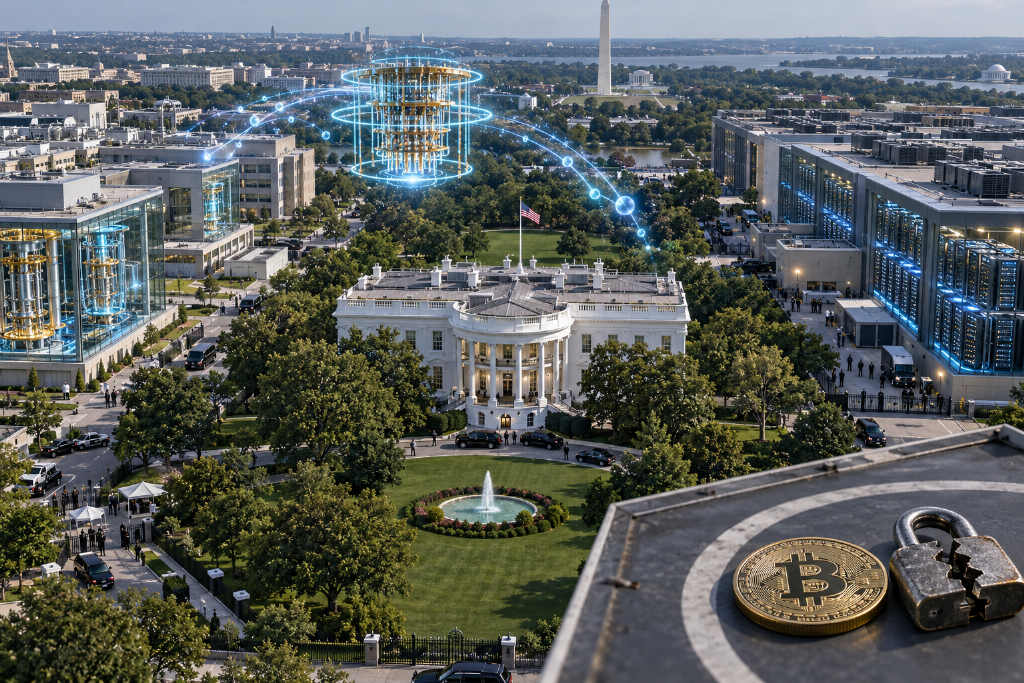
The White House has outlined more than $6 billion in science initiatives, including a $215 million quantum computing competition and $2.4 billion in industry commitments for artificial intelligence tools and computing resources. The announcement comes as concerns grow over the long-term risk that quantum advances could pose to cryptocurrency security.
DOE sets research targets for Quantum Genesis Q Competition
On Thursday, the Department of Energy said it had identified eight scientific applications to guide its Quantum Genesis Q Competition. The program offers up to $215 million in planned funding for companies developing fault-tolerant quantum computers.
First announced in September, the funding package includes milestone-based awards and incentive prizes for companies that demonstrate increasingly powerful quantum systems. The research priorities span chemistry, materials science, subatomic physics and applied mathematics.
Quantum risk remains a live issue for blockchain security
Advances in fault-tolerant quantum computing could carry implications for blockchain-based assets that rely on public-key cryptography. On Sept. 23, three European Union financial watchdogs warned that the development of more powerful quantum computers could undermine the cryptographic systems used to secure blockchains and financial transactions.
For crypto assets, a sufficiently powerful quantum computer could in theory derive private keys from exposed public keys, opening a path for attackers to steal funds. No quantum computer capable of carrying out that kind of attack currently exists.
AI commitments total $2.4 billion across 11 companies
The White House also said 11 technology companies pledged $2.4 billion in AI tools and compute credits to support research at 15 federal agencies.
- Nvidia: $1 billion
- AMD: $500 million
- OpenAI: $200 million
- Anthropic: $150 million
- Google: $150 million
Cointelegraph also linked the development to a related report on Ethereum co-founder Vitalik Buterin, who backed a crypto "bunker mode" as AI math capabilities advance rapidly.