On June 1, Binance officially opened over 8,000 US stocks and ETFs to non-US users, allowing zero-commission fractional share trading starting at just $5, purchasable with cryptocurrencies such as USDC, USDT and BNB. The partner enabling this is Alpaca, a US-regulated broker-dealer responsible for asset custody, dividends and corporate actions. Alpaca's market position extends far beyond what many realize — it already powers stock trading for Bitget, Gate, Ondo, xStocks and numerous other platforms.

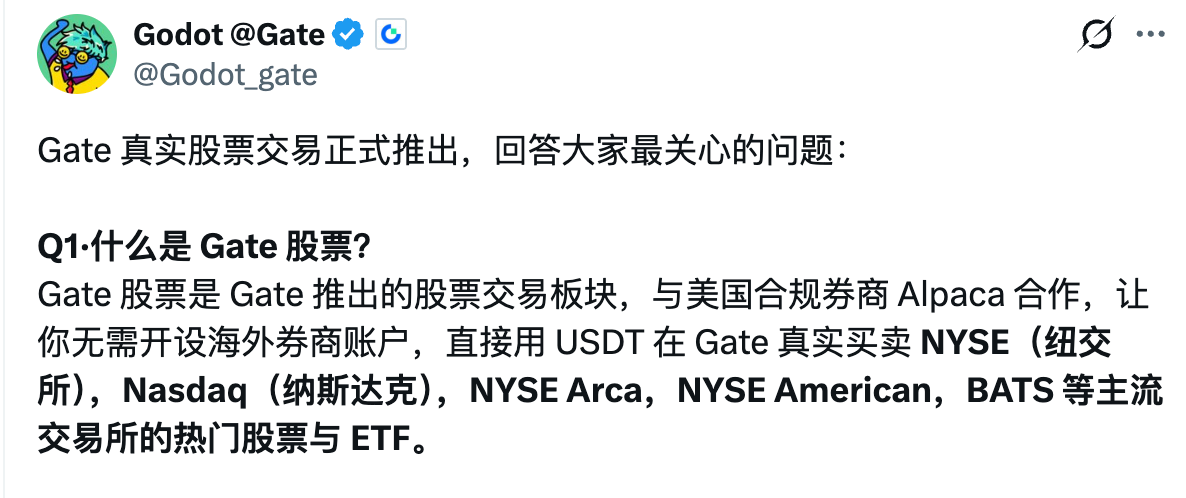
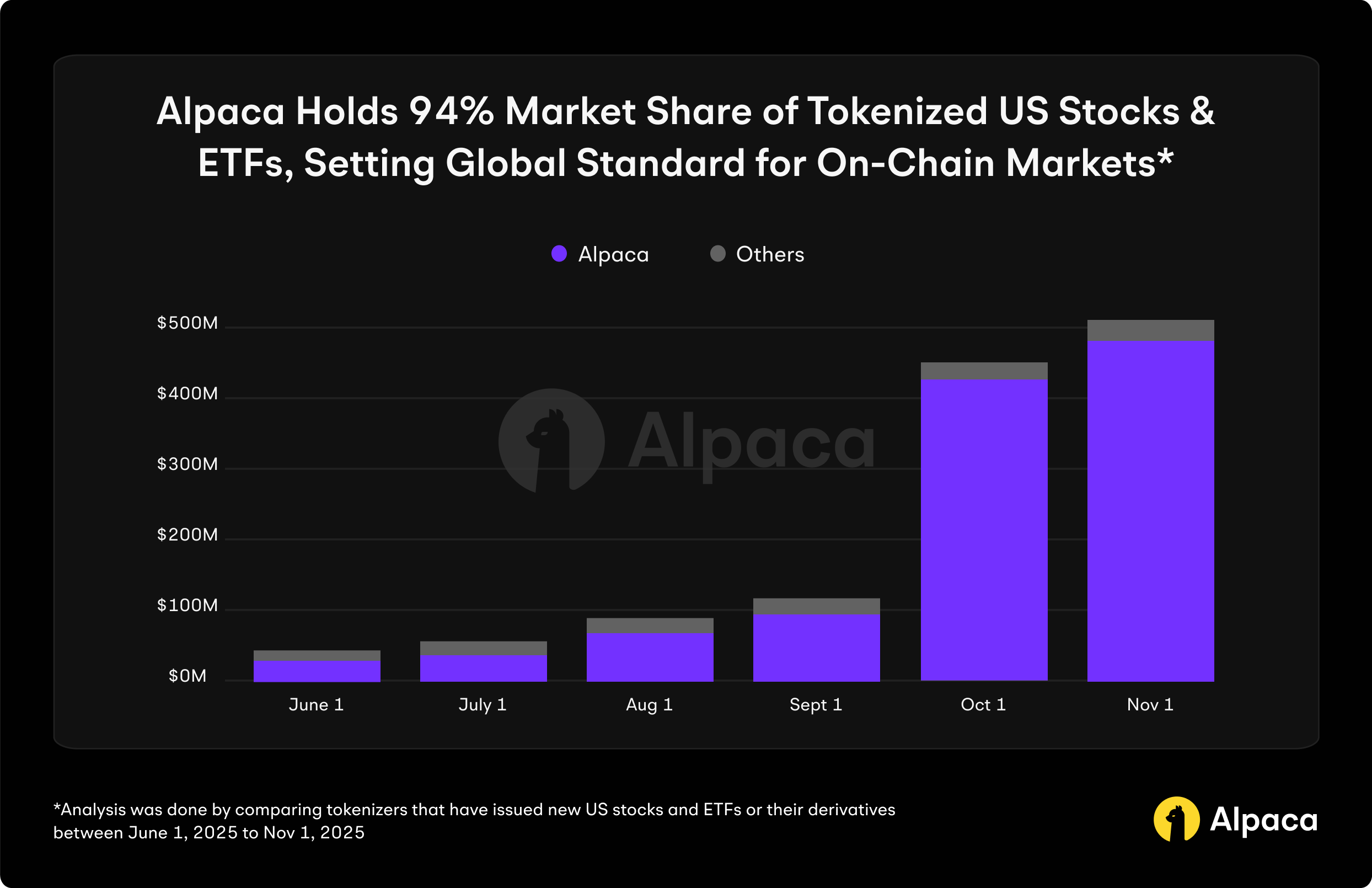
Around the same time, Bitget and Gate made aggressive moves into stock tokens. On May 28, Bitget announced Reality, a stock token platform that will issue derivative tokens (rToken) 1:1 backed by real equities, with Alpaca as the underlying brokerage. On June 1, Gate launched real stock trading service directly via USDT, also confirming Alpaca as its broker partner. On the DeFi side, Ondo — the dominant player in stock tokens — partnered with Alpaca last September to tokenize US stocks and ETFs. Kraken's xStocks followed suit in December, teaming up with Alpaca to accelerate global expansion. According to Alpaca's own disclosure in December last year, it already commands 94% of the tokenized US equity and ETF market.

Brokerage-as-a-Service: How Alpaca Works
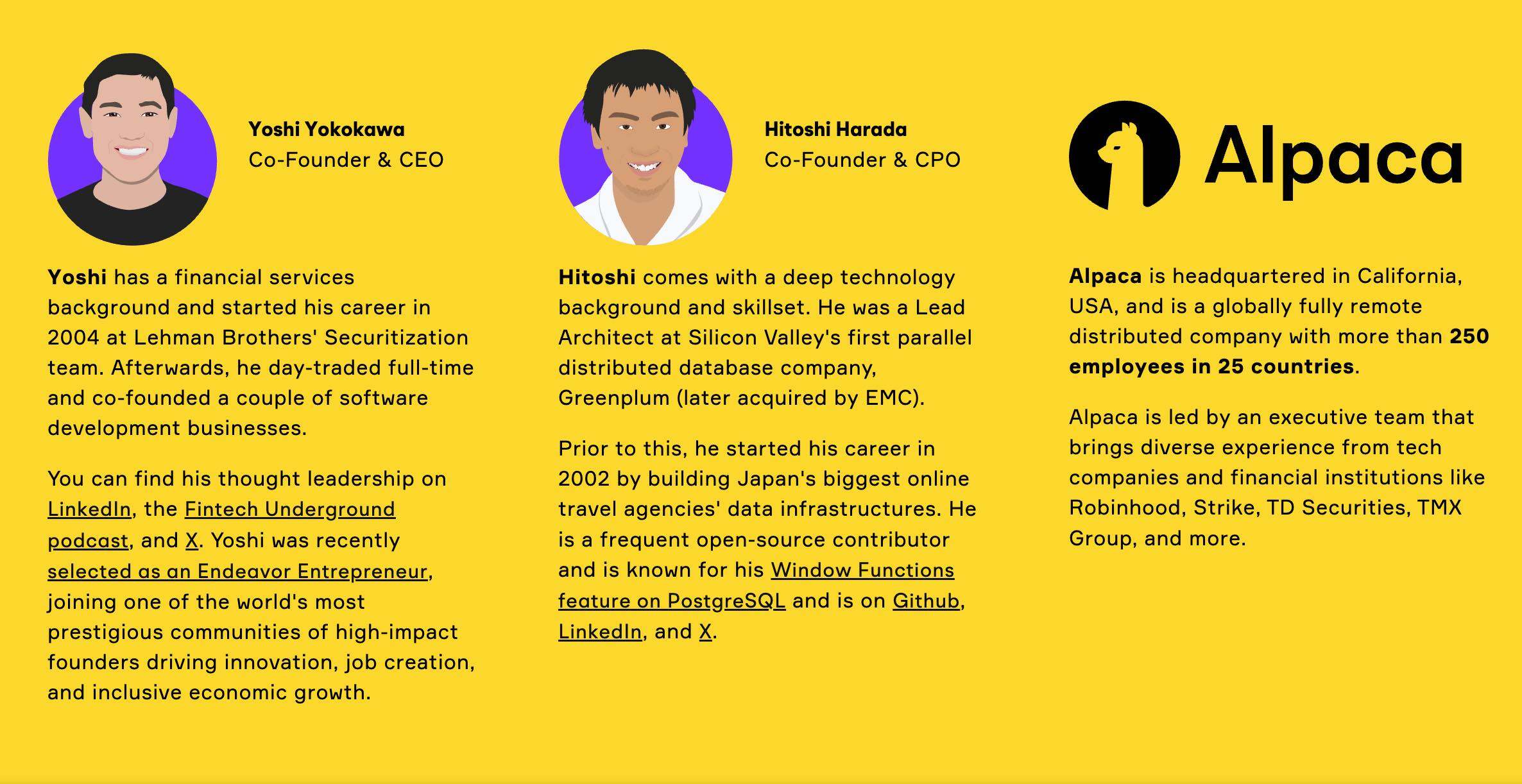
Founded in 2015 in California by former Lehman Brothers employee Yoshi Yokokawa and engineer Hitoshi Harada, Alpaca started as a financial database and machine learning startup serving quantitative traders through APIs. Over time it evolved into a full financial infrastructure provider covering stocks, ETFs, options and cryptocurrencies, along with market data, securities lending, high-yield cash accounts and 24/5 US trading. It has raised more than $320 million since 2019 from investors including Y Combinator, Spark Capital, Tribe Capital and SBI Group, and now serves hundreds of financial institutions across 40+ countries, helping open over 7 million brokerage accounts.

Unlike traditional brokers that directly serve retail investors, Alpaca's core clients are developers and fintech companies. Its Broker API allows partners to quickly build a complete securities service system — including account opening, KYC, order execution, clearing and market data — by simply calling APIs. In essence, it offers “Brokerage-as-a-Service.” Platforms like Binance, Bitget, Gate and Ondo only need to focus on user acquisition and interface, while the backend connectivity to real-world securities markets is entirely handled by Alpaca.
Why Crypto Institutions Favor Alpaca
Although the US has thousands of registered brokers and giants like Charles Schwab, Interactive Brokers and Fidelity boast far larger brands and assets, Alpaca has emerged as the dominant force in stock tokenization. The reason lies in its DNA: Alpaca was never a traditional brokerage. Its clients are developers, not end investors, and its product design is entirely API-first — a perfect match for Binance, Gate and Ondo, which want to embed securities trading natively into their platforms. Moreover, Alpaca was among the earliest US-licensed brokers to proactively embrace digital assets and tokenization, exploring the intersection of securities and blockchain long before the trend peaked. This first-mover advantage, combined with deep crypto alignment, is the core reason it captured such a dominant market share.
Network Effect Moat
As more CeFi and DeFi players choose Alpaca, a powerful network effect is reinforcing its moat. For latecomers, selecting Alpaca means the fastest time-to-market and the most mature compliance path. This drives a virtuous cycle: more platforms integrate Alpaca, bringing more accounts and trading volume, which in turn fuels further product and infrastructure improvements, attracting even more adopters. Stock tokenization has become an undeniable trend. While it remains unclear how many new Binances or new Ondos will emerge in this space, one thing is becoming evident: the entity selling shovels to all the prospectors might ultimately be the biggest winner in this race.