

Forward Deployed Engineer, or FDE, has become one of the hottest job titles in AI.
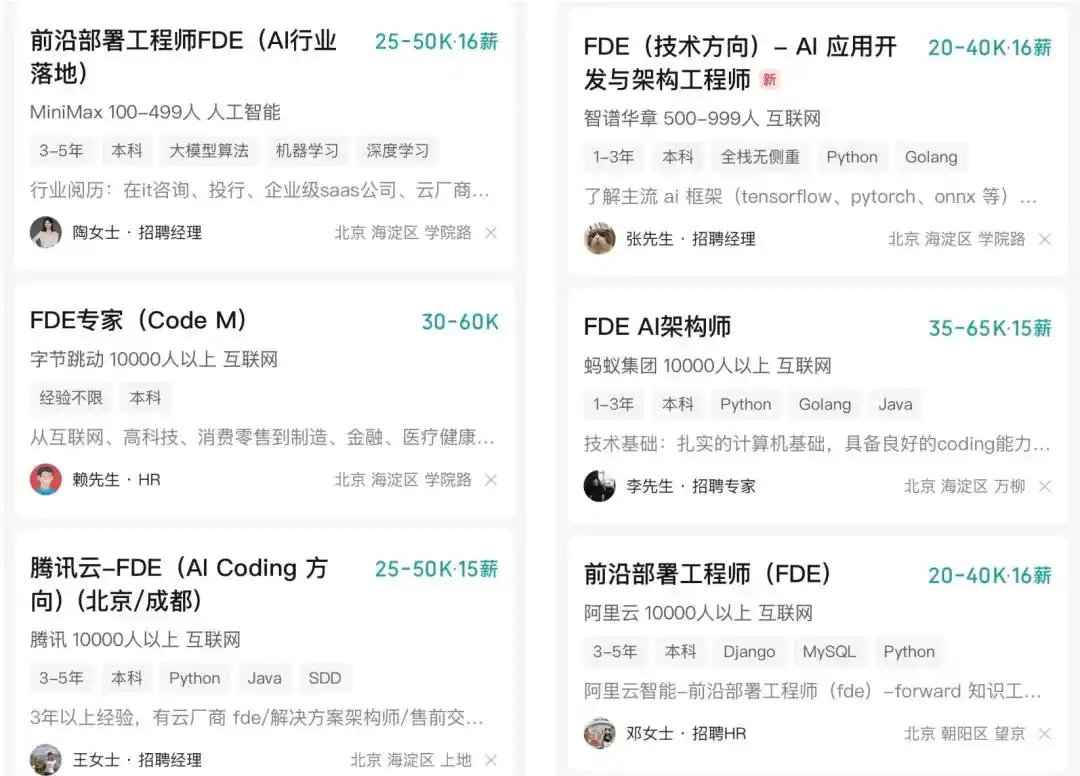
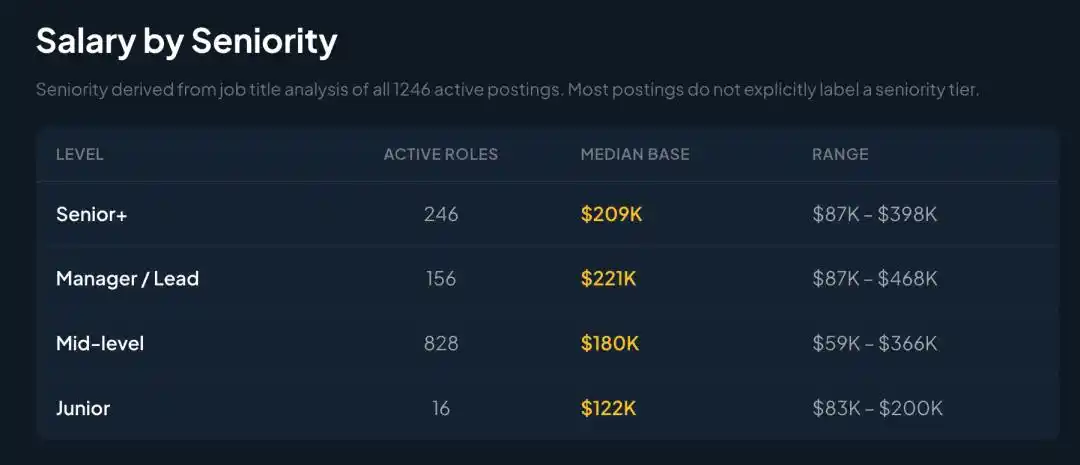
A MarsBit report, citing Chinese tech publication QbitAI, says the role is drawing attention for two reasons at once: pay and mystery. Some large companies in China have posted monthly salaries of RMB 30,000 to RMB 50,000. Data from FDE Pulse cited in the report shows that publicly disclosed overseas FDE roles carry a median base salary of about $200,000 a year, equal to roughly RMB 1.34 million.
FDE stands for Forward Deployed Engineer. In the report, the role is described in plain terms: engineers who work close to the customer, deploy software, and solve practical problems on the ground.
From Silicon Valley to China
The report says the term has moved from Silicon Valley into the Chinese market.
Abroad, Anthropic has announced a $100 million investment to train 10,000 FDE engineers by the end of 2027. OpenAI, according to the report, has also set up a deployment-focused company backed by $4 billion in investment. Amazon Web Services, or AWS, has committed $1 billion to build an FDE division and send thousands of engineers to work alongside customers.
Chinese companies are moving in the same direction. Kimi has said it will work with multiple IT service providers to build an FDE team. Tencent Cloud has launched what it describes as the industry’s first FDE engineer certification and is also recruiting FDE partners. At the same time, a growing number of independent developers are taking on enterprise AI transformation projects on their own.
None of this came out of nowhere. Sending engineers to customer sites has existed for years under other titles: deployment engineer, implementation consultant, solutions engineer, after-sales engineer. The report’s central question is why this old kind of work has suddenly become so desirable in the AI cycle.
What FDEs do: Echo, Delta, and Dev
In the classic FDE model, the report points to two recurring roles: Echo and Delta.
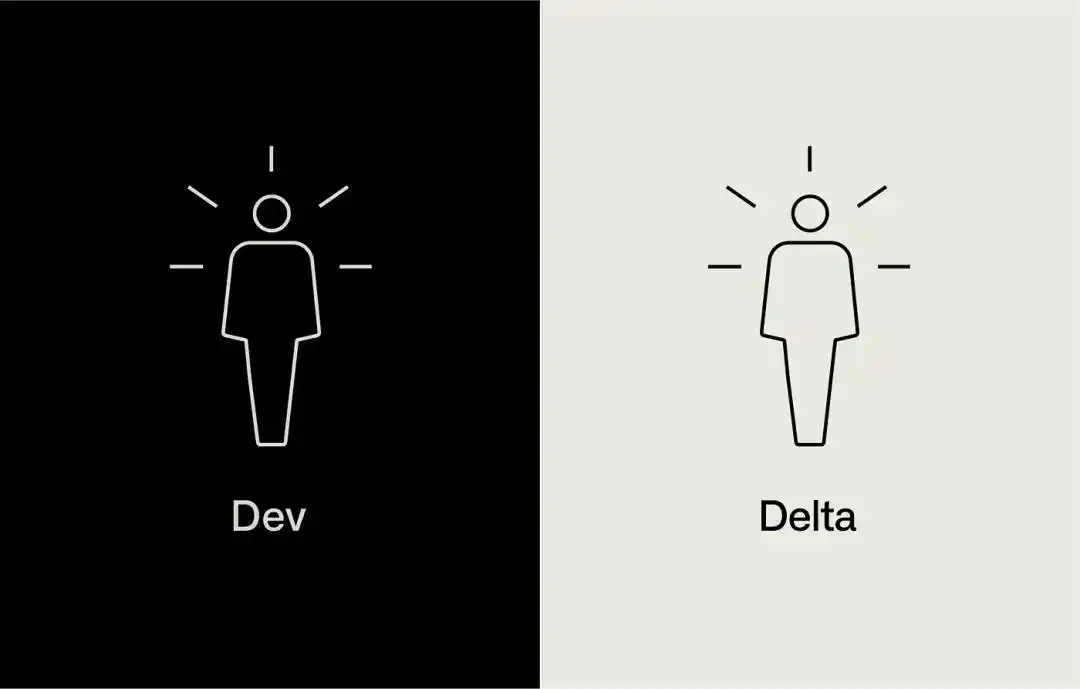
Echo handles business understanding, requirement gathering, and solution design. Delta writes code, connects data, and turns the plan into something that works. Behind them sits a broader Dev team, meaning standard software engineers who build the platform.
The distinction is framed this way in the report: Dev builds one capability for many customers, while Delta works with one customer to solve many problems.
The report also notes that some FDE job postings in China have started labeling positions by Echo or Delta direction. It says that was not the case at least two months earlier.
Ontology sits at the center of the work
A large share of frontline work revolves around ontology.
In the report’s explanation, ontology is a business map that software and AI systems can call on: which employees, departments, and orders exist inside a company, how they relate to one another, and what actions each is allowed to take. The FDE’s job is to gather information scattered across systems, workflows, and employee know-how, organize it into that map, and then build applications and solve problems on top of it.
Once the model reached China, it began to take on local variations. In the AI era, the focus of on-site work has shifted as well. Many companies cannot clearly define where AI should be used, so FDEs are often expected to help customers figure that out before anything is deployed.
01.AI’s approach: map the company first
The report presents 01.AI, led by Kai-Fu Lee, as a representative case.
01.AI has now fully shifted toward enterprise AI. Its path, according to the report, starts with reaching the top decision-maker at a company, then sending frontline deployment engineers into the organization to sort out the company’s ontology, and finally turning what they learn into products and platforms. In the early stage, one project required five FDEs on-site and a five-person backend team in support.
Lee said the company’s offering has been productized and uses a subscription model, but “it is not a plug-and-play product.” Building a company’s ontology takes one to three months, he said, because databases, roles, and workflows all need to be organized before the customer can get sufficient results.
Inside enterprise teams: requirement work first, product reuse later
The report also interviewed enterprise practitioners including Layla and Sonic.
Layla works as an FDE at a SaaS company, though her formal title is still product manager. She said that from March and April 2025, she began entering customer projects in a real sense. Her clients are listed companies with more than 10,000 employees, including chain-store operators and manufacturers. A single on-site engagement usually lasts one to two months.
At the beginning, she said, nobody around her called the work FDE. Only after the model became popular did she look into it and realize that what she had been doing was essentially the same thing.
Her workflow follows four steps:
- enter the client site and understand the business, sorting through input from procurement, marketing, finance, IT, and other roles to identify what the customer actually wants;
- propose a solution and build a demo for quick validation;
- once validated, hand the project to the company’s existing delivery team for launch;
- abstract reusable capabilities and feed them back into the company’s product.
In her view, what FDEs observe and learn in the field should ultimately be absorbed into a standard product.
Sonic, another enterprise FDE, works on AI review projects such as financial and tax review and ad material review. He said his team began studying the FDE model in 2025. For him, one of the most important parts of the job is structuring ontology.
He gave a simple example. If a company wants an AI assistant for organizational management, it first needs a clear picture of how many departments it has and how those departments relate to one another. Beyond relationships, there are attributes, such as a person’s rank and salary. Only when those elements are turned into a structure an agent can understand will the system answer accurately rather than guess.
That step is often difficult. Sonic said FDEs regularly run into incomplete historical data from upstream and downstream systems, or legacy systems with no open interfaces, which can stall a project. He still sees it as unavoidable: if the ontology is high quality, it can be highly effective, and later delivery quality depends mainly on the quality of that earlier ontology work.
Both Layla and Sonic said they need to stay on-site with customers. Sonic said the point is not only to understand requirements but also to align the business side’s understanding of AI, including what it can and cannot do. Without that shared language, it is hard to discuss pain points or solutions.
Not every FDE works on-site
That said, on-site work is not universal.
Cheng Tianshu of Silicon Valley company Baseten told the publication that Baseten’s FDEs are generally not stationed at customer sites. Baseten provides AI inference cloud services. Customers deploy models on its platform, and the company helps those models run faster, more reliably, and at lower cost.
Its customers are almost all engineers, Cheng said, and their needs are specific. A customer may be calling OpenAI’s API and want to switch to an open-source model, for example, and need help deciding which model to use, how to deploy it, and how to hit the desired speed and cost targets.
In those cases, FDEs meet with customers, understand the technical requirements, and build a prototype to validate the solution. The work may involve cloud infrastructure, model inference optimization, training, or product experience, with different FDEs covering different specialties. Most of that communication can happen online.
The reason, according to Cheng, is that Baseten offers a standardized product for developers. It handles one clearly defined part of the customer’s business chain. The level of customization is limited, and the company does not need to go deep into the customer’s organizational structure to solve business problems. “Our product is not highly coupled with the customer’s own business logic,” he said.
Independent FDEs are growing fast
Outside large companies, the report says, a group of independent “guerrilla” FDEs is expanding quickly. They do not belong to a product company. They find customers on their own, take contracts on their own, and help enterprises with AI transformation.
That is also part of what AI has changed. In the past, building a custom system often required a team working for months. Now code is cheap enough that one person can take on a project and deliver it.
Lawted, who describes himself in the report as “the first FDE on the internet,” calls this segment “local FDE.” In his telling, large-company FDEs mainly promote their own products, while local FDEs work for “local bosses.” They can use OpenAI or Gemini, have no sales quota, and simply build what the client asks for.
The report also profiles Zaniel, an FDE and a Stanford PhD student. He began taking enterprise AI projects on his own in April this year. His clients have included banks, law firms, coal chemical companies, postpartum care centers, domestic staffing agencies, and construction firms. In a little over five months, he has completed dozens of projects, all delivered by himself.

What changed over time was the focus of his work. Instead of mainly building AI systems and tools for customers, he has shifted toward teaching employees how to use AI.
He described one bank client where several employees exported large amounts of data every day and compiled a few reports for management. At first, he built an automatic generator: drag in the data and the report comes out. It was soon abandoned. Reporting rules changed every day, export formats were inconsistent, and a hard-coded program “collapsed after a few days.”
He later concluded that the client did not need a new piece of software. Instead, employees could feed desensitized data into a general-purpose AI for summarization, while high-frequency workflows could be organized into skills and connected to existing data systems. Once that happened, people actually used it.
Zaniel said that, at least in white-collar work, most problems can be handled with a general-purpose agent, a set of skills, and connections to existing systems. “There is no need to develop other new software,” he said.
Another independent contractor, Ruanmeng Zishen, described a similar case. She worked as an FDE for a foreign trade company and discussed with the owner how to raise employees’ AI usage. The conclusion was to buy WorkBuddy. Her role was to train employees to use WorkBuddy and connect WorkBuddy to the group’s existing internal systems.
As these independent FDEs work through enterprise transformation, many have found that a brand-new product or system is often unnecessary. Their business model has started to tilt toward consulting.
Zaniel said he works with companies in two ways: project-based engagements and advisory arrangements. The second is becoming more common. In practice, the advisory role means teaching employees how to use AI tools, helping the company think through how its business should adapt whenever new tools appear, and handling smaller requests as part of the service. He calls that role an external CAIO, or chief AI officer, for the enterprise.
Community matching and 48-hour demos
Lawted says his own business is starting to resemble a consulting firm.
He runs an FDE community called HA7CH. Through offline meetups and hackathons, he matches companies that want AI transformation with independent FDEs willing to take on projects. The process works like this: a company submits its needs, he selects one or two candidates from the applicants, and those candidates enter the company for 48 hours to map the workflow and build a demo. If the demo convinces the boss, the deal is signed on the spot and the selected candidate handles delivery afterward.
After running several rounds, Lawted said FDE feels “very much like consulting.” In his view, companies often know they want AI but cannot clearly state where the problem lies. The FDE has to enter the scene, diagnose the situation, and then build the solution.
He even argued that consultants may be better suited than programmers to switch into FDE work, as long as they pick up vibe coding. “Vibe coding is actually not hard,” he said.

Code takes less time than people work
One pattern runs through nearly every interview in the report: coding is not the main time sink. Communication is.
Several practitioners said more than 70% of their time goes to requirement discussions, while development accounts for about 30%. Friction with employees, delays in getting interface permissions, and similar obstacles usually appear in that communication-heavy part of the process.
Ruanmeng Zishen said that while trying to connect WorkBuddy to a company’s internal systems, she had to keep talking with procurement, IT, ERP product managers, and outside engineers. Some systems had no ready-made interfaces, so the company had to be pushed to build them. More than a month later, many APIs were still not open, and she said she would have to continue negotiating with IT the next day.
She did not describe that as deliberate obstruction. “No one is intentionally trying to trip you up,” she said. In her view, everyone already has their own tasks, and AI transformation may simply not rank very high on the other side’s priority list.
The report says AI introduces another layer of resistance as well. Deploying software in the past rarely changed anyone’s position directly. AI can alter how a team works.
One company wanted to build an AI system covering dozens of business modules. Zaniel estimated he could finish it in three to four months, but the client required him to work with the IT team as an adviser. Even after signing a non-disclosure agreement, the client still would not open the code repository and often asked him to troubleshoot problems remotely.
Zaniel also suggested that some modules could simply use a general-purpose agent rather than be built in-house. A manager replied: “If you use WorkBuddy, then what are they supposed to do?”
He did not reduce that to simple non-cooperation. The client may have confidentiality requirements, existing vendor relationships, or concerns spread across different departments. “For enterprises, the cost of changing a way of working is often much greater than the cost of changing a tool,” he said.
Is FDE just outsourcing?
Another recurring question in the report is whether FDE is really just another name for outsourcing.
At Baseten, Cheng’s answer is no. He said FDEs there are hired under the same standards and interview process as regular engineers. They receive fixed salary and equity, not commissions. The service itself is not billed separately. Even if an FDE builds a prototype, the customer pays nothing unless it ends up using Baseten’s cloud platform.
In that model, FDE exists to serve the company’s own product: help customers use it, then bring field feedback back into product improvement.
Layla and Sonic made a similar distinction. For them, the key difference between FDE and outsourcing is whether what is learned in projects gets turned back into reusable product capability.

Layla said people used to distinguish outsourcing by one feature: it did not build its own product and did not accumulate its own capabilities. If her team also failed to accumulate capabilities, failed to build products, and had to rebuild every project from zero, then calling it outsourcing would be hard to argue against.
Sonic put it more bluntly. Traditional outsourcing cannot do FDE work, he said. “If you don’t believe it, try hiring an outsourcer.”
He said his team takes reusable modules from projects, organizes them by scenario into an evaluation and iteration platform, and then builds a Skill Hub and Agent Hub where FDEs test and optimize. In one vertical field, the first scenario may take about a month from integration to launch. After that, similar scenarios may be completed in one or two days.
“The longer you do it, the faster it gets,” he said. Faster work means fewer meetings and lower communication costs, and the business side feels the process is lighter and worth the money.
AI changes the economics of reuse
Zaniel pushed back on part of that logic.
People usually imagine reuse as building a semi-standardized software package and then deploying it to the next customer with a few rule changes. He does not deny that skills, code, and industry knowledge can be reused. His question is how much those assets really reduce the cost of the next full delivery.
He framed it with a simple comparison. In the past, building a piece of enterprise software might cost 90 units, while adapting it for each customer cost 10. Build once, sell many times, and the initial 90 gets spread out. That was the classic software company model.
AI changes the formula. Now development costs 1, while adaptation still costs 10.
If he built a customer management system for one client and the next client wanted something similar, he said it might make more sense to rebuild it from scratch because “AI is now too fast at making software.”
Code can still be reused. Skills and industry knowledge can still accumulate. But every time an FDE enters a new company, that person still has to understand requirements again, connect systems again, handle permissions again, and persuade different departments to accept a new way of working. That part of the investment does not fall just because code has become cheaper.
Software is getting easier to copy. Whether the business itself can be copied is another matter.

Will the role last?
Near the end of the interviews, the report asked nearly everyone the same question: will FDE remain as a role?
Cheng said the ultimate goal of FDE is “to eliminate FDE.” If an FDE is needed, that means there is still a gap between the product and the customer’s needs. Once the product is good enough, customers should be able to handle things themselves and the role should fade away.
In his view, FDE fits early-stage companies whose products are still immature. In mature companies, it looks more like a transitional function used while the product is being refined. He also acknowledged that AI is moving too fast. “The product you built yesterday may already be behind today.” As long as the market keeps changing, the gap will remain. The goal can be approached, he said, but never fully reached.
Zaniel sees it differently. The work now called FDE existed before AI, he said. It used to be called management consulting or IT outsourcing. The term itself has only become fashionable recently. “Whether the term is hot or not is really a question of internet communication,” he said.
In fact, neither he nor Ruanmeng Zishen seems especially attached to the label. They use it externally because the market recognizes it. Ruanmeng Zishen said: “I don’t particularly like people calling me an FDE, but I have to do it. In the market right now, you have to tell clients you are an AI FDE, or they won’t look.”
She would rather describe herself as an entrepreneur whose goal is to use AI to transform foreign trade and “make China’s supply chain great again.”
An old job carrying more weight in the AI cycle
The report closes by arguing that the three letters FDE now carry too many meanings at once. Software development, consulting, employee training, system integration, community matching. All of them can fall under the same label.
Still, one common thread remains. Whatever kind of FDE it is, the work is about getting AI into the customer’s actual business and dealing with the human side required to make that happen.
The report identifies three shifts:
- In the past, people on-site mainly installed software that had already been built. Now they often have to help the customer decide where AI should be used in the first place.
- In the past, building a custom system required a team. Now code is cheap enough that one person can take on the work.
- In the past, the hard part was technology. Now the hard part is people.
That is why the role has become so visible. Technology is changing faster than enterprises can reorganize around it. Companies have not fully figured out how to use AI, and internal division of labor has not caught up. As a result, too many capabilities are being pushed onto one person.
The report ends with a line that captures the market’s expectation: when companies buy SaaS, they buy software. When they hire consultants, they buy advice. When they hire outsourcers, they buy functions. When they hire an FDE, they want to buy a person — someone who understands management, technology, human behavior, and AI, and ideally does not cost too much.



