
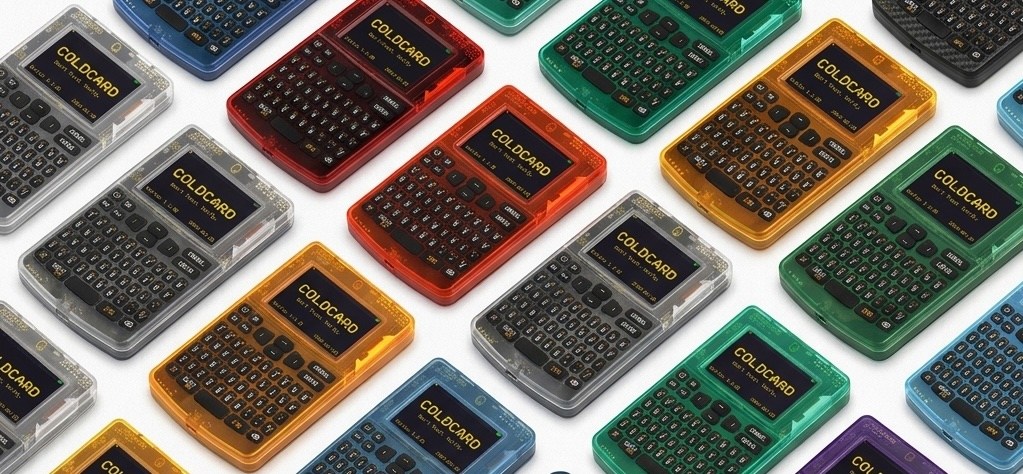
Many of the victims in the large-scale Coldcard bitcoin theft incident were early Bitcoin OGs. ABMedia described them as technically sophisticated users who had moved away from exchanges, stuck to offline practices, and chose a highly hardened cold wallet, only to suffer heavy losses anyway.

South Korea stood out for a different reason. A large group of Coldcard users there appears to have avoided the incident altogether. Koji Higashi, a long-time observer of the Bitcoin ecosystem and one of the reported survivors, said Korean users came through the event because they followed the right method, and that the reason was surprisingly simple. It was not really about advanced technical skill.
Korean communities stressed manual entropy from the start
Higashi said one unusual feature of the Coldcard incident was that many victims came from English-speaking Bitcoin communities. In his view, these users generally had a relatively high level of Bitcoin knowledge and were long-term believers, but they also shared a structural weakness: broad trust in the wallet vendor’s built-in random number generation process.
He contrasted that with South Korea’s Bitcoin community. While Korean users also treated physical isolation as a core principle, the community had long argued that users should not depend on a vendor’s technology to generate randomness. Community leaders instead encouraged people to create seed phrases manually, including through dice rolls.
Higashi said that habit, built over time, helped users defend themselves against a possible weakness in the mechanism.
Influencer preferences may have increased overall exposure
Higashi also linked the heavy losses in English-speaking Bitcoin circles to tensions between community opinion leaders and commercial sponsorship. According to the report, well-known podcasters and influencers may have strongly recommended Coldcard because of personal preference or business ties, reducing the public’s willingness to make an independent assessment of product risk.
He argued that Korean opinion leaders, lacking direct financial links to the vendor, were in a better position to judge product flaws more neutrally and warn the community earlier.
“Don’t Trust, Verify” goes beyond code
ABMedia noted that despite the word “Card” in the product name, the Coldcard wallet looks more like a calculator. Its users in Bitcoin circles are often veteran OGs, which made the damage from this incident especially painful for the community.
Higashi said the event also exposed a growing echo-chamber effect in Bitcoin circles. Group behavior amplified trust in a brand while dulling attention to risk. He pointed to the familiar line, “Don’t Trust, Verify,” and said it should not be limited to code and software. In his reading, it also applies to how people handle information and whose claims they choose to accept.
Higashi says understanding human bias matters most
Higashi said his ability to stay in Bitcoin’s “wild land” for more than a decade came in large part from paying close attention to human bias and motivation. For him, the fact that South Korea’s Bitcoin community avoided this episode shows that careful thinking and a clear-eyed view of reality remain the most important defenses against loss.