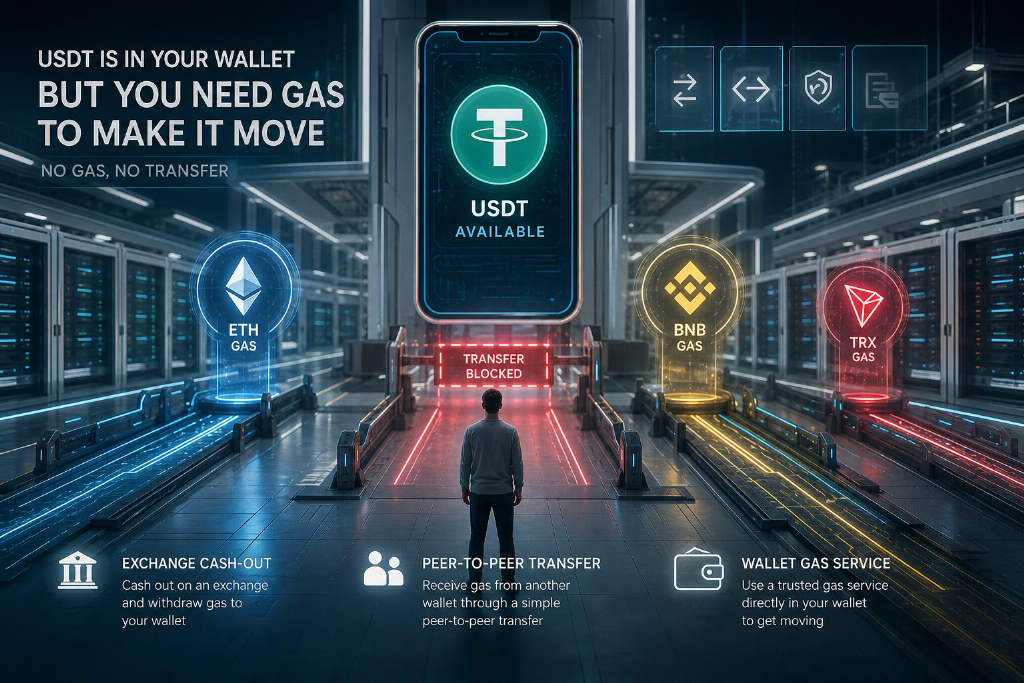
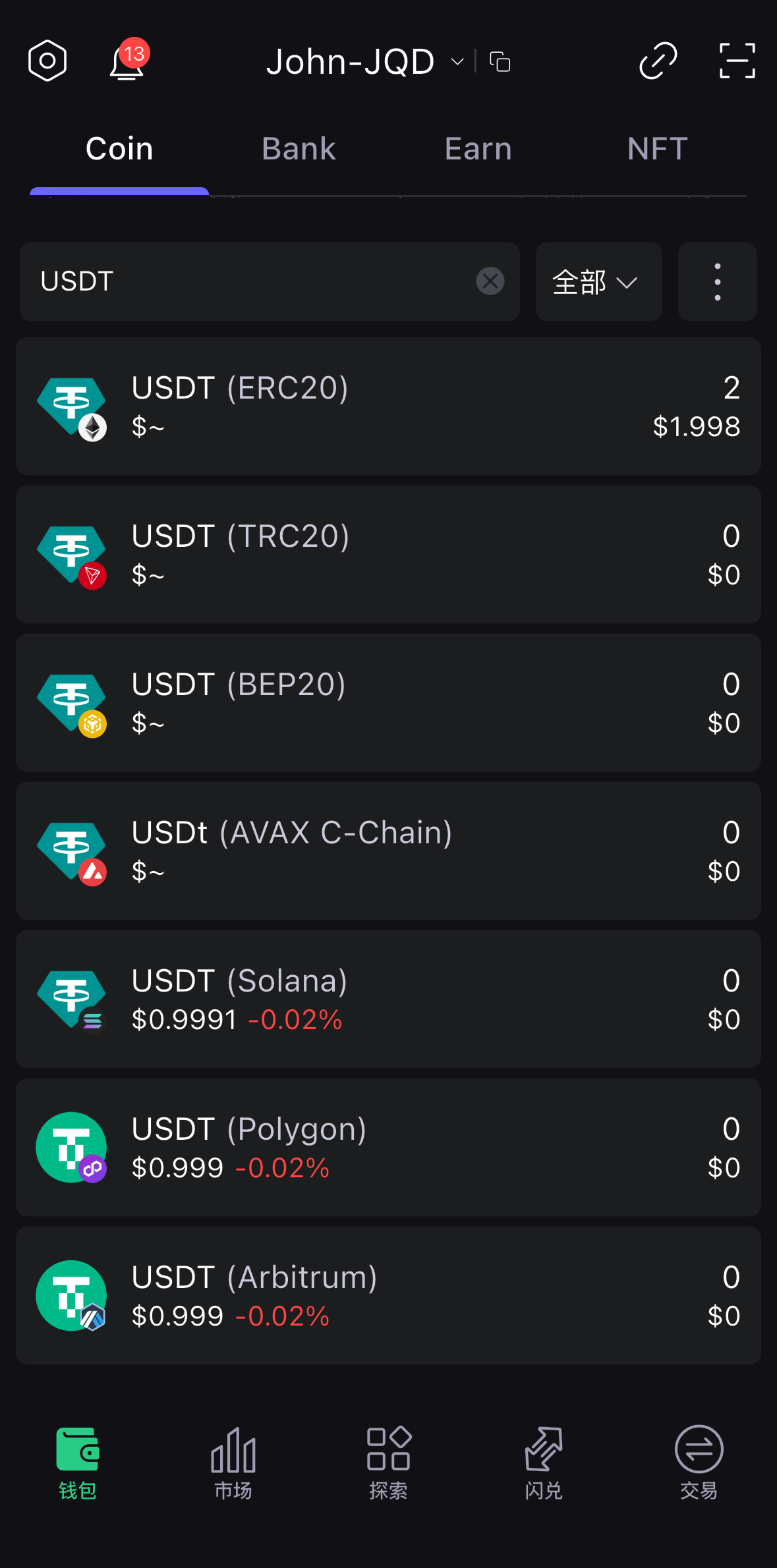
A wallet can hold USDT and still fail to send it. In Foresight’s explanation, the missing piece is usually gas: the wallet does not have the native token required by the underlying blockchain to pay the network fee.
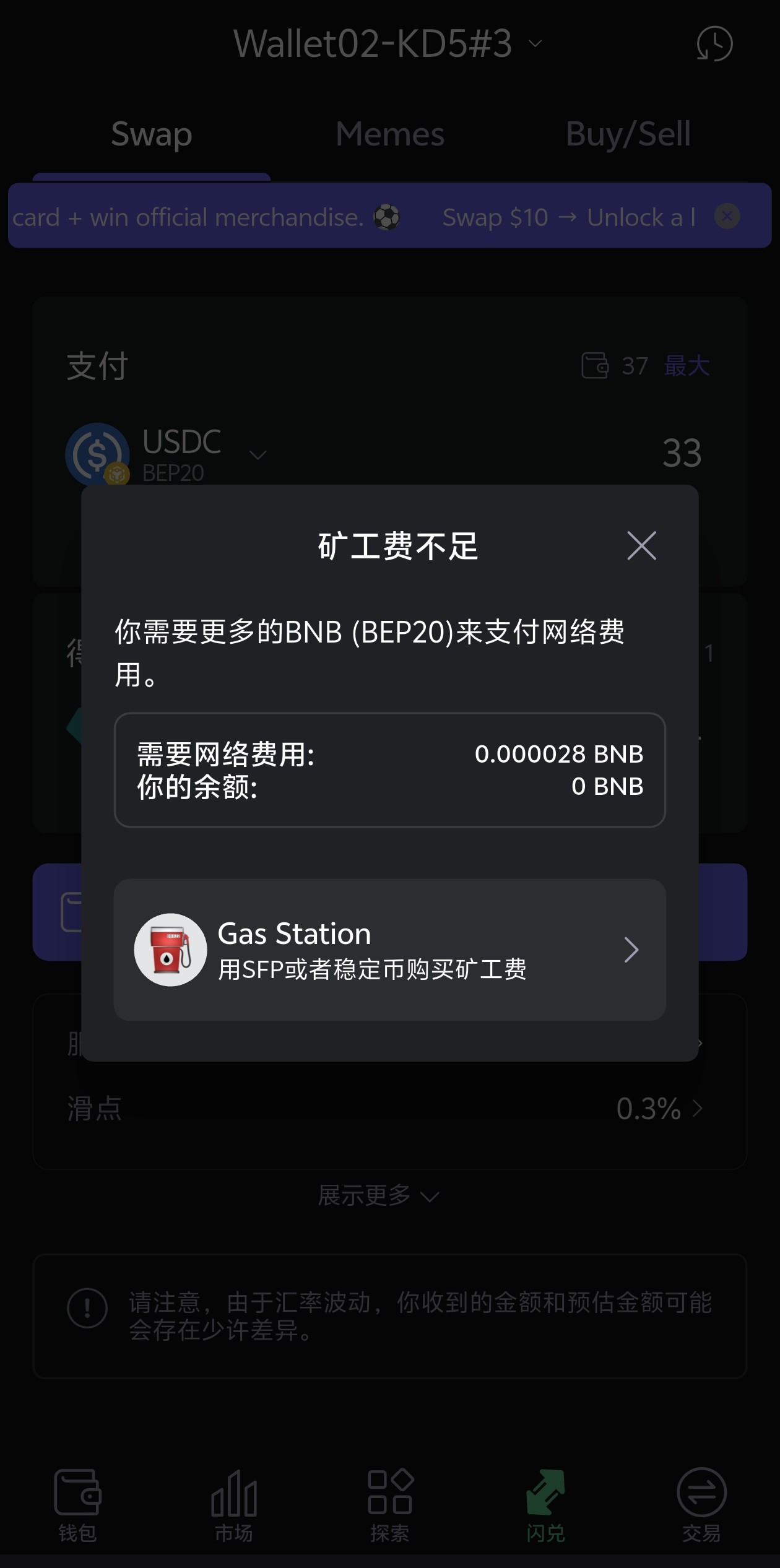
The article addresses a question many first-time wallet users run into. A transfer may show 「insufficient miner fee」 even though the balance page clearly shows USDT. In some cases, users also need to keep ETH, BNB or TRX in the same wallet before they can move that USDT.
What gas is and why a blockchain charges it
Foresight describes a blockchain as a public computer maintained by many nodes. When a user sends a transfer, swaps a token, approves a dApp, or executes a smart contract, those nodes need to validate the action, perform computation and write the result into a block. That process uses network resources, so the user pays a fee.
That fee is commonly called a gas fee, or simply gas. The article stresses that the charge comes from the blockchain network itself and is used to cover the resources consumed in validating and processing the transaction. It is not an extra fee added by the wallet.
Different blockchains use different native assets for gas, and most chains use their own native token by default. Because of that, holding a token does not automatically mean the wallet holds the asset needed to pay the fee.
Foresight gives a straightforward example: a wallet may contain 100 USDT on ERC-20, but if it holds no ETH, that USDT still cannot be transferred on Ethereum. In the same way, sending USDT on TRC-20 usually requires TRX, while sending USDT on BEP-20 usually requires BNB.
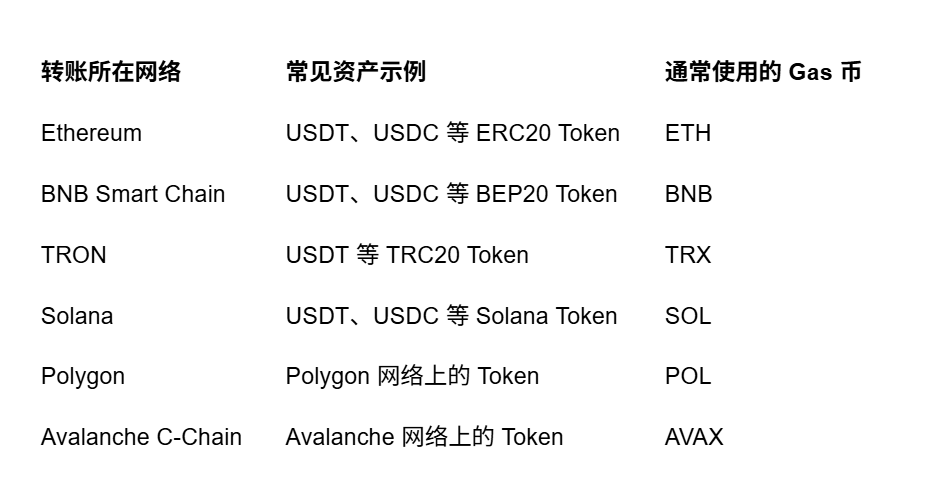
The same token can require different gas on different networks
One of the first things beginners need to check is the network. USDT exists on multiple chains, so users need to confirm not only the asset name but also the exact network before making a transfer, then make sure the wallet holds the matching native token for that chain. The network is often shown near the token logo or beside the asset name.
Gas is not a fixed price
The article says gas fees are mainly shaped by two factors.
The first is network congestion. When many users submit transactions at the same time, block space becomes scarce, and transactions with higher fees are usually handled first.
The second is how complex the operation is. A basic native-token transfer usually only updates balances. Token approvals, swaps, cross-chain actions, and interactions with smart contracts require more computation, so they often consume more gas.
That is why, even on the same chain, sending ETH and swapping a token on a decentralized exchange can carry very different fees.
Low gas settings can leave a transaction pending
If the submitted fee is far below the current level on the network, the transaction may remain pending for a long time. Foresight notes that this does not necessarily mean the funds are lost. More often, it means the transaction is still waiting to be included in a block.
In that situation, users can first check the transaction status through a block explorer. Some wallets and some networks also allow users to speed up the transaction by raising the gas fee.
A failed transaction can still consume gas
The article separates two cases. If a transaction is never successfully broadcast to the blockchain, there is usually no on-chain fee. But if the transaction reaches a block and validators execute the required computation before it fails, the resources used are generally not refunded.
Do not empty the native-token balance
Foresight says many users transfer out all of their ETH, BNB, TRX or SOL, only to find that the remaining tokens in the wallet can no longer be used because there is no gas left.
The safer approach is to leave a small amount of the native token on networks used frequently, so the wallet can still handle transfers, approvals, approval revocations, or other urgent actions later.
What to do if the wallet has no native token
Once gas is understood, the practical issue becomes how to get the required native token. The article lists three common approaches.
Buy it on an exchange and withdraw it
This is the traditional route. A user buys a small amount of the native token on a centralized exchange and withdraws it to the wallet address. Foresight says this method offers a clear source of funds and flexible amounts, but the process is longer and may be limited by minimum purchase sizes, minimum withdrawal amounts, withdrawal fees, or temporary withdrawal suspensions at the exchange.
Ask someone else to send a small amount
If a friend or another address on the same chain is available, that person can send a small amount of the native token for emergency use. The article says this works better for temporary, small-value needs than as a long-term solution.
Use a wallet’s built-in gas service
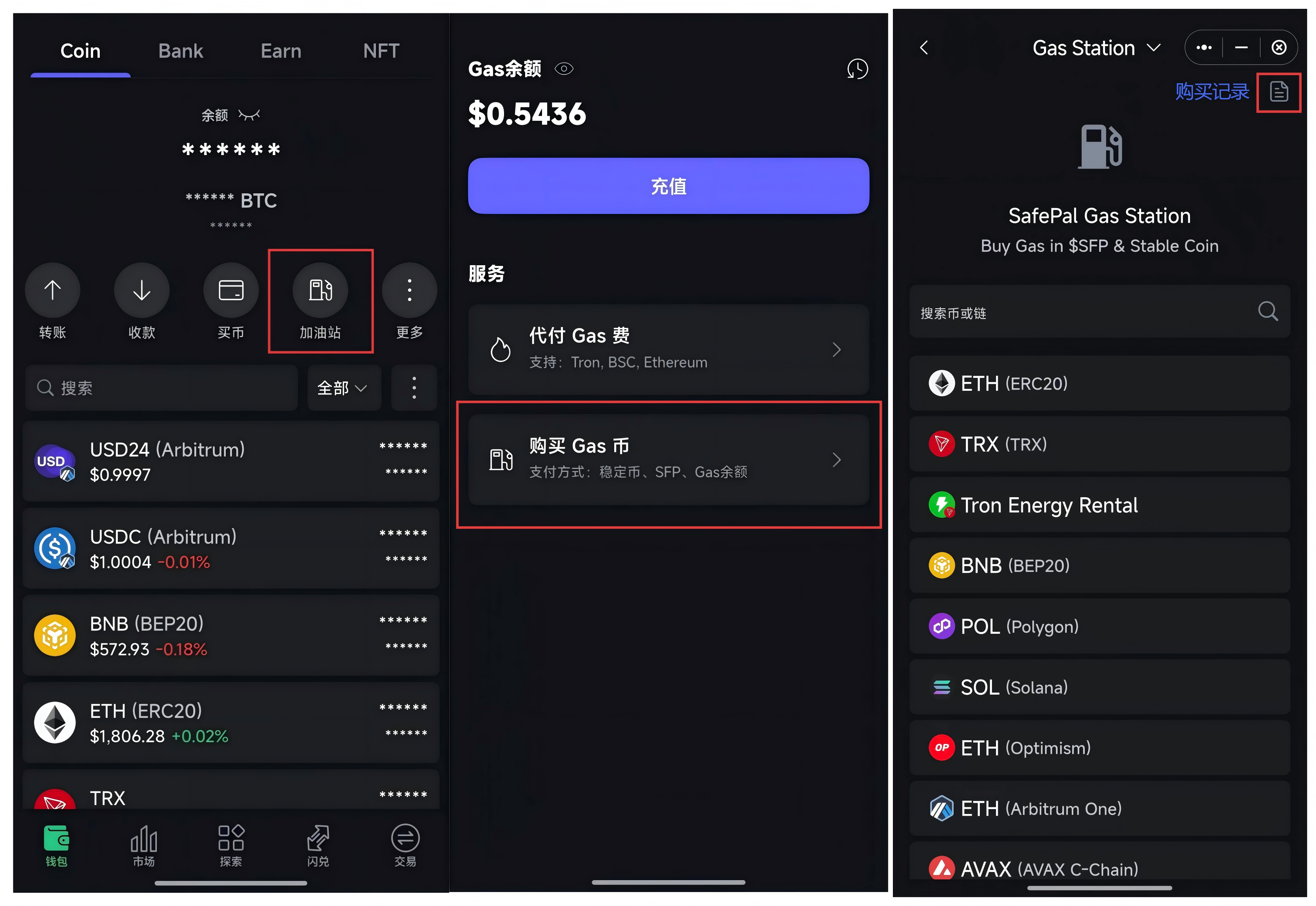
Some wallets now include a Gas Station-style feature that moves the "buy on an exchange, then withdraw" process into the wallet itself. Foresight uses SafePal as an example and describes two main formats.
The first is buying gas tokens. In SafePal’s Gas Station, users can exchange stablecoins or platform tokens for small amounts of native assets such as ETH, BNB or TRX. Compared with the exchange route, this removes the back-and-forth deposit and withdrawal steps and also supports small, on-demand conversions. The article presents it as a fit for cases where a user only needs a little gas on one chain, such as a small amount of ETH to move ERC-20 assets.
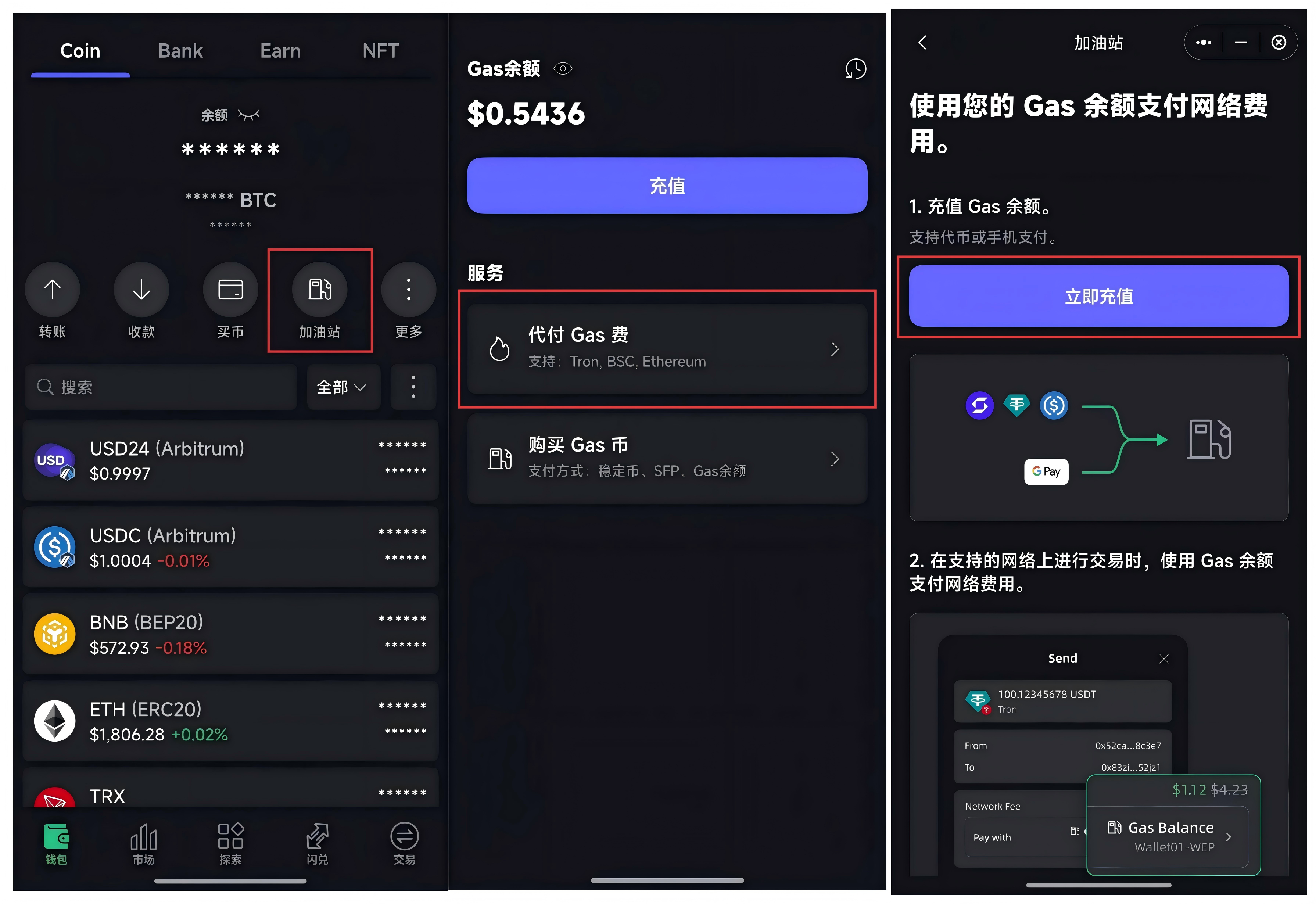
The second is a unified gas balance. Under this model, a user prepays a single gas balance and uses it to cover network fees in supported transfer scenarios. That reduces the need to keep scattered native-token balances across multiple chains and avoids repeated conversions before each transaction.
Using SafePal as the example again, Foresight says the gas balance can be funded with USDT, USDC, SFP and some payment methods. It can then be used for transfer gas on Tron, Ethereum, Solana, Arbitrum, Base, Polygon, Sonic and BNB Smart Chain.
Coverage still has limits
The article adds that built-in gas services still have boundaries. Support for public blockchains is still expanding, and availability can vary by region. Users should weigh their most-used chains, transaction frequency and fee sensitivity when choosing a method.
Foresight closes by saying that once users understand gas, the problem of "having tokens in a wallet but still being unable to move them" becomes much easier to solve. If gas is temporarily missing, users can choose between an exchange, help from another user, or a wallet-integrated gas service depending on the situation.
The article also includes a disclaimer stating that markets carry risk and the piece does not constitute investment advice. Users should consider whether any opinions, views or conclusions in the article fit their own circumstances, and any investment decisions remain their own responsibility.