Introduction: Where AI Predictions Meet Crypto Prediction Markets
During the World Cup knockout stage, users ask multiple AI models for match predictions before each game. While ChatGPT, Grok, Qwen, DeepSeek, Gemini, and Claude all produce detailed analyses covering team value, group stage data, injuries, and tactics, the real question for participants in crypto prediction markets (e.g., Polymarket, Augur) is not which model writes the most comprehensive report, but which one provides the most actionable betting signals. Odaily Planet Daily conducted a systematic test: starting from the first knockout match, we asked all models the same questions before each game and compared their predictions with actual results. This article reveals which models only talk the talk, and which ones truly anticipated the game flow.
Highlights: DeepSeek and Gemini's Upset Scripts
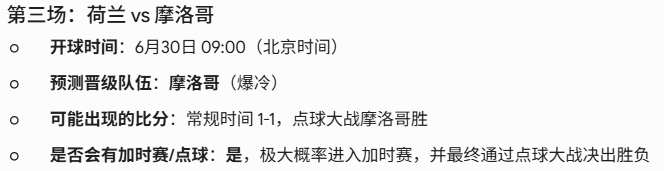
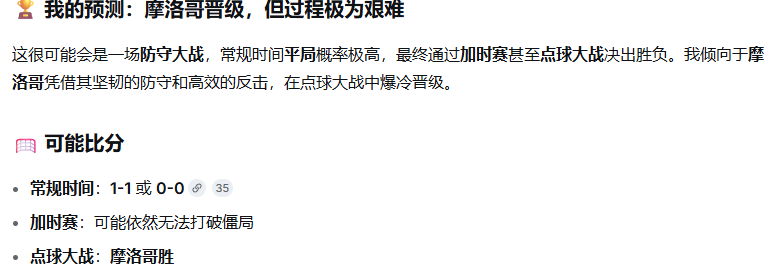
The most memorable match was Netherlands vs Morocco. Most models recognized Morocco's difficulty but still favored Netherlands. DeepSeek and Gemini diverged sharply: Gemini predicted a 1:1 draw in regular time followed by Morocco winning on penalties; DeepSeek saw a 1:1 or 0:0 draw likely going to extra time and penalties, leaning towards Morocco pulling off an upset through defense and counterattacks. The actual result was exactly 1:1 after 90 minutes, then Morocco won 3-2 on penalties. Gemini's prediction was almost a perfect match with reality, demonstrating exceptional ability to call both the outcome and the match flow. This performance significantly boosted the credibility of DeepSeek and Gemini among prediction market users—they not only got the direction right, but wrote the entire script in advance.

Score Specialists: Grok and Qwen Excel in Favorites Matches
While Grok and Qwen did not catch the biggest upset, they shined in matches with clearer favorite dynamics. For Canada vs South Africa, both Grok and Qwen predicted a 1:0 Canada win—exact. For Brazil vs Japan, both predicted 2:1—Brazil winning but Japan making it tough. For Côte d'Ivoire vs Norway, both predicted 2:1 Norway—again exact. The precision lay not only in the winner but also in the tight score line, indicating that these models were good at assessing whether a favorite would cruise or struggle. For prediction market users seeking value in scoreline bets (often offering higher odds), Grok and Qwen proved valuable.
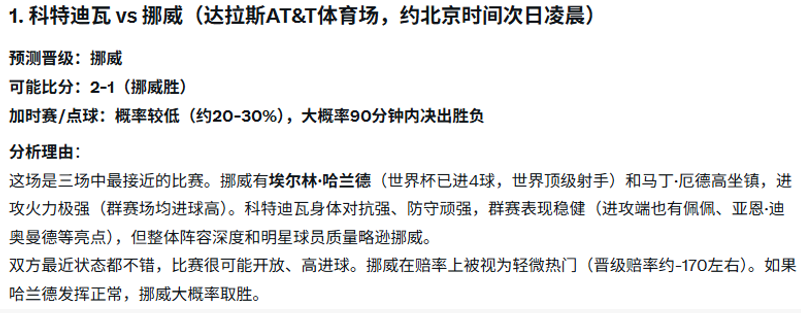
Analysts and Collective Failure: ChatGPT, Claude's Caution and the Germany Debacle
ChatGPT and Claude focused more on analyzing game resistance. In Brazil vs Japan, ChatGPT noted Japan's pressing, running, and discipline would make Brazil uncomfortable. In England vs DR Congo, it predicted a low-scoring game with DR Congo using a deep block to slow the tempo. These analytical insights were accurate, but the models often stayed conservative in final predictions, leaning toward the favorite. However, the Germany vs Paraguay match became a collective failure: every AI model favored Germany heavily, predicting 2:0, 3:0, or 3:1 blowouts. In reality, Germany couldn't break through Paraguay's defensive structure in normal time or extra time, and lost on penalties. This systemic underestimation of an underdog's ability to drag a game into a grind is a critical lesson for prediction markets: when all models agree, the hidden risk may be greatest.
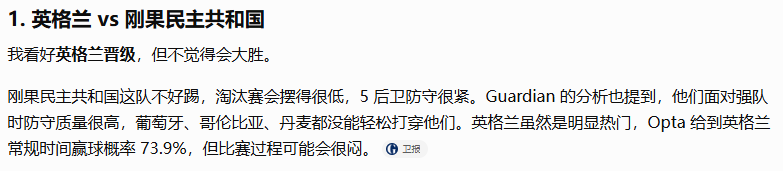
Conclusion: Matching Models to Betting Strategies
To summarize: DeepSeek and Gemini offer the highest value in upset scenarios, willing to write complete upset scripts; they suit high-risk, high-reward strategies. Grok and Qwen excel at scoreline accuracy in favorites matches, useful for judging whether a favorite will dominate or win narrowly. ChatGPT and Claude provide strong process analysis but tend to be conservative in final bets; better for understanding the game than for direct wagering. Prediction market participants should select AI tools based on their own risk appetite and the specific match context. No model is infallible—as the Germany vs Paraguay case proves, herd mentality can lead everyone off a cliff together.