
Prediction Market Boom and the 'Smart Money Trap'
The World Cup has ignited an explosion in prediction market activity. Bets on match outcomes, group qualifications, champion picks, and Golden Boot winners are flooding onto platforms like Polymarket, pushing trading volumes and user participation to historic highs. Yet most retail users face a stark reality: they see probability fluctuations but lack a reliable strategy for consistent profits. Many try to follow "smart money" addresses by tracking social media or news signals, then manually copying trades. This reactive approach is inherently flawed in prediction markets where odds change in real time—opportunity windows close before human reaction can catch up.
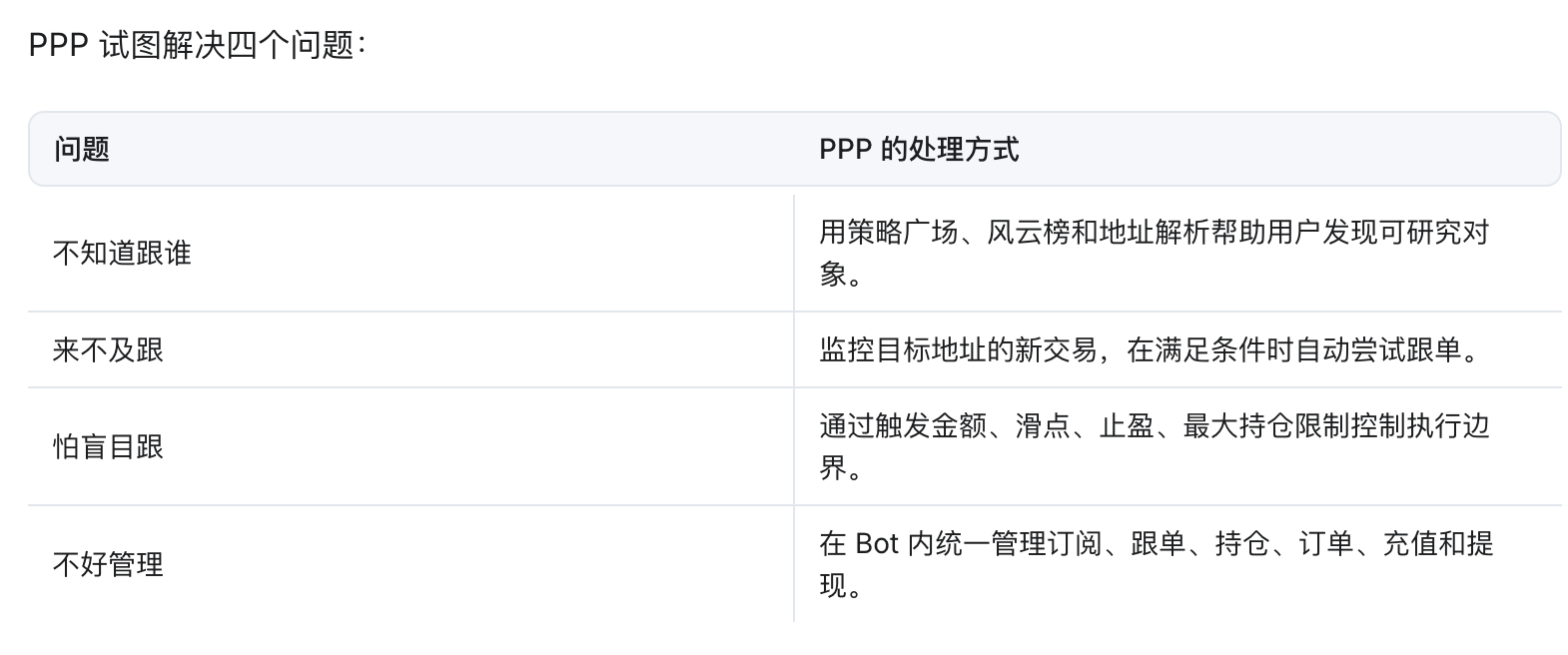
To automate the process, some turn to third-party copy-trading tools, but this often leads into a more insidious trap. Many tools rank addresses solely by total profit or recent win rate, showcasing accounts that may have achieved high returns through lucky one-off bets, extreme positions, or massive capital advantages. Novice users see million-dollar gains and blindly follow, only to suffer losses after entering. PPP (Prediction Position Platform) highlights the core issue: "Not all profitable addresses are suitable for copying." An address might have profited from an inside tip, a single outlier event, or sheer leverage—none of which are repeatable by a follower who lacks the same information or risk tolerance.
PPP's Solution: Filtering for Replicable Smart Money
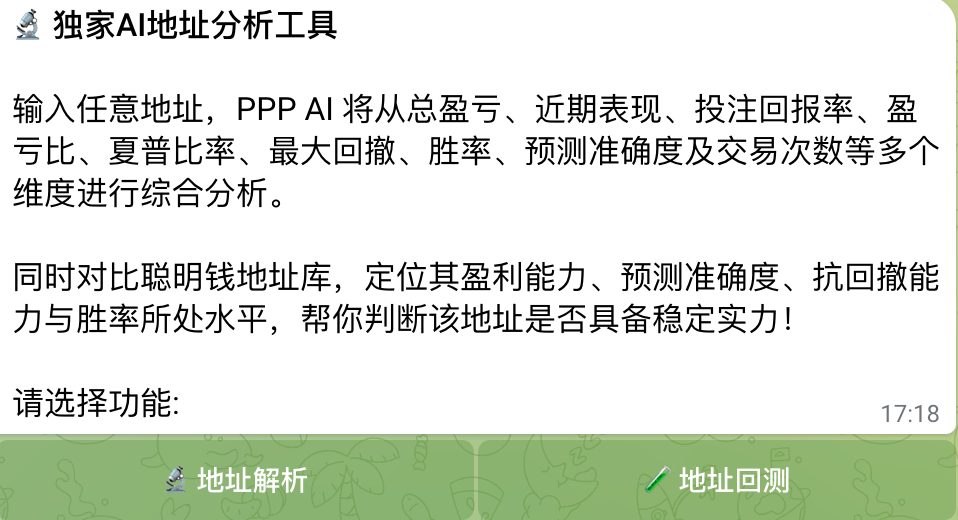
PPP aims to build a systematic pipeline that transforms raw on-chain address data and trade signals into structured, actionable strategies for ordinary users. Lorne, a PPP team member, explains: "The market doesn't lack monitoring tools or copy-trading products. What's missing is a mechanism that structures, cleans, and translates complex trading behaviors into strategies that users can understand, trust, and easily execute." PPP uses a dual mechanism combining AI modeling and manual review, analyzing addresses across multiple dimensions: profit frequency, win rate, position allocation, maximum drawdown, strategy consistency, information advantage, and capital scale. The AI model first eliminates "accidental profits" and "abnormal trade samples." After several rounds of human verification, PPP retains only those addresses with statistically stable and continuously researchable trading patterns.
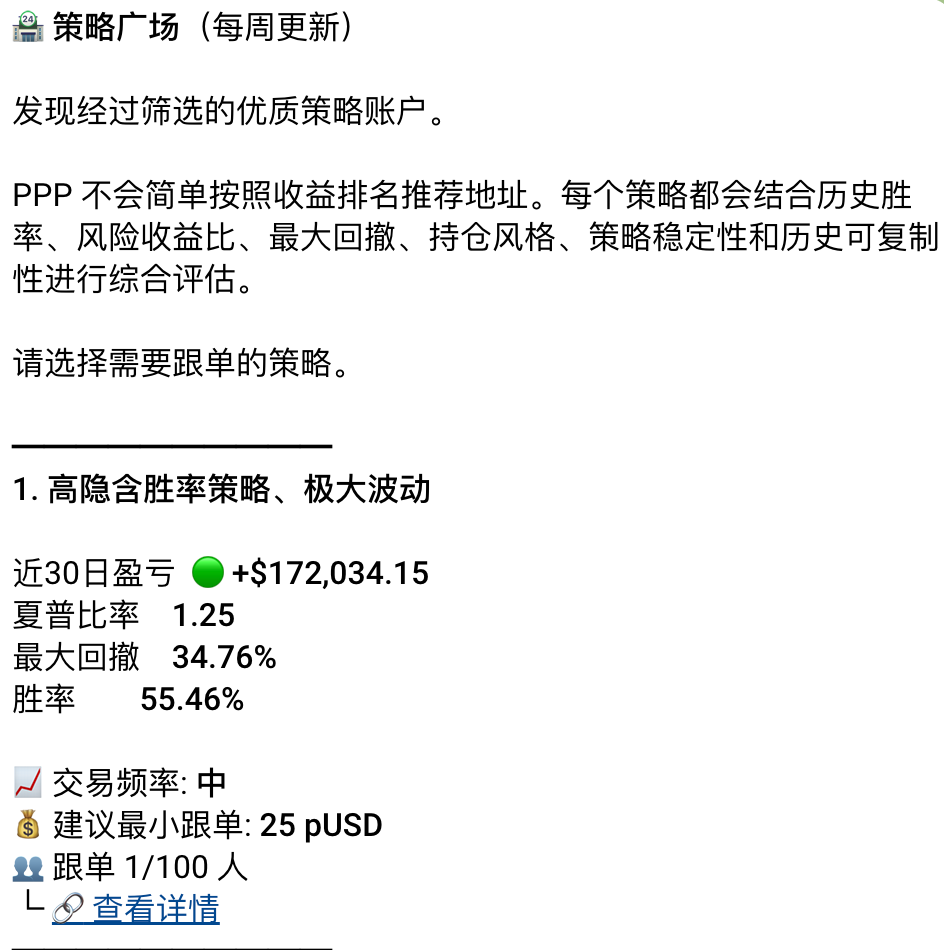
PPP's AI algorithm itself remains proprietary, but the platform offers an "AI Address Analysis Tool" that lets users input any address and compare it against PPP's curated smart money library. Users can assess an address's profitability, information edge, drawdown resilience, and win-rate percentile to determine whether it has genuine strength.
Strategy Plaza vs. Trading Leaderboard: A Tiered Product System
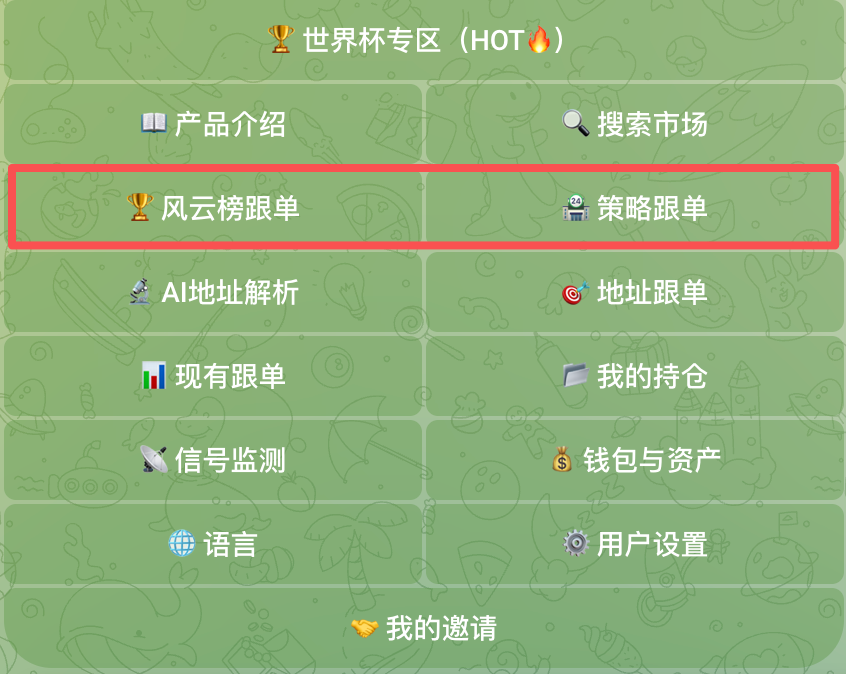
After the initial filter, PPP further stratifies replicable smart money addresses into two core product tiers. The first is Strategy Plaza, which aggregates long-term verified, stable strategies. Addresses admitted to this tier must meet strict criteria: the strategy must have run for over 30 days, executed at least 30 trades, maintained a maximum drawdown below 30%, and have a fully traceable core logic. Strategy Plaza acts as a filtered, long-term strategy pool. PPP reviews all strategies weekly to ensure they remain effective.
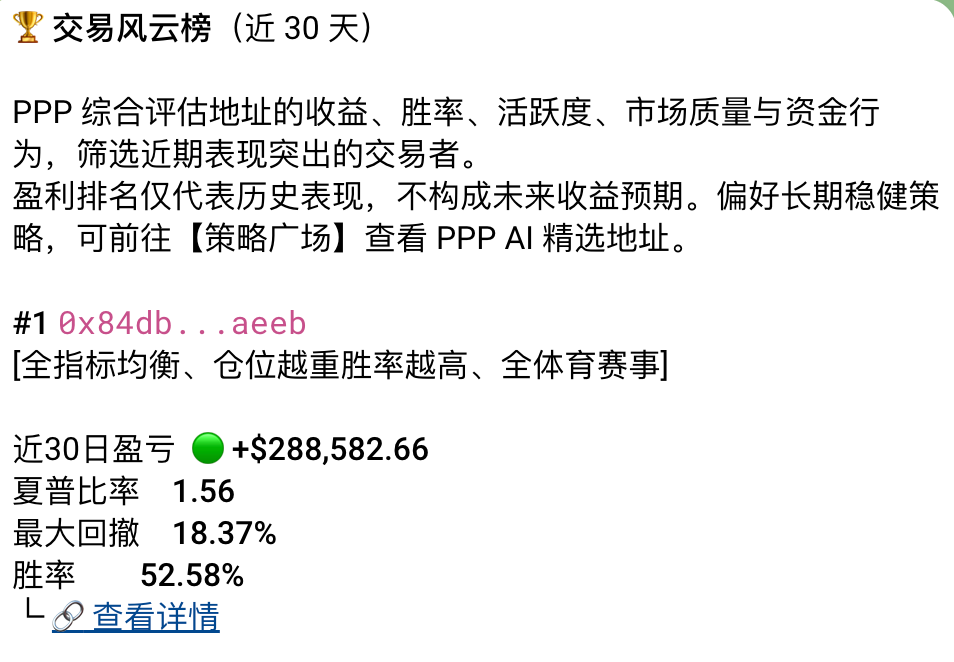
The second tier is the Trading Leaderboard, which features short-term high-yield addresses. These may profit from large bets on a single event or information asymmetry, but high returns come with elevated volatility. PPP explicitly warns: "This list is better suited for users seeking tactical opportunities, not for long-term stable copy trading." To help users navigate, PPP adds concise style descriptions to each strategy—for example, "High implied win rate, extreme volatility"—so users can compare risk-reward profiles at a glance.
User Flow and Risk Warnings: Hands-on Experience with the Telegram Bot
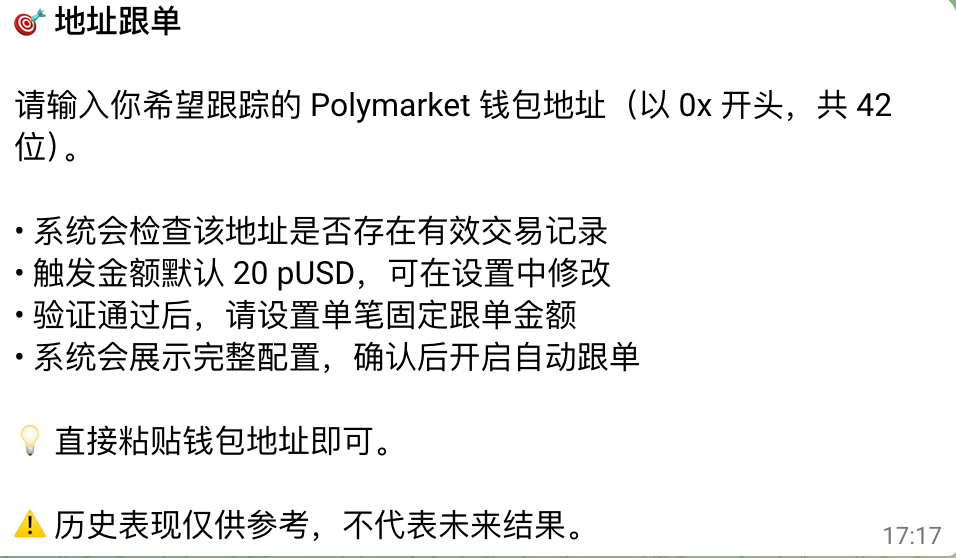
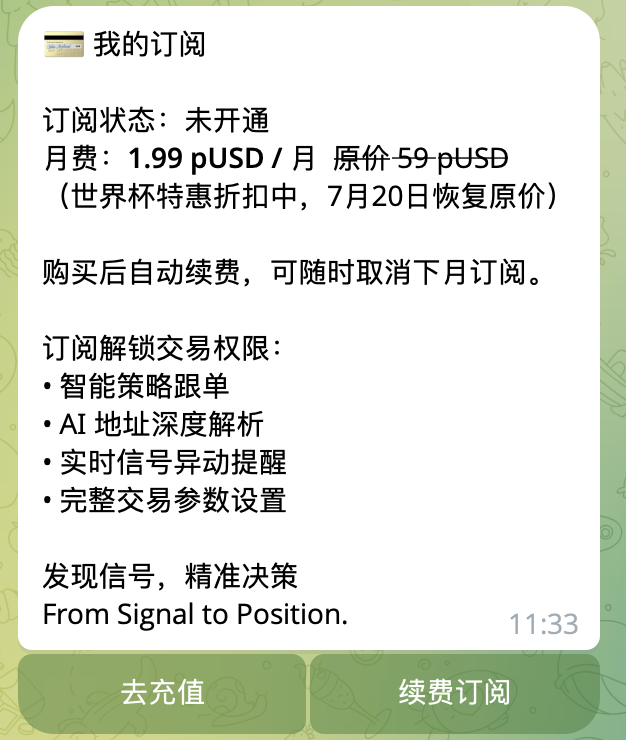
PPP recently launched its Telegram Bot as the primary user interface. New users log in via a Telegram Mini App and create a wallet through a non-custodial system—users retain full control of their private keys (which can be exported; users must safeguard them). This means any potential airdrops (e.g., from Polymarket) go entirely to the user. After selecting a strategy, users review core metrics (win rate, drawdown, volume, etc.), then choose a copy amount or customize settings. The "Copy Settings" feature allows adjusting trigger amount, copy amount, slippage, take-profit, and maximum position limit for each strategy.
To test the system, the author deposited $100 and followed two strategies—one from Strategy Plaza and one from the Trading Leaderboard—for one day. The next day, the account net asset value peaked at $164, a single-day return of over 60%. However, subsequent tests showed some drawdown, mainly because the author did not set different copy amounts for strategies with different risk levels, causing a low-probability event to drain funds. Lorne commented: "While PPP has rigorously screened and reviewed the historical performance of selected strategies, we cannot guarantee future profits. Users should only invest within their acceptable risk tolerance and avoid overconfidence."
Conclusion: Can PPP Survive the Prediction Market Cycle?
PPP should not be reduced to a mere "copy-trading tool." It is building a structured compilation pipeline from on-chain trade signals to executable strategies. Smart money indisputably exists, but it is scattered across thousands of addresses, strategies, and short-term fluctuations. Profit records are real, but the underlying risk structure, capital behavior, and strategy consistency are often hidden by simple profit numbers. PPP's combination of AI algorithms and human review strips away noise and extracts truly replicable smart money strategies, delivering them via a low-friction Telegram Bot. This serves as a defense against the "smart money trap" and helps eliminate information asymmetry in prediction markets.
Nevertheless, no amount of backtesting or strategy screening can guarantee future returns. High yields in prediction markets inherently come with high volatility and risk. PPP provides a refined weapon that improves win rates and avoids obvious pitfalls, but ultimate success depends on each user's capital management skills and risk appetite. As prediction markets continue to evolve, PPP's methodology will be tested through real-world market cycles. For now, it offers a more certain on-ramp for ordinary users looking to participate in the World Cup frenzy without being overwhelmed by information noise.