
WuBlockchain’s daily crypto roundup covered seven developments spanning token unlocks, U.S. labor data, Bitcoin treasury strategy, derivatives volume, a Tether lawsuit, a financing expansion by Hyperliquid Strategies, and a new compliance rule in Thailand.
Large token unlocks scheduled over the next month
For one-off unlocks over the next month, projects with unlock amounts above $10 million include HYPE, XPL, ENA, ZRO, H, CARDS, and ARB.
For linear unlocks, projects with monthly unlock values above $10 million include RAIN, SOL, CC, TRUMP, ZEC, ASTER, WLD, MORPHO, PUMP, TAO, AVAX, and NEAR. The total value of these large linear unlocks over the next month was listed at more than $1.535 billion.
U.S. August ADP employment misses expectations
U.S. ADP employment increased by 38,000 in August, the smallest gain since January. The market expectation was 48,000, while the previous reading was 44,000.
Strategy says Bitcoin trades depend on cost of capital
In an interview with Bloomberg TV, Strategy CEO Phong Le responded to questions about the company selling Bitcoin at roughly $60,000 to $65,000 and then buying again near $80,000. He said Strategy’s BTC trading decisions are not based on Bitcoin’s absolute price, but mainly on the company’s cost of capital.
Le said the earlier sale of about 7,000 BTC to pay part of the dividend on preferred shares was the right trade at the time. Over the past two months, the company reduced net debt from about $7 billion to zero and built roughly $7 billion in U.S. dollar reserves. He said the current approach of raising money by issuing MSTR stock at a premium and then buying BTC is also the right trade.
Le added that Strategy is effectively running a two-way strategy. The company may still sell BTC under the right conditions, but remains a net buyer overall. Even if BTC rises to $90,000, $100,000, or even $130,000, he said the company could continue buying as long as cost of capital and expected returns make sense.
CEX stock-linked perpetual futures hit $665.42 billion in August
Data showed that trading volume in CEX stock-linked perpetual futures reached $665.42 billion in August. That was up 4.6% from $636.19 billion in July, though the pace of growth slowed. Compared with January’s $11.58 billion, August volume was 56.5 times higher.
The top three contracts by trading volume were SNDK at $193.58 billion, SKHYNIX at $75.89 billion, and SPCX at $65.93 billion. Together, they accounted for 50.4% of total volume.
Tether sued over frozen USDT linked to alleged pig-butchering laundering case
Attorney Ariel Givner said two Thai businessmen have sued Tether in the U.S. District Court for the Southern District of New York over roughly $42.4 million in USDT.
The plaintiffs said Tether froze their wallet in October 2025 after an informal request from Homeland Security Investigations, or HSI, before any search warrant or court order had been issued. In February 2026, the U.S. District Court for the Eastern District of North Carolina later issued a seizure warrant directing that the frozen USDT be destroyed and reissued to a government wallet.
Givner added that the funds may be tied to a pig-butchering scam money-laundering case in North Carolina. Law enforcement later announced the seizure of about $61 million in USDT. The plaintiffs did not deny the government’s allegations about the source of the funds. Instead, they challenged whether Tether had authority to freeze the assets before a court order was in place, and whether the later order authorized the freeze, destruction, or reissuance of the USDT.
Hyperliquid Strategies lifts equity financing capacity to $2.5 billion
Hyperliquid treasury company Hyperliquid Strategies (NASDAQ: PURR) increased the aggregate capacity of its ChEF equity financing arrangement from $1 billion to $2.5 billion.
The company can raise funds as needed by issuing new shares in tranches to Chardan Capital Markets. The proceeds are intended for general corporate purposes, including potential purchases of HYPE.
After cumulative financing reaches $1 billion, if the company continues issuing shares below $12.02 per share, the number of those newly issued shares generally may not exceed 19.99% of the shares outstanding before the agreement was amended. Exceeding that limit would usually require shareholder approval.
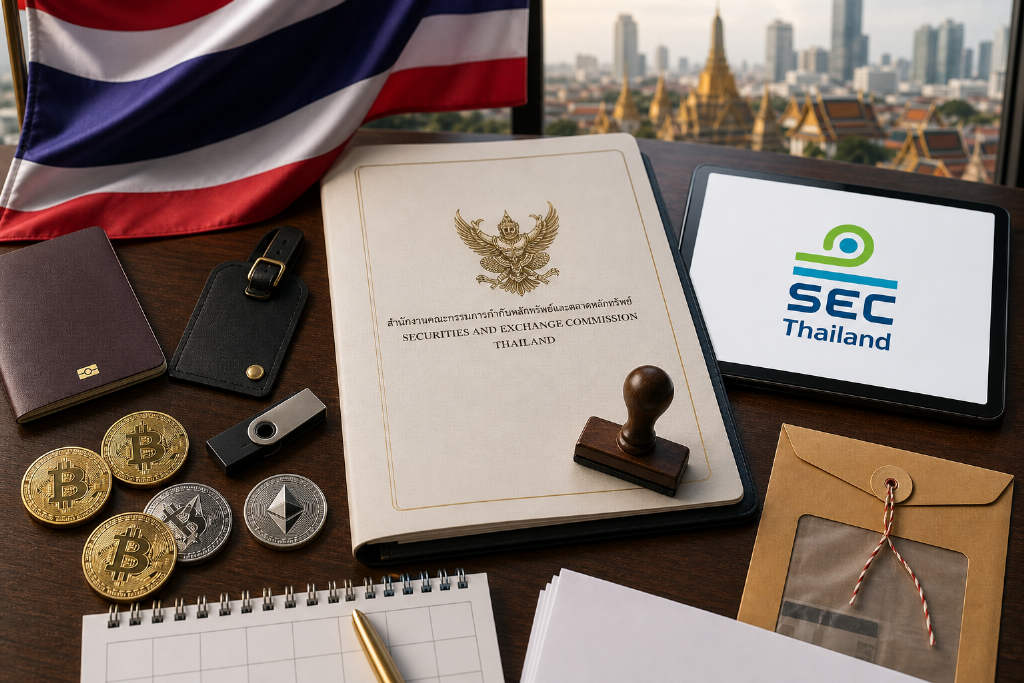
Thailand approves crypto Travel Rule for transfers involving self-hosted wallets
Thailand’s Securities and Exchange Commission said it had approved a new crypto Travel Rule that requires digital asset operators to verify wallet ownership or control when customers transfer funds to or from self-hosted wallets. Operators must also collect information on both sides of the transaction.
The rule will take effect on Feb. 27, 2027. Transaction records must be kept for at least five years and will be subject to regulatory inspection.
SEC Secretary-General Pornanong Budsaratragoon said the rule is intended to reduce the risk that digital asset operators are used for money laundering and terrorist financing.