
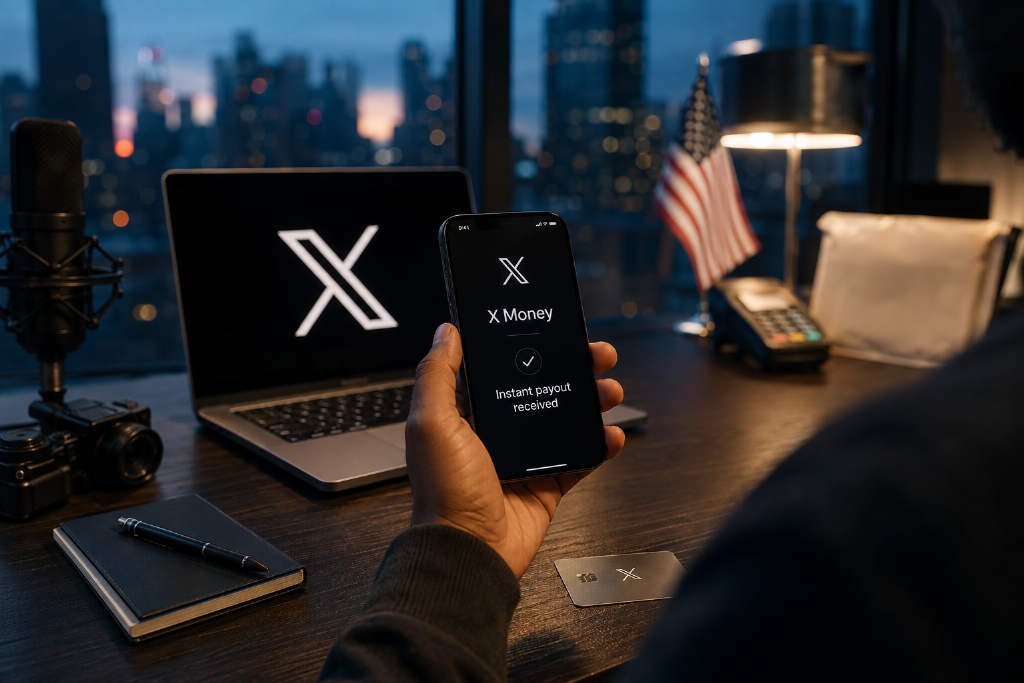
X (formerly Twitter) said Wednesday that, starting Sept. 3, all revenue earned by U.S.-based creators will be paid through X Money. The change applies to original-content rewards and creator subscription income, and it brings instant withdrawals while dropping the previous $30 minimum and the two-week settlement window.
Instant payouts replace a biweekly system
TechCrunch reported that the new payment system is all about speed. In the previous model, X processed payouts every two weeks and required creators to accumulate at least $30 before withdrawing. Lower-earning creators could wait several weeks just to see their first money. With X Money, creators can in theory withdraw at any time after income is generated, which significantly shortens the cash-flow cycle.
Stripe is out, and U.S. creators have no alternative
Judging by the announcement, X no longer offers U.S. creators another payout route. Even those who favored the prior Stripe-supported channel are being asked to move to X Money. The effect is clear: Stripe is lifted out of X’s creator-economy infrastructure and replaced by a financial layer built by Elon Musk’s team.
This is not just a technical swap of payment rails. For X, having all creator revenue pass through X Money means richer data on money flows and how users interact with financial services. The self-built payment layer gives the company tighter command over its creator economy.
What X Money can do now, and where stablecoins fit
X Money was earlier opened to X Premium subscribers across the U.S. It supports FDIC-insured fiat deposits, Visa cards, and an annual interest rate of up to 6% on deposits, plus a metal credit card offering 3% rewards. Those features are still limited to U.S. users. Moving creator payouts onto X Money gives this internal product a bigger role in X’s content-driven economy.
The next step may be crypto. Market observers broadly expect X to integrate cryptocurrencies and stablecoins, letting creators be paid directly in assets such as USDC and avoid traditional bank clearing. Should that happen, X would end up competing with Meta’s recent collaboration with Stripe on USDC creator payouts. The two social platforms would then be fighting over the underlying rails of creator payments.