
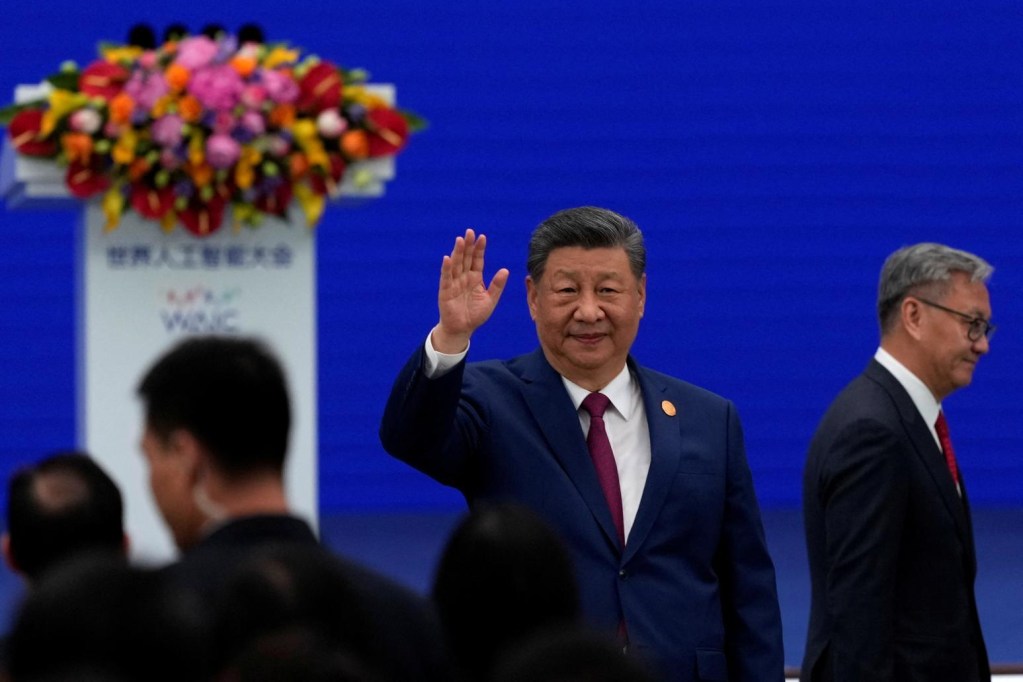
Chinese President Xi Jinping appeared at the 2026 World Artificial Intelligence Conference (WAIC) in Shanghai and said China would help developing countries build their AI capabilities. The appearance came as the US continues to enforce export controls on advanced chips, with China using the conference and a newly launched multilateral body to deepen technology links with countries in the Global South.

China offers 5,000 AI training slots
According to CNBC, Xi said China will provide 5,000 AI training places for developing countries. China also plans AI cooperation with several regional organizations, including the Association of Southeast Asian Nations (ASEAN), the Arab League and the African Union.
Xi said AI development should not be a “one-man show” by a single country, but a “symphony” of international cooperation. He called on countries to address AI development with an open approach.
WAICO launched with 29 signatories and Shanghai headquarters
A total of 29 countries signed an agreement to establish the World AI Cooperation Organization, or WAICO, with headquarters in Shanghai. The signatories included Kazakhstan, Laos, Pakistan, Russia and Indonesia.
UN Secretary-General António Guterres and representatives from other international organizations also attended the ceremony.
Remarks on AI security and US chip controls
Xi said countries should oppose the “overextension” of national security concepts in AI and reject putting one country’s security above others. The report said he did not directly name any country, though the remarks were framed against recent US technology restrictions.
The article pointed to a timeline that runs from Donald Trump’s 2019 decision to place Huawei on a blacklist to the Biden administration’s 2022 move to tighten restrictions on China’s access to advanced computing chips and manufacturing equipment on national security grounds.
Nvidia cites shrinking China share, Huawei presents Atlas 950 SuperPoD
The US chip curbs have also affected American companies operating in China. Nvidia said in its annual report that it was unable to offer competitive data-center products that comply with both US and Chinese rules. As a result, the company said its market share in China fell sharply and acknowledged that it has exited the competition in China’s AI market.
At the conference, Huawei showcased its Atlas 950 SuperPoD super node. Huawei said the system can link multiple chips to raise computing capacity and support large-scale data center construction and the training needs of large models.