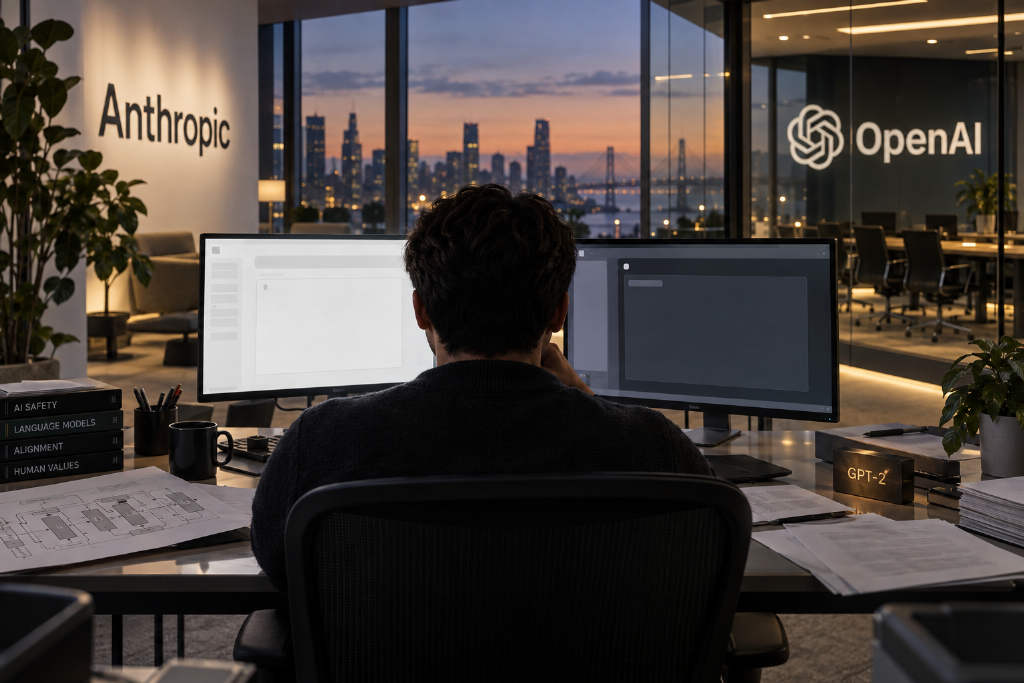
Anthropic CEO Dario Amodei recently called for frontier AI development to slow down, drawing a sharp response from Turing Award winner Yann LeCun. LeCun brought up the 2019 debate around OpenAI’s GPT-2 release and mocked Amodei over his earlier stance. According to LeCun, Amodei — then at OpenAI — had argued that GPT-2 was dangerous enough that it should not be open-sourced. LeCun said he ridiculed that view at the time and believes others should still do so now.
The exchange points back to OpenAI’s decision in 2019 to withhold the full 1.5 billion-parameter version of GPT-2 at first, citing concerns over misuse. Instead, the company initially released smaller models. Amodei was OpenAI’s director of research at the time. Nine months later, OpenAI released the full model and said it had not seen strong evidence of real-world misuse.
Anthropic CEO Dario Amodei recently called for frontier AI to slow down. That prompted a public jab from Turing Award winner Yann LeCun, who revived the 2019 dispute over GPT-2’s release.
LeCun said that when Amodei was still at OpenAI, he believed GPT-2 was dangerous enough that it should not be open-sourced. LeCun added, “I ridiculed that at the time, and people should keep ridiculing it now.”
The dispute goes back to OpenAI’s 2019 GPT-2 release
In 2019, OpenAI did hold back the full 1.5 billion-parameter version of GPT-2 at first because of concerns about misuse, releasing smaller models before the complete version. Amodei was OpenAI’s director of research at the time.
Nine months later, OpenAI released the full model and said it had not seen strong evidence of actual misuse.
This article was originally published by Bit.Fan. For more cryptocurrency news and market insights, visit www.bit.fan. Disclaimer:
The market information, project data, and third-party content displayed on this platform are for industry information sharing only and do not constitute any form of investment advice or return commitment.
Cryptocurrency trading carries high risks. Users should fully assess their risk tolerance and make independent decisions. All profits, losses, and legal responsibilities are borne by the users themselves.