

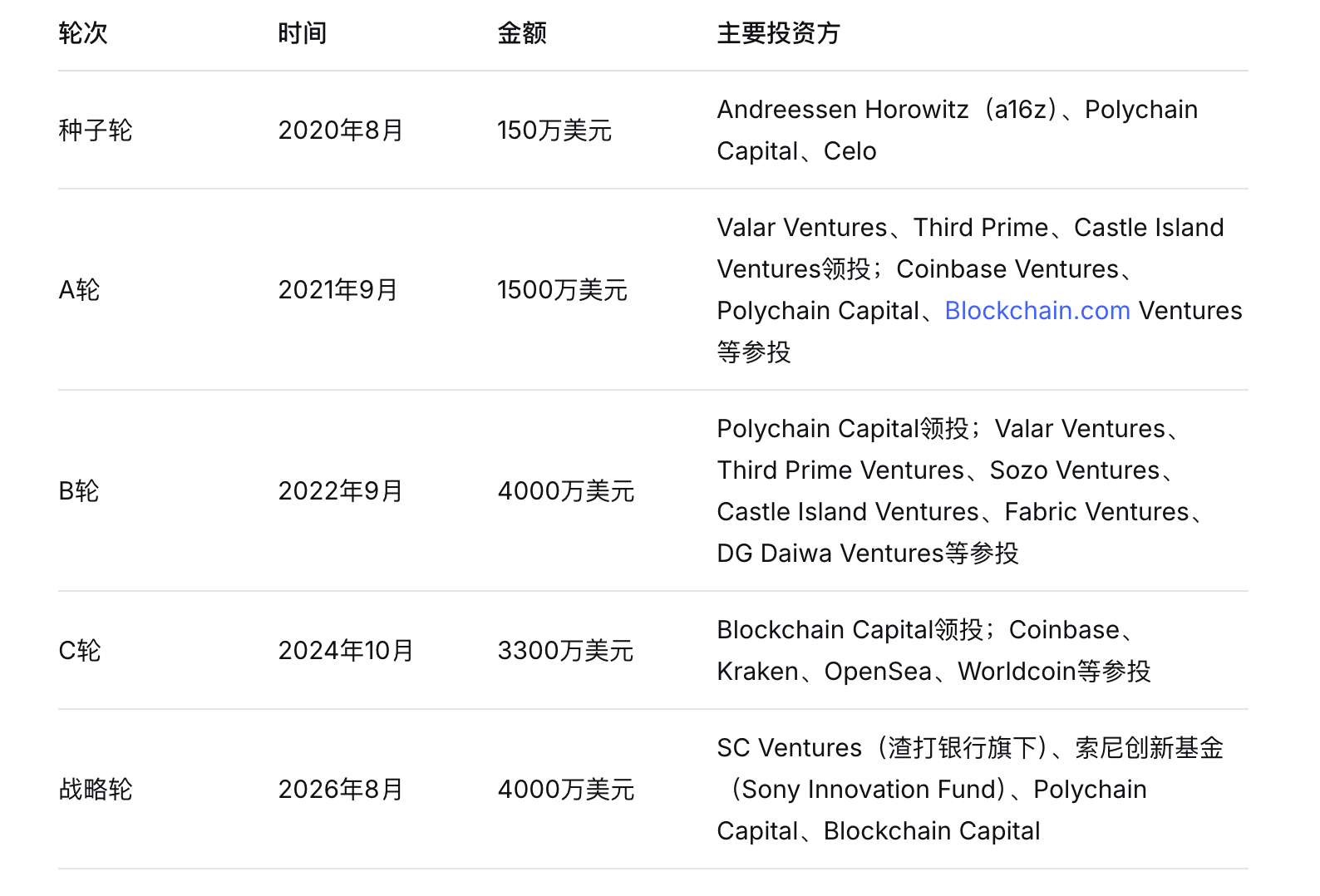
Stablecoin infrastructure provider Yellow Card announced a $40 million strategic financing round on Aug. 4, with participation from Standard Chartered-backed SC Ventures, Sony Innovation Fund, Polychain Capital, and Blockchain Capital. The company said its cumulative equity financing has now exceeded $120 million.

Before becoming a B2B infrastructure company connecting banks and stablecoins, Yellow Card spent nearly a decade reshaping its business twice.
Two major pivots over nearly 10 years
Yellow Card was founded in the United States in 2016 by Chris Maurice and Justin Poiroux. Its first product was a Bitcoin gift card, a simple offering that the article says had limited upside. The first major turning point came in 2018.
Maurice encountered a user at a bank in Alabama who was trying to send $200 to family in Nigeria and was facing a $90 bank fee. Maurice suggested Bitcoin, then began asking a harder question: once the recipient got the Bitcoin, how would it be converted into something useful for food or rent?
That question led him to Nigeria. After discussions with a local contact, Maurice bought a one-way ticket to Lagos.
What he found, according to the article, was that Africa did not lack remittance apps. What was missing was an easy way for ordinary users to move between fiat currency and crypto. In 2019, Yellow Card launched a mobile app in Nigeria and positioned it as a crypto trading platform for everyday users in Africa.
The shift that truly changed the company came later. During the pandemic, Yellow Card’s business volume jumped from $1 million a month to $1 million a day. The structural change arrived after the company listed USDT. In four months, 99% of transaction volume moved from Bitcoin to stablecoins. Customers were not chasing crypto returns, the article says. They wanted a dollar equivalent that could hold purchasing power and be used in payments.
At the same time, demand for stablecoin infrastructure from businesses was rising beyond retail crypto trading. Yellow Card also ran into a practical problem: serving one million users was costly, margins were thin, and the business was hard to sustain. Retail trading volumes moved sharply with market sentiment, while B2B clients produced larger, steadier, and more predictable flows.
That led to a full exit from the consumer side. On Oct. 29, 2025, Yellow Card emailed users and told all retail customers to withdraw funds by Dec. 31. Its consumer mobile app was set to shut down on Jan. 1, 2026.
John Colson, Yellow Card’s chief marketing officer, described the move this way: 「This is not a change in mission, but a strategic refocus.」
Its current role: the link between banks and blockchains
After the transition, Yellow Card positioned itself as a stablecoin payments infrastructure provider for emerging markets.
Its flagship product, the Global Dollar Account, is described as an end-to-end dollar account solution for businesses. Through a single account, companies can hold dollar-denominated assets to reduce exposure to local currency depreciation, convert between stablecoins such as USDT and USDC, manage treasury functions, and send or receive local currencies through domestic payment rails in more than 50 countries without relying on correspondent banking processes.
The company says this product runs on infrastructure it has built over years and already serves major firms including Visa and Western Union.
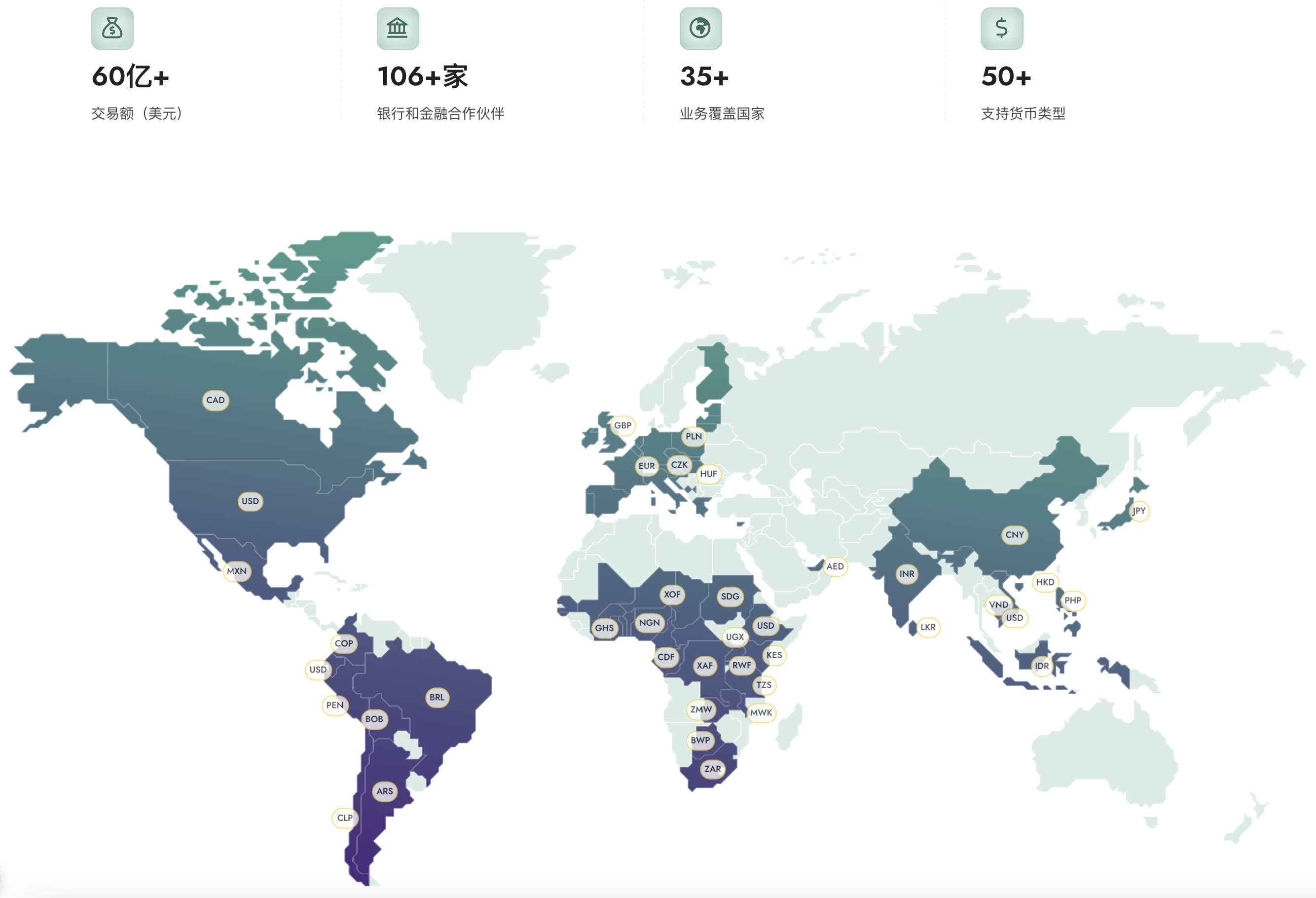
Beyond the Global Dollar Account, Yellow Card also offers a broader enterprise stack. The article lists APIs that let banks, fintech companies, and businesses integrate stablecoin and fiat payment capabilities without building their own multi-country licensing and banking relationships; fiat on-ramp and off-ramp components; wallet services for treasury management and stablecoin settlement; and localized stablecoin issuance for specific markets.
According to information cited from the company website, Yellow Card provides infrastructure for global banks, financial institutions, large enterprises, and other companies to access, store, send, and manage settlement and payments across U.S. dollars, euros, and more than 50 local currencies.
Compliance as a competitive layer
Another part of Yellow Card’s position is compliance. As of August 2026, the company held licenses, authorizations, or registrations in 22 jurisdictions across North America, Europe, and Africa, according to the article.
Two approvals were highlighted.
The first was what the article calls Africa’s first VASP license. Botswana’s Non-Bank Financial Institutions Regulatory Authority, or NBFIRA, issued it on Sept. 29, 2022 under Section 11 of the Virtual Assets Act 2022, making Yellow Card the first crypto company on the continent to receive such a license.
The second was Swiss anti-money laundering supervisory affiliate status obtained in June 2026. That status allows Yellow Card to operate as a regulated financial intermediary and provide a regulated access point to stablecoin infrastructure for banking partners and institutional clients.
Founders, management, and the funding path
Chris Maurice and Justin Poiroux met at Auburn University. Maurice studied finance, while Poiroux studied computer science. The two were already involved in Bitcoin trading in 2015 and, according to the article, once sold Bitcoin outside a Taco Bell.
They formally founded Yellow Card in 2016. Maurice became CEO and focused on strategy and fundraising. Poiroux took the CTO role and led the technical architecture.
The article says Poiroux had been coding since age 10 and had received two grants from the U.S. National Science Foundation. Maurice, for his part, had been a top sports writer on Fiverr while in high school and was later a finalist for both the Rhodes Scholarship and the Marshall Scholarship.
Yellow Card has also added executives with traditional finance backgrounds. In October 2025, the company appointed Maria Oldham as chief operating officer. Her previous roles included senior vice president at dLocal, head of PayPal’s Latin America SMB business, and earlier investment banking work at Goldman Sachs in London. She was tasked with revenue and growth functions. In August 2025, Gillian Darko was named group vice president of strategy. Her background included J.P. Morgan Asset Management, PwC, and JUMO, and she had previously served as Yellow Card’s chief of staff and director of strategy.
Partners and expansion after the new funding
The article describes Yellow Card’s capital path as a clear move from crypto-native investors to traditional financial institutions.
On partnerships, it says Yellow Card has built a network spanning the payment chain. Visa and Western Union are both customers of the Global Dollar Account and strategic partners. In May 2026, Yellow Card and Mastercard announced a strategic partnership focused on stablecoin payment innovation in four areas: cross-border remittances, B2B settlement, digital loyalty ecosystems, and treasury management.
The company also works with PayPal, Coinbase, Thunes, and MoneyGram. The article describes that network as covering the chain from stablecoin issuers to payment endpoints.
Yellow Card said the new $40 million will be used mainly in two directions. One is to expand the reach of the Global Dollar Account so more businesses can use a single account for holding dollars, converting stablecoins, and handling local currency collections and payouts across more than 50 countries. The second is to add stablecoin and local payment options in Latin America and Asia-Pacific, deepening its footprint in emerging markets.
In comments to CoinDesk, Maurice said the company is working with commercial banks globally to bring more dollars into markets through stablecoins and replace traditional systems such as Swift. He said: 「The state of the industry in the near future is that payments move directly on-chain between banks, with no B2B payments company or other payment service company in the middle.」
The article presents this as Yellow Card’s clearest statement of intent: it does not want to remain only a payment service provider. It wants to become infrastructure between banks, and between banks and the on-chain world.
Pressure from consolidation and regulation
The article also lays out the obstacles in front of that plan.
One is industry consolidation. In October 2024, Stripe acquired stablecoin infrastructure company Bridge for $1.1 billion. In March 2026, Mastercard announced an $1.8 billion acquisition of BVNK. In the same week Yellow Card announced its financing, SC Ventures was raising a $250 million digital asset fund.
The other is regulation. On June 10, 2025, the Bank of Ghana issued a public warning stating that YellowPay, a product under Yellow Card, was an unlicensed digital payments platform. Craig Stoehr, the company’s general counsel, responded that Yellow Card had already provided the central bank with the relevant facts before the notice was published and said it was 「regrettable」 that the bank chose to proceed.
The article notes that the flip side of holding 22 licenses is managing 22 compliance systems and 22 regulators. Regulatory conditions vary widely across African markets, and the global framework for stablecoins is still evolving.
Transaction growth and the next test
Maurice said, 「Money should move at the speed and convenience of the internet, and more banks want to keep up with that pace.」
The article says Yellow Card has spent nearly a decade building an early position with two major pivots, tens of billions of dollars in transaction volume, and 22 licenses. Its transaction volume rose from $6 billion at the start of 2026 to more than $10 billion now, which the article presents as evidence of the strength of the B2B model. The company currently operates in more than 50 markets and offers stablecoin payments, fiat settlement rails, enterprise wallet services, and localized stablecoin issuance.
Still, the article does not present that lead as decisive. With Stripe, Mastercard, and Visa putting major capital behind stablecoin infrastructure, with banks beginning to issue stablecoins themselves, Yellow Card now has to show not only whether its experience in Africa can be replicated in Latin America and Asia-Pacific, but also how long an independent player can keep competing in a field that is getting more crowded.