
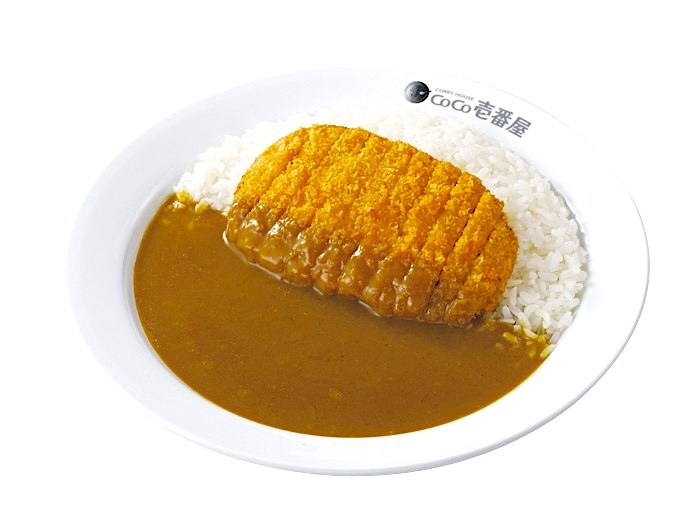
Bank of New York Mellon senior strategist Geoff Yu has introduced a "Katsu Curry Index" that uses cross-border prices for CoCo Ichibanya curry rice to estimate the yen’s purchasing-power value. On his calculation, the fair exchange rate would be ¥62.18 per U.S. dollar, far stronger than the market rate of about ¥159.23 seen in Wednesday morning trading, implying the yen is undervalued by roughly 61%.
A curry dish instead of a burger
According to Bloomberg, Yu framed the Katsu Curry Index as an alternative to The Economist’s Big Mac Index. He argued that comparing the price of pork cutlet curry across markets does a better job than a hamburger of showing how yen weakness affects everyday life in Japan.
Using curry prices as the purchasing-power reference point, Yu’s estimate suggests that one U.S. dollar should buy only ¥62.18. Against the market rate of roughly ¥159.23 per dollar in Wednesday morning trading, that leaves the yen about 61% below its implied purchasing-power level.
More extreme than the Big Mac Index
For comparison, the Big Mac Index, which is based on McDonald’s burger prices in different countries, produces a fair rate of ¥80.30 per dollar. Even that gauge, often cited as evidence that the yen is deeply undervalued, looks conservative next to the Katsu Curry Index.
Focus returns to the yen after intervention
The report said the index has drawn attention as the yen remains a focal point in global foreign-exchange markets. After what was described as the most dramatic joint intervention by U.S. and Japanese authorities in 15 years, the currency rebounded from its weakest level against the dollar in more than 40 years. About half of that intervention-driven gain has since been given back.
With no follow-up action, market attention has shifted back to fundamentals including the U.S.-Japan rate gap and Japan’s fiscal outlook, and the yen has weakened again.
Other food-based PPP gauges and their limits
Beyond the Big Mac Index, the report noted other food-based purchasing-power parity measures, including a latte index tracking Starbucks coffee prices worldwide and a KFC index used in African markets.
Still, prices for any single product can be shaped by local market conditions. CoCo Ichibanya is a low-cost chain in Japan, but in overseas markets it is often positioned as foreign cuisine and priced higher.
That structural pricing gap can amplify the appearance of yen undervaluation. As a result, PPP indexes may be useful for illustrating price differences, but they are not well suited to serve as direct exchange-rate trading targets.