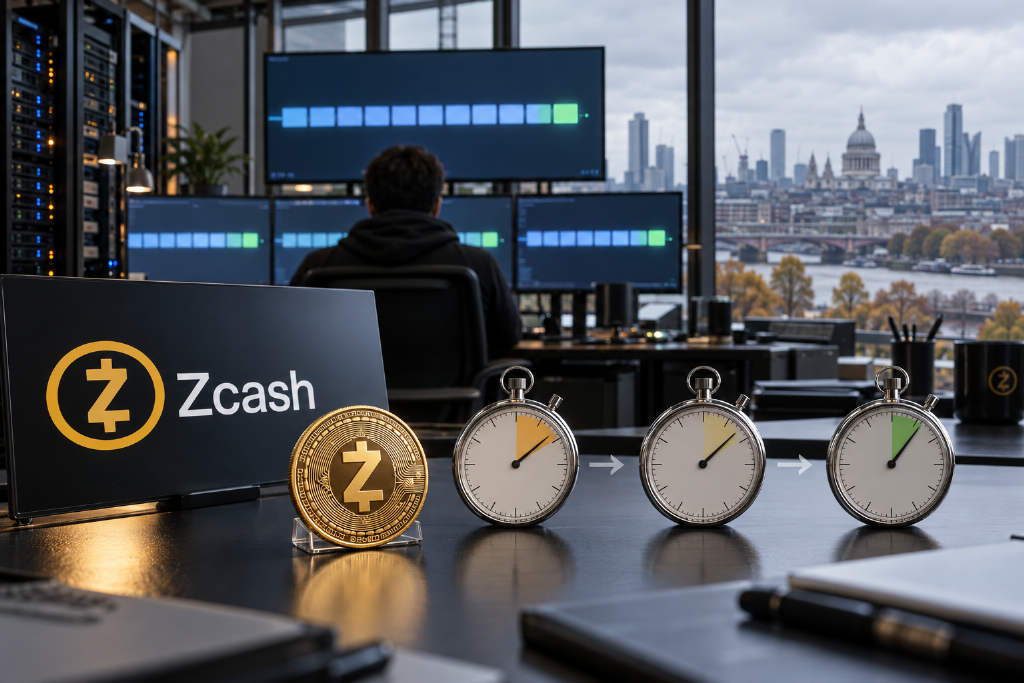
Zcash developers have confirmed that the network’s NU7 upgrade will activate at block height 3,543,405, which is expected to arrive around Nov. 5 Beijing time. The upgrade will reduce block time from 75 seconds to 25 seconds, lifting transaction confirmation speed by about three times. In a practical example cited in the report, if an exchange waits for three block confirmations before crediting a user’s ZEC deposit, the delay would fall from nearly four minutes to about 1 minute and 15 seconds. The upgrade has already been running on the Zcash testnet since early October. The update was reported by CoinDesk and carried by Techub as a brief.
Zcash developers have confirmed that the NU7 network upgrade will activate at block height 3,543,405, expected to be reached around Nov. 5 Beijing time.
Under the upgrade, block time will be reduced from 75 seconds to 25 seconds, increasing transaction confirmation speed by about 3x.
Deposit credit times would be shorter
The report gave one exchange-related example: if a platform waits for three block confirmations before crediting a user’s ZEC deposit, the delay would drop from nearly four minutes to about 1 minute and 15 seconds.
Already live on testnet since early October
The upgrade has been running on the Zcash testnet since early October. CoinDesk was cited as the source in the Techub brief.
This article was originally published by Bit.Fan. For more cryptocurrency news and market insights, visit www.bit.fan. Disclaimer:
The market information, project data, and third-party content displayed on this platform are for industry information sharing only and do not constitute any form of investment advice or return commitment.
Cryptocurrency trading carries high risks. Users should fully assess their risk tolerance and make independent decisions. All profits, losses, and legal responsibilities are borne by the users themselves.