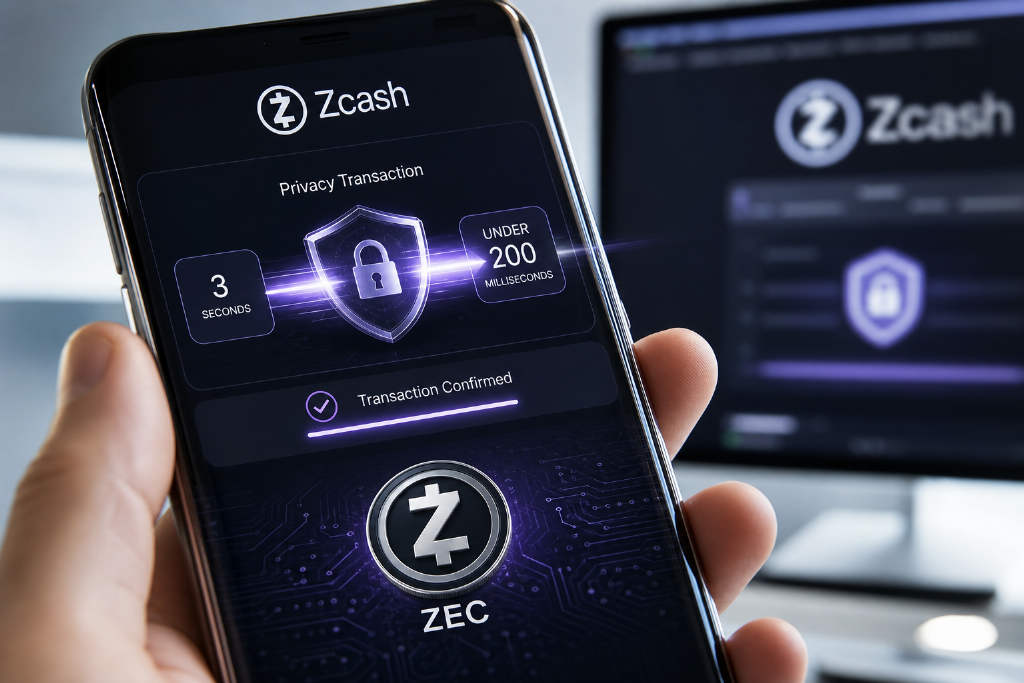
The Zcash development team on Aug. 31 released Zakura Common, an open-source cryptography toolkit aimed at speeding up private transaction generation. In some cases, the toolkit can reduce the time a wallet needs to create a private transaction from more than three seconds to less than 200 milliseconds. According to Zakura, the new code delivers more than a 14x improvement in related processing speed on mobile devices, more than 5x on desktop devices, and more than 21x for hashing. Node verification of private transactions also becomes roughly 4x to 8x faster. The toolkit does not require a Zcash network upgrade, which means wallet developers can adopt it directly. Zakura has already integrated the new technology stack in version 1.3.0, and Vizor Wallet is among the first wallets to use it.
The Zcash development team released Zakura Common, an open-source cryptography toolkit, on Aug. 31.
According to Zakura, the toolkit can, in some cases, cut the time required for a wallet to generate a private transaction from more than three seconds to less than 200 milliseconds.
Zakura said the new code improves related processing speed by more than 14x on mobile devices and more than 5x on desktop devices. Hashing speed is up by more than 21x, while node verification of private transactions is roughly 4x to 8x faster.
The toolkit does not require an upgrade to the Zcash network, allowing wallet developers to adopt it directly. Zakura has already used the new technology stack in version 1.3.0, and Vizor Wallet is also among the first wallets to adopt it.
This article was originally published by Bit.Fan. For more cryptocurrency news and market insights, visit www.bit.fan. Disclaimer:
The market information, project data, and third-party content displayed on this platform are for industry information sharing only and do not constitute any form of investment advice or return commitment.
Cryptocurrency trading carries high risks. Users should fully assess their risk tolerance and make independent decisions. All profits, losses, and legal responsibilities are borne by the users themselves.