BackTechnology Updates

Technology Updates

ChangXin Tech
2026-07-15 08:04:12

ChangXin Technology says it will keep a no-controlling-shareholder structure after listing

ChangXin Technology said it expects to retain a no-controlling-shareholder structure after its listing, according to comments made by Vice President and Board Secretary Yuan Yuan in response to investor questions. She said the company’s ownership will become more dispersed after going public, with each of the top five shareholders holding no more than 30% and no single shareholder owning more than 50%. Yuan also outlined the company’s governance setup. ChangXin Technology has established a modern governance structure made up of the shareholders’ meeting, the board of directors, specialized committees, and the management team. The board has 11 members, including four independent directors. Among the seven non-independent directors, the actual nominating parties are Qinghui ChangXin with one seat, ChangXin Jicheng with one seat, the National Integrated Circuit Industry Investment Fund Phase II with two seats, Hefei Jixin with one seat, Anhui Provincial Investment with one seat, and one employee director seat. According to Yuan, no shareholder can determine the appointment of more than half of the board through actual control of voting rights. She said the company is expected to keep a relatively dispersed board nomination structure after listing.


00
ChangXin Technology says it will keep a no-controlling-shareholder structure after listing
Bonzo Lend
2026-07-14 05:07:17

Bonzo Lend exploit tied to zero-signature oracle flaw, losses reach about $9.05 million

Bonzo Lend, a lending protocol built on Hedera, remains paused after an oracle verifier accepted a proof containing a zero signature and a zero public key, allowing one wallet to borrow roughly $9.05 million against 250 SAUCE worth only a few dollars. According to the incident review cited in the report, wallet A posted a manipulated SAUCE/wHBAR price update at 00:51 UTC, inflating the token’s value by about 12 orders of magnitude while the market price stayed near 0.2 HBAR. Eight seconds after the bad price reached onchain oracle storage, the wallet borrowed 6.63 million USDC and then 34.5 million wrapped HBAR. Bonzo said its lending contracts simply used the stored oracle price and executed under the protocol’s loan-to-value rules. A second wallet borrowed about $1 million while the abnormal price remained active, then contacted Bonzo and identified itself as a white hat responder that intended to return the funds. Bonzo said about $1 million has been recovered in its accounting, though the money has not yet been returned and the final amount is still uncertain. Supra has fixed the verifier, but Bonzo Lend, Bonzo Points, and withdrawals were still suspended as of July 13.

120
Bonzo Lend exploit tied to zero-signature oracle flaw, losses reach about $9.05 million
Google
2026-07-14 04:53:44

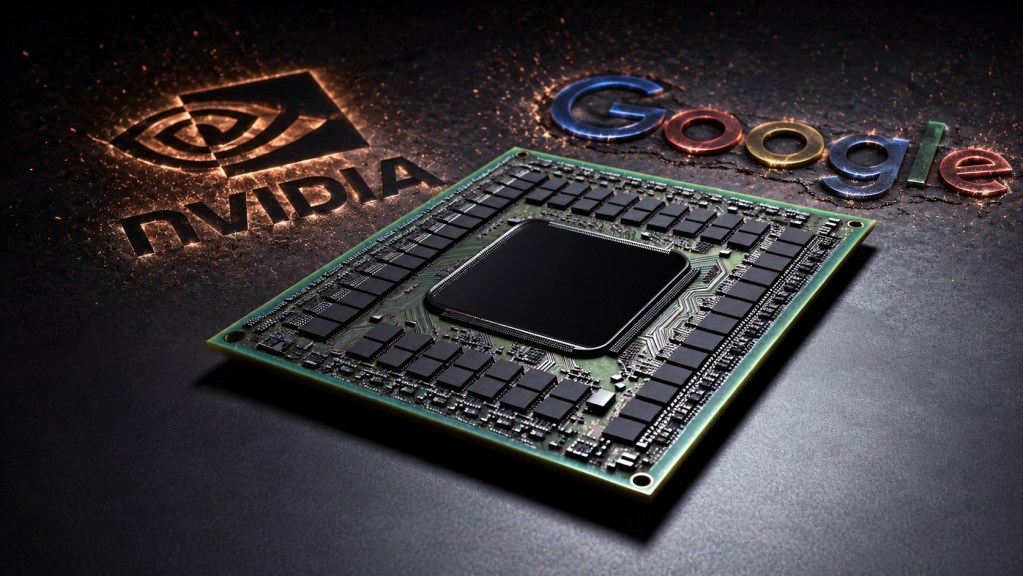
Google pushes TPU sales to challenge Nvidia among neocloud customers

Google is stepping deeper into the AI chip market by targeting customers tied to Nvidia’s fast-growing neocloud ecosystem, according to a report from The Information. The company is using emerging cloud providers focused on AI compute as a key channel for commercializing its Tensor Processing Units, or TPUs, and moving beyond its traditional role as a cloud infrastructure provider. Alphabet CEO Sundar Pichai said in April that Google plans to sell TPUs directly to selected external customers for use in their own data centers. The report said Google aims to ship 4.3 million TPUs this year and more than 35 million by 2028. Morgan Stanley estimated that selling 500,000 TPU chips could generate roughly $13 billion in revenue for Google in 2027. The report also said Nvidia responded after Google approached Nscale, a neocloud startup backed in part by Nvidia, by offering financial incentives during talks. Google’s TPU push may also carry a supply-chain angle: stronger outside demand could improve its leverage when competing with Nvidia for advanced manufacturing capacity at Taiwan Semiconductor Manufacturing Co. (TSMC).

20
Google pushes TPU sales to challenge Nvidia among neocloud customers
Aspecta
2026-07-14 02:51:17

ASP falls about 98% from peak despite YZi Labs backing and Binance Wallet integration

Aspecta’s token ASP fell to around $0.015 on July 14, down roughly 98% from its all-time high of $0.73 reached on its July 24, 2025 token generation event. The project had strategic backing from YZi Labs and was later integrated into Binance Wallet’s pre-TGE trading model, yet that support did not prevent a prolonged slide. Aspecta positions itself as infrastructure for pricing illiquid assets on-chain through its BuildKey product, which lets users trade tokenized claims before a project’s official token launch. Its website highlights headline return figures, including an average valuation increase of 1,934% and average asset returns of 3,573%, while 77 projects have reportedly used the system for early pricing and settlement. The report points to a highly concentrated token distribution, with the top five addresses holding 81.49% of total supply, and a long unlock schedule still ahead. It also compares ASP with other projects shown on Aspecta’s site, including Sign, GAIB and Solayer, all of which have seen steep declines from their highs. The broader takeaway is that venture backing, platform integration and pre-market paper gains did not translate into durable secondary-market price support.

20
ASP falls about 98% from peak despite YZi Labs backing and Binance Wallet integration
Aspecta
2026-07-14 02:51:17

ASP drops about 98% from its TGE peak as Aspecta’s Binance Wallet tie-up fails to reverse the slide

Aspecta’s token ASP fell to around $0.015 on July 14, down about 98% from its all-time high of $0.73 reached on the July 24, 2025 TGE day. The project had strategic backing from YZi Labs and later integrated with Binance Wallet’s pre-TGE trading model, making it one of the more closely watched pre-market infrastructure names in the Binance orbit over the past year. According to the report, ASP’s ownership remains highly concentrated, with the top five addresses holding 81.49% of total supply, while a large portion of supply is still locked and scheduled to be released monthly. The article also points to examples on Aspecta’s own platform where BuildKey certificates posted huge paper gains before corresponding tokens showed weak liquidity or limited access to mainstream exchanges. The report argues that backing from YZi Labs or cooperation with Binance Wallet did not translate into price support in the secondary market, as a short-lived rally following Binance Wallet’s September 17, 2025 announcement faded within a week.

260
ASP drops about 98% from its TGE peak as Aspecta’s Binance Wallet tie-up fails to reverse the slide
IOSG
2026-07-14 01:32:50

IOSG says private AI is gaining ground as open models close the gap in cost and accuracy

IOSG argues that demand for private AI is rising across both enterprises and consumers as concerns over intellectual property leakage, data retention, and legal discovery become harder to ignore. The report maps the current privacy stack, from contract-based zero data retention and anonymous proxies to trusted execution environments, end-to-end encryption, fully homomorphic encryption, and local inference. Its main point is that the tradeoff is no longer as simple as privacy versus performance. A central example comes from Bridgewater’s AIA Labs and Thinking Machines. In a June 30 case study, an expert-tuned open model, Qwen3-235B, outperformed frontier models on financial judgment tasks while also delivering much lower inference cost. The model scored 84.7% on an independent test set, above an 80% threshold set by investment professionals. Frontier models averaged about 50% with simple prompts and reached 78.2% with expert prompting. By the report’s framing, the fine-tuned Qwen made 29.8% fewer mistakes than the best frontier baseline and ran at 13.8x lower inference cost. IOSG also says infrastructure for private inference and post-training is starting to mature. Enclave-based services from companies such as Phala, Tinfoil, and NEAR AI are pushing privacy costs down, in some cases to parity with or below plain-text routes. Still, major gaps remain in tool calling, agent workflows, and encrypted search, where privacy guarantees often break once requests leave the model layer.

20
IOSG says private AI is gaining ground as open models close the gap in cost and accuracy
Private AI
2026-07-14 01:32:50

IOSG says private AI is gaining ground as open models close the gap in high-value enterprise work

IOSG argues that private AI is moving from a niche concern to a practical deployment choice for both enterprises and consumers. The report says the core issue is no longer abstract model safety, but where plaintext prompts, internal data, and company-specific judgment end up once they leave a user’s device. It reviews the current privacy stack, from contractual zero-data-retention and anonymous relays to trusted execution environments, end-to-end encrypted inference, fully homomorphic encryption, and local inference, and finds that costs and performance penalties are falling for several of these approaches. A central example comes from a June 30 case study by Bridgewater’s AIA Labs and Thinking Machines. In that work, an expert-tuned open model based on Qwen3-235B outperformed frontier models in both accuracy and inference cost on investment-related tasks, scoring 84.7% versus 78.2% for the best frontier setup using expert prompts, while cutting inference cost by 13.8x. IOSG’s argument is not that privacy AI is solved. Tool calls in agent workflows, encrypted search, and private post-training remain major gaps. But the report says the infrastructure needed to train and run open models inside controlled, attestable environments is arriving piece by piece, giving companies a clearer path to keep their own alpha inside their own boundary.

340
IOSG says private AI is gaining ground as open models close the gap in high-value enterprise work
Private AI
2026-07-14 01:32:50

IOSG says private AI is gaining ground as open models close the gap in cost and accuracy

IOSG argues that private AI is moving from a niche concern to a practical choice for both enterprises and consumers, as companies grow more wary of sending sensitive data and proprietary knowledge into closed-model systems. In a long-form analysis by Jeff @IOSG, the firm lays out the tradeoff now facing the market: frontier labs still lead in general capability, but open models are improving quickly and, in some specialized domains, already outperform frontier systems on both accuracy and cost. The report traces several privacy approaches, from contractual zero-data-retention and Oblivious HTTP to trusted execution environments, end-to-end encryption, fully homomorphic encryption, and local inference. It argues that only some of these offer verifiable privacy, and those routes largely depend on open models rather than proprietary ones. IOSG also points to a recent case from Bridgewater-backed AIA Labs and Thinking Machines, where a fine-tuned Qwen3-235B model beat frontier models on expert financial tasks. Even so, the report says major gaps remain. Tool use in agent workflows, private post-training, and encrypted search are still hard to deliver at scale. IOSG’s conclusion is that privacy inference is becoming cheaper and more deployable, but the most defensible opportunities lie in the unsolved layers around training loops, tool execution, and search infrastructure.

40
IOSG says private AI is gaining ground as open models close the gap in cost and accuracy