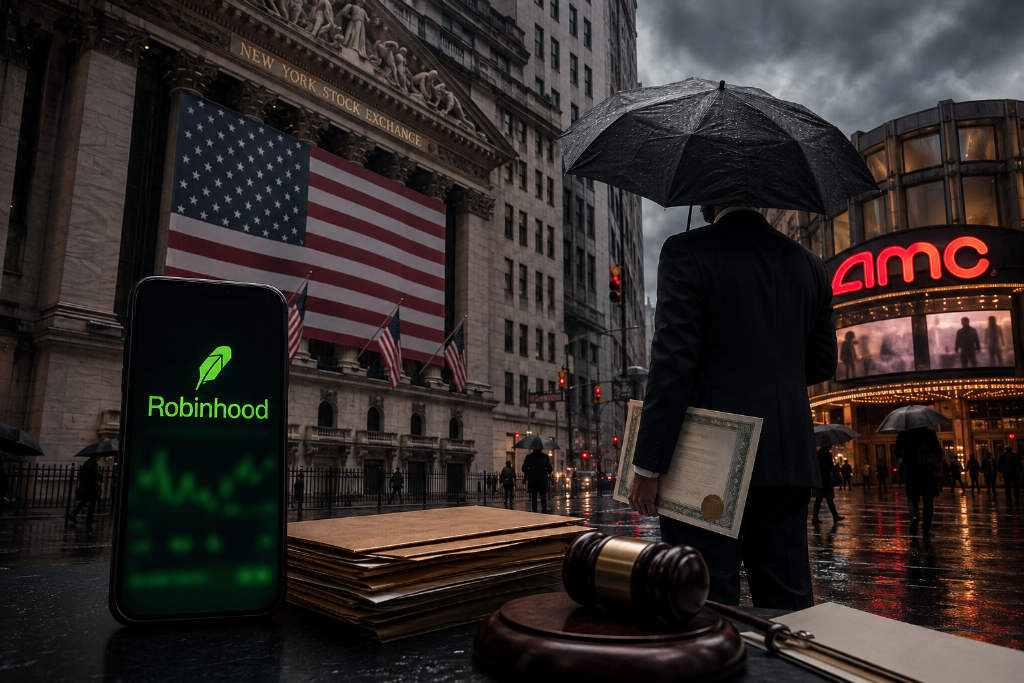
Robinhood2026-09-08 09:54:40Bernstein says Robinhood chain could reach $160 million in annual fees by 2028Bernstein said in a Tuesday report shared with Cointelegraph that Robinhood’s blockchain network could generate as much as $160 million in annual fees by 2028. The forecast is tied to rising demand for tokenized stock trading on the chain, which the analysts said now accounts for about 27% of total trading volume. Over the same period, trading in native memecoin pairs fell to 36% of network activity from 100% at launch on July 1. Bernstein attributed the shift in part to Uniswap automated market-making pools that pair memecoins with stock tokens, creating what it described as reflexive demand on both sides. DefiLlama data cited in the report showed the Robinhood chain produced $2.13 million in fees over the past 24 hours and has become the leading blockchain network by daily fees a little more than two months after launch. Bernstein also raised its price target on Robinhood stock to $160 from $130 on July 20 while keeping an Outperform rating. Robinhood’s tokenized equities business has also drawn criticism from AMC CEO Adam Aron, who said tokens tied to AMC shares have no affiliation with the company and called the offering outrageous.1140
Policy & Regu2026-09-07 17:34:00AMC price spike puts tokenized stock trading and Wall Street price control under scrutinyA commentary published by Foresight argues that tokenized stock trading is beginning to affect real U.S. equity prices, using AMC Entertainment as its clearest recent example. The piece says AMC shares were tokenized on Robinhood and paired with a meme coin, and heavy trading in that meme coin helped push AMC stock up more than 20% before the U.S. market open. That reaction, the article says, prompted AMC’s CEO to voice anger online and threaten a legal investigation, while Robinhood’s CEO responded on X. The article frames the episode as more than a one-off move in a single stock. It says the development suggests that traditional institutions may no longer have the same grip over secondary-market price discovery, as retail traders using crypto-native venues and leveraged products gain new influence. At the same time, the piece warns that tokenized equities remain tied to centralized issuers and regulators. If the U.S. Securities and Exchange Commission were to rule that AMC stock tokenization on Robinhood was unlawful, the article says related trading could become invalid. Even if regulators find the structure legal, the author expects restrictions or higher access barriers rather than a hands-off approach.1110
Robinhood2026-09-07 12:47:29Robinhood Chain’s stock-token meme trades can move prices, but not sustain a GameStop-style squeezeA long-form market analysis by IOSG researcher Mario Chow argues that the recent wave of meme coins priced in tokenized equities on Robinhood Chain can send real buying pressure into U.S. stocks, but the mechanism breaks before it becomes a self-feeding short squeeze. Using AMC, Hims & Hers and Nvidia-linked examples, the report says on-chain demand can quickly push tokenized prices far above fair value, prompting authorized participants to buy real shares, place them into custody and mint more stock tokens. That transmission is real: in the AMC episode, the issuing agent reportedly bought and custodied about $7.6 million worth of real AMC shares over a weekend, accounting for as much as 7.6% of premarket volume during the busiest stretch. The same mechanism also caps the trade. According to the report, tokenized AMC supply expanded from 152,106 shares to 2,895,758 shares within 72 hours, while tokenized Hims rose from 468 shares to 130,876 shares over a longer span. In Chow’s framing, GameStop worked in 2021 because float was fixed and shorts could not create more stock to return; on Robinhood Chain, the float is effectively elastic because supply can be minted against newly purchased underlying shares. The report concludes that what traders are often buying is not durable equity exposure or a true short-squeeze setup, but corporate attention. It also identifies a different weak point: weekends, holidays and fake quote assets, when token supply cannot be expanded immediately and on-chain dislocations can widen sharply.6230
Bonk Guy2026-09-07 07:07:32Bonk Guy Doubles Down on MEME, New Position Hits 185% Unrealized GainAccording to GMGN monitoring, the high-profile trader known as Bonk Guy, who previously made headlines with PONS returns, executed 8 cross-chain buys between September 5 and 7, spending approximately 321,700 USDC to acquire 8.2055 million MEME tokens at an average cost of $0.03921. The position is now worth $747,600, yielding an unrealized profit of $425,900 (132.4%). The latest and largest trade, completed at 00:03 today, involved 66,700 USDC for 2.0886 million MEME at $0.03194, already up 185% to $190,300.1030
Long.xyz2026-09-07 02:03:12Long.xyz tokens MEME and BONER rebound after drawing attention, co-founder teases protocol update this weekTwo tokens issued through Robinhood onchain launch platform Long.xyz moved higher after drawing fresh attention overnight. According to BlockBeats, MEME and BONER, which had both shown signs of losing momentum earlier, regained strength after Robinhood’s founder and HIMS’ founder each turned their attention to the projects. GMGN market data showed the two tokens’ market capitalizations rising 127% and 147%, respectively, over the past 24 hours. BONER was launched on Long.xyz and paired against tokenized HIMS shares as its base pool through Robinhood’s stock trading framework. MEME, meanwhile, uses tokenized AMC Entertainment stock as its base pool and provides liquidity through the MEME/AMC trading pair. Long.xyz co-founder Nate also posted earlier in the day that the protocol will roll out an expansion update later this week. The report did not disclose additional details about the planned release.1520
Robinhood2026-09-06 23:39:34Robinhood Co-Founder Follows MEME Account, Token Surges Nearly 2xRobinhood co-founder Vlad Tenev followed the official account of MEME, a meme coin paired with AMC Entertainment stock (ticker: AMC) via the Robinhood platform, early on September 7. This action triggered a rapid surge: according to GMGN data, MEME's market capitalization nearly doubled within a short period, peaking at $174 million before retreating to $83.58 million, representing a 24-hour gain of over 100%. The token's market cap was approximately $41.79 million a day earlier, implying a doubling. The move came a day after multiple FOMO platform KOLs, including Bonk Guy, had been heavily accumulating MEME tokens. MEME utilizes tokenized AMC shares as its base pool and provides liquidity through the MEME/AMC trading pair on Robinhood. The coin had already surpassed the $100 million market cap threshold on Friday, setting the stage for increased attention. The involvement of a high-profile figure combined with prior KOL accumulation highlights the speculative interest in this meme asset, though specific accumulation amounts remain undisclosed.2810
Tokenized Sto2026-09-05 15:13:15AMC Token Dispute Expands Into a Broader Fight Over Which Tokenized Stock Structure Should PrevailA public clash between AMC Entertainment CEO Adam Aron and Robinhood over tokenized AMC shares has widened into a much larger industry debate over how tokenized stocks should be built. At the center of the dispute are three competing structures: Robinhood’s offshore debt-style stock tokens that give users economic exposure but no claim on the referenced issuer; custodial 1:1 models used by firms such as Ondo, xStocks and Dinari, where regulated intermediaries hold the underlying shares; and issuer-native designs from Securitize and Superstate, where a company’s own registered shares are recorded onchain. The SEC’s Division of Corporation Finance outlined these categories in a Jan. 28 statement, and the choice of structure affects both the securities rules that apply and what investors may be able to claim if an intermediary fails. The argument intensified Friday as Dinari co-founder Gabriel Otte criticized synthetic products, Uniswap founder Hayden Adams defended programmability and 24/7 access, and Securitize CEO Carlos Domingo backed issuer-controlled tokenization. The fight is unfolding as tokenized stocks reach $2.91 billion across 2.67 million holders, according to rwa.xyz, with Ondo leading the sector and Robinhood gaining trading traction through activity on Robinhood Chain. Lawyers, transfer agents and market structure participants have also entered the discussion, turning what began as an AMC controversy into a live test of investor rights, execution quality, supply mechanics and regulatory design for onchain equities.1260
AMC2026-09-05 10:44:52AMC CEO Slams Robinhood's Tokenized Stocks, Announces Legal ReviewAMC Entertainment CEO Adam Aron has strongly criticized Robinhood's newly launched tokenized stock service, calling it "despicable, disgusting, and unforgivable." Aron questioned the legality of the product and announced that AMC would initiate a legal review. He argued that if the company does not issue or recognize the tokens, and holders cannot enjoy shareholder rights, the legal basis of tokenized stocks is questionable. The controversy highlights regulatory challenges in the convergence of traditional securities and crypto finance. (Cointelegraph)1050