AMD
Oct 20, 2026

AMD joins UXL Foundation and backs oneDNN for PyTorch AI development

AMD has joined the UXL Foundation as a governing member and is also backing oneDNN to improve AI development with PyTorch, according to Techub, which cited Crypto Briefing. The move is aimed at cutting fragmentation in AI development workflows while improving efficiency across platforms. The update links AMD more closely with efforts to streamline software development in AI environments that span different hardware and system setups. Techub’s brief did not disclose further technical details beyond AMD’s membership status, its support for oneDNN, and the stated goal of reducing fragmentation and raising cross-platform efficiency.

940
AMD joins UXL Foundation and backs oneDNN for PyTorch AI development
ASML
Oct 16, 2026

SemiAnalysis says ASML appears to be developing chip-to-wafer hybrid bonding tools

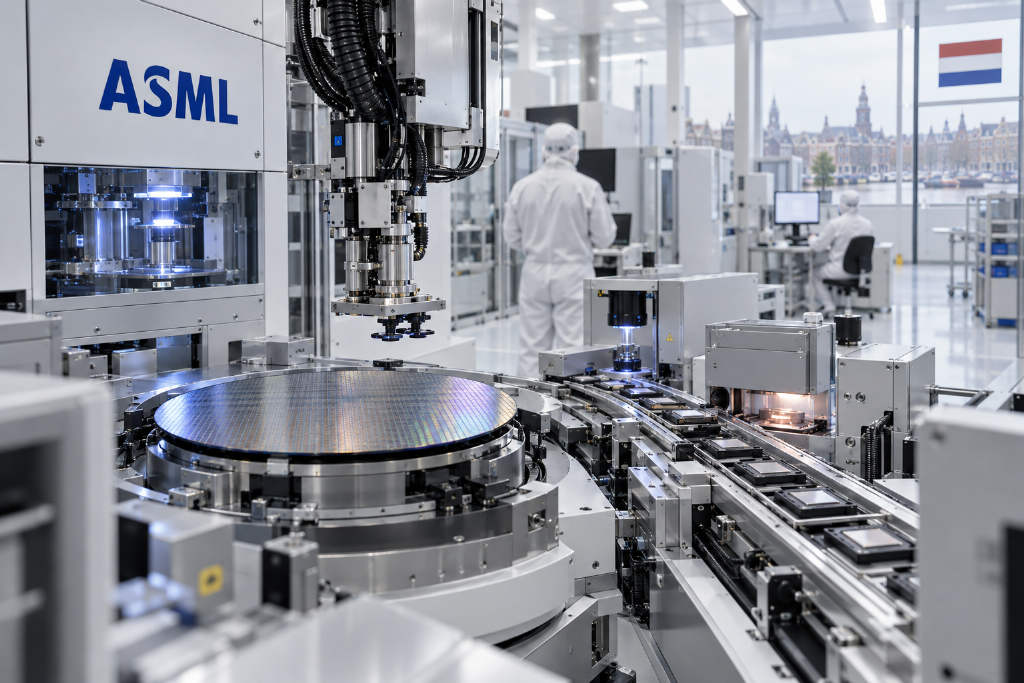
SemiAnalysis said in an Oct. 15 article that ASML has not formally announced a hybrid bonding product, but patents, prior media reports and the company’s roadmap all point to ongoing development in the segment. The article argued that ASML may first introduce a more technically demanding chip-to-wafer hybrid bonding tool, framing the move as an extension of vertical integration. Patent filings describe a system that runs on a track, with each chip placed in an individual carrier and moved through inspection, cleaning, plasma activation, topography inspection, leveling, coarse alignment, position correction and fine alignment before entering the bonding station. The piece also noted that the system’s repeatability is about 10 microns, far short of the roughly 50 nanometers required for bonding. ASML filed 27 bonding patent families between December 2022 and November 2024, most of them aimed at chip-to-wafer applications. The Elec reported in March that ASML had begun hybrid bonding machine architecture design work with Prodrive Technologies and VDL ETG.

1050
SemiAnalysis says ASML appears to be developing chip-to-wafer hybrid bonding tools
U.S. premarket
Oct 15, 2026

AI-linked U.S. stocks fall in premarket trading, with MU down 3.91%

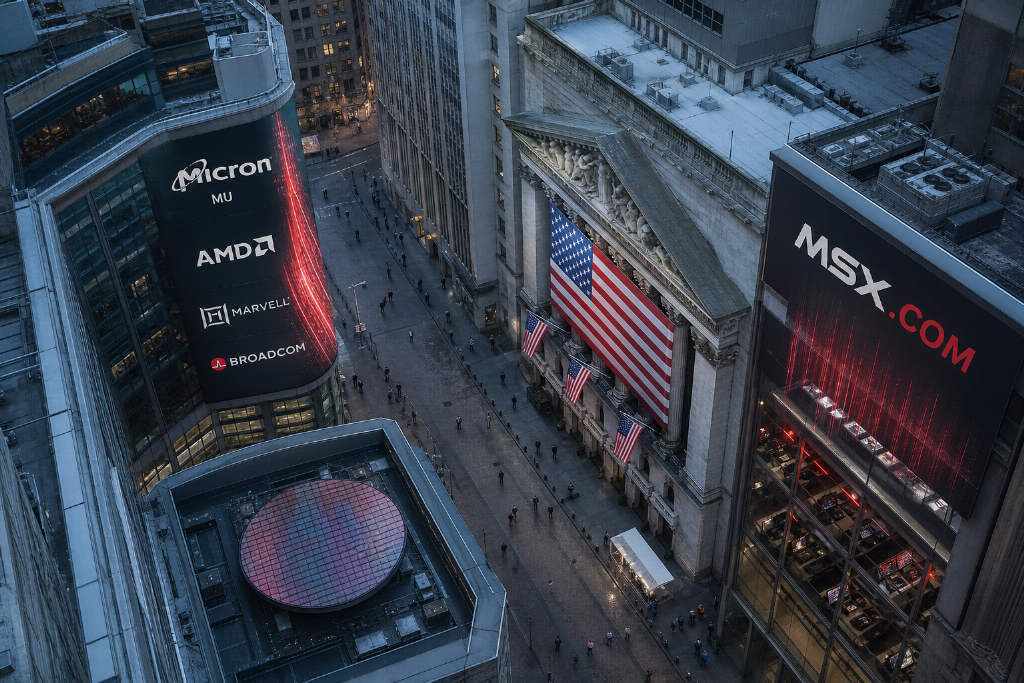
Odaily reported, citing data from MSX.COM, that AI-related U.S. stocks broadly moved lower in premarket trading. Among the names listed, MU fell 3.91%, AMD dropped 2.66%, MRVL declined 3.13%, and AVGO slipped 1.66%. The report also noted that MSX.COM is a decentralized real-world asset, or RWA, trading platform. According to the same report, the platform has cumulatively listed hundreds of RWA tokens tied to U.S. equities and ETF underlyings. Examples mentioned include AAPL, AMZN, GOOGL, META, MSFT, NFLX, and NVDA. No other market data or reasons for the declines were provided in the source brief. The item was published by Odaily as a homepage headline.

560
AI-linked U.S. stocks fall in premarket trading, with MU down 3.91%
Samsung Electronics
Oct 14, 2026

Samsung and AMD unveil CXL memory expansion system at OCP 2026

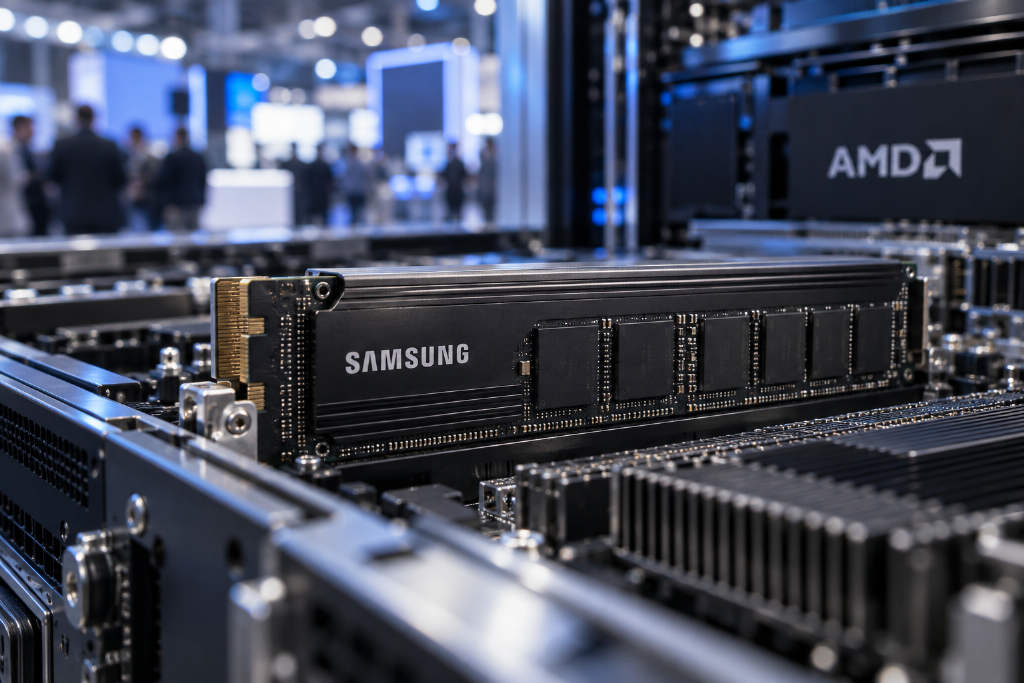
Samsung Electronics and Advanced Micro Devices used OCP Global Summit 2026 to show a CXL-based memory expansion design built around CMM-D memory pooling, a setup aimed at easing the capacity limits that appear as AI inference workloads grow. The companies presented the system as a way for multiple machines to share a common memory pool instead of relying only on memory installed on each server motherboard. Samsung tied the pitch to a broader AI memory strategy that also included HBM5, custom HBM, zHBM, processing-in-memory, and newer SSD technologies such as QLC NAND and Flexible Data Placement. The company also highlighted KV cache optimization, Direct Storage, and its Samsung MAX Lab program, which lets customers test technologies under real AI workloads before commercialization. Beyond memory, Samsung displayed Groq LPU wafers and an Nvidia Groq 3 LPX system, with reports saying the chips are being mass-produced on Samsung Foundry’s 4 nm process, and it also showed a wafer made with its 2 nm GAA process. Even so, the OCP presentation did not include performance figures, customer names, or a commercialization timeline.

900
Samsung and AMD unveil CXL memory expansion system at OCP 2026
AMD
Oct 13, 2026

AMD unveils Helion rack and debuts Verano AI processor

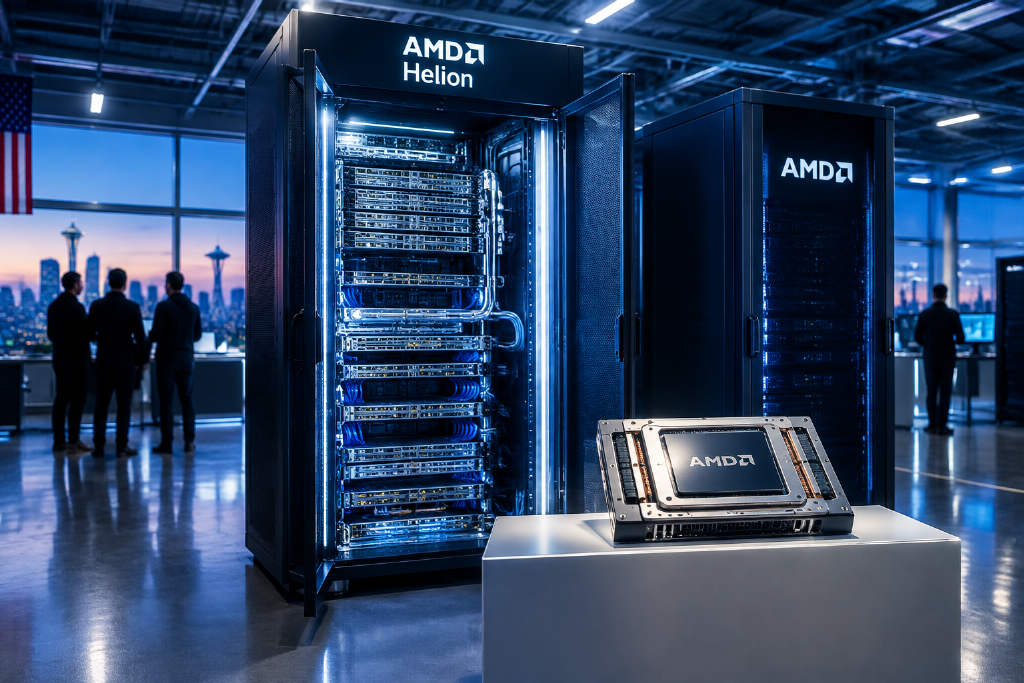
AMD used the Open Compute Project event to update several AI infrastructure efforts, according to a post from CEO Lisa Su. Su said Helios, which AMD showed a year ago, has now moved into production ramp. At the same event, the company introduced Helion, described as an open and flexible rack built for agentic AI. AMD also gave the first look at Verano, which Su identified as the company’s latest agentic CPU. The update ties together AMD’s hardware roadmap across system design and processors, with Helios moving closer to broader deployment while Helion and Verano make their public debut.

1000
AMD unveils Helion rack and debuts Verano AI processor
OpenAI
Oct 12, 2026

OpenAI revenue report hits AI infrastructure stocks, sending NVIDIA and AMD lower

A new OpenAI revenue report triggered a sell-off in AI infrastructure-related stocks, according to Techub, which cited Crypto Briefing. The report raised investor concerns about customer concentration risk across the AI infrastructure trade, putting pressure on chipmakers including NVIDIA and AMD. At the center of the reaction was a renewed focus on how exposed AI infrastructure companies may be to business from a single major customer. The report highlighted that vulnerability and, in turn, weighed on valuations tied to the sector. Crypto Briefing said the concern was not limited to chip manufacturers. It also affected how investors viewed cloud service providers linked to the same AI buildout theme. The move reflects a broader reassessment of concentration risk rather than any newly disclosed operating issue beyond the revenue report itself.

670
OpenAI revenue report hits AI infrastructure stocks, sending NVIDIA and AMD lower
Intel
Oct 12, 2026

Intel starts shipping D-series GPU samples to customers for AI infrastructure push

Intel has begun providing samples of its D-series GPUs to customers as it looks to expand its artificial intelligence infrastructure, according to Techub News. The move is aimed at strengthening the company’s strategic position in AI inference, a segment that has become increasingly important in enterprise and data center deployments. Techub said the step could also reshape competition in data centers, where Intel is trying to challenge the market dominance currently held by NVIDIA and AMD. The update points to a broader effort by Intel to deepen its presence in AI hardware through customer sampling and infrastructure expansion, with AI inference identified as a key part of that strategy.

660
Intel starts shipping D-series GPU samples to customers for AI infrastructure push
Microsoft
Oct 12, 2026

Microsoft unveils Maia 300, says in-house chip will become its main AI inference system from 2027

Microsoft on Oct. 12 introduced Maia 300, its third-generation in-house AI chip, and said the Maia line will scale to multi-gigawatt deployments starting in 2027 to serve as the primary inference system behind the company’s products and services. In a blog post, Microsoft Cloud and AI Executive Vice President Scott Guthrie said Maia 300 will enter volume deployment in 2027, marking a gradual shift in user-facing AI compute from Nvidia GPUs toward Microsoft’s own silicon for inference workloads. Microsoft said Maia 300 is expected to deliver 40% more tokens per megawatt than leading GPU systems, while a fully configured rack with 96 accelerators can reach up to seven times the token throughput of the previous Maia 200 generation. The chip carries eight HBM4 memory stacks, 18 TB/s of peak bandwidth, and a 950-watt power ceiling. Microsoft said training workloads will still rely on Nvidia and AMD, according to comments from General Manager Alistair Speirs to CNBC.

760
Microsoft unveils Maia 300, says in-house chip will become its main AI inference system from 2027
Total 247 items
Go topage