AMD
Oct 12, 2026

AMD unveils Helion agentic AI rack system with support for up to 32,768 CPU cores

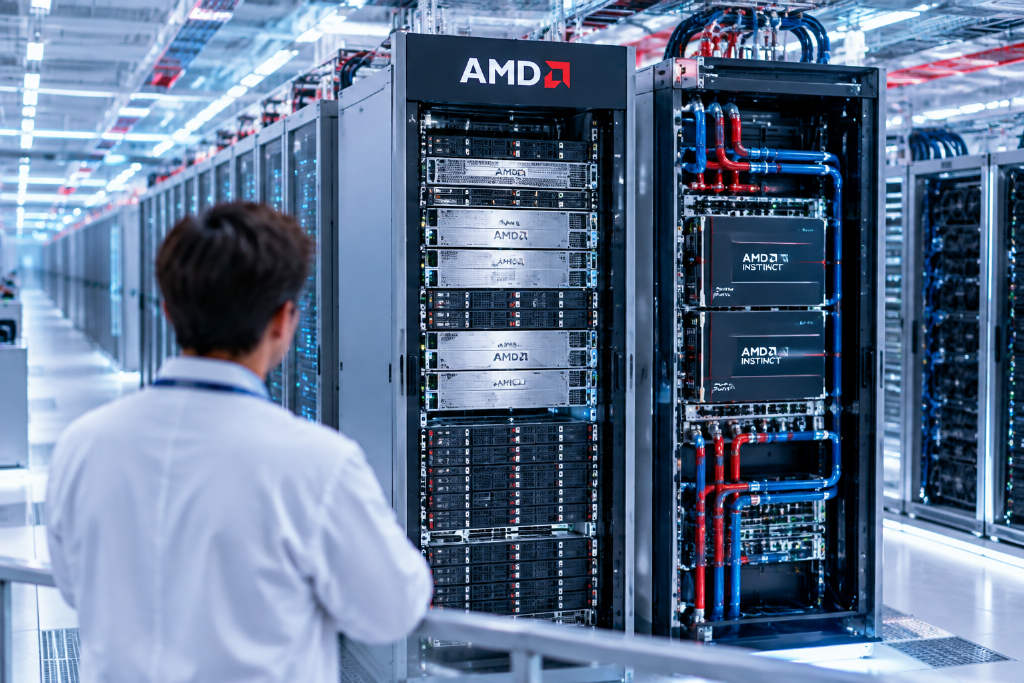
AMD said it has introduced the AMD Helion agentic AI rack system, an open infrastructure design built on Open Compute Project, or OCP, standards for large-scale AI agent workloads. The company outlined two primary configurations. One is a CPU-only rack using 6th Gen AMD EPYC processors and supporting as many as 32,768 CPU cores for hyperscale deployments, where it can provide dedicated compute for agent execution while linking to separate model inference infrastructure. The other is an integrated rack that combines AMD EPYC CPUs, AMD Instinct MI350P GPUs and general-purpose compute nodes for enterprise agentic AI use cases. AMD said Helion supports both liquid and air cooling, allowing customers to adjust CPU and GPU resources based on workload, performance, power and cost needs. The system also includes open hardware and software components plus an integrated token router that can direct model calls across frontier and open-source models. AMD plans to submit the Helion specification to OCP for broader community development and adoption. The company said the product is being developed with ecosystem partners and is expected to launch in November 2026.
1100
AMD unveils Helion agentic AI rack system with support for up to 32,768 CPU cores
Microsoft
Oct 12, 2026

Microsoft to expand use of in-house AI chips, with Maia 300 slated for 2027 production

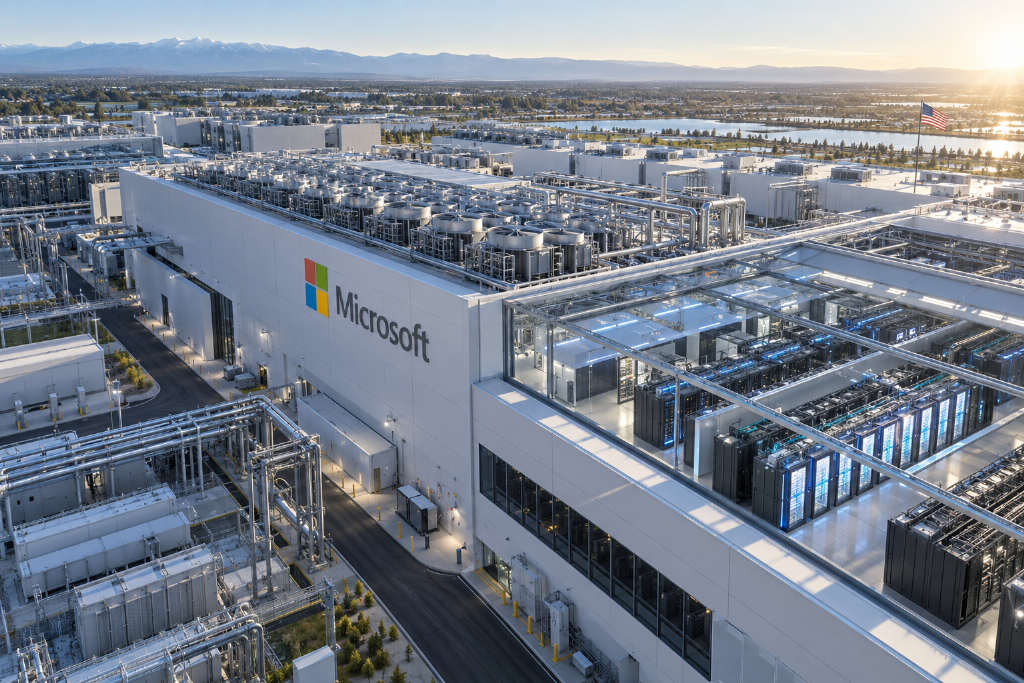
Microsoft plans to steadily raise the share of internally developed AI chips used in its data centers as it looks to reduce reliance on Nvidia GPUs. The company said future AI model request processing will mainly run on its Maia chip architecture, and it aims to deploy gigawatts of computing capacity across the Maia family. On Monday, Microsoft unveiled its third-generation AI accelerator, Maia 300, which is expected to enter production in 2027. Each data center rack can hold 96 Maia 300 chips, double the count of the previous Maia 200 generation. Microsoft said the chip can deliver up to 7 times the AI token throughput per rack compared with GPUs, while tokens processed per megawatt improve by about 40%. The company added that Maia 300 is expected to improve AI service performance and lower data center operating costs. Evercore ISI analysts estimate that Maia chips will account for about 10% of Microsoft’s AI chip spending by the first quarter of 2027. Even so, Nvidia will remain a key supplier for Microsoft’s AI infrastructure, and the company said model training will still rely on Nvidia and AMD chips. Unlike Google’s TPU and Amazon’s Trainium, Microsoft’s in-house accelerator is not yet available for rental by other enterprises.

680
Microsoft to expand use of in-house AI chips, with Maia 300 slated for 2027 production
U.S. premarket
Oct 12, 2026

AI-linked U.S. stocks fall in premarket trading, with MU down 2.33%

AI-related U.S. stocks were broadly lower in premarket trading, according to data cited by Odaily from MSX.COM. Micron Technology (MU) posted the biggest decline among the names listed, falling 2.33%. Advanced Micro Devices (AMD) slipped 0.55%, Marvell Technology (MRVL) lost 1.76%, and Broadcom (AVGO) was down 0.35%. The update also identified MSX.COM as a decentralized real-world asset, or RWA, trading platform. It said the platform has listed hundreds of RWA tokens so far, covering tokenized U.S. stock and ETF underlyings including AAPL, AMZN, GOOGL, META, MSFT, NFLX, and NVDA. No other market data or company commentary was provided in the brief.

1510
AI-linked U.S. stocks fall in premarket trading, with MU down 2.33%
TSMC
Oct 12, 2026

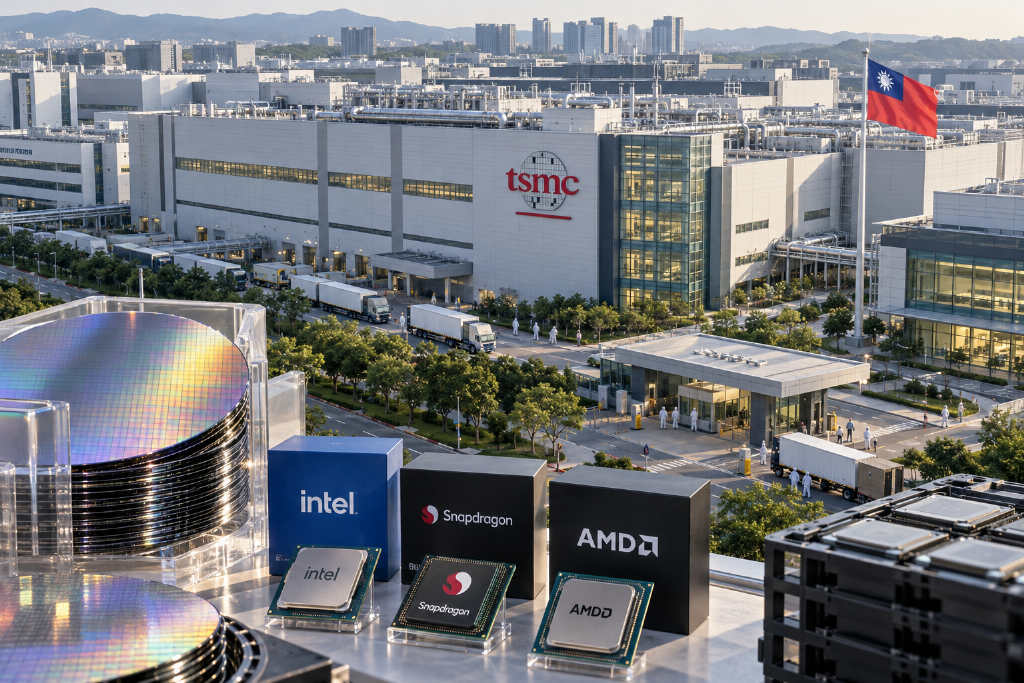
Intel and Qualcomm raise CPU pricing as TSMC advanced-node costs climb; AMD reportedly may follow

A new round of CPU price increases is taking shape across the semiconductor market. ABMedia, citing a report by Commercial Times published on Oct. 12, said Intel raised prices on multiple PC processors in September, with high-end Panther Lake models seeing increases of 15% to 20%. Qualcomm also lifted quotes by about 10% from October for several chip platforms, including the Snapdragon X series, while AMD is reportedly preparing its own adjustments. The report tied the moves by the three processor vendors to the same underlying pressure: rising costs tied to Taiwan Semiconductor Manufacturing Co. (TSMC) advanced manufacturing nodes, along with tighter competition for capacity driven by AI PCs, servers, and high-performance computing workloads. Intel’s latest increase was described as its third since late last year, and the steepest hikes were concentrated in Panther Lake models that use high-end GPU tiles manufactured on TSMC’s N3E process. Qualcomm’s increases were said to cover products such as Snapdragon X and Snapdragon X2 Elite. AMD, meanwhile, has not formally confirmed whether Ryzen CPUs will be included, and the exact scope, timing, and magnitude of any increase remain unconfirmed.

1380
Intel and Qualcomm raise CPU pricing as TSMC advanced-node costs climb; AMD reportedly may follow
Intel
Oct 12, 2026

Supply chain report says Intel raised PC processor prices in September, with high-end Panther Lake up 15% to 20%

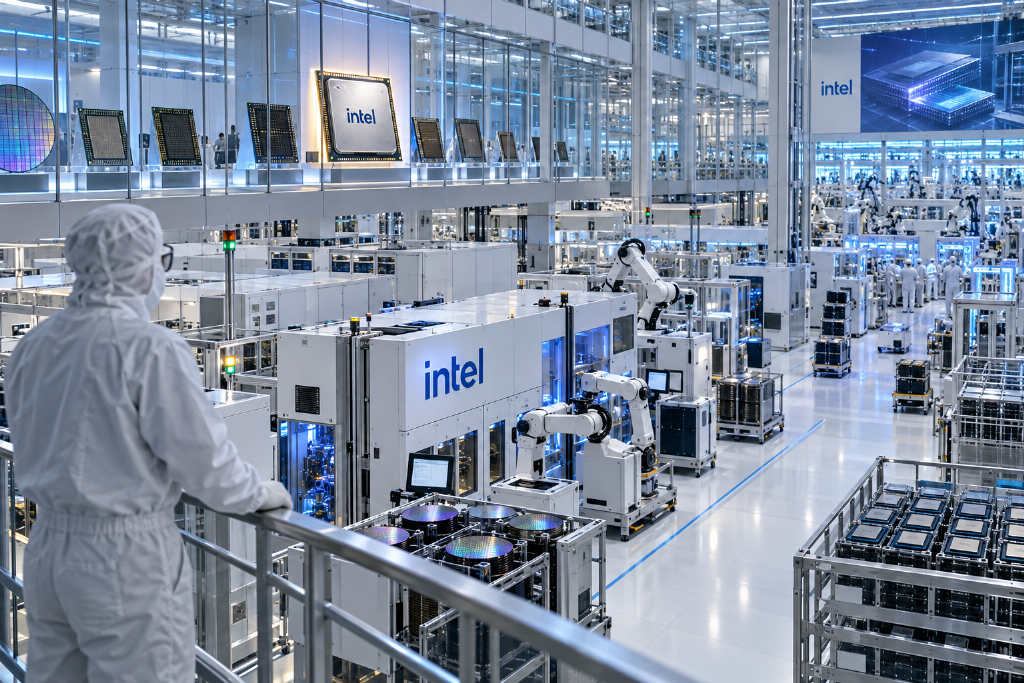
Intel has raised prices for multiple generations of PC processors starting in September, according to a Commercial Times report cited by ChainCatcher and attributed to supply chain sources. The steepest increase was said to be in high-end Panther Lake chips, where prices rose 15% to 20%. The report said Intel has now lifted prices three times since the end of last year. The pricing move was described as product-line specific rather than a blanket increase. High-end Panther Lake parts carrying advanced GPU tiles saw the largest adjustments, while Meteor Lake and Arrow Lake were said to rise about 5% to 10%. The report linked the sharpest increases to components made with TSMC’s advanced process technology. It also said Qualcomm raised quotes for platforms including Snapdragon X and X2 Elite by about 10% from Oct. 1. AMD was reported to be preparing similar action, though the size, scope and effective date were still unconfirmed. Industry sources cited process migration, premium product positioning and AI compute demand as factors pushing CPU prices higher, while AI, smartphones and high-end computing continue to compete for TSMC’s 3 nm capacity as 2 nm moves into volume ramp-up.

2010
Supply chain report says Intel raised PC processor prices in September, with high-end Panther Lake up 15% to 20%
Donald Trump
Oct 8, 2026

Trump’s August trading disclosure shows up to $25 million Meta buy and SpaceX debt purchase

Fresh financial disclosure documents show that U.S. President Donald Trump made a series of securities trades in August, including a Meta stock purchase valued at up to $25 million and a purchase of SpaceX unsecured notes worth between $1 million and $5 million. The filing also lists sales of AMD shares worth $1 million to $5 million and Nvidia shares worth $500,000 to $1 million. In total, Trump carried out 517 securities transactions during the month, with aggregate trading volume ranging from $74.3 million to $273.3 million. The disclosure says the SpaceX debt transaction took place on Aug. 18, two days before Trump signed a national policy intended to expand U.S. commercial space transportation. It also shows that he rebalanced his portfolio on Aug. 21, buying shares of companies including AT&T and Netflix while trimming holdings in AMD and Nvidia. The White House and SpaceX had not responded to requests for comment.

410
Trump’s August trading disclosure shows up to $25 million Meta buy and SpaceX debt purchase
Donald Trump
Oct 8, 2026

CNBC says Trump sold between $1 million and $5 million in AMD shares in August

ChainCatcher, citing CNBC, reported that U.S. President Donald Trump sold AMD shares in August. The value of the sale was listed at between $1 million and $5 million. The input does not provide a more specific transaction date, sale price, or details on how the trade affected his remaining holdings. This is a brief market update based solely on the cited report and includes no additional filing data or trading background beyond what was provided.

570
CNBC says Trump sold between $1 million and $5 million in AMD shares in August
AMD
Oct 8, 2026

Lisa Su revisits Samsung as AMD seeks HBM supply and foundry options

AMD Chair and CEO Lisa Su returned to Samsung Electronics on Oct. 7, seven months after her previous visit, in a trip that industry observers linked to AMD’s need to secure high-bandwidth memory for its AI chips. Korean media reported that Su met Jun Young-hyun, the vice chairman who heads Samsung’s Device Solutions division, while AMD executives Jack Huynh and Joseph Macri joined the visit. Su told reporters only that the two sides would discuss a “broader partnership,” and did not disclose whether she would meet Samsung Chairman Lee Jae-yong. The visit came as AMD pushes its next-generation AI products. The company’s Instinct MI455X uses 432GB of HBM4, up 50% from the 288GB HBM3E in the prior MI355X. Su said the HBM4-based MI455X and Helios system had started shipping, with support from both Samsung and SK hynix. TrendForce said on Sept. 29 that HBM and conventional DRAM share limited advanced-process capacity, and that supply is likely to stay tight through next year. For Samsung, stronger HBM demand could open the door to broader manufacturing work. The two companies signed an MOU in March covering HBM4 and next-generation DDR5 supply, and also agreed to discuss the possibility of using Samsung foundry for AMD’s future products. Still, AMD’s advanced CPUs and GPUs currently rely on TSMC, making any production shift difficult.

870
Lisa Su revisits Samsung as AMD seeks HBM supply and foundry options
Total 247 items
Go topage