SEC
Nov 11, 2026

SEC Exemption Opens Path for Tokenized Stock Venues as Uniswap Targets $79T U.S. Equity Market

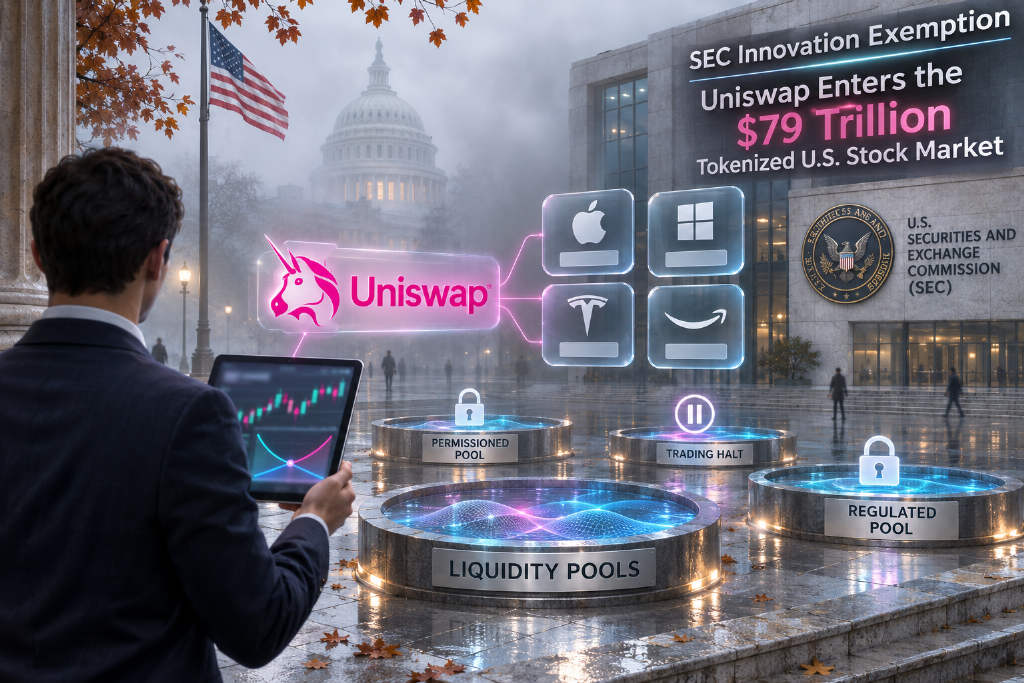
A U.S. Securities and Exchange Commission innovation exemption that took effect on Sept. 17, 2026, created a new category called tokenized securities venues, or TSVs, for approved venues running automated market makers on public blockchains. Eligible venues can receive a five-year exemption from registration as a securities exchange or alternative trading system, while compliant liquidity providers are not treated as securities dealers. Uniswap says more than $20 billion in tokenized stocks has already traded on its protocol, with activity tied mainly to products including Robinhood Stock Tokens and xStocks and issuers such as Ondo and Dinari. The protocol is positioning Uniswap v4 permissioned pools and hooks as infrastructure for access controls, trading pauses and other venue-level compliance rules. The company’s interpretation also describes atomic on-chain settlement, round-the-clock markets and broader pairing options for tokenized equities. It cites more than 40 assets using SPY liquidity pools on Robinhood Chain three months after 10 tokenized stocks and ETFs began trading against SPY in August, with more than $900 million in volume across 130,000 wallet addresses. Uniswap Labs says it does not operate or control any TSV built on its protocol.
10
SEC Exemption Opens Path for Tokenized Stock Venues as Uniswap Targets $79T U.S. Equity Market
XRP Ledger
Oct 30, 2026

XRP Ledger proposes tighter restricted-token holding rules, with four fixes still pending on mainnet

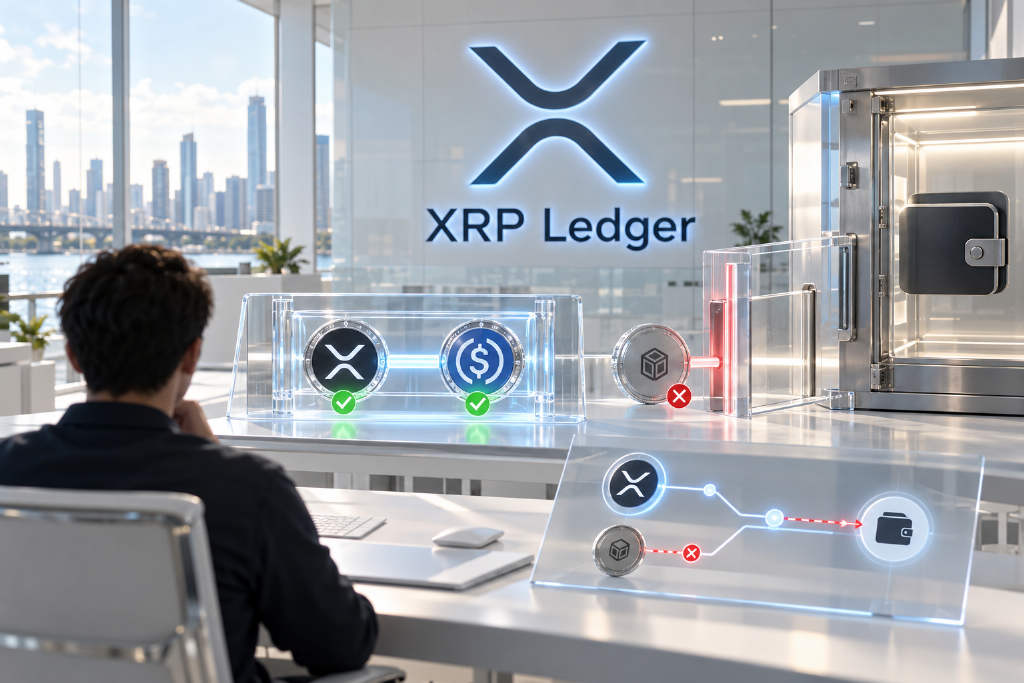
XRP Ledger developers have proposed four fixes aimed at closing loopholes that could let restricted tokens enter accounts without issuer approval. The changes have already been bundled into the network upgrade known as fixCleanup3_5_0, but they have not yet been activated on mainnet. On XRP Ledger, some restricted tokens are only supposed to be held after an issuer grants approval. Developers said they found several ways that requirement could still be bypassed under current behavior. The proposed fixes include a rule requiring both tokens in an automated market maker, or AMM, pool to be approved before a purchase can go through. Another change addresses a flaw in which approval checks were triggered only on trust lines with a zero balance, allowing trust lines that already held tokens to keep receiving more. The XRP Ledger Foundation said the update is part of routine protocol hardening rather than a security incident, and added that there have been no reports of users being affected.

810
XRP Ledger proposes tighter restricted-token holding rules, with four fixes still pending on mainnet
Yield Basis
Oct 29, 2026

Yield Basis unveils permissionless propAMM, with Curve WETH pool set as first deployment

Yield Basis, the automated market maker protocol founded by Curve creator Michael Egorov, said it is launching a permissionless propAMM to upgrade how liquidity works on Curve. The design combines market-aware pricing with dynamic fees and is aimed at lifting trading volume, cutting arbitrage leakage, and improving returns for liquidity providers. In simulations covering the past 18 months, Yield Basis said its WETH position would have posted 8.5% annualized growth when measured in ETH under the new design, versus 3.6% under current parameters. The protocol said WETH liquidity providers will not need to take extra action because the design will apply directly to the pool they are already in. Small trades that move the pool price back toward the market price will carry a 0.50% fee, and the code has been made public. The WETH pool will be deployed first, with bitcoin-related pools to follow after a successful rollout. The announcement also outlined governance steps involving Curve DAO vote 1508 and Yield Basis vote 60.

1250
Yield Basis unveils permissionless propAMM, with Curve WETH pool set as first deployment
liquidity pool
Oct 28, 2026

Why a Liquidity Pool Can Earn Fees and Still Lag a Buy-and-Hold Position

The Defiant highlighted a basic but important point about automated market maker, or AMM, liquidity provision: earning trading fees does not guarantee better performance than simply holding the underlying assets. In the example cited by the outlet, a hypothetical $200 liquidity position grows to $400 before fees. At the same final prices, however, an unchanged hold-only position would be worth $500. The comparison shows that fee income can coexist with weaker overall returns when measured against a passive holding strategy. Rather than focusing on a broad market move, the piece centers on the mechanics of AMM liquidity, fee generation, and the gap that can emerge between a pooled position and the value of keeping the original assets untouched. The article frames that difference as the key reason a liquidity provider may still underperform even after collecting fees.

920
Why a Liquidity Pool Can Earn Fees and Still Lag a Buy-and-Hold Position
XRPL
Oct 25, 2026

XRPL fixCleanup3_4_0 vote resets, pushing earliest activation window to Nov. 4

The XRP Ledger’s maintenance amendment, fixCleanup3_4_0, has restarted its activation clock after losing validator majority during its first countdown period. The amendment regained majority backing on Oct. 21, moving its earliest possible activation window to Nov. 4, provided support remains in place through the full required period. A snapshot taken at 07:09 UTC on Oct. 24 showed that 32 of 35 trusted validators were backing the proposal, equal to a 91.43% support rate. The new majority-support timestamp was recorded at 14:46:22 UTC on Oct. 21. The amendment had first entered the process on Oct. 9, but the clock reset after support fell below the threshold on Oct. 21 before the network could complete the required two consecutive weeks. Under XRPL rules, an amendment must maintain support from more than 80% of trusted validators for two straight weeks before it can activate. If support drops below that level at any point, the timing process starts over. The fixCleanup3_4_0 package covers technical fixes tied to vaults, lending, AMM, permissioned trading, trust lines, and NFTs.

1080
XRPL fixCleanup3_4_0 vote resets, pushing earliest activation window to Nov. 4
PropAMM
Oct 15, 2026

PropAMM’s edge over AMMs draws scrutiny over who pays the cost

Foresight has highlighted the rise of PropAMM, a model for active market making on-chain, and framed the debate around two blunt questions. First, where does its profit advantage come from when compared with automated market makers, or AMMs? Second, if the model relies on quotes that can be seen as deceptive or bait-like, who ultimately bears that cost. The discussion goes straight to market structure rather than price action, asking whether the extra returns captured by PropAMM are effectively being funded by retail traders. With only a short prompt disclosed, the piece centers on the mechanics of on-chain market making, the source of excess profitability, and the allocation of hidden trading costs between professional strategy operators and end users. The report does not provide additional figures or case studies in the available text, but it clearly sets up a critical line of inquiry into whether a more profitable quoting system creates an uneven burden for less sophisticated participants.

1240
PropAMM’s edge over AMMs draws scrutiny over who pays the cost
Sight
Oct 13, 2026

Sight outlines three-month roadmap with AMM shift and SightEVM testnet launch

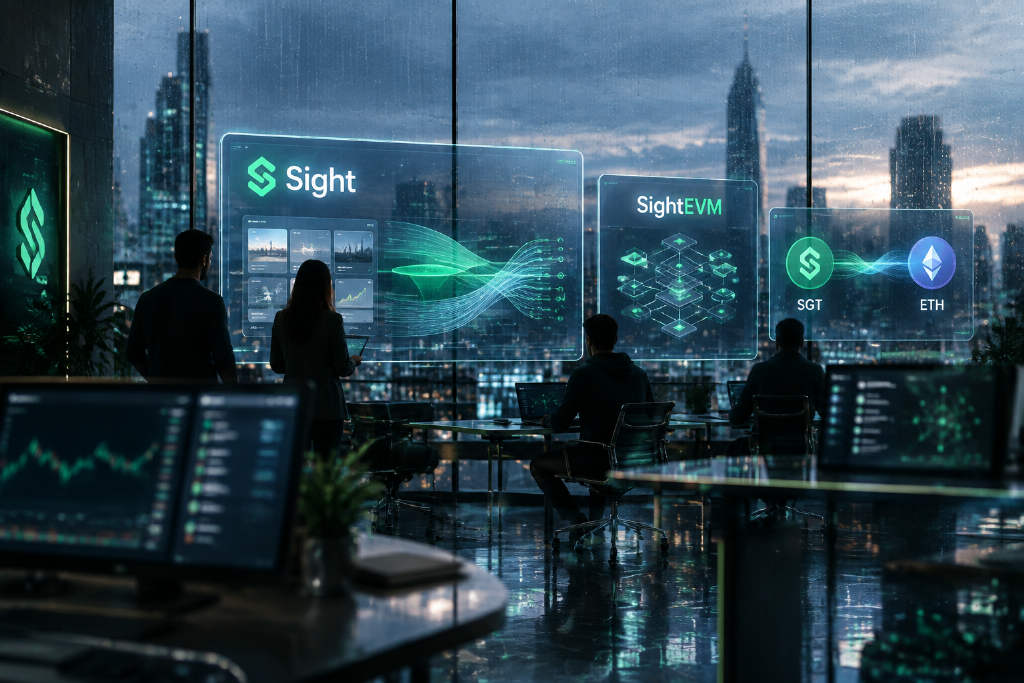
Sight, a prediction market project on Robinhood Chain, has released its development roadmap for the next three months. The plan centers on an upgrade to its market infrastructure, moving to an automated market maker, or AMM, model to support a broader range of market formats and categories. The roadmap also includes the launch of the SightEVM Layer 2 testnet, which will be used to test network infrastructure, deploy EVM-compatible smart contracts, and support ecosystem growth. In addition, Sight said it will introduce an SGT-ETH cross-chain bridge, with SGT serving as the native token of SightEVM. During the testnet phase, the project also plans to roll out Sight DEX, focused on decentralized token swaps, liquidity infrastructure, and smart contract testing. Other items on the roadmap include a dedicated blockchain explorer and a community testing program designed to gather user feedback on network functions, cross-chain features, and DEX-related testing.

2470
Sight outlines three-month roadmap with AMM shift and SightEVM testnet launch
Robinhood Chain
Sep 2, 2026

Robinhood Chain Still Runs on Meme Coins as Tokenized Stock Trading Waits for Its Turn

A Foresight article says Robinhood Chain is still drawing most of its traffic and revenue from meme-coin activity, not tokenized stock trading. Citing data shared by Odaily News, the piece says the chain generated about $2.66 million in revenue in a 24-hour period around Aug. 30. Roughly 90% of that came from three applications: GMGN, the Pons launch platform, and Uniswap. About 80% of the revenue within those apps was tied to meme coins. The article points to Long.xyz as a popular launch platform on Robinhood Chain that is pushing trading pairs between meme coins and tokenized equities. It highlights two main setups: meme coins paired with well-known stocks such as AI/NVDA, where NVDA represents tokenized Nvidia shares, and meme coins paired with low-market-cap U.S. stocks. In the author’s reading, traders in both categories are largely trading sentiment rather than fundamentals. The piece also argues that the structure has broader implications. Because tokenized stocks are included in AMM pairs, part of each trade fee can accumulate in project treasuries in the form of stock tokens, bringing U.S. equities into crypto’s asset base. It adds that if tokenized shares of crypto-linked companies such as MicroStrategy or BMNR are later paired with treasury-linked assets like BTC or ETH at sufficient scale, market swings could become sharper than before.

1000
Robinhood Chain Still Runs on Meme Coins as Tokenized Stock Trading Waits for Its Turn
Total 95 items
Go topage