Tether
Oct 24, 2026

Tether says 15 bitcoin mining firms, ASIC makers and pools will build MDK integrations

Tether said 15 bitcoin mining companies, ASIC manufacturers and mining pools have committed to jointly build and maintain integrations for its open-source Mining Development Kit, or MDK. The company said the toolkit is designed to standardize how different mining infrastructure is accessed, giving developers a common way to build applications and AI automation systems across varied environments. Under the plan, participants will develop and maintain MDK Workers that convert their own hardware, pool or system interfaces into a shared interface. Tether said this approach does not require participants to replace their existing technology, and each party can decide which functions to expose. The company also said existing applications can use MDK to connect with different mining environments. Tether added that its QVAC mining agent has already connected to mining infrastructure through MDK. According to the company, MDK version 0.11 will be released at the Plan ₿ Forum in Lugano, while the first stable version, version 1, is scheduled for launch by the end of 2026.


850
Tether says 15 bitcoin mining firms, ASIC makers and pools will build MDK integrations
Intel
Oct 20, 2026

JPMorgan lifts Intel to Neutral after 36% pullback, but stops short of a bullish call

JPMorgan raised Intel to Neutral from Underweight in an Oct. 18, 2026 report, arguing that much of the long-running bearish trade has already played out after the stock fell about 36% from its June peak. The bank did not turn positive on the name. Instead, it said the risk-reward profile now looks more balanced, with Intel trading close to JPMorgan’s $85 price target for December 2027. The report pointed to better execution in several areas: stronger competitiveness in data center CPUs, a sharp improvement in profitability at the Data Center and AI segment, progress in manufacturing with 18A-P in risk production and 14A targeted for high-volume manufacturing in 2028, and fast growth in ASIC services revenue. JPMorgan said those developments were enough to remove its Underweight rating. Still, the bank kept a cautious stance. External foundry revenue remains small relative to Taiwan Semiconductor Manufacturing Co., management has warned that 2027 free cash flow will be “more challenged,” and incremental dilution remains a key risk. JPMorgan said the next move in the stock will depend on four proof points, including data center CPU execution, broader AI compute strategy, external foundry customer wins, and stronger data center networking capabilities.

1050
JPMorgan lifts Intel to Neutral after 36% pullback, but stops short of a bullish call
MediaTek
Oct 20, 2026

MediaTek-linked Google TPU v9 shipment timeline may slip to Q1 2028

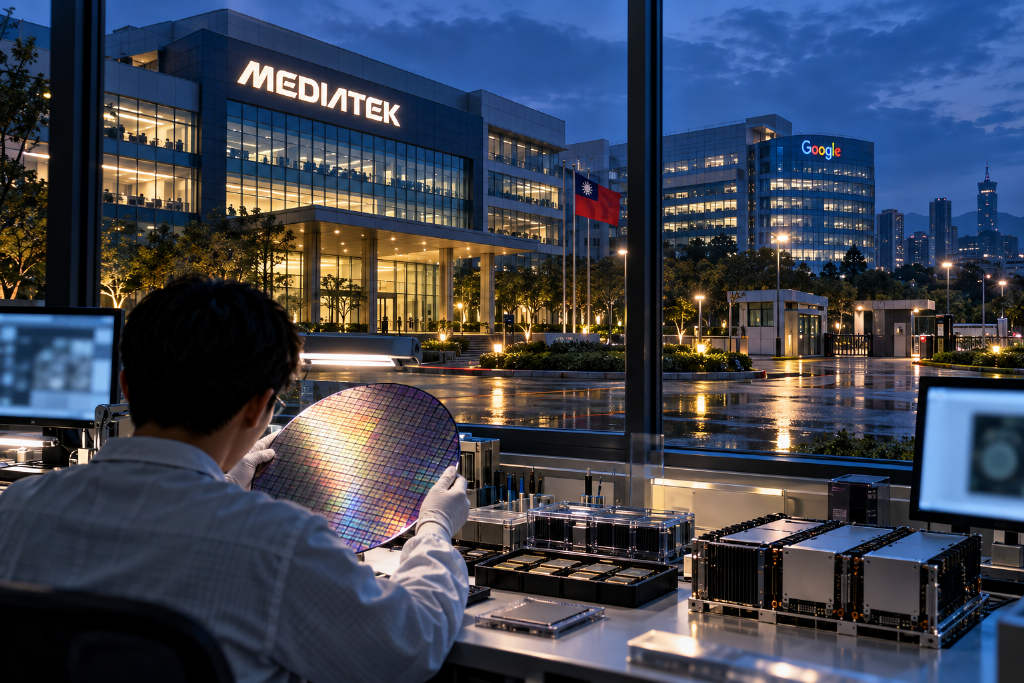
Google’s TPU v9 program, which involves MediaTek, is facing fresh timing questions after a reported design change to Core A. Citing institutional sources via Commercial Times, the report said the adjustment pushed development back by about three weeks, with the first tape-out now expected in January 2027 and shipments potentially moving to the first quarter of 2028. The November 2026 sample target was said to remain unchanged, while the mass-production tape-out is projected for the second quarter of 2027. The delay has also fueled debate over packaging and substrate technology. TrendForce said the chip is expected to use Intel’s EMIB-T packaging, where substrate yield remains a key factor for scale and cost competitiveness. DIGITIMES linked the schedule shift to Google’s design revision and referenced earlier yield issues during packaging, while also mentioning market talk around advanced glass substrates. That claim was challenged by Citrini analyst Zephyr, who said TPU v9 does not use glass substrates and that Broadcom, not MediaTek, would be the first to adopt them around 2029 to 2030. MediaTek is expected to face questions on the matter at its late-October earnings call.

2750
MediaTek-linked Google TPU v9 shipment timeline may slip to Q1 2028
ASIC
Oct 15, 2026

Australia’s ASIC unveils draft crypto platform rules with capital bar up to A$14 million

Australia’s Securities and Investments Commission has opened consultation on a draft rulebook for crypto trading platforms, setting out proposed standards on capital, custody and trading conduct under the country’s new digital asset framework. The consultation on CP 392 runs through Nov. 27, with final standards targeted for March 2027. The underlying law, the Corporations Amendment (Digital Assets Framework) Act, is set to take effect on April 8, 2027, followed by a transition period for license applications until Oct. 7. The most closely watched part of the draft is a three-option capital regime. Under the toughest option, a platform without a qualified third-party custody arrangement would need at least A$14 million in net tangible assets, or 10% of average revenue, whichever is higher. Industry participants said they are reviewing how the models would apply to firms of different sizes and what concessions may be available where third-party custody is used. ASIC also proposed allowing offshore custody rather than mandating domestic custody, while asking whether Australian operators should have emergency access to private keys if an overseas parent or affiliate fails. The draft also moves to curb conflicts of interest by restricting proprietary trading, limiting arrangements that could favor specific tokens, and introducing best execution requirements.

670
Australia’s ASIC unveils draft crypto platform rules with capital bar up to A$14 million
Australia
Oct 15, 2026

Australia opens consultation on crypto platform rules ahead of 2027 launch

Australia’s securities regulator has begun consulting on a proposed rulebook for crypto platforms as the country moves toward implementing its new digital asset law in 2027. The package, released by the Australian Securities and Investments Commission, or ASIC, focuses on capital requirements, custody arrangements and trading conduct for platform operators. Among the options under review are three alternative capital models, including one that would require operators without qualifying third-party custody to hold at least 14 million Australian dollars in net tangible assets, or 10% of average revenue, whichever is higher. ASIC is also seeking feedback on offshore custody, wallet reporting and restrictions on platforms trading on their own venue for their own account. The consultation follows Parliament’s passage in April of the Corporations Amendment (Digital Assets Framework) Act, which expands regulatory oversight of the sector. Industry participants quoted by Cointelegraph described the release as a meaningful step from years of policy debate into implementation, while also warning that the rules could pressure some business models. Feedback is due by Nov. 27. ASIC plans to publish final standards and guidance in March 2027. The law is scheduled to take effect on April 8, 2027, and operators will have until Oct. 7, 2027, to apply for the relevant license while continuing to operate during ASIC’s review.

940
Australia opens consultation on crypto platform rules ahead of 2027 launch
ByteDance
Oct 15, 2026

Bloomberg says ByteDance is close to a deal to buy custom AI data center chips from MediaTek

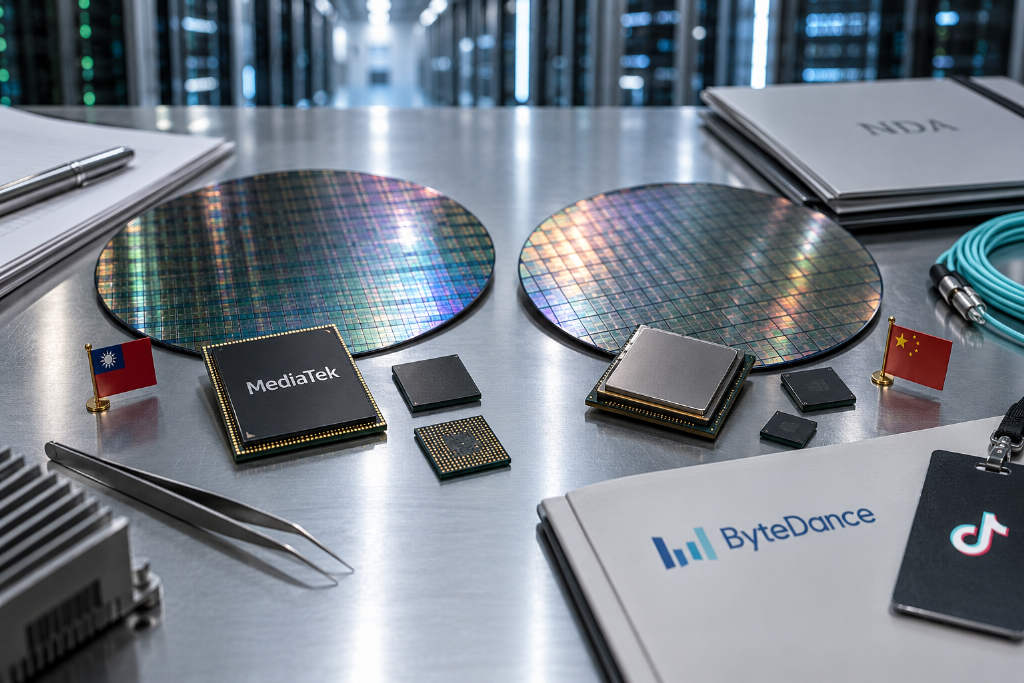
ByteDance, the parent company of TikTok, is in advanced talks with MediaTek and is close to reaching an agreement to buy custom chips for data center use, according to Bloomberg, which cited people familiar with the matter. If completed, the deal would make ByteDance a major ASIC customer for MediaTek, potentially its second large client after Google. Neither company has publicly confirmed the report. Bloomberg said MediaTek would supply an undisclosed volume of application-specific integrated circuits, or ASICs, designed around ByteDance’s platform needs. The report said the arrangement could help ByteDance secure key AI components while giving the Taiwanese chip designer more ground in its competition with Qualcomm. The article also pointed to ByteDance’s broader effort to secure computing power through multiple channels, including previously reported access to Nvidia chips. A number of details remain unknown. Bloomberg did not disclose chip volumes, deal value, manufacturing process, shipment timing, or where the chips would be made. The report also did not specify whether the cooperation would face regulatory constraints tied to U.S. export controls on advanced chips to China, an issue that could depend on chip specifications and end use.

840
Bloomberg says ByteDance is close to a deal to buy custom AI data center chips from MediaTek
Kingboard Laminates
Oct 14, 2026

Kingboard raises some CCL and prepreg prices by 15%, while Panasonic plans 200% hikes on selected products from 2027

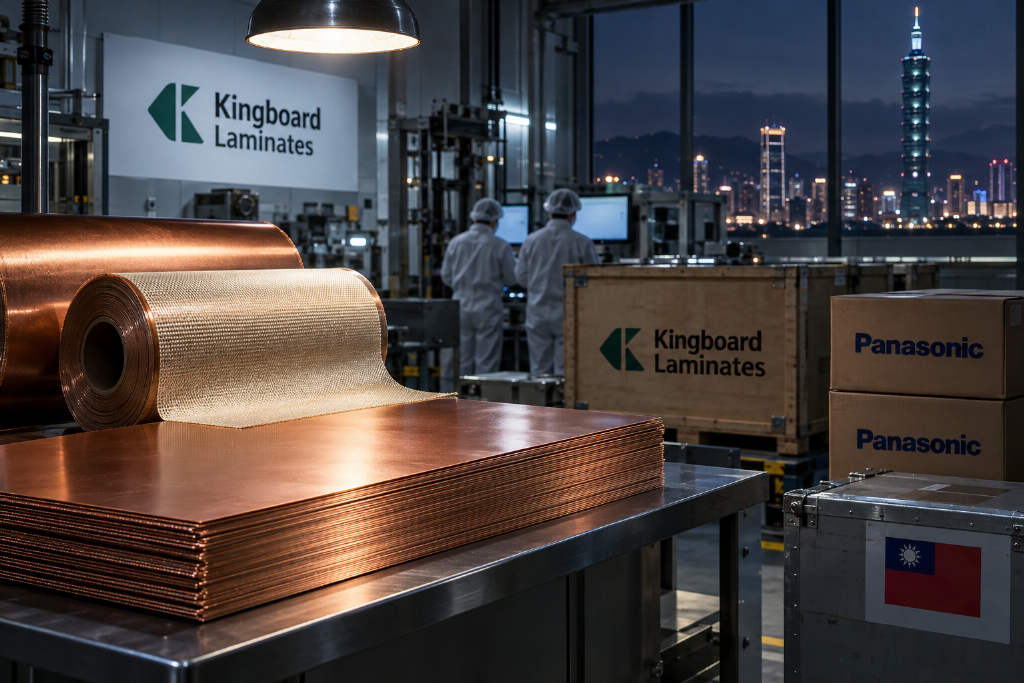
Price increases in the copper clad laminate, or CCL, market are spreading across Asia. Kingboard Laminates, a major Chinese CCL producer, said on Oct. 13 that it would raise prices by 15% on new orders for CCL and prepreg made with 2116-grade and thinner fiberglass cloth, marking its eighth price adjustment this year. The company said demand for thin fiberglass cloth has stayed strong while upstream supply of fiberglass cloth and fiberglass yarn remains tight, pushing raw material costs higher. Panasonic has also notified customers that some CCL products for standard multilayer boards will see a 200% price increase on shipments starting Jan. 1, 2027. The adjustment applies to the R-1705, R-1766, R-1566 and R-1755 series, with R-1705 covering all specifications and the other models applying to products with thickness of 1.1 mm or above. The change will apply across production sites in Koriyama, Guangzhou, Suzhou, Taiwan and Thailand. The report also cited Sinolink Securities in Hong Kong, which said demand for AI-related CCL and printed circuit boards remains strong. In the third quarter, EMC posted revenue of NT$60.885 billion, up 28.79% quarter over quarter and 142.13% year over year, while TUC reported NT$17.948 billion, up 25.51% from the previous quarter and 122.6% from a year earlier.

1600
Kingboard raises some CCL and prepreg prices by 15%, while Panasonic plans 200% hikes on selected products from 2027
Australia
Oct 12, 2026

Australia's ASIC proposes 2:1 leverage cap for retail crypto derivatives traders

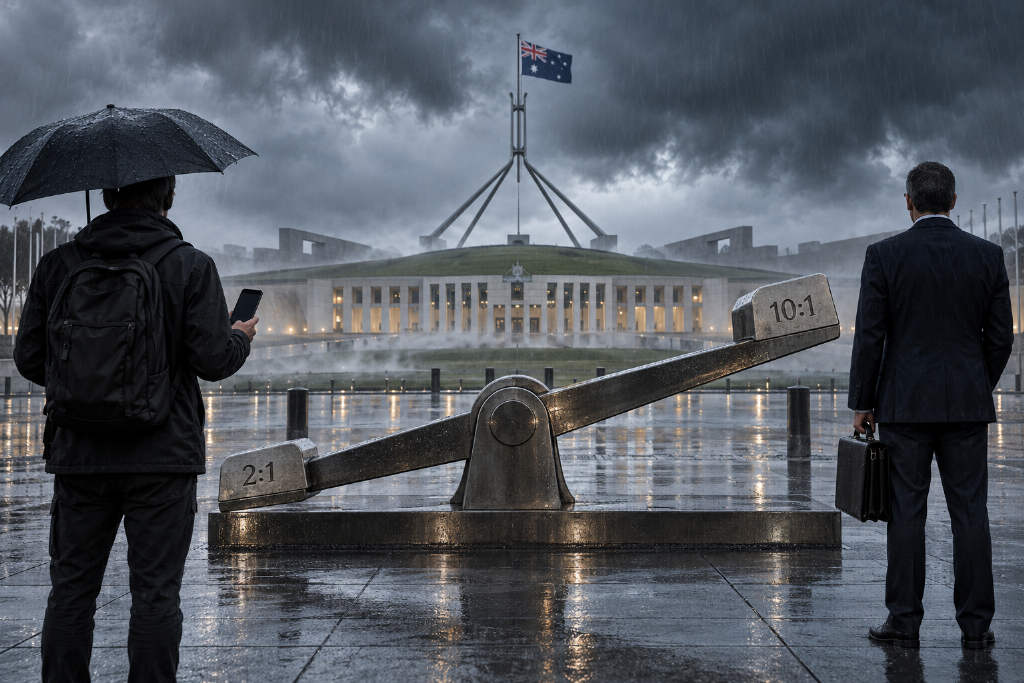
Australia’s Securities and Investments Commission, or ASIC, has proposed setting a 2:1 leverage cap for retail investors trading crypto derivatives, according to Techub News, which cited Cointelegraph. Under the proposal, professional investors would be allowed to use leverage of up to 10:1. The update points to a potential tightening in how leveraged crypto derivatives could be offered to different investor groups in Australia. The report did not provide additional details on timing or implementation.

780
Australia's ASIC proposes 2:1 leverage cap for retail crypto derivatives traders
Total 126 items
Go topage