Bitget
Sep 27, 2026

Crypto Week Ahead: Bitget Sets Withdrawal Timeline, CoinEx Winds Down Spot Trading

The week of Sept. 28 to Oct. 3 is packed with crypto policy deadlines, exchange changes, shutdowns, and token unlocks. Bitget said it will reopen withdrawals in phases from Sept. 28 through Oct. 2 after addressing a Sept. 24 security incident, and CEO Gracy Chen and Greater China lead Xie Jiayin are scheduled to host a live AMA on Sept. 28 for at least two hours to answer community questions. CoinEx, meanwhile, said it will cease operations and proceed with an orderly liquidation, with spot trading set to stop on Sept. 29. Beyond exchange developments, several regulatory milestones are due across major jurisdictions. The U.K. Financial Conduct Authority will open applications under its future crypto authorization regime on Sept. 30, while Australia’s transition period for digital asset licensing ends the same day. Brazil’s central bank is set to ban the use of stablecoins and other cryptocurrencies in cross-border settlement by eFX providers from Oct. 1, and Hawaii’s statewide ban on crypto ATMs also takes effect that day. South Korea is also due to introduce civil seizure rules for crypto assets. The calendar also includes product launches, governance votes, project closures, and large unlocks. Robinhood will hold its third HOOD Summit in Houston, Router Protocol plans to fully shut down by Sept. 30, and DoubleZero is scheduled to unlock about 1.66 billion 2Z tokens on Oct. 2, worth about $114 million and equal to roughly 47.69% of circulating supply.

3080
Crypto Week Ahead: Bitget Sets Withdrawal Timeline, CoinEx Winds Down Spot Trading
Microsoft
Sep 22, 2026

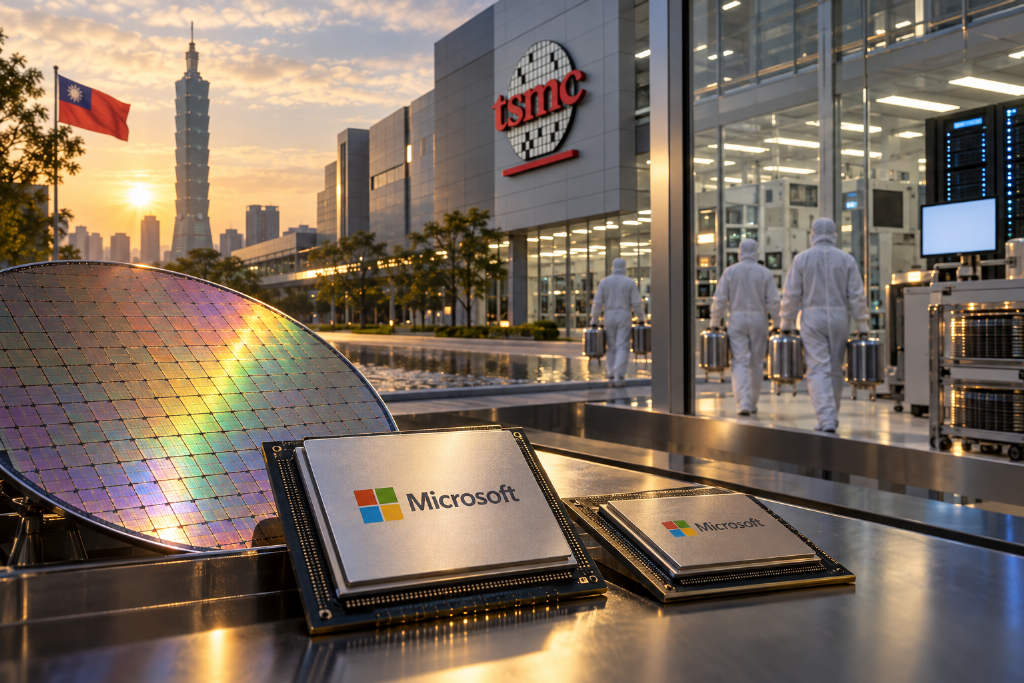
Microsoft pushes in-house AI chips as Maia 300 is said to seek more than 300,000 units of TSMC capacity

Microsoft is accelerating its in-house artificial intelligence chip program as it looks to cut reliance on expensive third-party processors and ease cloud computing costs. Market information cited in the report says the company is preparing its second-generation Maia 300 chip and has approached Taiwan Semiconductor Manufacturing Co. (TSMC) for manufacturing capacity exceeding 300,000 units, with delivery planned by 2027. Benjamin Bien, general manager of Microsoft Taiwan, said Microsoft’s internally developed application-specific integrated circuits, or ASICs, are progressing smoothly across design, capacity and deployment, and are expected to enter mass production next year. In the near term, the new chips are set to support Microsoft’s own services, including Microsoft 365 and Copilot, rather than being opened to third-party rental customers. The report also says Microsoft sees custom silicon as a way to lower AI computing costs, with internal briefing materials indicating dedicated chips could reduce related costs by about 30% to 40%. Even so, the company still faces scrutiny over ecosystem development and production scale, especially compared with Google, which is expected to produce as many as 300 million TPU units next year and already offers external compute rental.

980
Microsoft pushes in-house AI chips as Maia 300 is said to seek more than 300,000 units of TSMC capacity
Bitcoin mining
Sep 21, 2026

Can a Fruit Fly Brain Mine Bitcoin? FutureBit and FlyMiner Test Unusual Mining Setups

Bitcoin mining hardware has long moved toward highly specialized chips built for speed and power efficiency, but a small group of experiments is testing a very different direction. Hardware maker FutureBit said it has demonstrated a browser-based mining concept called HashFly that simulates 2,914 neural pathways from MaleCNS v1.0, a digital wiring map of an adult male fruit fly’s brain and central nerve cord. The company said it is now working to run SHA-256 across all neurons in the dataset and plans to publish the results. FutureBit argued on X that, if the idea could ever be scaled to real organic neurons, it could reach roughly 1 watt per terahash, which it described as about 10 times as efficient as the best 3-nanometer silicon ASICs. That estimate assumes a hypothetical setup where every neuron mines continuously. The current demo does not do that: it runs on standard computer hardware and operates far below Bitcoin’s real mining difficulty. Separately, a project called FlyMiner uses a larger fruit fly neural map with 139,255 neurons and 16.8 million connections to drive a conventional mining program linked to CKPool, reaching as many as 700,000 attempts per second.

1660
Can a Fruit Fly Brain Mine Bitcoin? FutureBit and FlyMiner Test Unusual Mining Setups
Market Analysis
Sep 16, 2026

Rising upstream costs squeeze PCB margins as substrate and CCL prices stay on an upward track

Economic Daily reported that CCL makers have raised product prices by roughly 20% to 30% over the past nearly six months as upstream material costs climbed across the board. Most PCB manufacturers have not been able to pass those increases through immediately, with a lag of around two to three months, pressuring gross margins. Institutional investors said some PCB makers are set to raise prices starting in the third quarter of this year, which could help earnings recover. Analysts also said substrate materials remain tight. Electronic fiberglass cloth led by T glass, along with copper foil and drill bits, continues to face shortages. The T glass gap is described as the most severe, with some manufacturers seeing a shortfall of as much as 20%, and the gap is expected to continue into next year. In the second half, demand from AI GPUs and ASIC high-performance computing, together with tight key raw materials, is expected to push substrate makers into a supply shortfall, leaving room for further rolling price increases. The report also named Taiwan-based CCL makers Taiwan Union Technology and ITEQ, and substrate supplier Nan Ya PCB, as companies the market remains positive on.

1370
Rising upstream costs squeeze PCB margins as substrate and CCL prices stay on an upward track
Google TPU
Sep 14, 2026

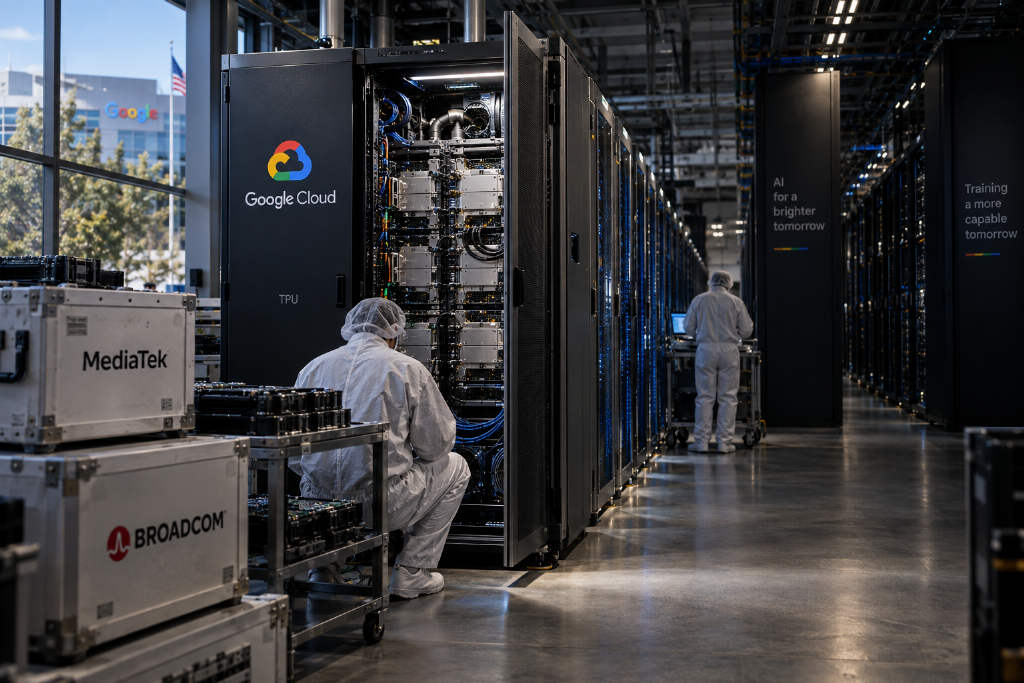
Google Says TPU Pays Back in About a Year as MediaTek Expands Supply Role and Broadcom Holds Training Orders

Google Cloud CEO Thomas Kurian said Google’s in-house Tensor Processing Units, or TPUs, can recoup their investment in about one year, while the overall payback period for Google AI servers is under two years. That disclosure has pushed investor attention toward the supply chain, where industry sources say TPU demand is still rising. According to the report, Google Cloud’s AI infrastructure customer base now stretches beyond AI labs into financial services, capital markets, high-performance computing, public-sector organizations and research institutions. Named examples include hedge funds, Deutsche Börse and the U.S. government’s Genesis Mission energy project. As workloads diversify, Google is said to be launching more TPU programs tailored to different computing needs. Third-party research from SemiAnalysis compared Google’s seventh-generation TPU v7 Ironwood with Nvidia’s B200 and B300 in FP8 inference. In one test setting, Ironwood posted a lower cost per million tokens than both Nvidia chips. Still, SemiAnalysis said results vary significantly depending on development maturity and latency requirements, and noted that Nvidia remains ahead in FP4 because Ironwood lacks native FP4 support. On the supply side, MediaTek has been increasing its share, while Broadcom continues to hold major training-side TPU orders.

2760
Google Says TPU Pays Back in About a Year as MediaTek Expands Supply Role and Broadcom Holds Training Orders
TSMC
Sep 14, 2026

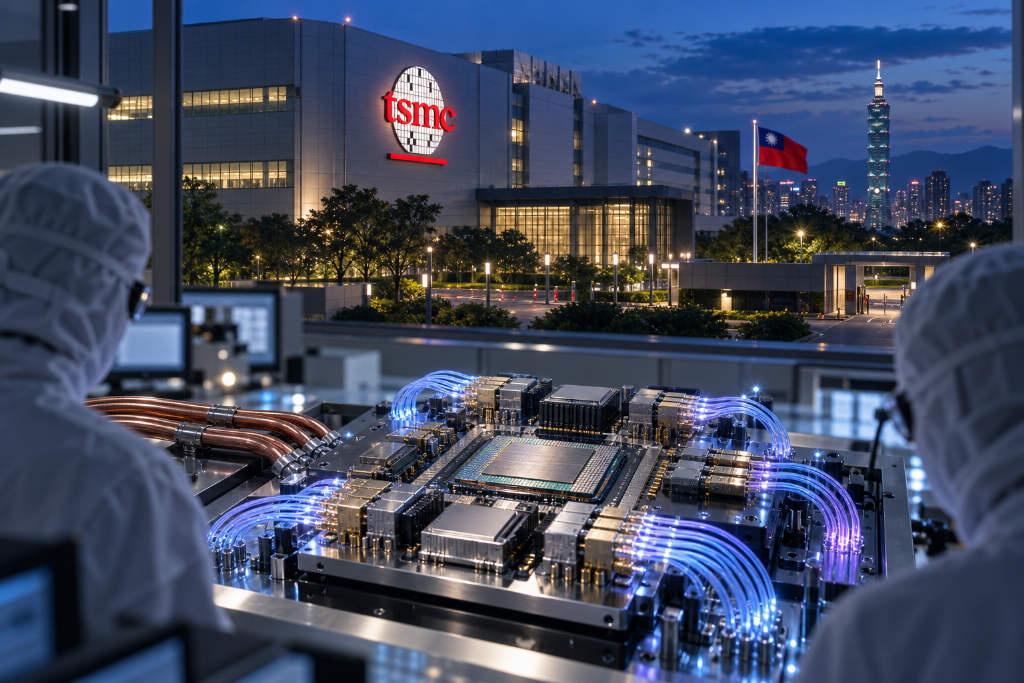
TSMC speeds up CPO push as copper interconnects near power and signal limits

TSMC is accelerating its push into co-packaged optics, or CPO, as rising GPU and ASIC compute capacity pushes traditional copper interconnects closer to their limits in power consumption and signal transmission, according to a Sept. 14 report by Taiwan's Commercial Times cited by ChainCatcher. Industry observers say CPO bandwidth could form an "optical Moore's Law" for the AI era if it continues doubling every two years. The report outlined three main upgrade paths for CPO bandwidth: increasing single-lane speed from 200G to above 400G, expanding optical channel counts from 16 to 32 and then beyond 64, and adopting wavelength division multiplexing, or WDM. On that basis, the theoretical ceiling by 2040 could reach about 128 times current levels. Using the present 3.2T class as a reference point, the long-term trajectory could extend into the hundreds of terabits. TSMC's role in optical interconnects is also expanding from pure wafer foundry work to system integration across 3DFabric, CoWoS, SoIC, silicon photonics and CPO, combining compute, HBM memory and high-speed I/O. The report added that once electrical signals exceed 200G, attenuation worsens across longer copper paths including ABF substrates, PCBs and connectors, pushing the industry toward shorter copper links and longer optical links. Mass production of CPO still faces packaging, optical coupling and testing hurdles.

1510
TSMC speeds up CPO push as copper interconnects near power and signal limits
MediaTek
Sep 11, 2026

MediaTek reports record August revenue of NT$64.183 billion

MediaTek posted consolidated revenue of NT$64.183 billion for August, up 32.4% from July and 44% from a year earlier, setting a new monthly record, according to ChainCatcher. Revenue for July and August combined reached NT$112.658 billion, while cumulative consolidated revenue for the first eight months of the year totaled NT$413.991 billion, up 5.7% year over year. The company said September revenue only needs to exceed NT$39.542 billion to meet the low end of its third-quarter guidance. MediaTek expects growth in its smart device platform business this quarter to offset weakness in its handset segment. Based on an exchange rate assumption of NT$32 to the U.S. dollar, third-quarter revenue is projected at NT$152.2 billion to NT$159.8 billion, ranging from flat to up 5% quarter over quarter and up 7% to 12% year over year, with gross margin estimated at 46% plus or minus 1.5 percentage points. MediaTek also said flagship system-on-chip shipment growth should broadly offset softness in other products. It expects third-quarter mobile chip revenue to be flat to down a mid-single-digit percentage, while smart device platform revenue rises by a mid- to high-single-digit percentage. The company added that data center chip revenue could exceed $2 billion this year, with its first AI accelerator ASIC set for mass production in the fourth quarter.

1500
MediaTek reports record August revenue of NT$64.183 billion
Progate Group
Sep 10, 2026

Progate Group rallies for a third straight limit-up as advanced-node design push lifts earnings

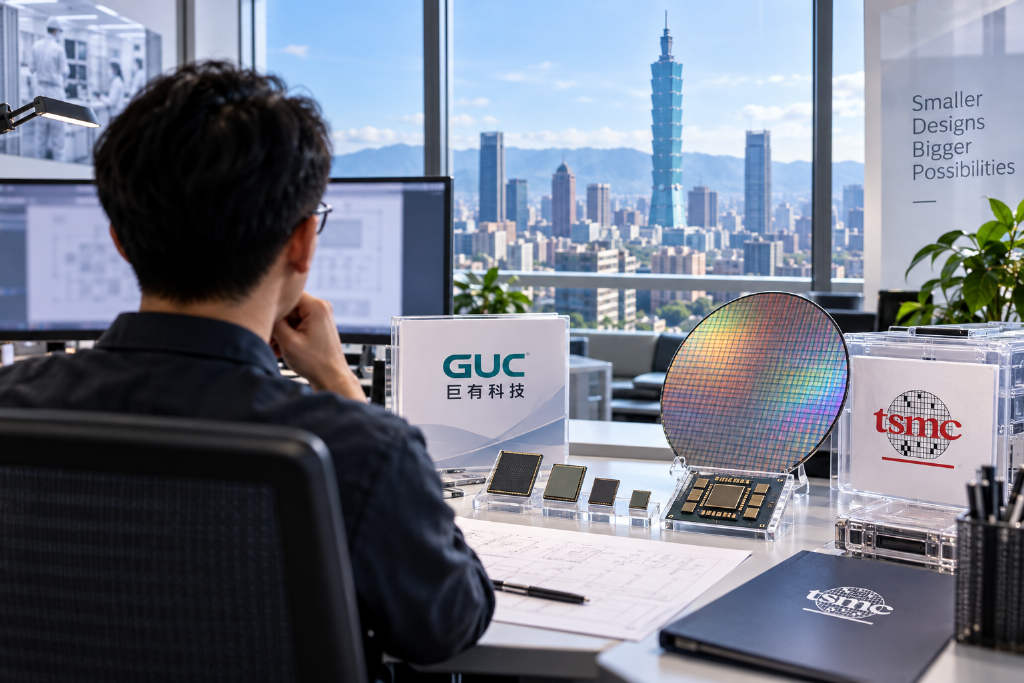
Progate Group Corp. (8227) has emerged as a key service provider for smaller IC design houses seeking access to Taiwan Semiconductor Manufacturing Co. capacity, as AI-driven demand keeps advanced-node supply tight. While major cloud service providers have turned to large ASIC firms such as Alchip and GUC to secure production slots, Progate is being positioned as a turnkey bridge for companies that lack the scale or budget to work directly with TSMC. According to the source report, Progate has more than 30 years of ties with TSMC and was the first strategic partner in TSMC’s early DCA, or Design Center Alliance. The company now provides end-to-end services covering chip design, wafer tape-out at TSMC, and backend packaging and testing. Recent investor presentation materials show Progate expanding from mature offerings into advanced nodes including 6nm, 5nm, 4nm and 3nm, while also extending into TSMC’s CoWoS packaging and related cooperation with Vanguard International Semiconductor. Financially, the company reported 2025 revenue of NT$1.35 billion, up 97.8% year over year, and second-quarter 2026 revenue of about NT$613 million. Q2 2026 EPS reached NT$2.59, up 304% from the previous quarter and above full-year 2025 EPS of NT$2.06. The stock has now hit limit-up for three straight sessions.

1650
Progate Group rallies for a third straight limit-up as advanced-node design push lifts earnings
Total 126 items
Go topage