Australia
Sep 3, 2026

Australia's ASIC Sets September 30 Deadline for Crypto License Applications

Australia's Securities and Investments Commission (ASIC) has warned crypto companies relying on temporary regulatory exemptions that they must apply for an Australian Financial Services License (AFSL) or amend an existing license by September 30. Starting October 1, firms that still need authorization but do not meet ASIC's no-action position conditions may face penalties, including fines up to 10% of annual turnover. ASIC said it has received over 45 digital asset-related license applications since its guidance update in October 2025.

1640
Australia's ASIC Sets September 30 Deadline for Crypto License Applications
Nvidia
Sep 1, 2026

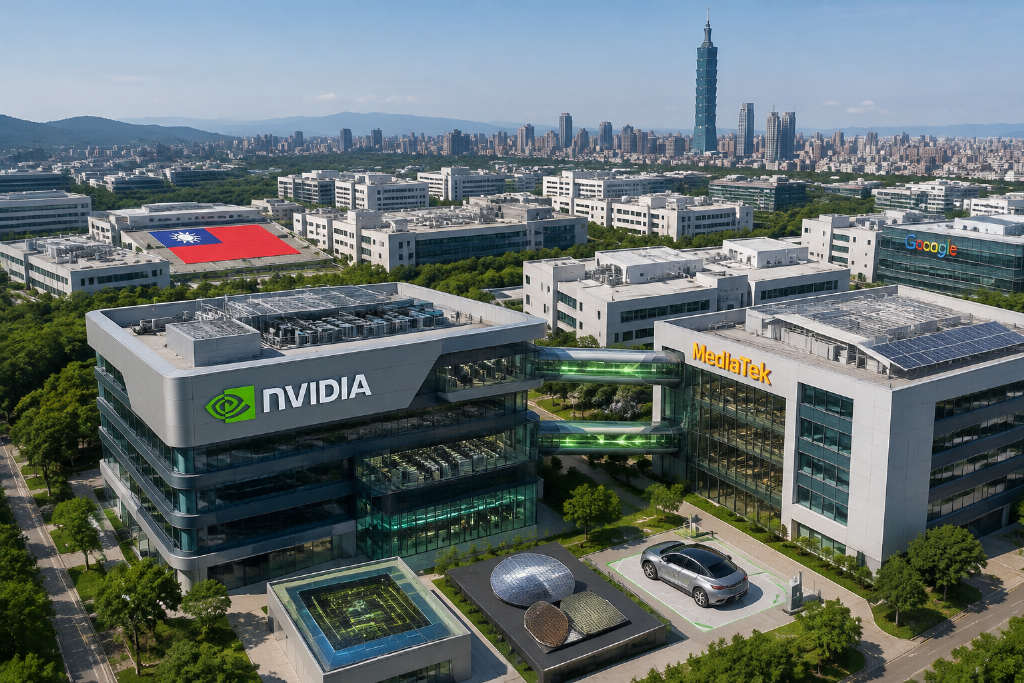
Nvidia Puts $3.5 Billion Into MediaTek Convertible Bonds as Partnership Expands Beyond GPUs

Nvidia has agreed to buy $3.5 billion of MediaTek convertible bonds, covering about 90% of the Taiwanese chip designer’s $3.9 billion offshore bond sale announced Monday. MediaTek described the offering as the largest deal of its kind in the island’s capital-market history. Alphabet also participated, though neither side disclosed how much Google’s parent invested. The transaction adds a financial layer to a partnership that already spans PCs, data centers, and automotive systems. Under a joint statement from the companies, MediaTek will adopt Nvidia’s NVLink Fusion platform to connect custom chips directly into Nvidia rack-scale computing systems. The two companies said their main focus areas are AI infrastructure, edge AI, and software-defined vehicles. They are also continuing work on RTX Spark and DGX Spark chips for AI PCs and developer workstations, combining MediaTek’s system-on-chip expertise with Nvidia GPUs. The bond structure has drawn scrutiny because Nvidia bought zero-coupon convertible bonds, which carry no interest payments unless holders convert at a preset strike price. Critics have described the arrangement as circular financing. MediaTek, for its part, is pushing deeper into custom AI accelerator ASICs, expecting that business to generate more than $2 billion in revenue this year. Its first AI accelerator ASIC is due for mass production in the fourth quarter of 2026, with a second-generation chip planned for high-volume output in 2028.

1840
Nvidia Puts $3.5 Billion Into MediaTek Convertible Bonds as Partnership Expands Beyond GPUs
MediaTek
Sep 1, 2026

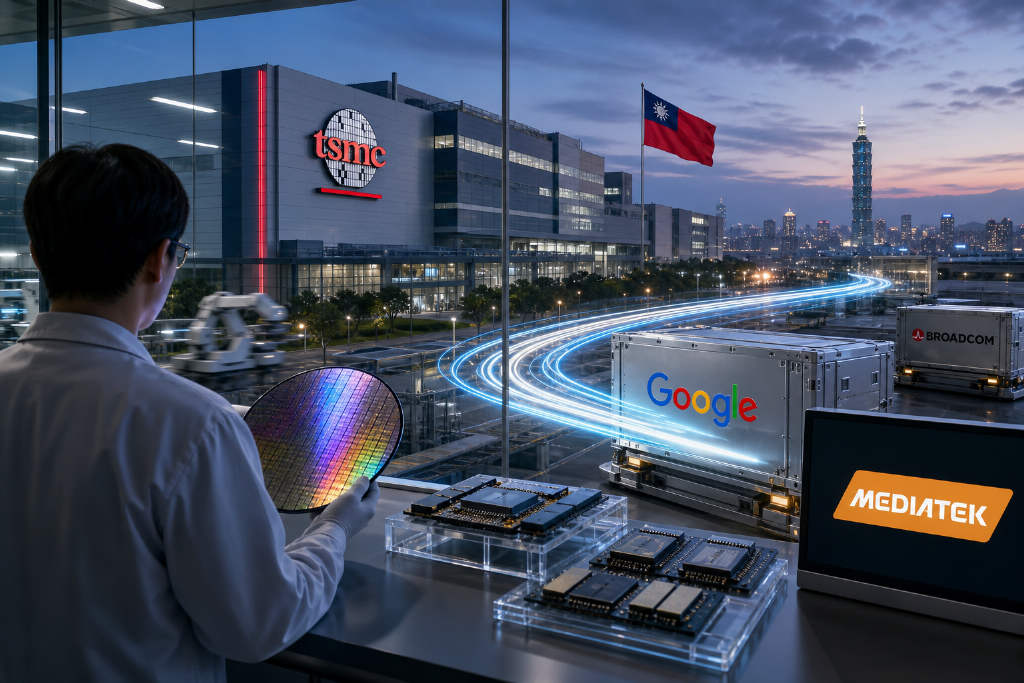
J.P. Morgan says Google TPU orders are tilting toward MediaTek, putting Broadcom share at risk

J.P. Morgan’s latest industry survey points to a sharper shift inside Google’s TPU supply chain, with MediaTek gaining ground against Broadcom in the current TPUv8 generation and potentially extending that lead into TPUv9. The bank said MediaTek’s TPUv8t Zebrafish ASIC has moved smoothly into mass production with Taiwan Semiconductor Manufacturing Co. (TSMC), using the N3 process node and CoWoS advanced packaging. On that basis, J.P. Morgan estimates MediaTek’s data center ASIC revenue could exceed $2 billion in 2026. The bank also expects Zebrafish unit shipments to top Broadcom’s Sunfish in 2027, which it said could lift MediaTek’s full-year data center ASIC revenue to $18 billion, above the company’s own $12 billion to $16 billion guidance range. A major factor in that view is cost. According to the survey, Google could save about 43% per chip by shifting purchases from Broadcom’s fully integrated design approach to MediaTek’s semi-CoT modular packaging model. J.P. Morgan added that it sees no sign Broadcom has a TPUv9 competitive product, reportedly codenamed Pumafish, for 2028. Separately, MediaTek on Aug. 31 announced a $3.9 billion unsecured overseas convertible bond deal, with NVIDIA taking $3.5 billion and Alphabet subscribing to the remainder.

3250
J.P. Morgan says Google TPU orders are tilting toward MediaTek, putting Broadcom share at risk
Nvidia
Aug 31, 2026

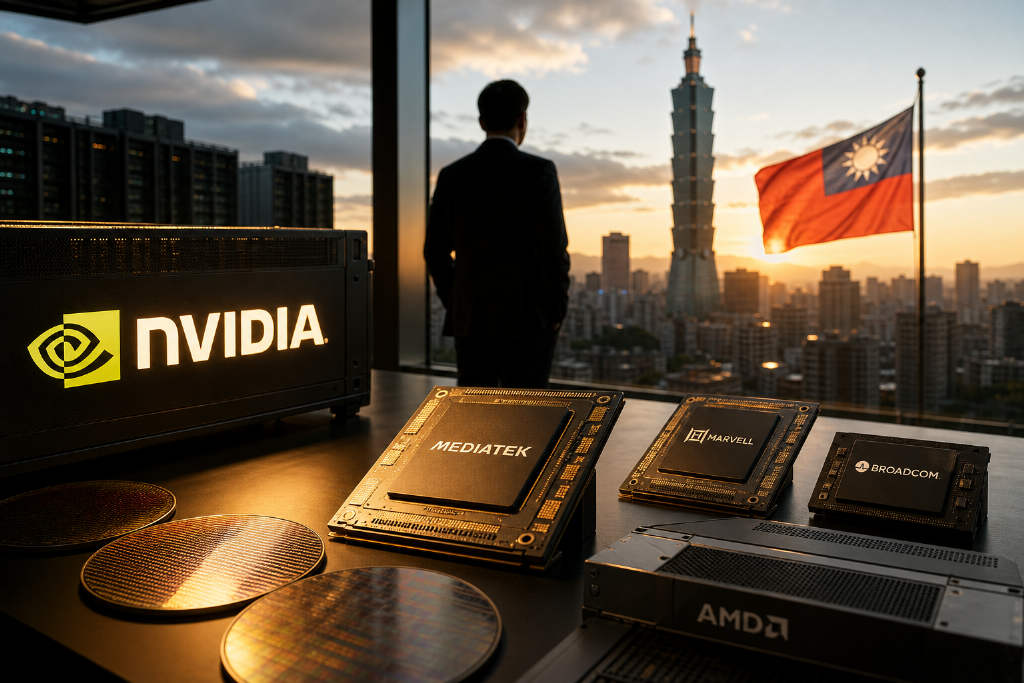
Serenity says Nvidia’s MediaTek bet may be a move to pick the next ASIC winner

Serenity, known in Chinese crypto circles as the “white-haired stock god,” said Nvidia’s $3.5 billion investment in MediaTek looks like more than a financial deal. In his view, the move suggests Nvidia is using capital and strategic partnerships to identify and back likely winners in the next wave of application-specific integrated circuits, or ASICs, with MediaTek and Marvell standing out as possible beneficiaries. He compared the approach to Nvidia’s earlier support for neocloud companies such as Nebius and CoreWeave, where Nvidia helped potential leaders scale and then built deeper financial and strategic ties with them. Serenity argued that this playbook helps Nvidia reinforce its leading position across the AI infrastructure supply chain. He also said the move could create a second-order effect for Broadcom by weakening its relative advantage in ASICs, while at the same time pushing AMD, Broadcom and some large cloud service providers into closer cooperation. Serenity added that the development matters because it could strengthen Nvidia’s strategic position in the AI inference market and weaken the bearish view that hyperscalers’ in-house ASIC efforts will pose a lasting challenge to Nvidia.

1450
Serenity says Nvidia’s MediaTek bet may be a move to pick the next ASIC winner
Marvell
Aug 31, 2026

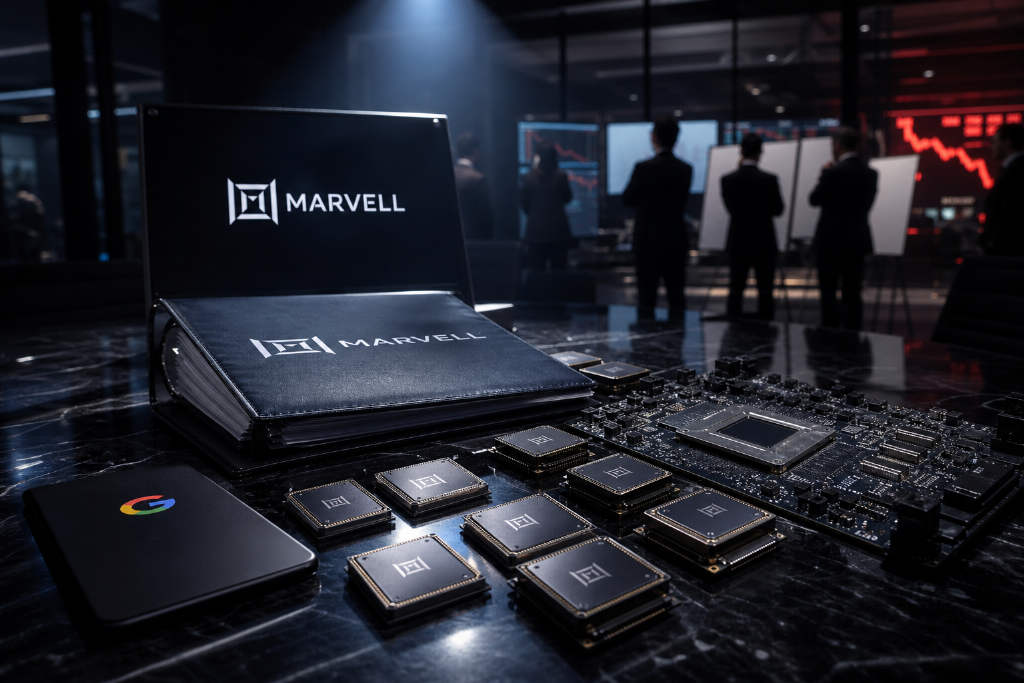
Marvell lifts two-year revenue targets, but unchanged ASIC outlook leaves investors unconvinced

Marvell Technology reported fiscal 2027 second-quarter results for the period ended July 2026 and raised its revenue outlook for both fiscal 2027 and fiscal 2028. The company now expects $12 billion in revenue for fiscal 2027, up from prior guidance of $11.5 billion, and $18 billion for fiscal 2028, up from $16.5 billion previously. Those figures imply 45% and 50% year-over-year growth, respectively. Management also said data center revenue is expected to grow by more than 60%, while custom ASIC revenue is still projected to more than double in fiscal 2028. The problem for investors was not the headline increase, but the gap between expectations and what Marvell actually delivered. Before the earnings release, major institutions had already modeled roughly $11.8 billion for fiscal 2027 and $17 billion to $17.5 billion for fiscal 2028. Against that backdrop, the new company targets were only modestly ahead of consensus. The contrast with Nvidia’s stronger growth framing was hard to miss. Marvell posted quarterly revenue of $2.74 billion, up 13% sequentially and close to the $2.75 billion market expectation. Data center revenue reached $2.17 billion, up 19% quarter over quarter and accounting for 79% of total revenue, driven mainly by connectivity products. Even so, investor attention stayed fixed on custom ASIC. After Marvell’s recent agreement with Google, the market had been looking for a more aggressive ASIC update. Management did not raise that outlook and said more detail, including scenario ranges, will be discussed at its Oct. 6 analyst day.

1760
Marvell lifts two-year revenue targets, but unchanged ASIC outlook leaves investors unconvinced
OpenAI
Aug 26, 2026

SemiAnalysis says OpenAI’s Jalapeño inference chip outperformed Nvidia Blackwell in lab tests

SemiAnalysis said OpenAI’s in-house inference chip, Jalapeño, delivered higher token throughput per megawatt than Nvidia’s Blackwell in lab testing, and in some comparisons even came in ahead of the next-generation Rubin lineup. The report says the chip went from design to tape-out in about 16 months after development began in mid-2024, with OpenAI and Broadcom building the first-generation ASIC from scratch. According to the published results, SemiAnalysis ran the benchmarks with the InferenceX suite and found Jalapeño leading on token throughput per megawatt without using multi-token prediction, while the other chips in the chart had MTP enabled. The report lists more than 700 tokens per second per user on DeepSeek R1 at concurrency 1, about 1,400 tokens per second per user on Kimi-K2.5 and GPT-OSS, and GSM8k scores in line with Nvidia chips. The piece argues that Rubin, not Blackwell, is the more relevant comparison because both Jalapeño and Rubin use HBM4. It also says OpenAI is optimizing for performance per watt because data center power, rather than budget or floor space, is the current constraint. The architecture described in the report allows up to 2,048 Jalapeño XPUs within a single scale-out network, with OpenAI’s next target set at 100MW.

1760
SemiAnalysis says OpenAI’s Jalapeño inference chip outperformed Nvidia Blackwell in lab tests
mining rigs
Aug 25, 2026

U.S. 100% bonus depreciation creates a different cost-recovery path for mining rigs

FinTax examined how the same ASIC mining machine can produce two very different cost-recovery schedules under accounting rules and U.S. federal tax law. Under financial reporting, listed miners commonly capitalize self-mining equipment as property, plant and equipment and depreciate it over an estimated useful life that may now be as short as two to three years for many models. Under the U.S. tax code, though, qualifying property may be eligible for a full first-year writeoff. The article says H.R.1 became Public Law 119-21 on July 4, 2025, and Section 70301 amended IRC §168(k) to permanently restore the 100% additional first-year depreciation deduction, commonly known as bonus depreciation. IRS Notice 2026-11 later said the rule generally applies to qualified property acquired and placed in service after Jan. 19, 2025. FinTax stressed that this does not mean every mining machine can be deducted in full in the year of purchase. The outcome still depends on tax classification, timing of acquisition, when the asset is placed in service, and whether the taxpayer elects out or uses the transitional 40% option available under IRC §168(k)(10) for the first tax year beginning on or after Jan. 19, 2025. The piece also compared the U.S. approach with Ethiopia and Kazakhstan, where mining equipment generally follows local asset classes and statutory depreciation rules, producing a different tax-accounting profile.

1880
U.S. 100% bonus depreciation creates a different cost-recovery path for mining rigs
Total 126 items
Go topage