Tesla to Add a Shift to Complete Cybercab Orders on Time
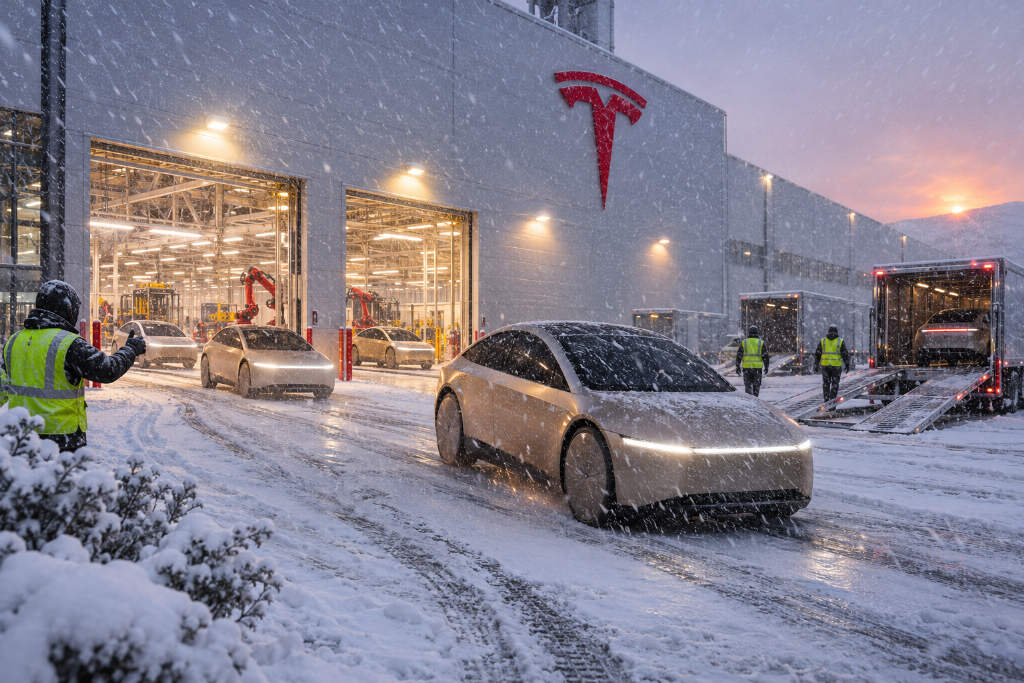
ChainCatcher reported that Tesla will add another shift as it seeks to complete all Cybercab orders on schedule. The company did not disclose further details about the additional shift.
390

ChainCatcher reported that Tesla will add another shift as it seeks to complete all Cybercab orders on schedule. The company did not disclose further details about the additional shift.
Qualcomm reported weaker results for its fiscal 2026 fourth quarter and full year, with its handset chip business posting the sharpest decline. Fourth-quarter revenue came in at $10.322 billion, down 8% year over year, while non-GAAP net income fell 28% to $2.332 billion and adjusted EPS was $2.17. For the full fiscal year, revenue slipped 3% to $43.120 billion and non-GAAP net income dropped 15% to $11.311 billion. The company’s handset segment remained the main pressure point. Smartphone chip revenue fell 26% year over year to $5.137 billion in the fourth quarter and declined 13% to $24.072 billion for the full year. By contrast, automotive revenue rose 89% to a quarterly record of $1.990 billion, and IoT revenue increased 4% to $1.888 billion. Qualcomm reiterated a target of $5 billion in data center revenue for fiscal 2027 and said custom chip projects with two large cloud service providers are expected to begin contributing revenue in the first quarter of that fiscal year. Investors are still weighing whether those newer businesses can offset pressure from smartphones. After the earnings release, Qualcomm shares fell about 5% in after-hours trading at one point. Management pointed to higher memory prices, changes in handset makers’ procurement plans, and shrinking Apple modem revenue as near-term headwinds, even as automotive growth stays strong and data center orders move toward revenue recognition.
Qualcomm shares fell about 7% in after-hours trading after the chipmaker released earnings and a new quarterly forecast that came in light on profit. The company said earnings per share for the quarter ending in December are expected to range from $2.15 to $2.35, with a midpoint of $2.25, below analysts’ average estimate of $2.32. Revenue guidance was stronger, at $10.4 billion to $11.2 billion, with the midpoint above the market forecast of $10.55 billion. Still, rising costs for key components and wafer manufacturing cut into margins. The company’s smartphone chip business remained under pressure. Revenue from that segment fell 26% year over year to $5.14 billion in the previous quarter, reflecting weak smartphone demand and production adjustments by handset makers. By contrast, automotive revenue rose 89% to $2 billion, while internet-connected devices revenue increased 4% to $1.89 billion. Qualcomm CEO Cristiano Amon is pushing expansion into PCs, automotive, connected devices, and data centers, and the company recently secured a ground wireless network equipment partnership with SpaceX. Even so, investors are still watching whether newer businesses can offset weakness in the company’s core handset chip segment.
NVIDIA founder Jensen Huang met German Chancellor Friedrich Merz in Berlin, where the two discussed combining German engineering with NVIDIA’s AI technology to support development in manufacturing and the automotive sector. Separately, NVIDIA said it plans to invest in four German companies: Agile Robots SE, aveliosmed, MireloAI and reflexaerospace. The planned investments span robotics, healthcare, creative tools and space. The update was reported by Techub News. No financial terms were disclosed in the source material, and the announcement did not include additional details on timing beyond the meeting and investment plan described in the report.
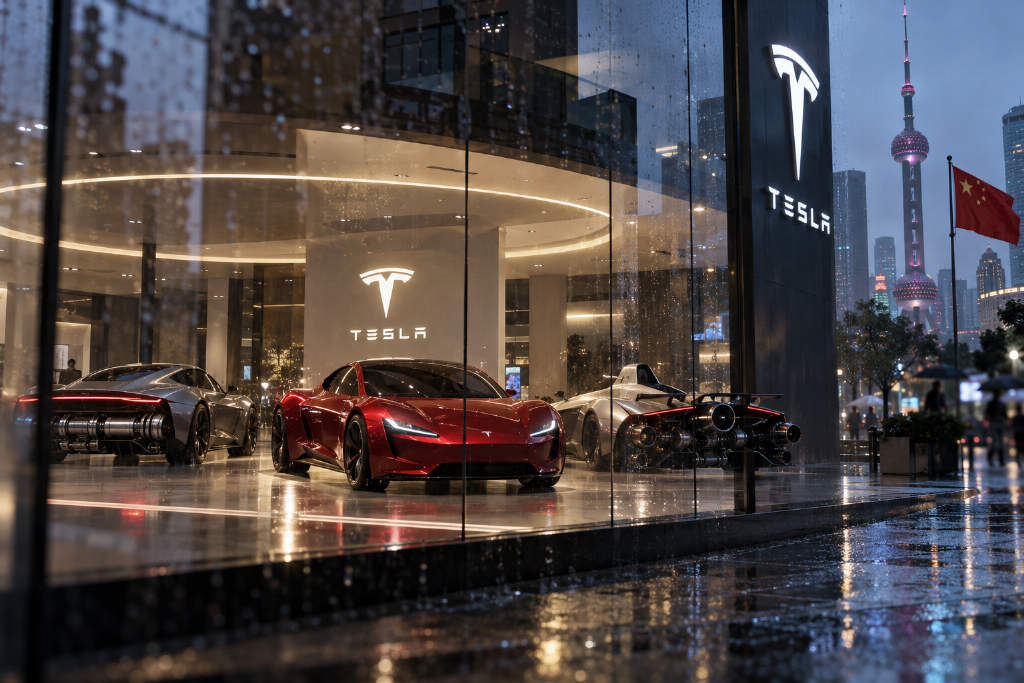
Tesla’s official website shows that the new Roadster will come in three versions: Performance, Thrust, and Rocket. The Performance version uses a two-seat layout and is street legal, with a $50,000 deposit in the U.S. Tesla’s China website is currently accepting pre-orders only for this model, with a deposit set at RMB 332,000. The Thrust version will be sold in limited quantities and is restricted to track use. It features cold-gas thrusters at the rear, and Tesla says it can accelerate from 0 to 100 km/h in under one second. Its U.S. deposit is $250,000, purchases are limited to one car per customer, and supply depends on local regulations. The Rocket version adopts a single-seat layout and adds cold-gas thrusters around the body. Tesla says it can accelerate forward, upward, and turn laterally. The company says the model has flight capability, but it cannot be used on public roads. Sales will be handled through invitations, and online reservations are not yet available.
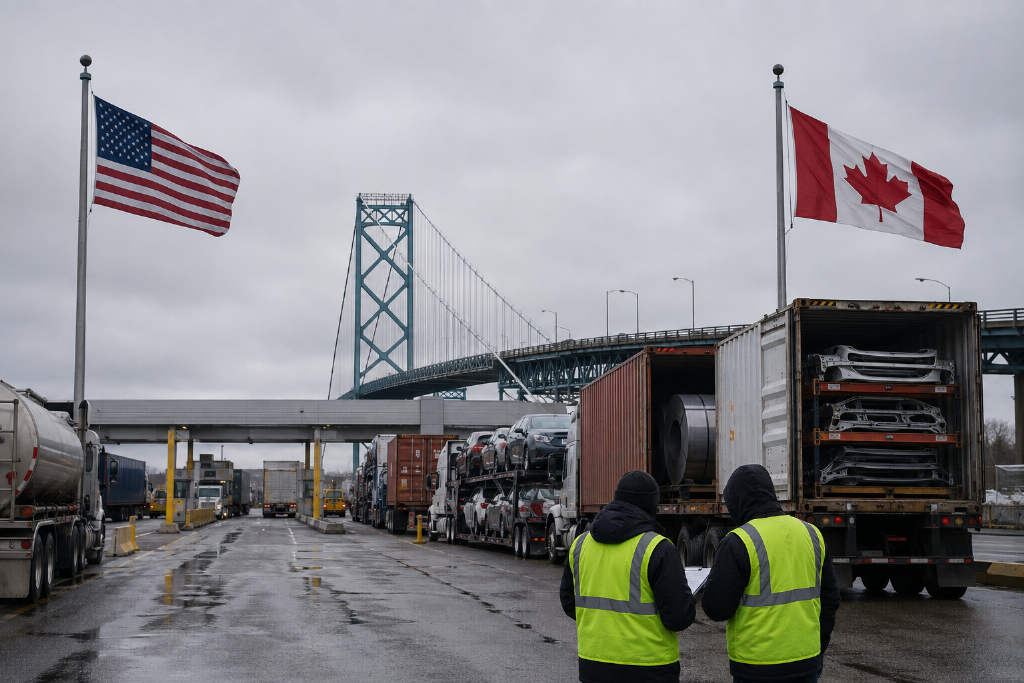
According to CryptoBriefing, U.S. President Donald Trump imposed a 50% tariff on approximately $20 billion worth of Canadian imports on August 22, 2026, sharply escalating trade tensions between the two nations. Canadian Prime Minister Mark Carney responded by pledging equivalent retaliatory measures effective September 8. The trade dispute stems from U.S. dissatisfaction with an annual trade deficit of roughly $50 billion, particularly in energy and automotive sectors, raising concerns about bilateral economic relations and the stability of North American supply chains.
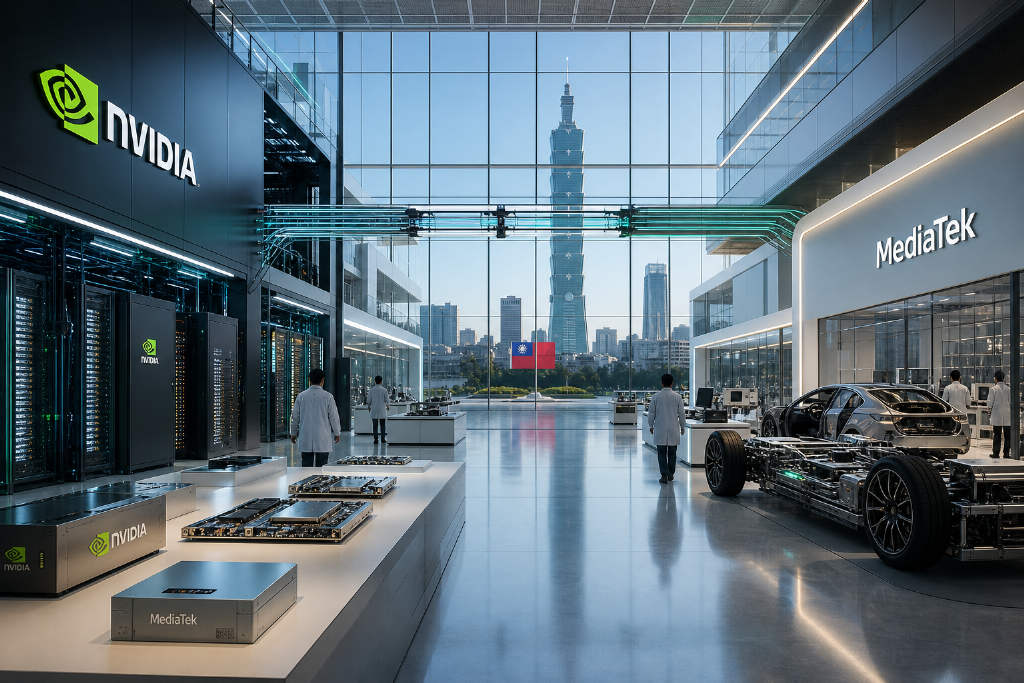
Nvidia and MediaTek are deepening their long-running partnership with a planned $3.5 billion investment by Nvidia in MediaTek convertible bonds, according to an Odaily report citing Jin10. The two companies said they will work together on an edge-to-cloud AI computing platform and broaden collaboration across three business lines: AI infrastructure, local AI computing, and automotive technology. MediaTek will adopt the new NVIDIA NVLink Fusion platform to help customers bring custom XPUs into rack-scale AI factories connected through NVIDIA NVLink. On the client and workstation side, the companies will continue developing multiple generations of NVIDIA RTX Spark and DGX Spark PC chips, combining Nvidia GPUs with MediaTek SoCs for consumer PCs, AI development supercomputers, and enterprise workstations. The partnership also extends to software-defined vehicles, where both sides said they will continue developing AI-driven platforms for the era of physical AI.
Texas Instruments reported $5.46 billion in second-quarter revenue, up 23% from a year earlier, while net income reached $1.98 billion and came in above the level recorded in the same period last year. The company also guided third-quarter revenue to a range of $5.65 billion to $6.15 billion, topping Wall Street expectations. According to the company, demand for analog chips was supported by investment tied to AI infrastructure, along with a recovery in the industrial and automotive markets. The latest figures point to stronger momentum in end-market demand than analysts had expected heading into the quarter.