Boltz2026-08-13 01:43:14Boltz to be taken over by new team after service suspension, original founders step downBoltz, a non-custodial Bitcoin cross-chain bridge, said it will be taken over by a new team after suspending its swap service, saying its five-person bootstrapped startup could no longer withstand the current intensity of attacks over the long term. The project said a group of experienced Bitcoin professionals has offered funding and engineering support and agreed to continue operating Boltz. The company said work on vulnerability fixes has started and that the goal is to restore swap services as soon as possible. At the same time, Boltz said its swap service will remain offline until further notice. Its API is still available for cooperative refunds, while unilateral refunds do not depend on Boltz infrastructure. Boltz also said the three original founders — Kilian, Michael, and Karl — have all stepped down effective immediately and will hold no formal roles going forward. According to the project, it has faced months of automated and AI-assisted infrastructure probing and has dealt with multiple attacks that were contained. After conducting security scans, the team said it could not responsibly bring the service back online yet. Boltz added that user funds were not at risk because the protocol is non-custodial, and any losses will be borne by the team.1280
Boltz2026-08-12 21:35:29Boltz founders step aside as unnamed Bitcoin group moves to take over suspended swap serviceBoltz said Wednesday that all of its original founders have stepped down and that an unnamed group of 「veteran Bitcoiners」 has agreed to take over the suspended Bitcoin swap service. The incoming operators are expected to bring both capital and engineering support as the company works through vulnerabilities that led to the shutdown. The service was suspended on Aug. 3 after what Boltz described as months of increasingly frequent, intense, and sophisticated AI-assisted attacks. Some of those attacks succeeded and caused losses, the company said, though it added that user funds were never at risk because Boltz operates as a non-custodial service. As of Wednesday, swaps were still offline. Boltz’s web app continued to show 「Swap Services Disabled,」 while its outage notice said the API remained available for cooperative refunds and that unilateral refunds do not depend on Boltz infrastructure. The company also said support remained reachable. Boltz’s documentation shows its software supports swaps involving Lightning, bitcoin, and Liquid bitcoin, with a broader library referencing RBTC, WBTC, USDT, and USDC as supported currencies.1740
Blockstream2026-08-10 21:18:27Blockstream launches Swaps for trustless moves between Bitcoin’s base layer and LightningBlockstream has introduced Blockstream Swaps, a new feature designed to let Bitcoin users move funds between the Bitcoin main chain and the Lightning Network through trustless swaps. The company said the product was built to support the wider Bitcoin and Liquid ecosystem and was already in development before its announcement. Rather than replacing existing swap providers, Blockstream said the service is meant to add redundancy and utility to the ecosystem. A key part of the rollout is user experience. According to Blockstream, people who want to pay over Lightning will not need to run their own node or open channels, which are normally required for direct Lightning use. Instead, they can hold either bitcoin or LBTC and have the swap take place at the moment of payment. LBTC is the native asset of Liquid Network, Blockstream’s Bitcoin layer-2 sidechain. The launch comes after non-custodial Bitcoin swap provider Boltz suspended its service this month, saying attackers using AI were identifying vulnerabilities faster than its team could fix them. The report also noted a wider rise in crypto hacks, with security specialists warning that AI is being used to scan projects for bugs and exploit issues auditors may have missed.1890
Bitcoin2026-08-09 03:10:42Volunteer Security Team Uses Frontier AI to Simulate Attacks on 150 Bitcoin Core Projects, Finds Dozens of VulnerabilitiesOn August 9, a volunteer security team said it used frontier AI models to scan codebases of roughly 150 Bitcoin core-related projects, uncovering more than a dozen vulnerabilities spanning wallets, cryptography libraries, and infrastructure. Team members reported finding about one severe vulnerability per person per hour, and had submitted security reports to multiple projects over the past 12 hours without naming them. Recent incidents involving Coldcard and Boltz also suggest AI is being used by both researchers and attackers to spot software flaws faster.1780
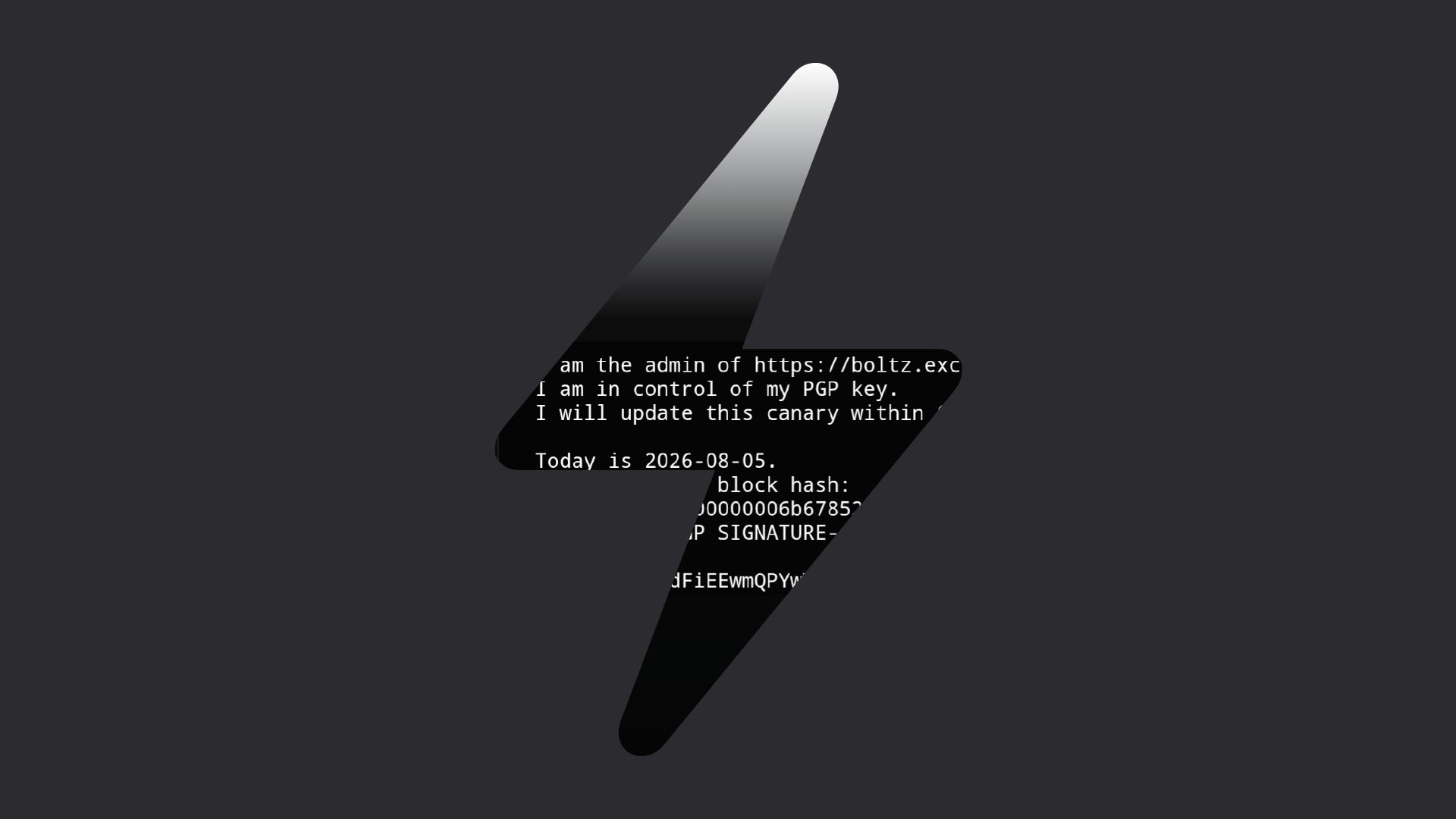
Boltz2026-08-05 19:21:27Boltz warrant canary lapse sparks scrutiny after BTC bridge service suspensionBitcoin bridge operator Boltz is facing fresh scrutiny after its warrant canary went unrenewed for more than five days while the company was already dealing with a service shutdown tied to what it described as months of “AI-assisted probing.” Critics argued that the lapse, combined with the suspension of Boltz Swap Service, could point to government pressure or some form of duress. Boltz later renewed the notice on August 5 with a valid PGP-signed message stating that it had received zero information requests from any third party, including government agencies. The timing drove the debate. Boltz’s previous signed canary was dated May 31 and promised a 60-day refresh, setting July 30 as the expected renewal date. Swaps were disabled on August 3, and the new canary did not appear until August 5. Users and companies relying on the service, including Bull Bitcoin and wallets such as Aqua, warned of failed Lightning payments and Liquid-to-BTC swaps. On social media, critic Adam Simecka described the stale notice as an “authenticated Deadman Switch,” while defenders said the update process was manual and that the team simply forgot during the service freeze.1920
Boltz2026-08-05 02:01:45Boltz halts swap service as attacks spill over into Lightning features across Bitcoin walletsBoltz, a non-custodial Bitcoin swap provider used behind the scenes by several wallets and payment tools, has suspended its swap service until further notice after what it described as months of automated and AI-assisted probing, along with several contained exploit incidents and a recent acceleration in attack activity. The company said refund APIs and official support channels remain available and that user funds were never at risk, with losses absorbed by the company itself. The shutdown quickly exposed how deeply Boltz had become embedded in Bitcoin infrastructure. Products including BULL Wallet, AQUA Wallet, Zeus, Blockstream App, BTCPay Server, Geyser, Freedomia and Mynymbox reported disruptions tied to Lightning payments, Liquid-to-Bitcoin conversions, swap plugins, donations, withdrawals, and top-up flows. While users in several cases still control their assets, functions that depend on Boltz for execution or routing have stopped working. The episode has also renewed debate over “non-custodial” design in Bitcoin apps. Boltz did not act as a custodial single point of failure for funds, but it had become a single point of availability for specific features. Developers and researchers cited in the report say the incident raises broader questions about open-source security budgets, external infrastructure dependencies, and whether wallet architectures need multiple swap providers, dynamic routing, and failover options in an era of AI-amplified attacks.650
Boltz2026-08-04 22:48:49Boltz suspends Bitcoin swap service indefinitely after stepped-up attack activityBoltz, a non-custodial Bitcoin swap service, has suspended its Bitcoin exchange service indefinitely and said it cannot provide a timeline for when the feature might return. The company said the service will remain offline until further notice. Boltz lets users move Bitcoin between the Lightning Network and the Bitcoin base layer without taking custody of customer funds during the process. According to the company, its infrastructure has faced a sustained rise in automated and AI-assisted probing over the past few months, and it has already handled multiple exploitation incidents. Boltz said each incident was contained, but added that attackers have been iterating faster than its team can identify and patch vulnerabilities. The pace of attacks increased over the past few days, the company said. After reviewing recent security scan results, Boltz concluded that it could not responsibly bring the swap service back online at this stage. Its API remains available for cooperative refunds, unilateral refunds still work because they do not rely on Boltz infrastructure, and customer support remains available.1670
Bitcoin2026-08-04 22:46:03Boltz Halts Bitcoin Swap Service as AI-Assisted Bug Hunting Outpaces Its TeamBoltz, a non-custodial Bitcoin swap service, has suspended swaps indefinitely after saying automated, AI-assisted attacks were escalating faster than its team could identify and patch vulnerabilities. In posts published Monday on X, the company said the shutdown was not tied to a single incident but followed months of probing against its infrastructure and several exploits that were contained. The pace picked up over the past few days, leading Boltz to decide it could no longer operate safely. The company said user funds were never at risk because customers retain control of their assets when moving Bitcoin between the Lightning Network and Bitcoin’s base layer. Boltz added that its API remains available for cooperative refunds, unilateral refunds still work because they do not rely on Boltz infrastructure, and customer support remains online. DeFiLlama lists roughly $262,000 in total value locked on the service, while Boltz has not disclosed transaction volume. Boltz framed the attacks as part of a larger shift affecting Bitcoin services built on open-source stacks. The announcement landed as the crypto sector was already debating AI’s role in cyberattacks. On Tuesday, Ledger CTO Charles Guillemet said AI lets attackers scan code and discover flaws at “machine speed,” as fallout from the Coldcard exploit continued and losses approached $130 million.1770