Buzz

Claude
2026-09-06 03:46:10

Claude and the Navier-Stokes rumor: Terence Tao says he did not signal a breakthrough

A social-media rumor claiming Anthropic's Claude had solved the Navier-Stokes existence and smoothness problem spread quickly over the past day, drawing millions of views and pulling one of mathematics' most famous open questions into the center of the AI debate. The claim gained traction after blogger Andrew Curran posted a prediction that Anthropic had already solved the Millennium Prize problem and that the result was under expert review, possibly to be announced before an Anthropic IPO. Yet no paper, proof text, or review materials have surfaced publicly, and the Clay Mathematics Institute still lists the Navier-Stokes problem as unsolved. Part of the speculation came from a recent series of posts by mathematician Terence Tao, who used Navier-Stokes as a hypothetical case study to discuss how autonomous AI systems might one day attack major open problems with heavy compute, iterative search, and formal verification tools such as Lean. Tao later clarified that he was not pointing to any new development and said he was unaware of any major progress on the problem. At the same time, he argued that the scenario itself is no longer far-fetched, given how quickly AI systems are moving into research-grade mathematics, formal proof generation, and work on long-standing open questions.

670
Claude and the Navier-Stokes rumor: Terence Tao says he did not signal a breakthrough
Bonk Guy
2026-09-04 12:29:27

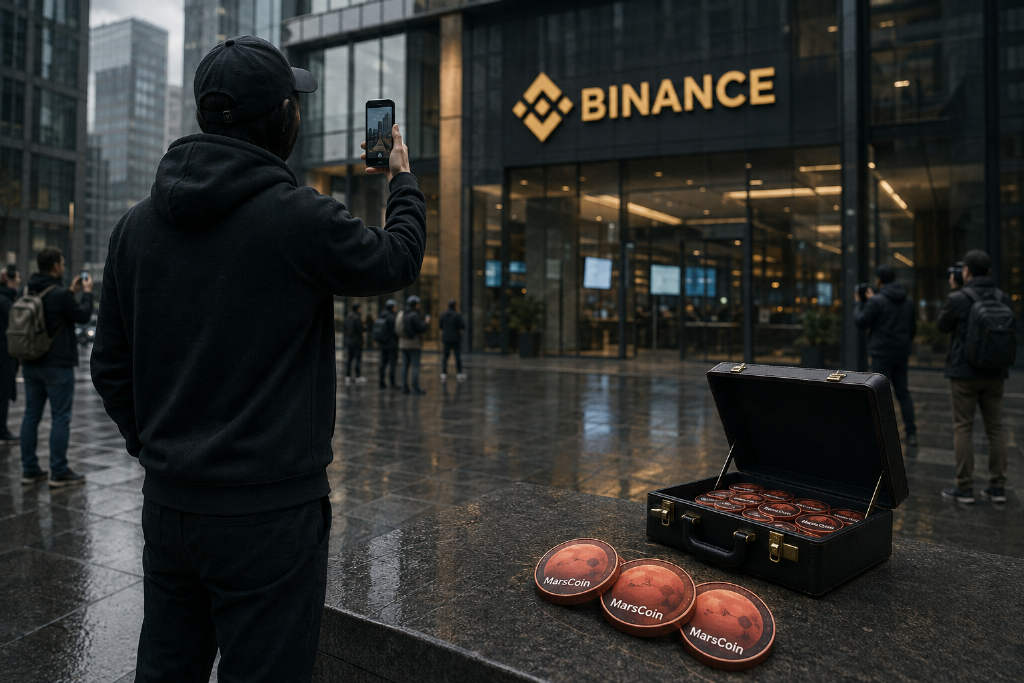
Bonk Guy Calls Out CZ: MarsCoin Is a Candidate for Meme Coin Testing, Holds $4.6M Position

On September 4, prominent crypto KOL Bonk Guy publicly called on Binance CEO CZ to follow through on his July 30 promise to buy/sell meme coins. Bonk Guy specifically recommended MarsCoin, which just launched on Binance spot, and revealed that his public address holds $4.6 million worth of MarsCoin, acquired at an average price of $984,000 when the market cap was $38.9 million. Yesterday, Binance co-founder He Yi followed Bonk Guy on X, sparking community discussion.

750
Bonk Guy Calls Out CZ: MarsCoin Is a Candidate for Meme Coin Testing, Holds $4.6M Position
Mesh LLM
2026-08-28 10:53:03

Mesh LLM Turns Idle Nvidia GPUs Into a Decentralized AI Compute Network

Mesh LLM, an open-source project backed by Jack Dorsey, is aggregating idle Nvidia GPUs into a peer-to-peer network that supports distributed inference for large language models. Alongside that core capability, the project provides an OpenAI-compatible API, so developers can use the network as a direct replacement for cloud-hosted models. The project's reasoning pipeline is called Skippy. It splits a model into partitions and distributes those partitions across multiple nodes. In a local-area network, the setup processes a 235-billion-parameter model at roughly 16 tokens per second. For contribution, Meshtrain acts as the incentive layer and issues MeshCoin rewards to nodes that provide compute capacity. Block's Buzz app has already integrated the network. The design keeps data from passing through an external data center, meaning the flow stays within the network rather than going out to a centralized facility. By using the OpenAI-compatible surface, developers can point existing applications at Mesh LLM instead of a cloud endpoint. Techub News relayed the details from CryptoBriefing.

830
Mesh LLM Turns Idle Nvidia GPUs Into a Decentralized AI Compute Network
Bitwise
2026-08-13 03:41:09

Bitwise executives say Bitcoin is shrugging off bad news as institutions focus on majors and on-chain capital hunts apps

Bitwise Chief Investment Officer Matt Hougan and Head of Research Ryan Rasmussen said in a recent episode of The Rollup that Bitcoin’s muted reaction to a string of negative developments may point to a market bottom rather than fresh downside. Speaking during a period when Bitcoin was around $65,000 and down more than half from its October peak last year, the two argued that several developments that would normally pressure the market failed to do so, including selling by Strategy founder Saylor, a cold-wallet theft worth more than $100 million, and the Clarity bill stalling in the Senate. Their broader thesis is that the next bull market may split into two distinct tracks. In their view, institutional money is likely to stay concentrated in large, liquid assets such as Bitcoin and Ethereum, largely through ETF structures that fit traditional portfolio construction. By contrast, crypto-native on-chain capital may target DeFi applications with visible revenue and tokenholder value accrual, including Hyperliquid, Uniswap, Aave, and Morpho. Hougan and Rasmussen also pointed to a catalyst outside crypto’s usual spotlight: model portfolios at major wealth platforms including Morgan Stanley, Wells Fargo, UBS, and Merrill Lynch, which they said oversee roughly $20 trillion in assets combined. If those platforms eventually adopt 1% to 2% crypto allocations, they argued, the result could be sustained inflows measured in the hundreds of billions of dollars over multiple years.

1260
Bitwise executives say Bitcoin is shrugging off bad news as institutions focus on majors and on-chain capital hunts apps
BSC
2026-08-12 13:34:53

BSC 'Utility' Token Reaches $780K Market Cap as CZ's GME Post Sparks Buzz

A BSC-based meme token called utility has become a talking point in crypto communities, with its market cap now at $780,000. The discussion picked up after CZ posted on Jan. 30 that GME should issue a utility token on the blockchain, hoping it would be on BSC. In response, multiple users on X identified the relevant contract address as GME's "utility" version on BSC, describing it as a new story. They have nicknamed the token the "second dragon" ($UTILITY) and treat GME itself as the "first dragon." The exchange between the post and community responses has turned the small-cap token into one of the day's most-discussed meme names on BSC.

4980
BSC 'Utility' Token Reaches $780K Market Cap as CZ's GME Post Sparks Buzz
Block
2026-08-06 01:43:40

Block lifts 2026 outlook as Square and Cash App offset weaker Bitcoin margins

Block raised its full-year 2026 financial targets after posting stronger-than-expected second-quarter results, with growth at Square and Cash App helping offset a decline in Bitcoin-related gross profit. The company reported $3.2 billion in gross profit for the quarter, up 25% year over year, while adjusted operating income reached $864 million and adjusted earnings per share came in at $1.02, ahead of Wall Street expectations of $525 million and $0.87. Block now expects 2026 gross profit to reach $12.5 billion, adjusted operating income to total $3.5 billion, and adjusted EPS to hit $4.02. Management said operating gains were driven by business growth, scale leverage, and internal efficiency improvements, including deeper integration of AI tools across operations. Even so, Bitcoin gross profit fell 31% in the quarter as crypto market weakness and lower transaction fees weighed on results. As of June 30, 2026, Block held 9,117 BTC for investment purposes, up from 8,883 BTC at the end of 2025.

1790
Block lifts 2026 outlook as Square and Cash App offset weaker Bitcoin margins
Trustworthy A
2026-08-04 12:25:36

Trustworthy AI Hackathon in Taipei sets Aug. 29 start, centers on agent identity and authorization

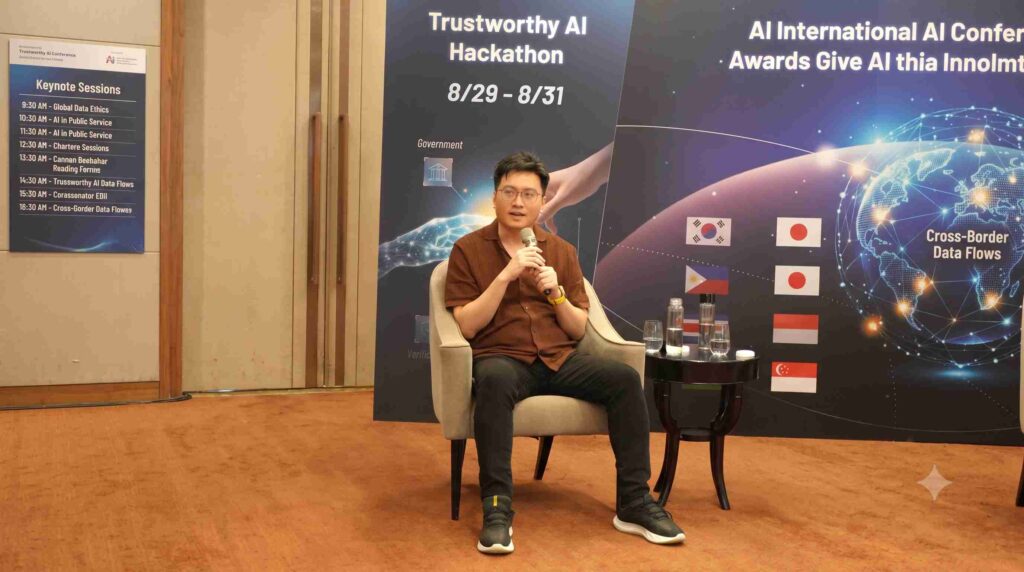
Taiwan Blockchain Enthusiasts Association chairman Taka Kao said the Trustworthy AI Hackathon was built around industry problems gathered from three closed-door expert sessions held on June 7, rather than topics drafted internally by organizers. Those meetings ran for a combined 24 hours and produced about 22 problem statements drawn from discussions with industry representatives and technical specialists. The event will run from Aug. 29 to Aug. 31 at N24 Taipei Ark in Nangang, Taipei, with Demo Day scheduled for Aug. 31. Registration closes on Aug. 5. Speaking at an Aug. 4 media tea session for the “2026 Trendy Taipei” technology festival, Kao said nearly 20 teams had already signed up at that point and final entrants would be selected afterward. Kao framed the challenge around a shift from “Responsible AI” to “Trustworthy AI” as agents move beyond code generation and content creation into autonomous actions such as signing legal documents, acting as digital twins, and coordinating across institutions. He said the association’s proposed direction is a credential-based model that combines digital identity, data governance, ownership, authorization, and accountability, so agents can act with verifiable permission on behalf of their owners. Organizers previously said the hackathon will offer prize money starting at $12,000, accept up to 20 teams, and, for the first time, allow individual registration.

1780
Trustworthy AI Hackathon in Taipei sets Aug. 29 start, centers on agent identity and authorization
OpenAI
2026-08-02 08:30:10

OpenAI reveals Astra, says next-generation model solved 10 decade-old math problems

OpenAI has publicly named its next-generation flagship model Astra for the first time, saying an internal version solved 10 open problems in mathematics and theoretical computer science that had remained unresolved for more than a decade. The company said the work was documented in a 249-page manuscript prepared with human researchers and then converted into Lean proofs, allowing line-by-line machine verification. OpenAI also said the full Lean proof library has been open-sourced on GitHub, with each problem accompanied by the model’s own account of its reasoning process. Based on Sol API pricing, the total token cost for solving all 10 problems was about $2,000, according to the company. The release has drawn praise from parts of the math community, including Fields Medalist Timothy Gowers, who called it a milestone for AI-assisted mathematics. At the same time, it has intensified debate over academic norms after OpenAI chose to publish the results on its blog rather than through a journal process, echoing concerns raised in the Leiden AI and Mathematics Declaration over training data, peer review, and attribution.

2160
OpenAI reveals Astra, says next-generation model solved 10 decade-old math problems