CRM

AI
2026-08-25 01:36:00

AI’s next big growth engine may not look like a second coding boom

A PANews commentary argues that the market is asking the wrong question when it searches for a single “next Coding” moment for artificial intelligence. Coding became AI’s first large-scale commercial success because software development is fully digital, highly testable, modular, expensive in labor terms, and easy to adopt from the bottom up. That combination allowed AI coding tools and coding agents to move from autocomplete to testing, bug fixing, code migration, project-wide reasoning, terminal use, and repeated code revisions in real production settings. The piece says the bigger issue now is timing. Coding has shifted from an underappreciated opportunity to a broad market consensus, while the next AI growth engine may take longer to show up in revenue, profit, and free cash flow. Rather than one cleanly defined product, the next wave is more likely to come from many fragmented enterprise workflows moving into agent-based execution at the same time. Customer service and voice agents are presented as the closest single analogue to Coding, but finance, procurement, IT operations, healthcare administration, legal work, insurance, and supply chain processes could collectively outweigh software development. The article also uses Microsoft’s FY2026 fourth-quarter disclosures—100,000 Foundry customers, more than 30 million paid Microsoft 365 Copilot seats, and nearly 40 million registered Agent 365 agents—to separate enterprise AI adoption into three layers: building, using, and governing. Its broader conclusion is that AI demand is real, but investors still need proof that non-coding use cases can convert infrastructure spending into durable end-market cash flow.

220
AI’s next big growth engine may not look like a second coding boom
tungsten supp
2026-08-23 01:47:41

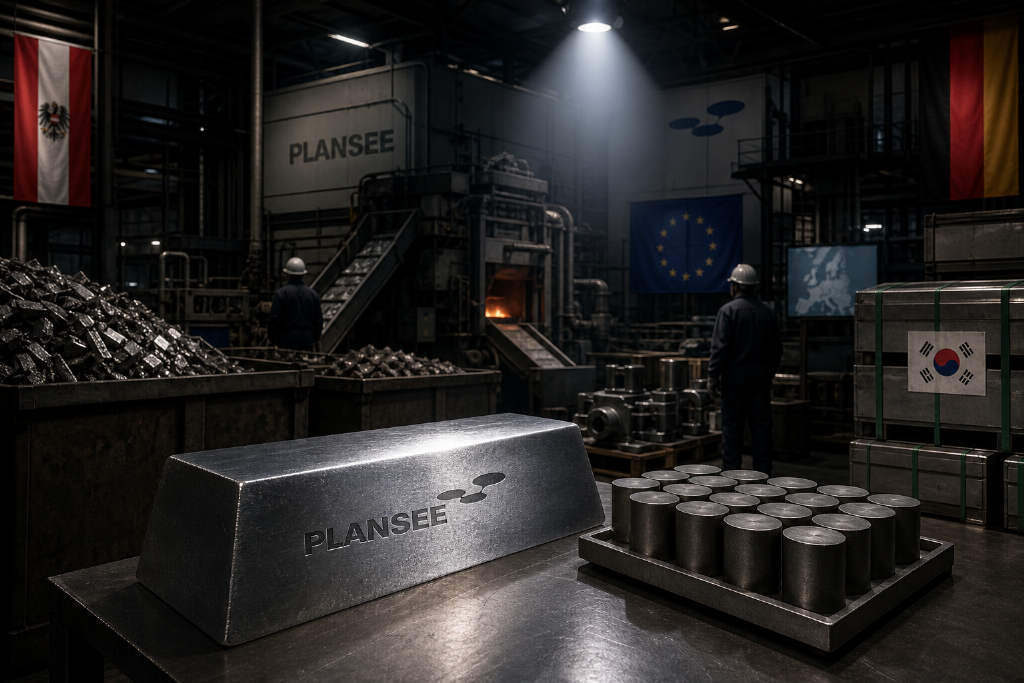
Europe reshapes tungsten supply chain as Plansee says China curbs have not hit operations

Europe’s tungsten supply chain is being reworked after China imposed tighter export controls on the metal, citing its potential defense uses. The move has sent global tungsten prices sharply higher and added pressure to supply chains tied to artificial intelligence, aerospace and defense manufacturing. Austrian tungsten processor Plansee said in an interview that it has signed a long-term supply agreement with a mine in South Korea, allowing it to secure non-Chinese feedstock and keep operations insulated from the Chinese restrictions for now. The company is also expanding tungsten scrap collection and recycling inside Europe, while using production and logistics links between its Austrian and German facilities to improve supply flexibility. The report says European companies are trying to cut reliance on Chinese raw material by building local circular systems and diversifying procurement. Tungsten remains critical for aircraft drilling and cutting applications, military uses, and semiconductor manufacturing, where tungsten plugs help chips withstand high heat and current loads. The European Union has already brought tungsten under its Critical Raw Materials Act. The report also notes that chipmakers are gradually validating molybdenum as an alternative material for DRAM, 3D NAND and logic chip production, while Applied Materials is working on tungsten deposition technology to lower resistance.

430
Europe reshapes tungsten supply chain as Plansee says China curbs have not hit operations
UAE
2026-08-14 14:48:30

Mubadala reshuffles U.S. AI holdings, exits Apple and Broadcom, adds Micron and Palantir

A recent U.S. Securities and Exchange Commission filing shows that Abu Dhabi sovereign wealth fund Mubadala Investment Company has made notable changes to its U.S. equity portfolio, with a clear focus on artificial intelligence, semiconductors, and technology stocks. The fund fully exited its positions in Apple (AAPL), Salesforce (CRM), and Broadcom (AVGO), while keeping its stake in NVIDIA (NVDA) at 65,326 shares. It also increased its Class A holdings in Palantir Technologies (PLTR) by 40.4% to 95,656 shares. In semiconductors, Mubadala raised its position in Micron Technology (MU) by 3.0% to 45,451 shares, but trimmed its long-held stake in GlobalFoundries by 5.5% to 399.6 million shares. The filing points to a portfolio rotation away from some traditional mega-cap technology names and major chip stocks, while maintaining exposure to areas tied to AI infrastructure, data analytics software, and memory chips.

640
Mubadala reshuffles U.S. AI holdings, exits Apple and Broadcom, adds Micron and Palantir
xAI
2026-08-12 01:42:02

xAI launches Grok Bot in early beta as Musk says Grok 4.6 is due later this week

xAI has introduced Grok Bot, a new AI agent product now in Early Beta, and is pitching it as more than a standard assistant that waits for prompts and returns answers. The company says each bot comes with its own cloud computer, allowing it to log in to websites, apps, and work tools that users already rely on, then keep running tasks even after the user closes their laptop. Musk also said Grok 4.6 is scheduled for release later this week. The product includes a "Teach a task" feature that lets users demonstrate a workflow once and save it as a reusable Routine. xAI says those routines can be scheduled, and Grok Bot can also run multiple agents in parallel, with different bots handling separate projects or passing work between one another in the same conversation. According to xAI, Grok Bot started as an internal experiment but spread quickly across teams handling business development, marketing campaigns, office operations, and software bug work. The company said early external users have already used it for vendor negotiation, e-commerce customer service, and CRM upkeep. Access is currently available to Cursor Ultra and SuperGrok Heavy subscribers, with Cursor Ultra priced at $200 per month and Cursor Premium Teams at $120 per seat per month.

1800
xAI launches Grok Bot in early beta as Musk says Grok 4.6 is due later this week
xAI
2026-08-12 00:27:59

xAI Launches Grok Bot: AI Agents Get Cloud Computers to Handle End-to-End Tasks

Elon Musk's xAI has launched Grok Bot, an AI agent designed to complete real work inside the tools users already rely on. The announcement, reported by Dongcha Beating, describes a bot with its own cloud computer that can sign into inboxes, apps and websites, perform end-to-end tasks and only return to the user when approval is needed. Tasks are assigned by messaging the bot, which remembers context and learns preferences over time. Internally, xAI has used the system as a prototype: sales bots update CRM records and draft follow-ups, operations bots set up workspaces and process invoices from Gmail, and engineering bots reproduce UI bugs, file tickets and route fixes to debugging bots. The product team noted a 'huge gap between 90% completion and 100% completion,' arguing that Grok Bot's worth is tied to outcomes landing in real tools rather than suggestions. Users can train the bot by demonstrating a workflow, which it saves for repeated runs. Multiple bots can work in parallel, communicate, and coordinate in group chats, with a lead bot supervising specialized teams. Grok Bot opens today for SuperGrok Heavy, Cursor Ultra and Cursor Teams Premium subscribers via desktop and iOS, with enterprise access through a waitlist.

1080
xAI Launches Grok Bot: AI Agents Get Cloud Computers to Handle End-to-End Tasks
WEEX
2026-07-29 04:29:14

WEEX data shows money rotating into tech and consumer names, with semis and software leading

WEEX TradFi market data on July 29 showed capital continuing to move into technology and consumer sectors. Semiconductor and software names were among the strongest performers, with SOXS up more than 13.02% over 24 hours, while FIGMA rose 6.21%, ADBE gained 5.40%, and CRM added 4.46%. In consumer staples, KO climbed 6.08% and PEP rose 3.74%. In financial payments, PYPL advanced 4.07% and MA was up 3.71%. WEEX Labs said the Philadelphia Semiconductor Index rebounded after a sharp pullback in the previous trading session. It added that the Federal Reserve rate decision and a dense schedule of earnings releases from large technology companies have prompted capital to reposition around earnings expectations and event-driven trades. WEEX also noted that its "TradFi Trading Carnival Season" is currently underway.

1100
WEEX data shows money rotating into tech and consumer names, with semis and software leading
Clarity Act
2026-07-28 09:30:00

Senate puts Clarity bill on hold as X Money rolls out to U.S. Premium subscribers

The U.S. Senate has temporarily sidelined the Clarity Act while it works through other items, narrowing the near-term window for one of the crypto industry’s most closely watched market structure bills. Majority Leader John Thune is prioritizing government nominations and a Russia sanctions bill, while this week’s schedule is also constrained by time set aside for the funeral of late Senator Lindsey Graham. Under current Senate procedure, the Clarity bill may not reach the floor until next week, just before the August 8 recess. The delay comes as large financial firms continue to line up behind the legislation. BlackRock publicly backed the bill, with Samara Cohen calling it an important step toward an investor-first digital asset framework. Franklin Templeton also voiced support, and the report said Fidelity, Goldman Sachs CEO David Solomon, and Charles Schwab have recently expressed similar views. Policy analysts cited in the report have cut the odds of passage this year to 30%. Elsewhere in the roundup, X Money began rolling out to U.S. Premium and Premium+ subscribers. Hyperliquid said Trade.xyz is investigating the SKHYNIX perpetual contract spike incident, while South Korea is studying a rule that would cap single-stock leveraged exposure at 20% of an individual’s total financial investment products. The report also covered whale activity, market data, venture fundraising, and a series of crypto and AI industry developments.

1320
Senate puts Clarity bill on hold as X Money rolls out to U.S. Premium subscribers
Anthropic
2026-07-27 18:27:52

Google indexed Claude share pages, exposing wallet seed phrases and other sensitive data

A Reddit user said on July 25 that a Google search for "site:claude.ai/share" surfaced hundreds of Claude shared conversations that could be read in full. The exposed material reportedly included crypto wallet seed phrases, suspected Social Security numbers and legal discussions. The issue was tied to Anthropic not placing a noindex meta tag on Claude share pages. Although the company’s robots.txt blocked crawling of Claude share URLs, Google could still index those pages when shared links appeared on public websites. The same indexing issue also affected public Claude artifacts, including apps, dashboards and financial tools created by users inside Claude. Search results had shown items such as payroll sheets with employee names, internal CRM chat exports and unpublished product roadmaps. Before July 26, Anthropic updated its configuration and added noindex tags, after which Google began removing Claude-related results. Bing was still showing some shared links, and one GitHub repository had archived 453 Claude conversations and 519 Grok conversations, containing a combined 11,241 plaintext messages.

1080
Google indexed Claude share pages, exposing wallet seed phrases and other sensitive data