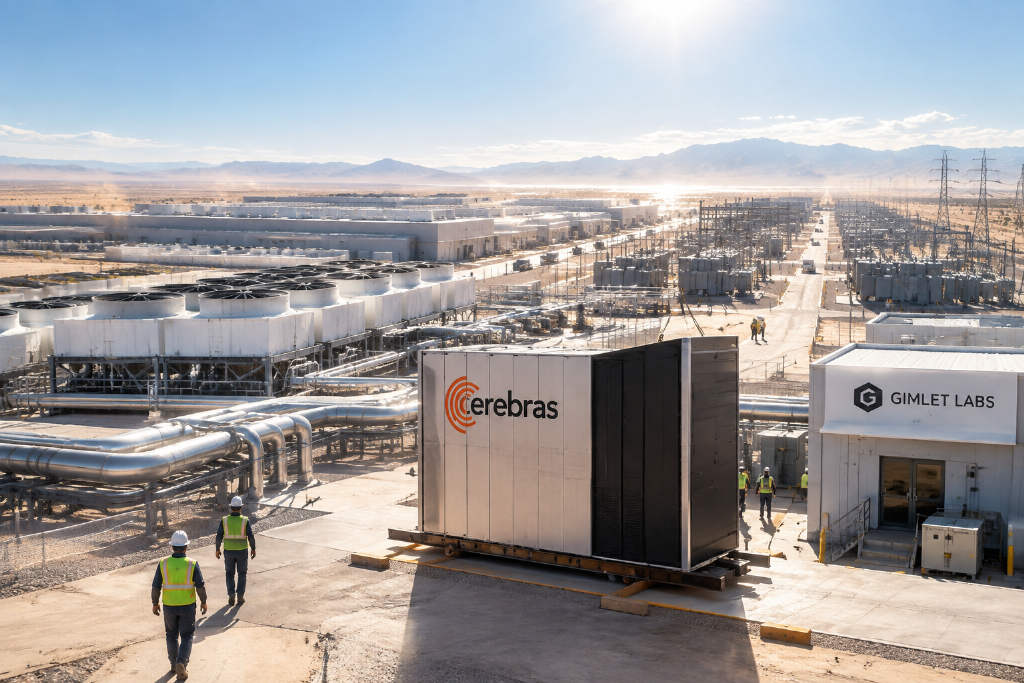
Cerebras2026-09-28 13:21:23Cerebras to supply AI chips and hardware to Gimlet Labs in roughly 100 MW buildoutCerebras Systems plans to supply AI chips and related hardware to cloud startup Gimlet Labs in a deployment sized at about 100 megawatts, according to Reuters. The hardware is intended to support Gimlet’s cloud business, with the startup aiming to run frontier AI models that require very large amounts of compute. Gimlet said it is targeting enterprises and startups building products around AI. Cerebras is expected to deliver its CS-4 systems, which it introduced this summer, over the next one to two years. Gimlet plans to make the hardware available on its cloud platform in 2027. The companies did not disclose financial terms of the deal. The arrangement outlines both the scale of the planned compute capacity and the timeline for deployment, while leaving pricing and other commercial details undisclosed.240
Google2026-09-28 08:09:00Google says hackers are hijacking cloud servers to run AI models for freeGoogle says hackers are hijacking cloud computing resources to run artificial intelligence models at no cost, according to a post from @Kalshi on X. The activity centers on abusing cloud-based compute capacity, which lets attackers avoid the high expense normally tied to running large-scale AI models. The claim, as presented in the source brief, does not include technical details about the affected infrastructure, the scale of the abuse, or the identities of the attackers. It does, however, point to a growing security concern around cloud resources being used as a vehicle for unauthorized AI workloads. The report was published by Techub as a short news alert under its technology category.250
AI2026-09-27 11:31:29Analyst says claims of 10-year AI demand visibility do not hold up as memory, ABF substrates and power emerge as bottlenecksP Equity Research analyst Mr. P said in a Sept. 26 podcast that the market narrative claiming hyperscale cloud providers have "10 years of demand visibility" is not credible. In his view, cloud companies struggle to forecast demand even two years out, and AI infrastructure spending will still be constrained by cyclical capital expenditure patterns. In the near term, inference demand is expected to keep lifting demand for memory products including HBM, DRAM and NAND. Mr. P estimates hyperscaler capex could reach $1.1 trillion to $1.2 trillion next year, with memory accounting for 50% to 60%, or roughly $500 billion to $700 billion. UBS has projected the figure could be as high as $900 billion. He also argued that AI compute constraints are shifting away from GPU unit counts alone toward power, advanced packaging, memory and ABF substrates. He added that used prices for older GPUs such as the H100 remain elevated, B-series GPU rental rates are still rising, ABF substrate tightness may last until 2028 to beyond 2030, and gas turbine order books at Mitsubishi, Siemens and GE Vernova are already filled past 2030.280
Meta2026-09-21 14:09:42Meta to build U.S.-France subsea cable with 1 petabit-per-second capacityMeta said it will build a subsea cable linking the United States and France, with transmission capacity reaching 1 petabit per second. The project is intended to increase transatlantic data transfer capacity as demand tied to artificial intelligence and cloud computing continues to rise. Techub carried the brief, which did not include additional details on the cable’s construction timeline, route, or investment size. The announcement centers on network capacity between the two countries and frames the cable as infrastructure aimed at handling heavier cross-Atlantic traffic. No further technical specifications were disclosed in the source provided.370
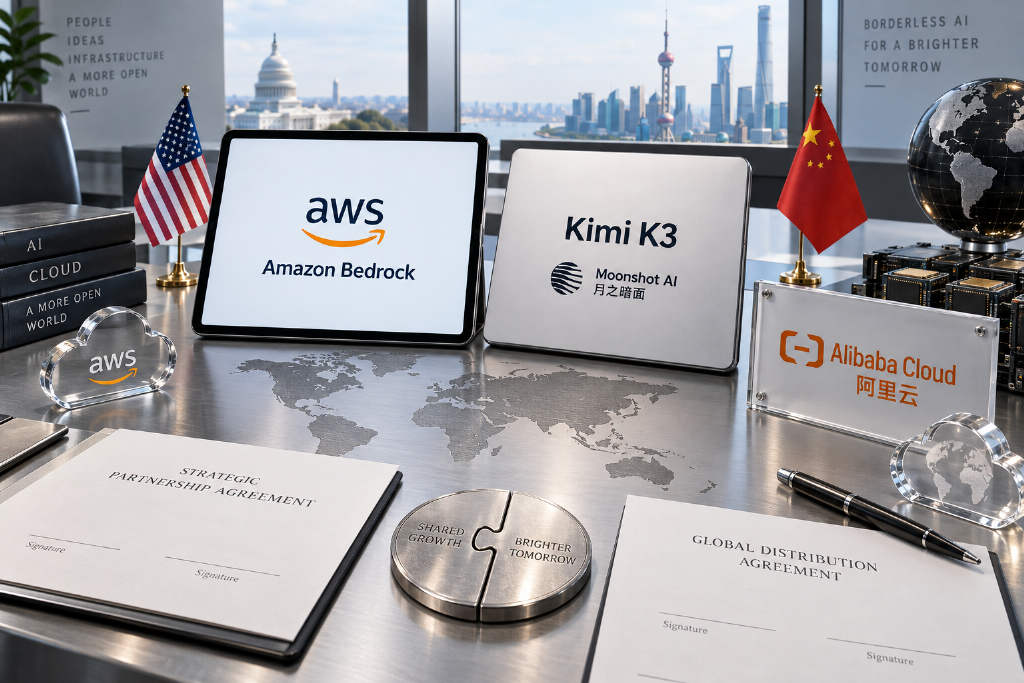
AWS2026-09-21 07:14:03AWS Bedrock adds Kimi K3 as Moonshot AI expands cloud revenue-sharing dealsAmazon Web Services has added the open-source Kimi K3 model to Amazon Bedrock, giving enterprise developers worldwide direct access through the platform, according to a Sept. 21 report cited by ChainCatcher. The move confirms earlier market talk that Kimi had been working on revenue-sharing arrangements with overseas cloud providers. Yicai learned that Moonshot AI, the developer behind Kimi, is pushing ahead with revenue-sharing partnerships with multiple overseas cloud vendors. Under that model, cloud providers list Kimi on their own platforms and split revenue with Moonshot AI based on model usage volume. The report also cited official information from Alibaba Cloud’s Bailian platform showing that Kimi K3 has already been listed there under a similar commercial arrangement. The updates place Kimi K3 on both Amazon Bedrock and Alibaba Cloud Bailian, extending its distribution through major cloud platforms and giving enterprise users more direct channels to access the model.430
Anthropic2026-09-16 00:19:43Anthropic’s cloud, chip and data center commitments could reach $517 billion over 10 yearsAnthropic has committed to cloud, chip and data center deals that could cost as much as $517 billion over the next decade, according to an analysis cited by ChainCatcher from The Information. The figure is nearly three times an earlier projection of $180 billion in server leasing through 2029, though the newer estimate covers a longer time frame and a broader set of spending categories. Since October, Anthropic has signed agreements for at least 14.8 gigawatts of computing capacity, on top of 1 to 2 gigawatts it had already secured. Amazon and Google account for 11 gigawatts of that total, with estimated costs above $300 billion over roughly 10 years. Other partners named in the report include Microsoft, SpaceX, Lambda and Nscale. Anthropic CEO Dario Amodei has urged AI labs to “pace the frontier,” while demand for Claude Code and Cowork is pushing the company to secure additional computing power.730
AI2026-09-15 01:13:08The Bigger Question in AI Spending Isn’t When the Bubble BurstsDebate around a possible AI capital expenditure bubble has moved from tech circles into boardrooms, where executives are asking whether current spending levels are sustainable and what a reversal could mean for the broader economy. This article argues that trying to predict the timing of a bubble’s collapse is the wrong frame. A more useful line of inquiry is how the AI buildout affects economic activity, which transmission channels carry the greatest risk, and under what conditions a spending boom becomes a systemic crisis rather than a painful but contained correction. Using a narrower macro lens, the piece estimates AI-related capital spending at about $630 billion in 2026, just under 2% of U.S. GDP. After adjusting for imports, especially semiconductors, the direct boost to U.S. domestic activity falls to roughly $315 billion, or about 1% of GDP. Bloomberg consensus expectations cited in the article suggest that adjusted figure could rise to 1.5% of GDP by 2028. The article then examines three main risk channels: a halt in economic activity, negative wealth effects from equity declines, and tighter credit conditions if debt tied to the AI boom turns sour. Its central conclusion is that AI spending may still represent a manageable macro risk as long as losses do not severely damage the banking system. The article also argues that bubbles can leave durable economic benefits by financing infrastructure that outlives the speculative cycle, and it offers five practical takeaways for corporate managers operating through the current AI investment surge.840
AI bubble2026-09-14 16:00:47Wall Street AI bubble warnings intensify as strategist sees 30%+ U.S. stock pullbackWarnings about a late-stage AI bubble are building on Wall Street, with terms such as "crazy market" and "irrational season" appearing more frequently as concerns grow over a possible break in the current rally. Capital Economics said several market indicators are now nearing levels seen at past bubble peaks and projected that the S&P 500 could start falling next year, eventually dropping at least 30% from its high. Recent stock moves have added to that anxiety. On July 30, Microsoft added $450 billion in market value in a single day. The following day, Apple lost $360 billion while Amazon gained $388 billion. Data from Acadian Asset Management showed stock-level dispersion in the U.S. market has risen to its third-highest level in nearly 2,850 trading days, behind only the 2020 vaccine rally and the 2025 DeepSeek shock. The market is also watching the Federal Reserve, which could raise rates by 25 basis points on Wednesday for the first time since July 2023. UBS expects the decision to pass by a 10-2 vote, with two officials potentially dissenting. Capital Economics said more tightening would make the current AI-driven rally look even more like the dot-com bubble around 2000. It also pointed to surging capital spending by hyperscale cloud companies and said the free cash flow of the four largest hyperscale cloud service providers could turn negative by 2027.910