PANews
1 days agoNews Editor

PANews essay examines why crypto professionals keep flying to conferences

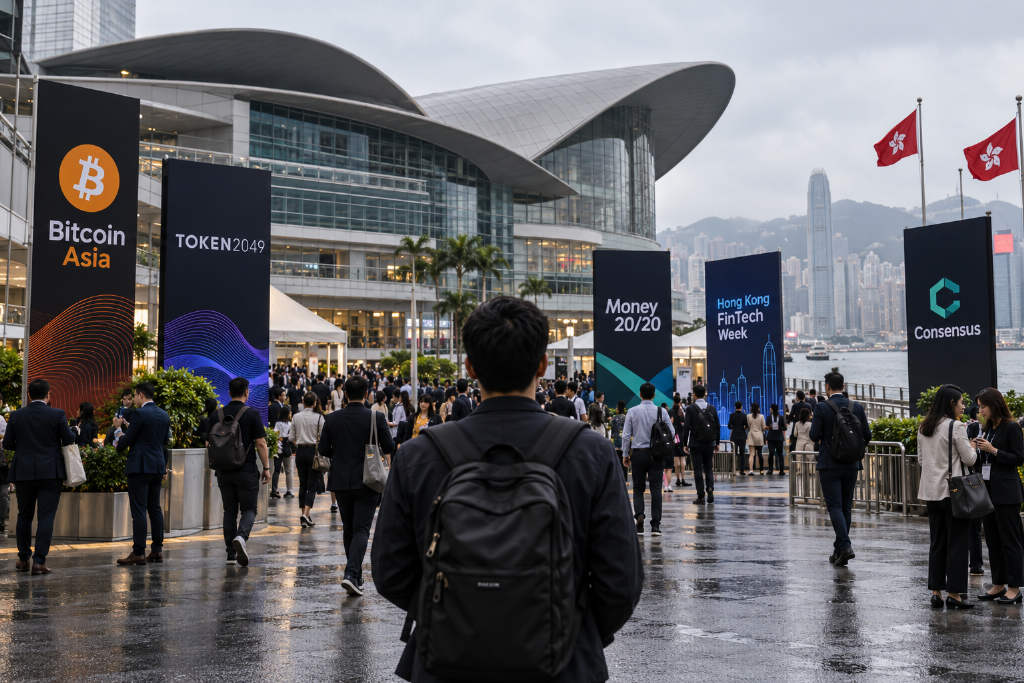
PANews published an opinion essay by Yuki (Liu Yuqing) that looks at the culture of conference-hopping in crypto and fintech. Drawing on her experience attending Bitcoin Asia, Token2049, Money20/20, FinTech Week and Consensus, as well as hosting three side events, she asks a simple question: why do people keep showing up? The piece does not offer a single answer. Instead, it maps out several motives described by people she met along the way. For some, conferences are still work: exhibiting, meeting clients, talking to investors and trying to close partnerships. For others, the point is simply to be present, let people know where they are, reconnect with friends, or gather teams that usually work remotely across time zones. In that setting, the main stage often matters less than hotel lobbies, dinners and side events. Yuki also argues that conferences remain places where information gaps circulate, even if the old hunt for easy “wealth codes” has cooled. Her broader takeaway is that global competition has become flatter, with more Chinese companies appearing on the same stage as firms from the US, Europe, Southeast Asia, the Middle East, Latin America and Africa. Still, she writes, what has flattened is the competitive arena, not social class. The article closes without a firm conclusion, framing the entire discussion as personal observation rather than investment or business advice.

40
PANews essay examines why crypto professionals keep flying to conferences
Espresso
2 days agoNews Editor

Espresso redesigns HotShot consensus around single-view finality

Espresso has outlined a major redesign of HotShot, its HotStuff-family consensus protocol, replacing the old chained commit path with a single-view finality model. Under the previous design, a block that had already gathered a quorum of votes still could not finalize immediately. Its certificate had to be embedded in the next view’s proposal, and that process had to continue across later views before the original block met the protocol’s commit rule. That structure kept bandwidth costs low and created a compact pipeline, but it also tied finality to the liveness of future leaders. The new design moves finality into the same view through two consecutive rounds of network-wide voting. Validators broadcast votes to all other validators instead of sending them to a single leader for aggregation. Any node that sees a quorum in round one can assemble the first certificate, lock the block, and broadcast a second-round vote. A quorum in round two produces the second certificate and finalizes the block. Espresso said this removes the bottleneck created by leader-side vote aggregation, eliminates the need for a separate DA committee, and uses VID plus erasure-coded shares to make data availability part of the same path that produces finality. The tradeoff is higher message complexity, rising from O(n) to O(n²), which the company said remains manageable at roughly 100 validators.

90
Espresso redesigns HotShot consensus around single-view finality
Solana
10 days agoNews Editor

Solana switches mainnet to Alpenglow, retiring TowerBFT consensus

Solana moved its mainnet to the Alpenglow consensus protocol on Wednesday, ending the network’s use of TowerBFT, the voting system it had relied on since 2020. The official Solana account said at 13:59 UTC that Alpenglow was live, while protocol developer Anza had posted the same update five minutes earlier. Chain data reviewed by Unchained showed the final TowerBFT-era block at slot 459,652,999 around 13:54:00 UTC, with Alpenglow’s genesis certificate pointing to that block. After eight empty slots, slot 459,653,008 arrived at 13:54:03 UTC, and block heights continued sequentially without signs of a rollback. Both Anza and Solana said finality dropped from 12.8 seconds to 150 milliseconds. Under Alpenglow, validators no longer submit votes as transactions. Instead, votes move between nodes as BLS-signed messages aggregated into certificates, a change intended to free blockspace for users. The rollout on Wednesday covers Votor, the voting component of the design, while Rotor, the planned replacement for Turbine’s block propagation system, remains scheduled for a later phase with no date announced.

460
Solana switches mainnet to Alpenglow, retiring TowerBFT consensus
Cardano
10 days agoNews Editor

Cardano to add Leios in Dijkstra upgrade, targeting 10x-15x higher transaction throughput

Cardano said in a post published on Oct. 20 that its next upgrade, Dijkstra, will introduce a new consensus technology called Leios. The project said the goal is to raise the network’s transaction processing capacity by 10x to 15x over time rather than all at once. According to the announcement, Leios will be rolled out cautiously and is expected to expand gradually only after at least two parameter updates. Cardano also made clear that deployment in the Dijkstra upgrade will mark the starting point of Leios development, not a full launch from day one. The update was cited by Techub, with CoinPost referenced in the source note.

470
Cardano to add Leios in Dijkstra upgrade, targeting 10x-15x higher transaction throughput
Solana
17 days agoNews Editor

Solana sets Oct. 21 for Alpenglow rollout, targeting 150ms finality

Solana has scheduled its next major network upgrade, Alpenglow, for Oct. 21, tying activation to the start of epoch 1064 at around 15:00 UTC, according to the Solana Foundation. The upgrade replaces TowerBFT, the consensus system currently used by validators, and is designed to cut transaction finality from about 12.8 seconds to roughly 150 milliseconds. In practical terms, that narrows the gap between a transaction appearing confirmed and becoming irreversible, a change aimed at payment flows, DeFi applications, and trading operations that need near-instant settlement certainty. The first component going live is Votor, a new voting protocol that moves validator voting off-chain. Under the design described by the Foundation, validators exchange messages directly, package votes into certificates, and can finalize a block after one round of voting, or two at most. A block finalizes immediately if 80% or more of stake backs it in the first round. If support falls between 60% and 80%, a second round using a 60% threshold determines whether the block is finalized or skipped. Ordinary users are not expected to take any action, and wallets, apps, transaction formats, programs, and fees remain unchanged. Validators, however, will need an additional 0.8 SOL per vote account to cover the new Validator Admission Ticket, a per-epoch fee that is burned. Rotor, the second half of Alpenglow and a replacement for Turbine, is still without a launch date.

740
Solana sets Oct. 21 for Alpenglow rollout, targeting 150ms finality
Ethereum
2 months agoNews Editor

Who Defines Ethereum? A Look at Cultural Convergence, Cryptographic Truth, and Majority Consensus

MarsBit has published an essay by Conall O'Reilly, translated by Foresight News, that examines Ethereum as both a philosophical project and a living software system. The piece argues that Ethereum is not defined by code alone. Instead, it rests on three linked layers: cultural convergence around what the protocol is supposed to be, cryptographic truth inside the system, and a majority-representation mechanism rooted in observers outside the system. From that starting point, the article moves through Ethereum governance, the role of All Core Developers (ACD), the architecture of the Ethereum Virtual Machine (EVM), and the limits of cryptographic verification under proof-of-stake. A central claim in the essay is that Ethereum’s consensus cannot be understood as a purely technical process. The protocol’s present state depends on subjective observer recognition, and under proof-of-stake that observer set is shaped by ETH itself. The article contrasts this with Bitcoin’s proof-of-work model and argues that Ethereum’s premine left a lasting imprint on who counts as an observer in the beacon chain era. It also revisits weak subjectivity, the 2/3 honest-majority assumption, and the DAO fork as an example of how social consensus can override what older software definitions would treat as invalid. The result is a broad argument that Ethereum is a shared computational reality built as much on culture and governance as on cryptography and code.

670
Who Defines Ethereum? A Look at Cultural Convergence, Cryptographic Truth, and Majority Consensus
Consensus
2 months agoNews Editor

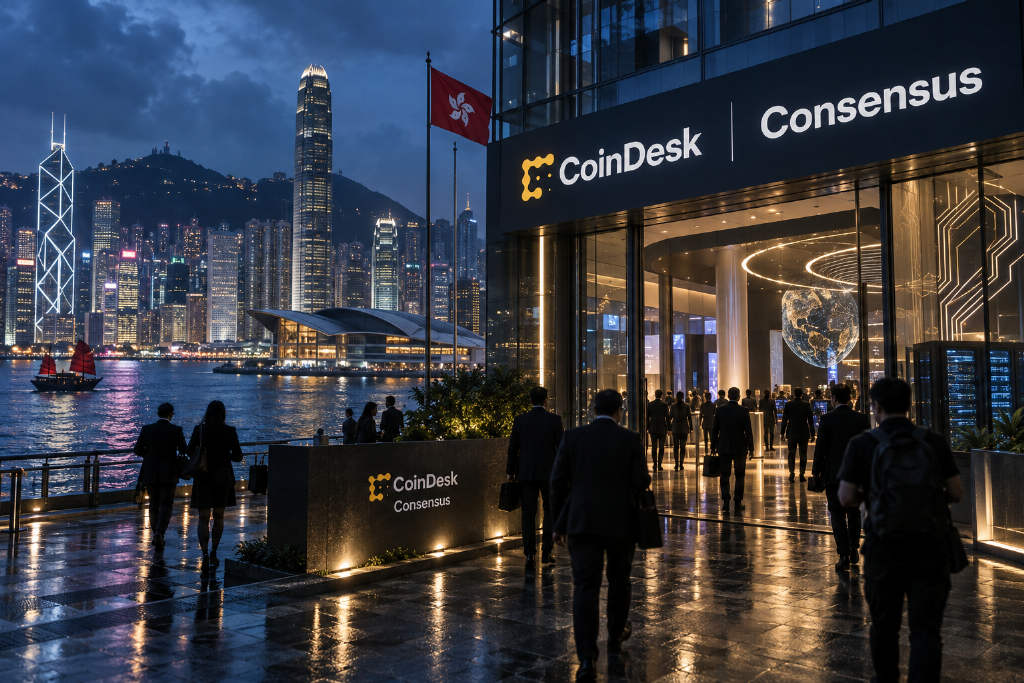
Consensus returns to Hong Kong for a third year with added AI focus

CoinDesk reported that Consensus Hong Kong is set to return to the city for a third straight year. The event will center on two main themes: institutional adoption of digital assets and the expanding role of artificial intelligence in the future of money. The brief update points to a broader agenda for the Hong Kong edition, with AI joining digital-asset adoption as a featured area of discussion. No additional schedule, speaker, or program details were provided in the source summary.

580
Consensus returns to Hong Kong for a third year with added AI focus
Consensus
2 months agoNews Editor

CoinDesk says Consensus will return to Hong Kong in early February 2027

CoinDesk said Consensus will be held in Hong Kong again in early February 2027, marking the third straight year for the event in the city. According to the announcement, both the 2025 and 2026 editions drew more than 10,000 attendees. The 2027 Hong Kong event will center on two themes: institutional adoption of digital assets and artificial intelligence. CoinDesk said AI is expected to take on a bigger role, with discussion focused on how it may fit into the future financial system. CoinDesk also described Asia as one of the leading regions for digital asset adoption. It said Hong Kong is becoming an important digital asset market because of its regulatory framework and status as an international financial center. Past speakers at the event have included Binance co-CEO Richard Teng, Solana Foundation President Lily Liu, Tron founder Justin Sun, and Consensys CEO Joseph Lubin.

1030
CoinDesk says Consensus will return to Hong Kong in early February 2027
Total 37 items
Go topage