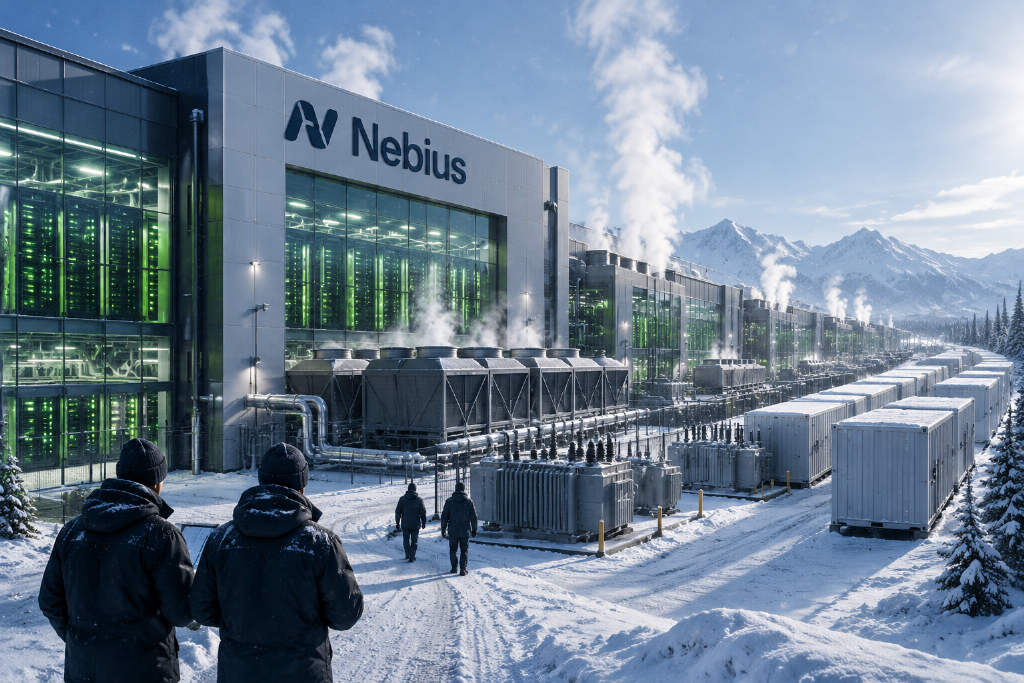
Nebius2026-10-21 12:45:59Nebius executive says AI compute prices are rising faster than expected as data center demand stays strongNebius Chief Revenue Officer Marc Boroditsky said AI compute prices have climbed more than expected, adding that the company would still sell out if it brought its 2027 capacity online today and that 2028 could show a similar pattern. He described the long-term demand outlook as positive. Nebius is part of a new group of neocloud companies that have spent billions of dollars on NVIDIA GPUs and data center buildouts. The company’s compute capacity auction held Tuesday showed prices continuing to move higher. Separately, the CEO of Crusoe, another AI company backed by NVIDIA, also struck an upbeat tone on pricing and said GPU prices are rising, including for older NVIDIA chips. The report was cited by CNBC and summarized by Techub.240
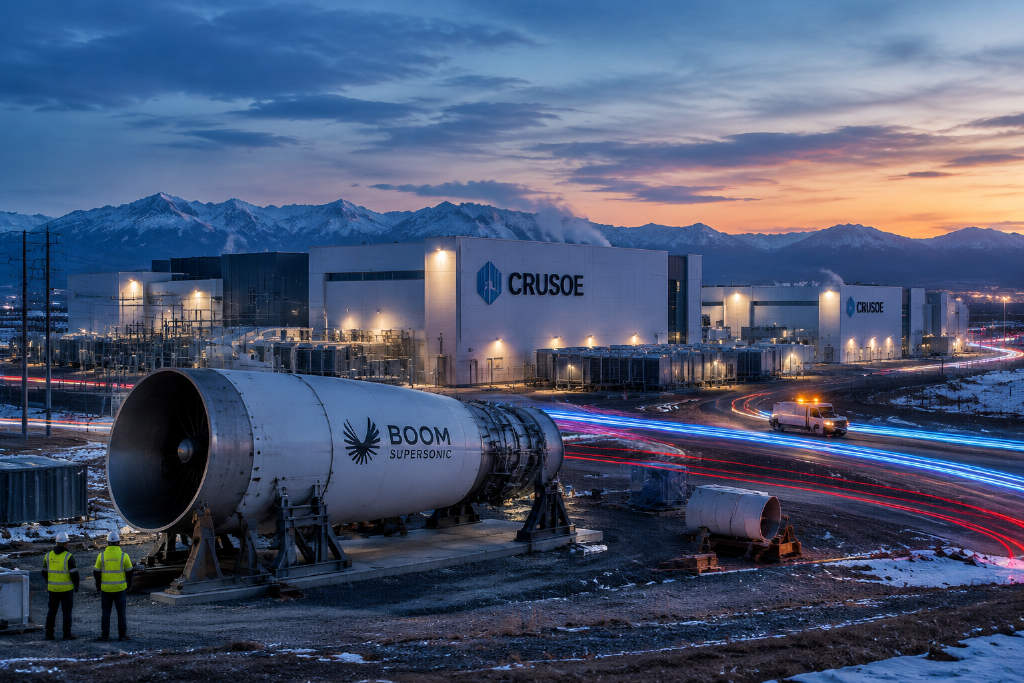
Oura2026-09-27 11:52:09Oura IPO Draws Roughly 4x Demand as Cipher Data Center Contract Value Tops $9 BillionWuBlockchain’s WhiteLine Daily highlighted four major developments spanning IPO demand, AI infrastructure, software consolidation and power equipment orders. According to Bloomberg, citing people familiar with the matter, smart ring maker Oura’s initial public offering has drawn orders equal to about four times the shares available for sale. The company and existing shareholders plan to sell 50 million shares at $40 to $44 each, implying a deal size of as much as $2.2 billion at the top end. The report also said AI data center developer Crusoe has canceled its planned $1.25 billion order for 29 Boom Superpower gas turbines from Boom Supersonic. Separately, Cipher Digital extended the total contract term for its Barber Lake data center in Texas from 10 years to 20 years, lifting expected total contract revenue from $3.8 billion to more than $9 billion after a binding commitment from an unnamed leading AI lab. In another industrial technology update, Siemens said it will combine four Digital Industries units into a single Automation division starting Oct. 1, after previously agreeing deals worth about $15.1 billion for Altair and Dotmatics.780
Crusoe2026-09-25 23:12:21Crusoe drops near-term plan to use Boom turbines for AI data centerCrusoe has removed Boom Supersonic’s new stationary power plant from its near-term plans, according to a statement from Boom CEO Blake Scholl cited by Techub. The company had previously planned to invest $1.25 billion to use Boom’s turbine technology at its AI data center. The update points to a change in Crusoe’s immediate deployment timeline for the power system. Techub attributed the report to TechCrunch. No additional details were provided in the brief on whether the plan was delayed, canceled outright, or replaced by another power option. The disclosed information was limited to Scholl’s comment and the earlier $1.25 billion investment plan tied to Crusoe’s AI data center project.610
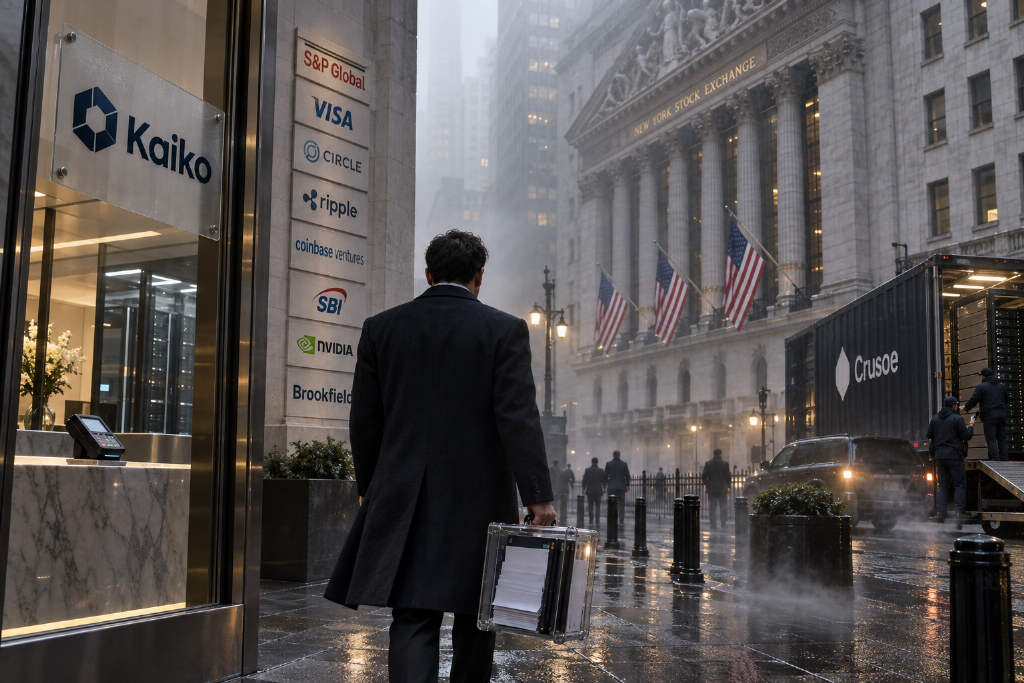
Kaiko2026-09-21 02:31:00Funding Weekly: Kaiko raises $110 million as Crusoe closes $3.9 billion Series FPANews’ weekly funding roundup showed that the blockchain sector recorded nine financing deals worldwide between Sept. 14 and Sept. 20, with disclosed funding topping $223 million. Stablecoin payments stood out as the busiest crypto segment of the week, with Velocity, dtcpay and Fin.com each securing fresh capital to build settlement, fiat on-and-off-ramp and banking backend infrastructure. Investors in those rounds included Visa, Circle, Ripple, Coinbase Ventures and SBI, pointing to continued capital flows beyond stablecoin issuance and into payment rails and compliance-heavy infrastructure. The largest checks, however, were written in AI infrastructure. Crypto data provider Kaiko expanded its latest round to $110 million with S&P Global leading, while AI compute infrastructure company Crusoe completed a $3.9 billion Series F at a post-money valuation of about $30.9 billion. Nvidia also committed $2 billion to Brookfield Asset Management’s global AI infrastructure fund. Elsewhere, the report covered funding across tokenized securities, RWA-backed finance, DePIN, AI chips, enterprise AI software, robotics and venture funds, showing how capital remained concentrated in infrastructure layers rather than consumer-facing narratives.830
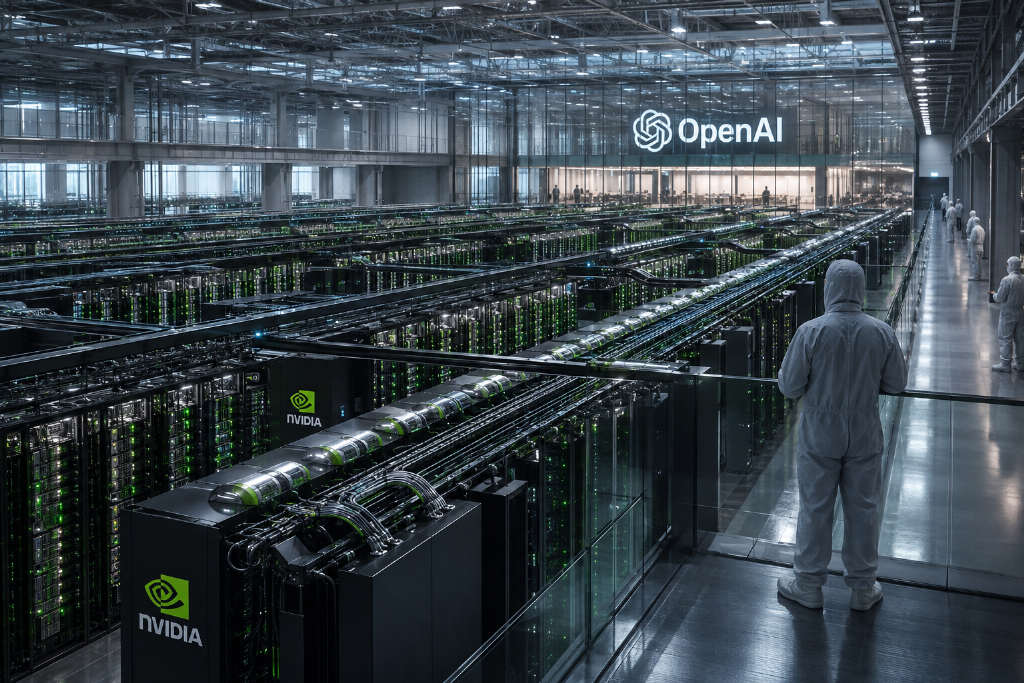
Jensen Huang2026-09-06 22:42:04Jensen Huang says AGI has arrived as GPT-6 Astra trained on more than 100,000 Blackwell GPUsOpenAI’s release of GPT-6 Astra prompted a public response from NVIDIA CEO Jensen Huang, who congratulated the company and said bluntly that "AGI has arrived." Huang said Astra was trained using more than 100,000 NVIDIA Grace Blackwell GPUs in an NVLink 72 setup, and added that another 400,000 GPUs are set to come online. He framed the jump from ChatGPT to o1 and then Astra as an advance that took roughly four years. OpenAI described Astra as its "smartest" and "most aligned" model so far. The company said the model scored 98% on FrontierMath Tier 4, 99.9% on ARC-AGI-3, and 100% on ExploitBench, while also highlighting gains in computer use, software engineering, cybersecurity, science, and professional work. Separately, Crusoe CEO Chase Lochmiller pointed to the company’s data center in Abilene, Texas, and said the site could be seen as the birthplace of AGI, linking the moment to OpenAI’s Stargate infrastructure buildout in the US.1230
OpenAI2026-09-04 11:50:00OpenAI unveils GPT-6 Astra as Bloomberg reports Jane Street’s $13 billion compute dealOpenAI introduced GPT-6 Astra early on Sept. 4 Beijing time, saying the new model is designed to improve computer use, software engineering, cybersecurity, scientific research and other professional tasks. In the company’s published evaluations, Astra scored 57.9% on Terminal-Bench 4.0, up from 37.3% for GPT-5.6 Sol, and reached 100% on ExploitBench. OpenAI said the model is the first in its lineup to cross the cybersecurity Critical capability threshold under its Preparedness Framework, and noted that testing uncovered and exploited two previously unknown zero-day vulnerabilities. Astra is being released first to a limited number of institutions before rolling out over the coming days to ChatGPT Plus, Pro, Business and Enterprise users, as well as through the OpenAI API, Microsoft Azure and AWS Bedrock. Standard API pricing is set at $10 per 1 million input tokens and $50 per 1 million output tokens. Separately, Bloomberg, citing people familiar with the matter, reported that quantitative trading firm Jane Street signed a five-year cloud computing agreement worth about $13 billion with AI cloud provider Crusoe. Crusoe is set to supply GPU clusters and related infrastructure for model training and inference, though GPU volumes and deployment timing have not been disclosed. Tesla also began offering rides in parts of Austin with its steering-wheel-free Cybercab, while Federal Reserve Governor Christopher Waller said he would lean toward holding rates steady in mid-September if incoming inflation data continues to cool.1750
Crusoe2026-09-04 00:57:12Crusoe Raises $3 Billion at $30 Billion ValuationData center developer Crusoe has reportedly raised $3 billion at a $30 billion valuation, following a $13 billion contract with Jane Street, per TechCrunch.1120
Crypto to AI2026-07-23 00:48:00How crypto’s leftover power, talent and capital are being redirected into AIA long list of companies and founders now tied to AI can trace part of their edge back to the last crypto cycle. In PANews’ account, the connection is not that mining rigs somehow became AI servers. The real handoff happened through three assets crypto had already accumulated before AI demand exploded: access to power, land and grid permits; engineers and operators trained in distributed systems and global internet products; and capital built during the last bull market. The piece starts with Crusoe, once known for using stranded natural gas at oil fields to mine Bitcoin and now involved in OpenAI’s Stargate buildout in Abilene, Texas. It then moves through mining companies signing multibillion-dollar AI and high-performance computing deals, former crypto builders launching AI infrastructure businesses such as OpenRouter and Fal.ai, and crypto fortunes backing GPU fleets, model companies and decentralized training experiments. Examples in the article range from Jed McCaleb’s Voltage Park to FTX-era investments in Anthropic and Anysphere, and from Paradigm-backed Nous Research to OpenAI’s own early internal discussion of a token-based funding structure. The article’s central point is narrow but clear: crypto did not simply turn into AI. It transferred resources from one cycle into the next industry that needed them more urgently.1700