SEC2026-09-25 22:17:38SEC Commissioner Hester Peirce to Leave on Oct. 2 as Agency Releases More Crypto GuidanceU.S. Securities and Exchange Commission Commissioner Hester Peirce, widely known in the digital-asset industry as "Crypto Mom," said she will leave the agency on Oct. 2, bringing to a close a long stretch in which she argued for clearer rules for crypto markets from inside a regulator often defined by enforcement-first policy. Peirce disclosed the date in a resignation letter posted Friday on X, while the SEC separately published another round of crypto policy guidance on token definitions and how the agency views project marketing and managerial activity. During her time at the SEC, Peirce pushed for policy work under both Jay Clayton and Gary Gensler, even as both chairs oversaw aggressive crypto enforcement. She later took on a more direct regulatory role during President Donald Trump’s administration and was put in charge of the SEC’s Crypto Task Force last year, before current Chair Paul Atkins arrived. Her work touched mining, staking, memecoins, asset classification and jurisdiction, and more recently formal rulemaking, including Regulation Crypto Assets and the agency’s five-year "innovation exemption" framework for tokenized securities. Her departure leaves the commission with only two members: Atkins and Mark Uyeda. On the same day, SEC staff also released an FAQ covering issues such as "essential managerial efforts," staking receipt tokens and when a secondary market may be treated as a promoter of an investment contract.270
Blockchain As2026-09-25 20:01:05Blockchain Association names Kristin Smith interim CEO as Summer Mersinger exits after Clarity Act setbackThe Blockchain Association, one of the crypto industry’s main advocacy groups in Washington, is changing leadership just days after a major legislative loss for the sector. CEO Summer Mersinger is stepping down, and former longtime chief Kristin Smith will return on an interim basis starting Oct. 16, according to a Friday statement. The move comes shortly after the U.S. Senate failed to advance the Digital Asset Market Clarity Act, a defeat that marked a significant setback for the industry. Mersinger, who joined the association after leaving her role as a commissioner at the Commodity Futures Trading Commission, said she was proud of the progress made during her tenure, citing the GENIUS Act and what she described as real regulatory clarity at the Securities and Exchange Commission and the CFTC. Smith led the Blockchain Association from its launch in 2018 until 15 months ago. She later became president of the Solana Policy Institute while remaining president of the Blockchain Association’s board. A spokesperson said she will keep that Solana Policy Institute role while serving as interim CEO. The leadership handoff closes a period that included both major crypto policy wins in Washington and the Senate’s recent rejection of the Clarity Act.260
Peter Hegseth2026-09-25 15:35:30Pete Hegseth’s financial disclosure shows Bitcoin holdings of up to $65,000U.S. Defense Secretary Peter Hegseth disclosed holding between $16,000 and $65,000 in Bitcoin, according to a newly released 2025 annual financial filing cited by Bitcoin Magazine. The filing says the Bitcoin is held in a Coinbase wallet, while one bank account contains $1 million in cash. Hegseth and his wife also reported retirement accounts with investments worth about $2.05 million to $4.35 million, including positions in Invesco QQQ Trust and Apollo Diversified Real Estate Fund. The disclosure also lists stock sales involving Amazon, Microsoft, and Apple. The report places Hegseth inside an administration described as the most crypto-friendly in U.S. history, noting that President Donald Trump pushed for the Clarity Act last month. It also contrasts Hegseth’s relatively small crypto position with the Trump family’s much larger digital asset income, which Trump said exceeded $1.4 billion personally, while a Reuters investigation said the family made $2.3 billion from four crypto ventures through the end of April 2026. Critics have raised conflict-of-interest concerns, which the White House has denied.250
Coinbase2026-09-20 17:13:27Coinbase CEO says short-term failure of CLARITY Act could benefit the U.S.Coinbase Chief Executive Officer Brian Armstrong said the CLARITY Act failing to pass in the short term may actually be better for the United States. In his view, the delay gives the crypto industry more time to build stronger infrastructure and hold deeper discussions with regulators. The comment was cited by Stocktwits and carried by Techub News. Armstrong’s remarks frame the legislative setback not as an immediate loss, but as extra time for the sector to prepare its foundations before any new framework takes hold. The statement did not include a timeline for the bill or further details on the legislative process, but it pointed to two areas Armstrong sees as important during the pause: infrastructure development and engagement with regulators.260
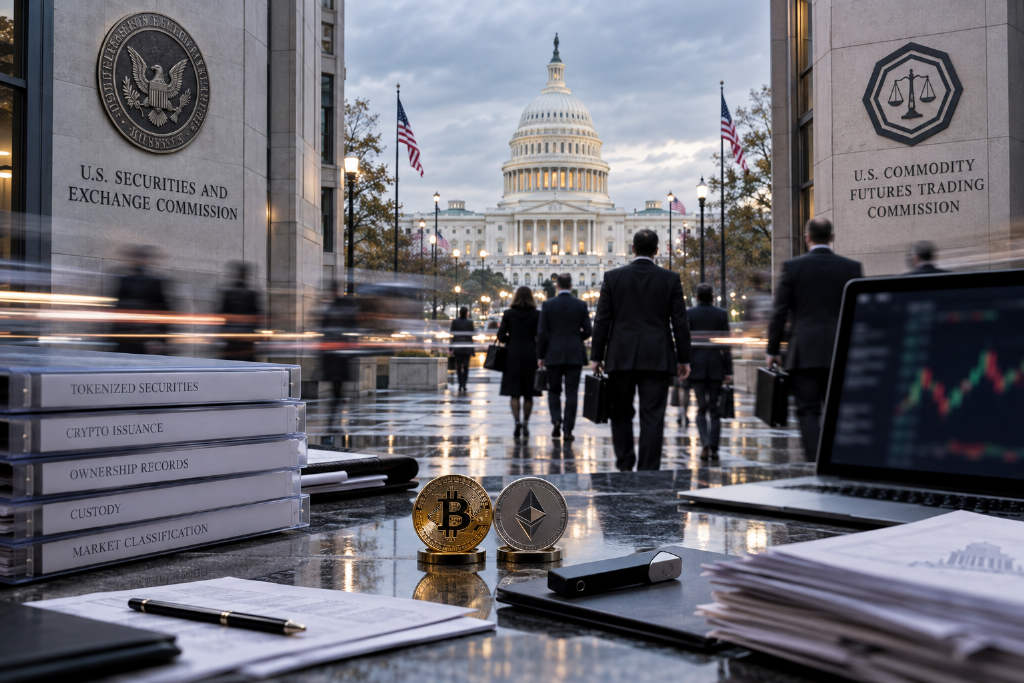
Clarity Act2026-09-19 16:01:05After the Clarity Act failed, the SEC and CFTC are trying to build crypto rules on their ownThe collapse of the Digital Asset Market Clarity Act has pushed U.S. regulators to move faster on crypto rulemaking, even as agency-led efforts fall short of the legal certainty Congress was supposed to provide. The bill had aimed to define categories of blockchain-native assets, assign regulatory authority between the Securities and Exchange Commission and the Commodity Futures Trading Commission, expand the CFTC’s reach over crypto commodity spot markets, address illicit finance concerns, and offer limited legal protections for DeFi software developers. With that framework now stalled, SEC Chair Paul Atkins and CFTC Chair Mike Selig are pressing ahead with a series of proposals. The SEC has advanced work on tokenized securities, a proposed Regulation Crypto Assets regime, blockchain-based ownership records, and digital asset custody rules for investment advisers. The CFTC, meanwhile, has sent a crypto transactions and markets proposal to the White House for review and is exploring a “crypto asset market” designation for firms. According to CoinDesk, these moves may recreate parts of what Clarity would have done, but they remain more vulnerable to leadership changes and legal challenges than legislation enacted by Congress.290
Charles Hoski2026-09-19 15:27:34Hoskinson says crypto could "eat" AI within a decade, sees CLARITY Act delayed until 2029Cardano founder Charles Hoskinson said on the Deeptech Insights podcast that cryptocurrency could "eat" artificial intelligence over the next five to 10 years. He argued that the current boom in data center construction is not sustainable and said blockchain could address several unresolved AI issues, including payments, alignment, and data provenance. Hoskinson also outlined a model in which distributed networks would use everyday consumer devices to help train AI systems rather than relying only on centralized infrastructure. On U.S. regulation, he said the CLARITY Act may not clear Congress until 2029. He also criticized what he described as mistakes by the Trump administration, including tying the public image of crypto too closely to Trump-branded tokens. His comments came one day after the Senate failed to move the bill forward on Sept. 15 because it did not reach the required 60 votes. The remarks were cited by BeInCrypto and summarized by Techub.300
Coinbase2026-09-19 04:48:58Brian Armstrong says WSJ is trying to blame Coinbase for CLARITY Act failing to passCoinbase Chief Executive Officer Brian Armstrong said on X that The Wall Street Journal is preparing a report that would blame Coinbase and Armstrong personally for the failure of the U.S. CLARITY Act to pass. Armstrong said the newspaper’s earlier coverage of the bill showed clear hostility and repeated arguments from banking industry lobbying groups. He said he did oppose one draft of the CLARITY Act from reaching a committee vote in January because it still had major flaws on DeFi, tokenization, the scope of Commodity Futures Trading Commission oversight, and stablecoin rewards. In his view, those issues could have harmed the crypto industry, and the bill also lacked enough support to pass at that stage. Armstrong said Coinbase later worked with multiple parties to revise the legislation, and that all four issues were addressed in the version sent to committee about four months later. He added that the final version of the CLARITY Act submitted to the Senate was "good" and that he strongly supported it. Armstrong said opposing the early draft did not mean opposing the CLARITY Act itself, but reflected an effort to push for a stronger and fairer regulatory framework for crypto.420
Bitwise2026-09-15 15:17:43Bitwise CIO Matt Hougan says U.S. is sacrificing a crypto opportunity for short-term political gainBitwise Chief Investment Officer Matt Hougan said in a post discussing U.S. crypto policy that the country had an opportunity to make the crypto industry safer, encourage investment, and help secure its leadership in global financial markets for the next 50 years. He said that opportunity is now being sacrificed for short-term political gain. The remarks were cited by ChainCatcher in a brief news update. No additional policy details were provided in the source item, but Hougan’s comments framed the issue as a missed strategic opening for the United States as it weighs its approach to crypto regulation and industry development.520