Crypto Regulation
10 days agoNews Editor

Crypto-backed PACs pour millions into Ohio Senate race

Crypto-linked political spending has surged in the Ohio Senate race, with Fairshake transferring more than $24 million in September to its affiliate Defend American Jobs, which then spent roughly the same amount in the contest. About $18.6 million went to support Republican incumbent Jon Husted, while another $5.7 million was used to oppose Democratic candidate Sherrod Brown. The spending did not stop there. In October, Defend American Jobs kept funding ads against Brown, backing Husted, and also added opposition to independent candidate Dan Osborn in Nebraska’s Senate race. The Ohio contest has become one of the clearest examples of how crypto industry money is being deployed in US elections. Brown has previously criticized the sector, calling crypto speculative products run by reckless companies that put Americans’ hard-earned money at risk and saying the industry was created to skirt the rules. Husted, by contrast, has been an outspoken supporter of the Clarity Act, saying it would set strong rules for cryptocurrency, protect consumers, and strengthen America’s leadership in digital assets. Altogether, Defend American Jobs has spent more than $46 million in the Ohio Senate race this cycle, surpassing the $40 million it spent backing Bernie Moreno in 2024. The Digital Freedom Fund has also added $5.9 million.


470
Crypto-backed PACs pour millions into Ohio Senate race
UK
10 days agoNews Editor

UK FCA opens consultations on DeFi compliance guidance and crypto regulation exclusions

The UK Financial Conduct Authority has launched two consultation processes tied to the country’s evolving crypto rulebook, one focused on how decentralized finance firms can comply with anti-money laundering and financial crime requirements, and another covering exclusions from cryptoasset regulation following recent legislative changes. The regulator said its proposed DeFi guidance is meant to clarify existing rules rather than create a new policy framework. The move comes only weeks after the FCA opened applications for firms seeking to operate under the UK’s new crypto regulatory regime. The broader framework referenced by the agency includes stablecoin holding arrangements and reserve assets, and is expected to take effect in October 2027. Companies seeking compliance under the regime have until Feb. 28, 2027, after applications opened on Sept. 30. The UK Cryptoasset Business Council said DeFi remains one of the most innovative areas in financial services and urged the FCA to strike a balance between clear regulatory boundaries, proportionate expectations and room for responsible innovation.

460
UK FCA opens consultations on DeFi compliance guidance and crypto regulation exclusions
UK FCA
10 days agoNews Editor

UK FCA opens consultation on exemptions under expanded crypto rules

The UK Financial Conduct Authority (FCA) published consultation paper CP26/36 on Oct. 21, seeking feedback on which activities may qualify for exemptions under the country’s upcoming expanded crypto regulatory framework. The paper focuses on several areas where exemptions could apply, including temporary settlement arrangements, the holding of qualifying stablecoins during payment processing, certain proprietary trading activities, and services that provide only technical access. The FCA said whether an exemption applies will depend on the facts of a given activity, and stressed that the document is consultative guidance rather than final rules. Responses are due by Nov. 18. Final guidance is expected in January 2027, while the broader scope of the UK’s crypto regulatory regime is scheduled to take effect on Oct. 25, 2027. The Techub item cited NewsBTC as the source.

400
UK FCA opens consultation on exemptions under expanded crypto rules
Chainlink
10 days agoNews Editor

Six blockchain groups including Chainlink and Cardano urge SEC to clarify crypto rules

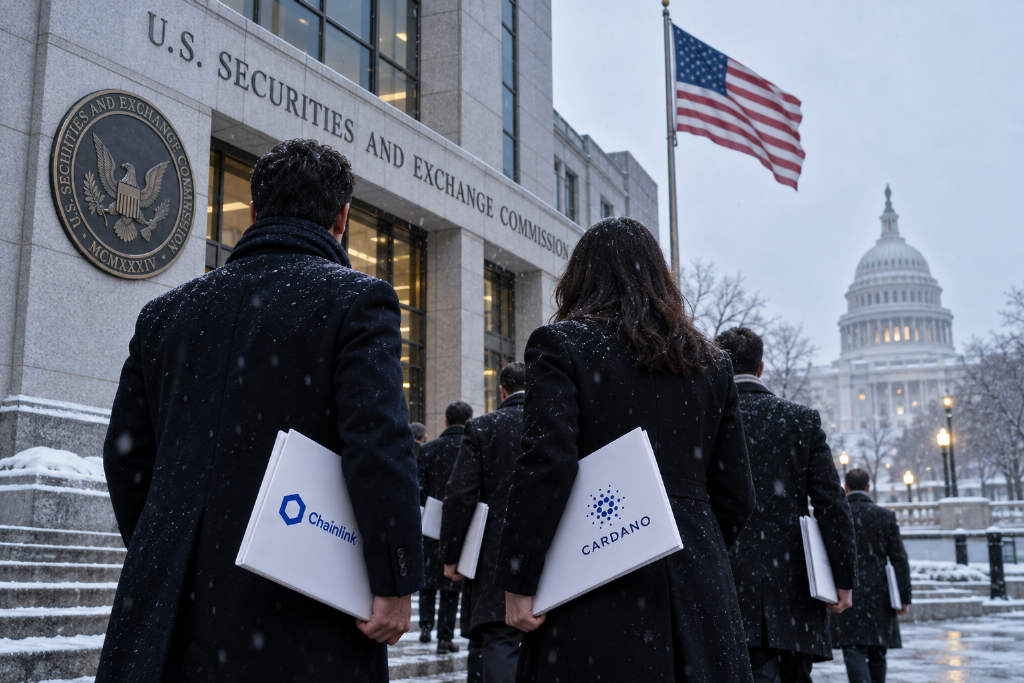
Six blockchain organizations, including Chainlink and Cardano, are urging the U.S. Securities and Exchange Commission to formally recognize digital commodities as non-securities within its proposed regulatory framework, according to Techub, citing Cointelegraph. The request centers on how crypto assets should be classified under U.S. rules and calls for clearer boundaries in the SEC’s approach. The groups’ position focuses on securing explicit treatment for digital commodities rather than leaving their status open to interpretation. The report did not name the other organizations involved or provide additional details on the proposal beyond the call for formal recognition. The development adds to the ongoing debate over how U.S. regulators should distinguish between securities and other types of digital assets.

380
Six blockchain groups including Chainlink and Cardano urge SEC to clarify crypto rules
UK banks
11 days agoNews Editor

UK Banks Drew 10,092 Complaints in 90 Days Over Blocked Crypto Transfers, Report Says

UK bank customers filed 10,092 complaints in a 90-day period over blocked or restricted transfers to crypto exchanges, according to a report released Tuesday by crypto advocacy group Stand With Crypto. The complaints were submitted by 9,803 people between May and August 2026 through the group’s online tool and involved transfers to platforms registered with the Financial Conduct Authority, the UK’s financial regulator. The group said complaints came from all 650 parliamentary constituencies in the country. Lloyds Banking Group received the largest share with 2,297 complaints, followed by Barclays with 1,569 and NatWest Group with 1,278. HSBC UK also logged more than 1,000, though the report did not provide an exact figure. The report also detailed transfer caps published by several banks and said some lenders block crypto transfers entirely. Barclays told Decrypt the limits are intended to protect customers from crypto-related scams and losses. The report places the issue in a wider UK policy debate, citing prior surveys, longstanding bank restrictions, and a parliamentary inquiry into banking access for crypto firms. Stand With Crypto called for risk-based reviews instead of blanket restrictions and urged the FCA and HM Treasury to clarify that sector-wide blocks and hard caps on transfers to registered or authorized crypto firms are unlikely to be justified.

520
UK Banks Drew 10,092 Complaints in 90 Days Over Blocked Crypto Transfers, Report Says
U.S. midterms
11 days agoNews Editor

U.S. Midterm Countdown Puts Crypto Regulation, Not the Bull Market, at the Center

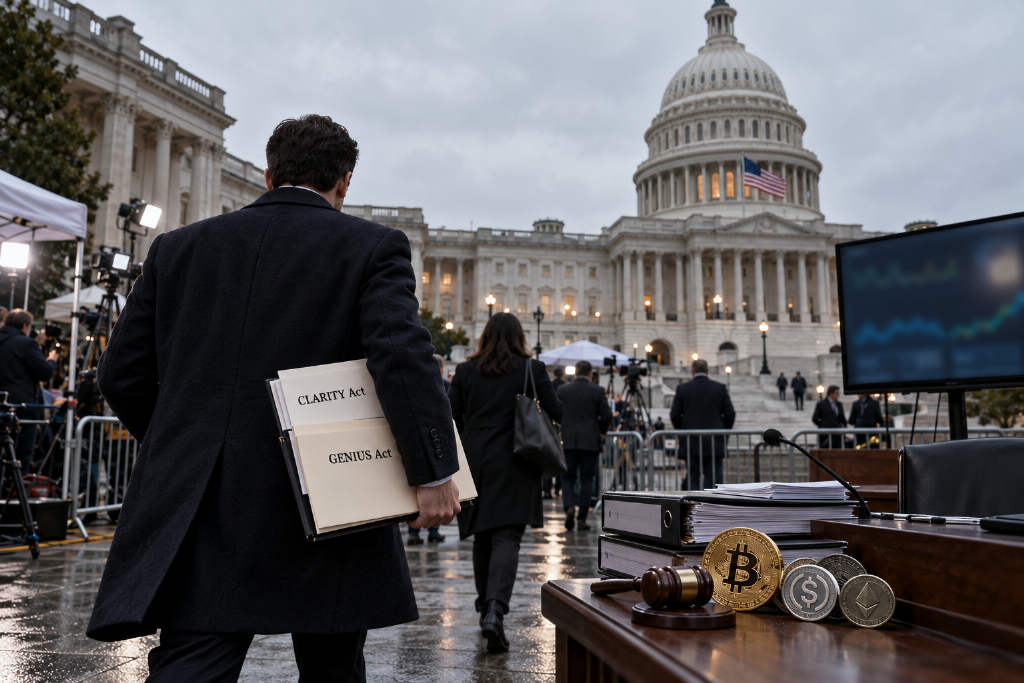
A CoinW Research Institute report says the key market question around the Nov. 3, 2026 U.S. midterm elections is not whether the vote will trigger a crypto bull or bear cycle, but how it could reshape the pace of regulation over the next two years. The report draws a clear line between rules that are already law and reforms still stuck in Congress. The GENIUS Act, signed in July 2025, has already created a federal framework for payment stablecoins, including 1:1 reserve requirements and disclosure rules. By contrast, the CLARITY Act remains unfinished after a Sept. 15, 2026 procedural vote in the Senate failed 49-50, short of the 60 votes usually needed to end debate. CoinW argues that changes in House or Senate control could alter legislative priorities, oversight pressure, committee agendas and senior appointments at agencies such as the Securities and Exchange Commission and the Commodity Futures Trading Commission. It also says the market impact would likely be uneven. BTC, with spot ETF access and broader institutional channels, remains more tied to liquidity, rates and fund flows. DeFi tokens, stablecoins, exchanges, RWA-related businesses and other regulation-sensitive segments could react more directly to changes in policy expectations. The report also notes that election outcomes can be priced in before the vote, leaving room for reverse moves after results are known if positioning becomes crowded.

390
U.S. Midterm Countdown Puts Crypto Regulation, Not the Bull Market, at the Center
Blockchain Association
11 days agoNews Editor

Blockchain Association urges SEC to define decentralization standards for tokens

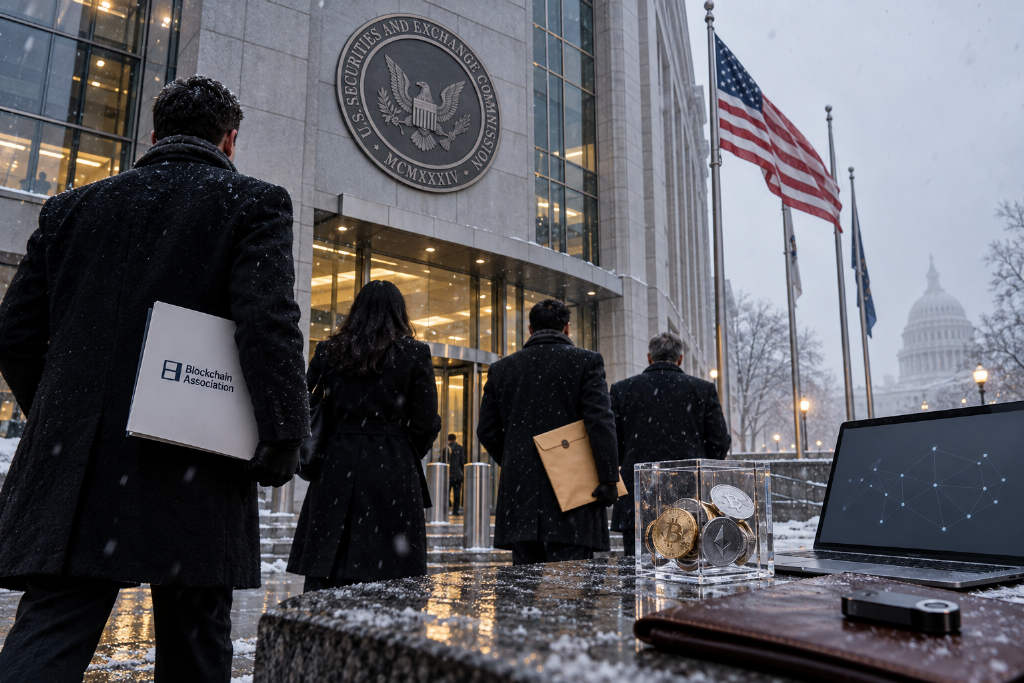
The Blockchain Association has submitted a comment letter to the U.S. Securities and Exchange Commission on its crypto asset regulation proposal, calling for clearer rules on when a token should no longer be treated as an investment contract. The group said the SEC should adopt objective decentralization standards, citing factors such as open-source code and the absence of unilateral censorship power. The association also proposed raising the startup exemption cap to $10 million and increasing the fundraising exemption threshold to $150 million. In its recommendations, it backed the use of on-chain transparency in place of audits and said airdrops should not be counted toward fundraising totals. For existing tokens, the group called for a safe harbor framework based on third-party filings. It also supported stronger federal preemption over state-level legislation, while backing 24/7 exchange trading and self-custody. The letter lays out a broader push for more defined treatment of crypto assets under U.S. securities rules.

440
Blockchain Association urges SEC to define decentralization standards for tokens
Bitwise
11 days agoNews Editor

Bitwise and Hyperliquid urge SEC to clarify token, airdrop, and secondary trading rules

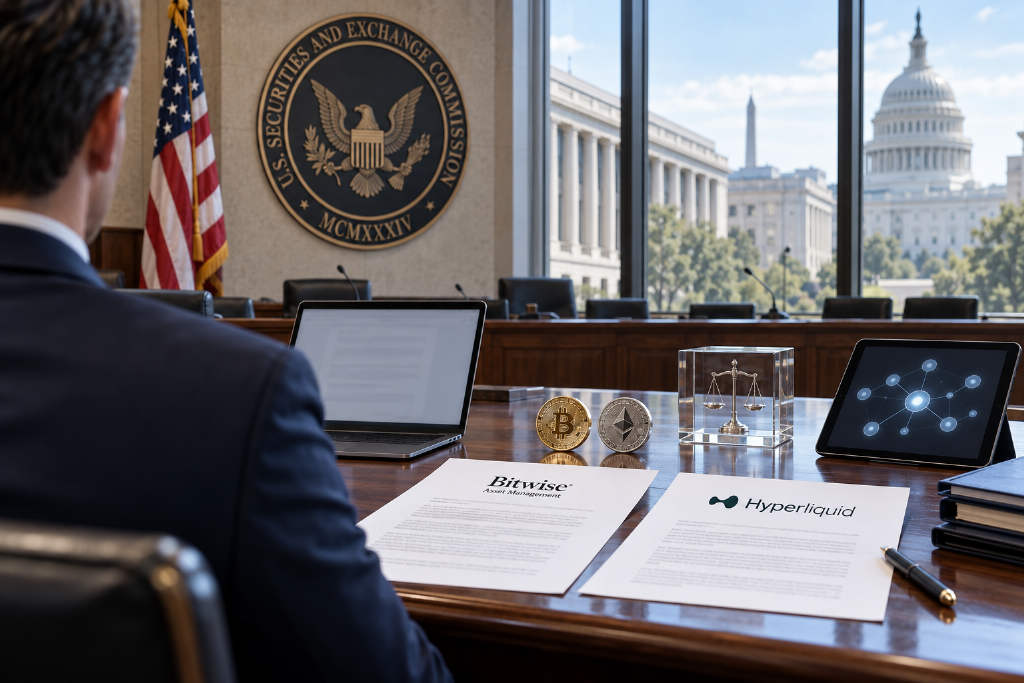
Bitwise Asset Management and the Hyperliquid Policy Center have submitted comment letters to the U.S. Securities and Exchange Commission, asking the agency to revise its proposed crypto rulemaking. The proposal, titled Regulation Crypto Assets, would create an exemption for eligible crypto fundraising and a conditional safe harbor for tokens tied to investment contracts. Bitwise asked the SEC to spell out how investment managers should determine whether a token falls under securities laws. Hyperliquid Policy Center called for a broader safe harbor and clearer rules for airdrops used to reward network participants, token buybacks, whether unregistered intermediaries can facilitate token trades, and whether tokens can trade freely through on-chain protocols. In a separate response, former SEC enforcement official John Reed Stark and Duke University finance scholar Lee Reiners urged the agency to withdraw the proposal, arguing that it exceeds the SEC’s statutory authority and weakens investor protection. The SEC will decide whether to revise, adopt, or withdraw the rule after the public comment period ends, and any final rule would require a commission vote before taking effect.

450
Bitwise and Hyperliquid urge SEC to clarify token, airdrop, and secondary trading rules
Total 1667 items
Go topage