Dragonfly
Oct 8, 2026

Dragonfly’s Haseeb Qureshi says agent payments were overhyped, while crypto’s real use is protecting individuals

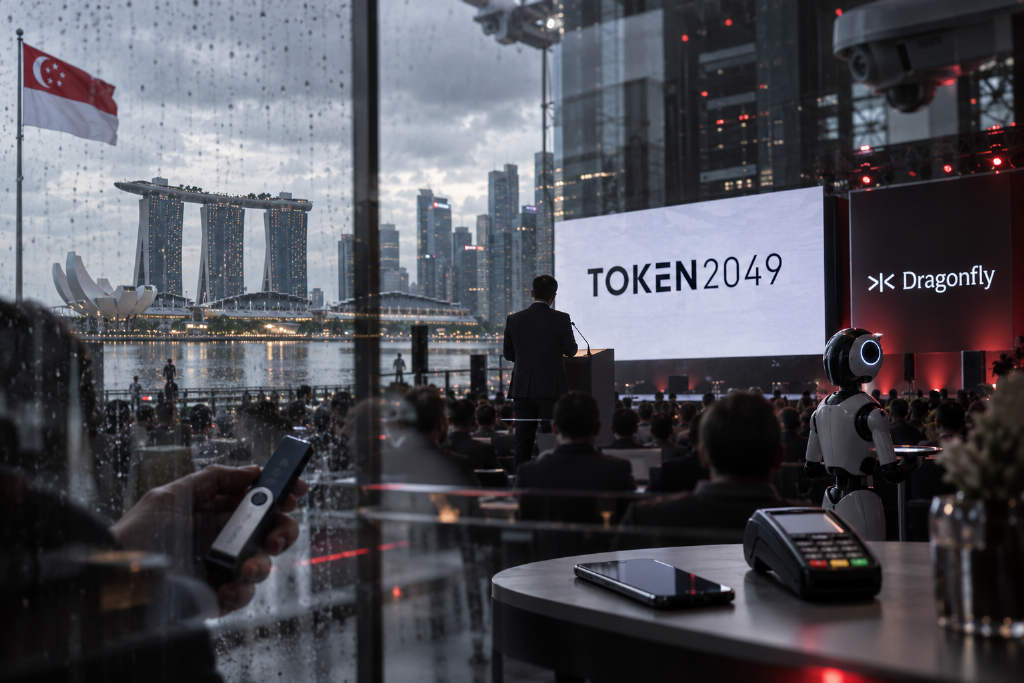
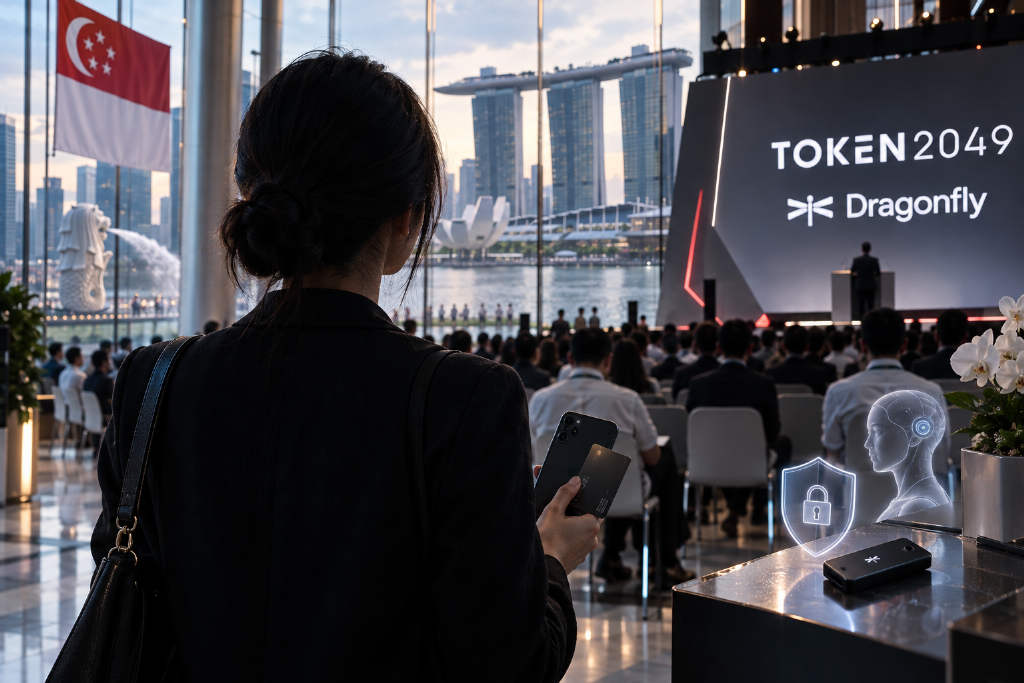
Dragonfly managing partner Haseeb Qureshi used a TOKEN2049 talk in Singapore to walk back one of the crypto market’s favorite AI narratives: that autonomous agents would naturally become major crypto users before traditional finance rails could catch up. His revised view is blunt. Agents, at least in consumer commerce today, mostly use cards. Products from Rain, Visa, Ramp and Stripe already let users issue controlled sub-cards for agents, and Qureshi said even his own agent tends to buy things with a card rather than a crypto wallet. He also pointed to Coinbase’s x402 agent payment protocol, saying 90% of its payment volume came from farming activity rather than broad real-world adoption. Where he still sees a major role for crypto is elsewhere. Qureshi argued that AI agents can make crypto safer and easier to use by reducing user error, screening for phishing, checking contracts and catching mistakes before funds move. He then tied that argument to privacy and state power, saying AI expands governments’ ability to monitor and process data at scale, while crypto can shift power back to individuals. In that framework, privacy tools and private AI systems matter more than agent-native payments. His closing line captured the thesis: your agent does not need crypto; you do.
1230
Dragonfly’s Haseeb Qureshi says agent payments were overhyped, while crypto’s real use is protecting individuals
Dragonfly
Oct 8, 2026

Dragonfly’s Haseeb Qureshi says agents may not need crypto, but people still do

Dragonfly managing partner Haseeb Qureshi used his TOKEN2049 talk in Singapore to walk back one of the crypto market’s favorite narratives from earlier this year: that AI agents would become a major native user of crypto payments before traditional rails could catch up. He said that did not happen. In his account, agents are already arriving in consumer products, but most of their real-world commerce is happening through cards, not onchain payment systems. He pointed to products from Rain, Visa, Ramp and Stripe, and said even Coinbase’s x402 agent payment protocol has not seen broad genuine adoption, adding that 90% of payment volume on x402 is driven by farming behavior. Qureshi’s broader claim was that crypto’s stronger long-term role in an AI-heavy world is not about agents paying with tokens for everything. Instead, he argued that agents can make crypto safer and easier for users by reducing operational mistakes, filtering phishing risks and acting as an intelligent layer between users and their funds. He also tied the rise of powerful AI systems to a sharp shift in privacy and state power, arguing that AI improves surveillance and large-scale data analysis while crypto pushes power back toward individuals. In that framing, privacy tools and private AI systems become more important, not less, as AI capability grows.

1290
Dragonfly’s Haseeb Qureshi says agents may not need crypto, but people still do
Dragonfly
Oct 9, 2026

Dragonfly partner rejects doomsday-style crypto migration, calls for recovery mechanism

Dragonfly managing partner Haseeb Qureshi pushed back against Ethereum researcher Justin Drake’s proposed "Bunker Mode," arguing that moving funds to fresh addresses would not solve the core problem if AI were to break current cryptographic signature systems. In his view, even assets that are successfully moved could still suffer a sharp loss in value if large amounts of coins in other exposed addresses were stolen and dumped on the market. Qureshi instead proposed that blockchain networks adopt a "cryptographic recovery mode." Under that approach, users would pre-bind a hash-based backup signature scheme to their addresses, allowing validators to trigger a forced recovery process if existing signature methods were compromised. The debate comes with fresh data from Glassnode. The analytics firm said about 6.26 million BTC, more than 31% of Bitcoin’s total supply, sits in addresses exposed to public-key risk. Roughly 4.33 million BTC is tied to address reuse and could be protected by moving to new addresses, while another 1.94 million BTC faces risk because of address format. Exchange-related exposure is close to 1.8 million BTC, or about 57% of exchange BTC balances. Drake has warned that AI could speed up attacks on ECDSA, with the worst-case timeline shrinking to months rather than years. Vitalik Buterin has also said the risk deserves serious attention, while cautioning against rushed asset transfers.

930
Dragonfly partner rejects doomsday-style crypto migration, calls for recovery mechanism
Dragonfly
Oct 9, 2026

Dragonfly’s Haseeb Qureshi rejects ‘bunker mode’ as answer to AI signature risk

Dragonfly managing partner Haseeb Qureshi has pushed back on Ethereum researcher Justin Drake’s warning that users may need to enter a so-called “bunker mode” if artificial intelligence begins breaking cryptographic signatures. Qureshi argued that simply moving tokens to fresh addresses would not amount to a real fix, because those coins would only remain protected if they were never moved again, and could still lose practical value if the broader market were being hacked and sold off at scale. Instead, he called on blockchain networks to prepare in advance with recovery mechanisms at the protocol level. His proposed “Cryptographic Recovery Mode” would let users link a hash-based backup signature scheme to their addresses, allowing validators to trigger recovery if current signature systems fail. The debate comes as Glassnode data shows 6.26 million BTC, more than 31% of Bitcoin’s supply, are currently held in addresses exposed to such risks. Of that total, 4.33 million BTC are exposed due to address reuse and 1.94 million through address format, according to Glassnode co-founder Rafael Schultze-Kraft. Drake, meanwhile, said AI progress could threaten ECDSA “in months, not years,” while Ethereum co-founder Vitalik Buterin said the industry should take the risk seriously but not rush users into moving funds.

710
Dragonfly’s Haseeb Qureshi rejects ‘bunker mode’ as answer to AI signature risk
Dragonfly
Oct 9, 2026

Dragonfly partner says address migration is not a real fix for AI-driven signature risk

Dragonfly managing partner Haseeb Qureshi has pushed back on Ethereum researcher Justin Drake’s proposed “bunker mode” response to the risk that AI could break cryptographic signatures protecting crypto wallets. Qureshi described the idea as “cryptographic doomerism” and argued that moving tokens to fresh addresses does not solve the core problem. In his view, the approach only protects assets that remain untouched in new wallets, while tokens held elsewhere could still be attacked and dumped, eroding value across the market. As an alternative, Qureshi proposed a “Cryptographic Recovery Mode” for blockchain networks. The model would use hash-based backup signature schemes and let users bind a recovery mechanism in advance, so validators could help restore assets if existing signature systems are broken. His comments came after Drake warned that the ECDSA signature algorithm used to secure crypto wallets could face a break “in months, not years” as AI’s mathematical capabilities improve. Drake had urged users to gradually move funds into wallets with unexposed public keys. Glassnode data cited in the report showed that about 6.26 million BTC are currently held at addresses facing potential risk.

750
Dragonfly partner says address migration is not a real fix for AI-driven signature risk
Dragonfly
Oct 7, 2026

Dragonfly’s Haseeb Qureshi says agents may not need crypto, but users still will

Dragonfly managing partner Haseeb Qureshi used the TOKEN2049 stage in Singapore on Oct. 7 to walk back one of the crypto market’s favorite narratives from earlier this year: that AI agents would naturally become major crypto users before traditional payment rails could catch up. In his telling, that thesis has not held up. Consumer-facing agents are already arriving, OpenAI is building in the category, and the payment tool they are mostly using today is not crypto but cards. Qureshi pointed to products from Rain, Visa, Ramp and Stripe, and said Coinbase’s x402 agent payment protocol has not seen broad real-world agent adoption, with 90% of payment volume coming from farming activity. His broader argument was not that crypto is irrelevant to the agent era, but that its role is different from what many expected. He said agents could matter more by making crypto safer and easier to use, reducing mistakes around wallets, gas, phishing, fake interfaces and compromised contracts. He also tied the rise of AI to a wider erosion of privacy, arguing that AI strengthens state capacity while crypto can return power to individuals. In that framework, privacy tools such as Zcash and private AI platforms such as Venice could become more usable once agents act as the interface between people and crypto.

1060
Dragonfly’s Haseeb Qureshi says agents may not need crypto, but users still will
Dragonfly
Oct 7, 2026

Haseeb Qureshi says agent-driven crypto payments thesis has been disproven

Dragonfly managing partner Haseeb Qureshi said at the TOKEN2049 conference that the early-year narrative claiming AI agents would broadly adopt crypto payments has not held up. He argued that traditional payment rails, including credit cards, were already ready for that use case, undercutting the idea that crypto was the default settlement layer for agents. Qureshi framed the shift differently: in his view, agents do not need crypto, people do. He said agents could still make crypto more reliable by preventing users from making avoidable mistakes, comparing that function to how banks stop reckless actions. Qureshi also tied crypto and private AI to a broader privacy and power debate. In what he described as a panopticon era shaped by sharply lower surveillance costs through AI and a rise in physical attacks, he said crypto and private AI may serve as a last line of defense for individuals seeking to resist state power and regain privacy.

850
Haseeb Qureshi says agent-driven crypto payments thesis has been disproven
Dragonfly
Oct 7, 2026

Dragonfly’s Haseeb Qureshi says AI agents don’t need crypto as much as people do

Dragonfly managing partner Haseeb Qureshi used a TOKEN2049 talk in Singapore to walk back one of his earlier assumptions about AI agents and crypto. His revised thesis is blunt: consumer agents are not flocking to crypto rails for everyday payments, and the existing card networks were far more prepared for agent-driven commerce than many in crypto expected. He pointed to products from Rain, Visa, Ramp and Stripe, and said agents today are mostly using cards, not onchain payment systems such as Coinbase’s x402, where he said 90% of volume has come from airdrop farming activity. Qureshi argued that the more durable impact of agents on crypto lies elsewhere. In his view, agents reduce friction in hard systems, whether that means navigating government bureaucracy or protecting users from making costly onchain mistakes. He said AI agents could become the intelligence layer between users and their funds, screening scams, checking addresses, spotting compromised contracts and making crypto safer to use. From there, he tied AI to a broader privacy debate. Qureshi argued that privacy has often survived only because surveillance and data aggregation were expensive. As AI lowers that cost, he said crypto and privacy-preserving tools may become one of the few counterweights available to individuals. He also pointed to private AI services such as Venice, a Dragonfly portfolio company, as part of that longer-term stack.

860
Dragonfly’s Haseeb Qureshi says AI agents don’t need crypto as much as people do
Total 59 items
Go topage