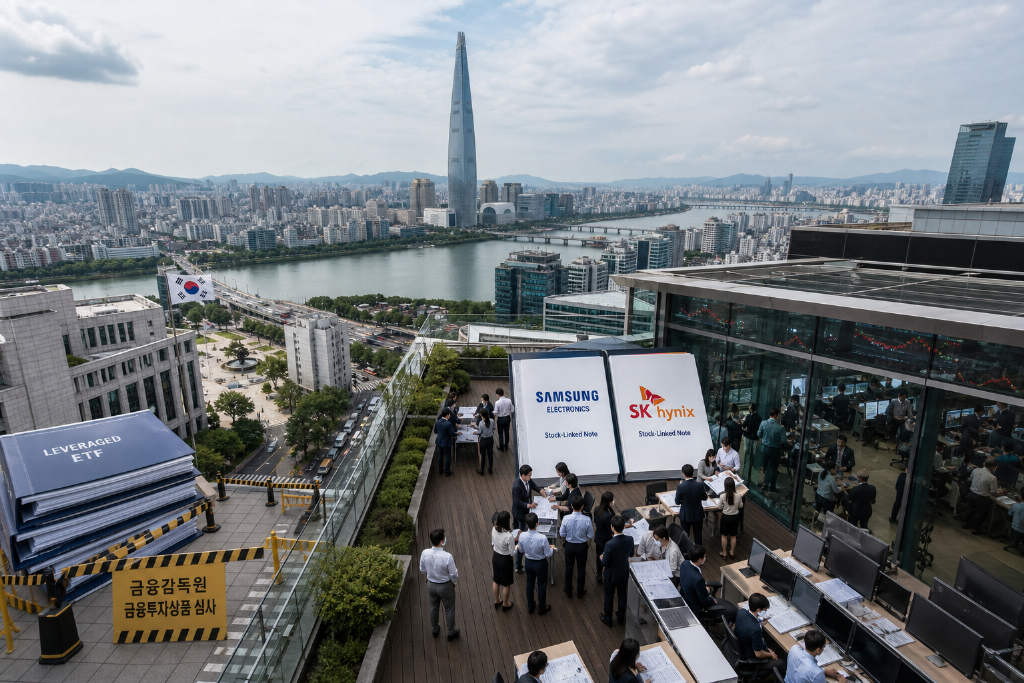
South Korea r2026-08-23 10:39:00South Korea to tighten oversight of high-yield equity-linked securities in SeptemberSouth Korean regulators plan to step up oversight of structured products such as equity-linked securities, or ELS, starting next month, according to Bloomberg. Under the planned rules, brokerages would need to warn investors when products approach principal-loss trigger levels and reassess product design and sales practices when risks rise sharply. The move comes after a historic selloff in South Korean equities, but retail appetite for risk has not faded. Instead, individual investors have shifted toward more complex structured products in search of higher returns. ELS offering annual coupon rates of 40% to 50% have drawn fresh retail money, with July sales climbing to the highest level in more than three years. Notes tied to Samsung Electronics and SK Hynix posted the clearest increase. Bloomberg also said funds did not truly leave the market after losses and forced liquidations in single-stock leveraged ETFs. They moved instead into products that appear to offer fixed high yields, even though many high-coupon ELS include knock-in clauses that can expose investors to heavy principal losses if the underlying shares fall below preset levels.1300
South Korea2026-08-23 10:40:41South Korea to tighten oversight of ELS products from next monthSouth Korean financial regulators plan to tighten oversight of equity-linked securities and other structured products starting next month, according to Bloomberg. The new measures would require brokerages to warn investors when products approach the knock-in level that can trigger principal losses. Firms would also need to reassess product design and sales practices when market conditions shift in ways that materially raise risk. The move comes after sharp swings in the South Korean stock market, even as retail appetite for higher-risk products has not meaningfully cooled. Following tighter rules on single-stock leveraged ETFs, part of that demand has shifted toward stock-linked securities offering high coupon payments. Data released by the Korea Financial Investment Association showed ELS sales in July reached 3.5 trillion won, the highest level since April 2023 in what Bloomberg described as a more than three-year high. Products linked to shares of Samsung Electronics and SK Hynix were the main drivers of that growth.1270
South Korea2026-08-23 10:34:12South Korea to tighten oversight of high-yield ELS products from September, requiring broker warnings on principal-loss riskSouth Korean regulators plan to tighten oversight of equity-linked securities, or ELS, and other structured products starting next month, according to Bloomberg as cited by Odaily. Under the planned rules, brokerages will have to warn investors when a product approaches its knock-in level, the threshold at which losses of principal can be triggered. Firms will also need to reassess product design and sales when changes in market conditions make risks materially higher. The move comes after sharp swings in the Korean stock market, even as retail appetite for high-risk trades has not cooled in a meaningful way. Following tighter regulation on single-stock leveraged ETFs, part of that demand has shifted into stock-linked ELS products that offer relatively high coupon payments. Data released by the Korea Financial Investment Association showed ELS sales in July reached KRW 3.5 trillion, the highest level since April 2023 in what Odaily described as a more than three-year peak. Products tied to shares of Samsung Electronics and SK Hynix led the increase. The report said some investors remain positive on the AI chip cycle and the outlook for major semiconductor names. Although Samsung Electronics and SK Hynix shares have rebounded recently, they were still down by about 22% or more from record highs set in June. Some investors see rising demand for high-bandwidth memory, or HBM, and expanded shareholder return plans at both companies as factors that may reduce the risk of further declines.1390
South Korea2026-08-23 02:35:10Korean Retail Investors Pivot to High-Yield ELS as Samsung and SK Hynix Become Top UnderlyingsSouth Korean retail investors appear to be keeping their appetite for risk even after a historic selloff in local equities, shifting from single-stock leveraged ETFs to equity-linked securities, or ELS. Bloomberg reported on Aug. 23 that ELS sales in South Korea reached about 3.5 trillion won in July, the highest level since April 2023. Products linked to Samsung Electronics and SK Hynix drew the strongest demand, with some brokerages offering annualized coupons of 40% to 50%. The appeal comes with material downside. ELS are structured products whose payouts depend on the performance of shares or indexes. Investors can earn high coupons if the underlying stocks stay above preset barriers, but steep declines can trigger large principal losses. One product from Meritz Securities linked to Samsung Electronics and SK Hynix offered annualized returns of as much as 43.4%, while a Kiwoom Securities product tied to SK Hynix and LG Electronics offered coupons up to 50%, with disclosed potential losses ranging from 30% to 100% if conditions are not met. The shift is taking place after the KOSPI at one point fell 22% last month and regulators moved to curb speculative trading in single-stock leveraged ETFs, which were seen as adding to volatility.1330
South Korea s2026-08-23 00:19:26Korean retail investors turn to high-yield structured products after stock selloffA sharp slide in South Korean equities has not materially reduced retail investors’ appetite for risk. Instead, it has pushed many toward more complex structured products, with equity-linked securities, or ELS, regaining popularity among individual buyers. Products tied to Samsung Electronics and SK Hynix led the rebound, and ELS sales in July climbed to their highest level in more than three years. The products on offer carried annualized coupons as high as 40% to 50%, reflecting continued demand for elevated returns even after a major market drawdown. At the same time, regulators are moving to curb heavy retail demand for single-stock leveraged exchange-traded funds. Those instruments were seen as amplifying volatility during the Korea Composite Stock Price Index’s 22% drop last month. The shift suggests one of the biggest market selloffs in recent memory has changed the type of products retail traders are chasing, rather than weakening their willingness to take risk. The recent correction has also made ELS look more attractive to some buyers, though the products can face steep downside if the linked stocks or indexes fall sharply outside preset ranges.1220