ELS

RWA
2026-08-26 09:02:46

Wall Street’s Next Crypto Bet May Be the Onchain Product Layer Behind RWA

A TechFlowPost market analysis argues that Wall Street’s most valuable skill over the past five decades has not been stock picking, but product manufacturing. In that framework, the next major crypto opportunity may not sit at the asset-tokenization layer itself, but one level above it: the onchain infrastructure that turns tokenized assets into standardized investment products. The article points to several data points to support that view. Global ETF assets reached a record $23.09 trillion by the end of June 2026, with $1.33 trillion in net inflows during the first half of the year. In tokenized markets, stablecoin supply has climbed above $300 billion, while tokenized real-world assets, or RWA, expanded from $11.8 billion to $33.5 billion in one year. The piece also notes that the GENIUS Act took effect in July 2025, while market structure legislation has moved into the U.S. Senate process. Against that backdrop, the author says the asset side, demand side, and regulatory side have matured at the same time for the first time in the past 18 months. The analysis highlights activity from BlackRock, JPMorgan, MGX, Nasdaq, DBS, BNY Mellon, and Goldman Sachs as signs that not only assets, but products themselves, are moving onchain. It argues that the most obvious gap in current crypto-financial infrastructure is an issuance and operations layer for structured products, and names City Protocol as one project attempting to fill that opening.

110
Wall Street’s Next Crypto Bet May Be the Onchain Product Layer Behind RWA
South Korea r
2026-08-23 10:39:00

South Korea to tighten oversight of high-yield equity-linked securities in September

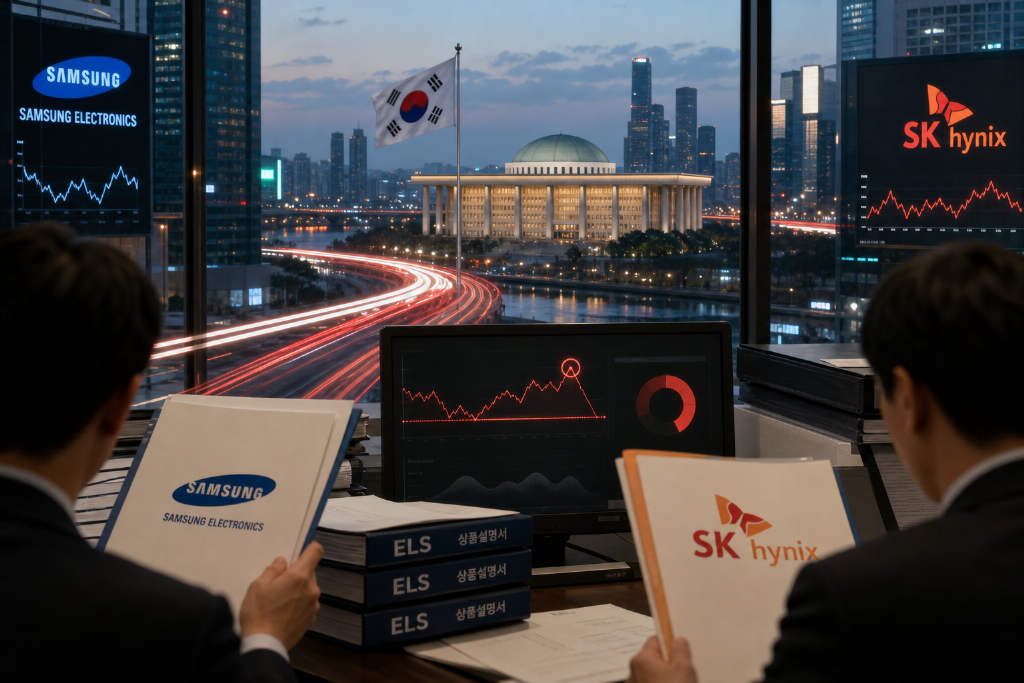
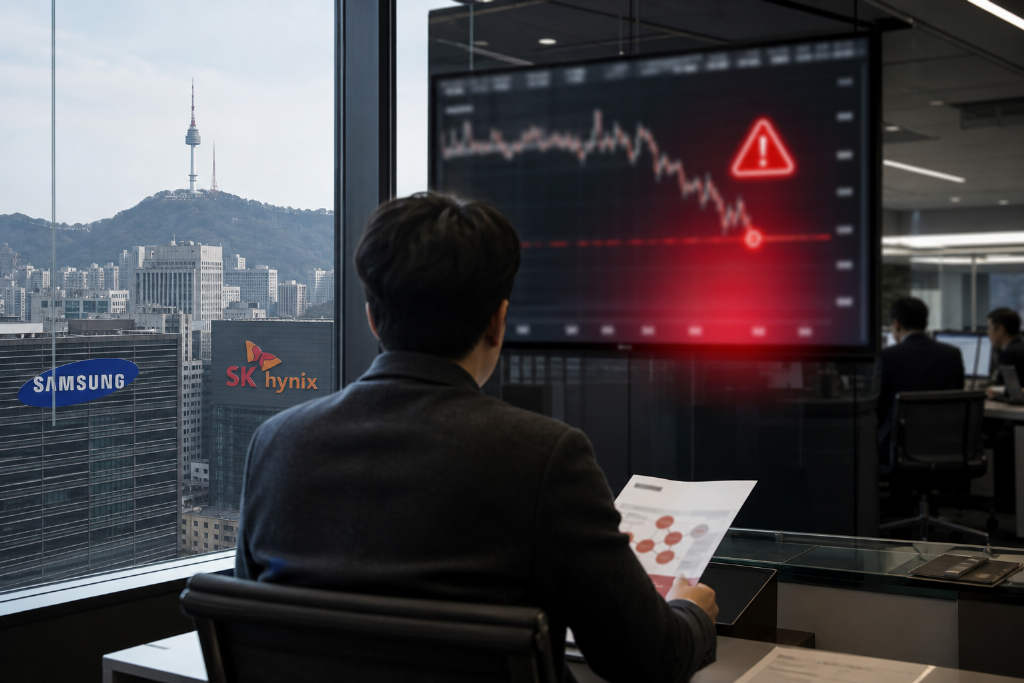
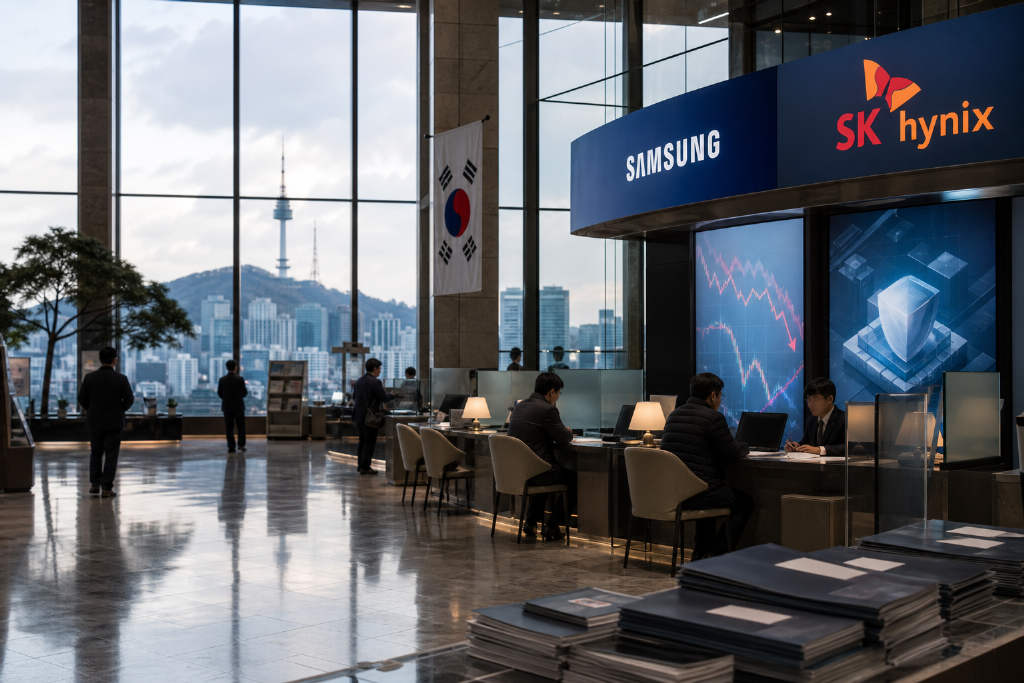
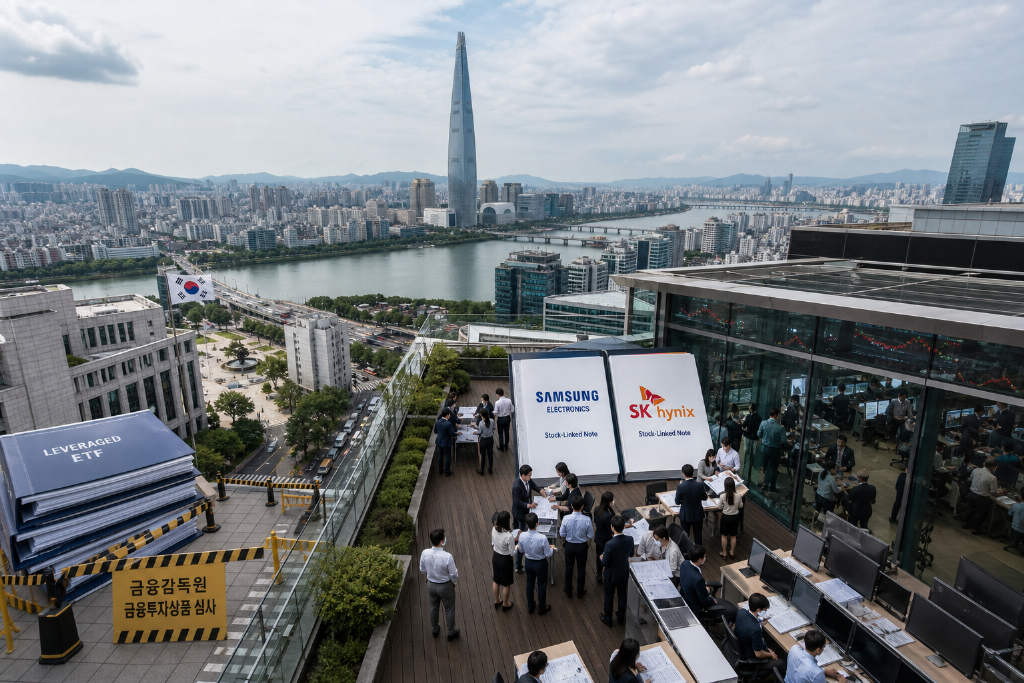
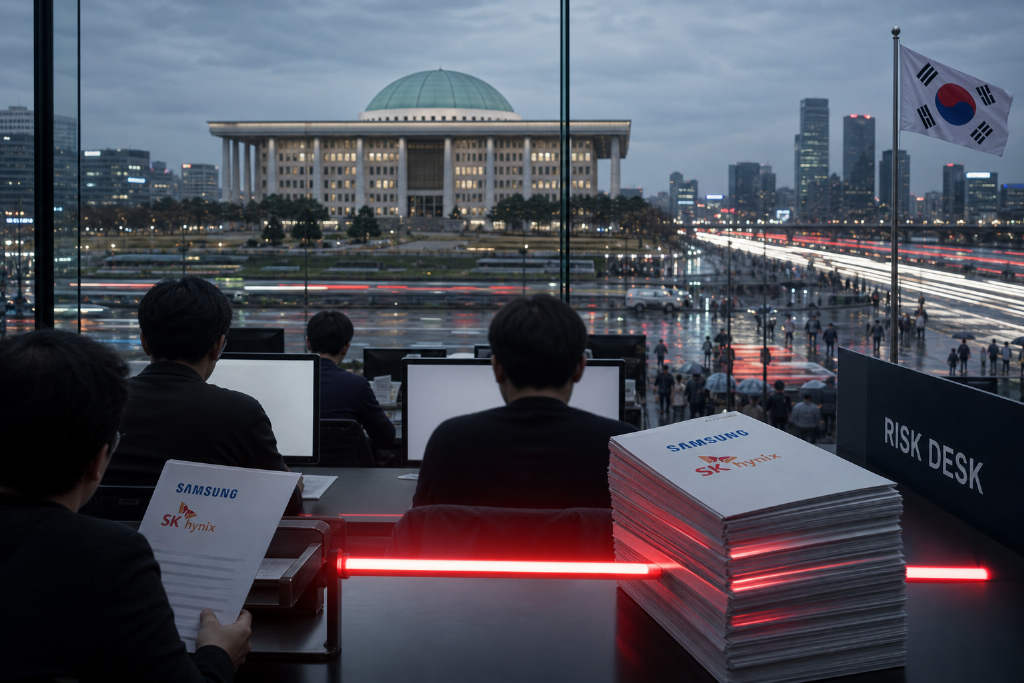
South Korean regulators plan to step up oversight of structured products such as equity-linked securities, or ELS, starting next month, according to Bloomberg. Under the planned rules, brokerages would need to warn investors when products approach principal-loss trigger levels and reassess product design and sales practices when risks rise sharply. The move comes after a historic selloff in South Korean equities, but retail appetite for risk has not faded. Instead, individual investors have shifted toward more complex structured products in search of higher returns. ELS offering annual coupon rates of 40% to 50% have drawn fresh retail money, with July sales climbing to the highest level in more than three years. Notes tied to Samsung Electronics and SK Hynix posted the clearest increase. Bloomberg also said funds did not truly leave the market after losses and forced liquidations in single-stock leveraged ETFs. They moved instead into products that appear to offer fixed high yields, even though many high-coupon ELS include knock-in clauses that can expose investors to heavy principal losses if the underlying shares fall below preset levels.

320
South Korea to tighten oversight of high-yield equity-linked securities in September
South Korea
2026-08-23 10:40:41

South Korea to tighten oversight of ELS products from next month

South Korean financial regulators plan to tighten oversight of equity-linked securities and other structured products starting next month, according to Bloomberg. The new measures would require brokerages to warn investors when products approach the knock-in level that can trigger principal losses. Firms would also need to reassess product design and sales practices when market conditions shift in ways that materially raise risk. The move comes after sharp swings in the South Korean stock market, even as retail appetite for higher-risk products has not meaningfully cooled. Following tighter rules on single-stock leveraged ETFs, part of that demand has shifted toward stock-linked securities offering high coupon payments. Data released by the Korea Financial Investment Association showed ELS sales in July reached 3.5 trillion won, the highest level since April 2023 in what Bloomberg described as a more than three-year high. Products linked to shares of Samsung Electronics and SK Hynix were the main drivers of that growth.

330
South Korea to tighten oversight of ELS products from next month
South Korea
2026-08-23 10:34:12

South Korea to tighten oversight of high-yield ELS products from September, requiring broker warnings on principal-loss risk

South Korean regulators plan to tighten oversight of equity-linked securities, or ELS, and other structured products starting next month, according to Bloomberg as cited by Odaily. Under the planned rules, brokerages will have to warn investors when a product approaches its knock-in level, the threshold at which losses of principal can be triggered. Firms will also need to reassess product design and sales when changes in market conditions make risks materially higher. The move comes after sharp swings in the Korean stock market, even as retail appetite for high-risk trades has not cooled in a meaningful way. Following tighter regulation on single-stock leveraged ETFs, part of that demand has shifted into stock-linked ELS products that offer relatively high coupon payments. Data released by the Korea Financial Investment Association showed ELS sales in July reached KRW 3.5 trillion, the highest level since April 2023 in what Odaily described as a more than three-year peak. Products tied to shares of Samsung Electronics and SK Hynix led the increase. The report said some investors remain positive on the AI chip cycle and the outlook for major semiconductor names. Although Samsung Electronics and SK Hynix shares have rebounded recently, they were still down by about 22% or more from record highs set in June. Some investors see rising demand for high-bandwidth memory, or HBM, and expanded shareholder return plans at both companies as factors that may reduce the risk of further declines.

350
South Korea to tighten oversight of high-yield ELS products from September, requiring broker warnings on principal-loss risk
South Korea
2026-08-23 02:35:10

Korean Retail Investors Pivot to High-Yield ELS as Samsung and SK Hynix Become Top Underlyings

South Korean retail investors appear to be keeping their appetite for risk even after a historic selloff in local equities, shifting from single-stock leveraged ETFs to equity-linked securities, or ELS. Bloomberg reported on Aug. 23 that ELS sales in South Korea reached about 3.5 trillion won in July, the highest level since April 2023. Products linked to Samsung Electronics and SK Hynix drew the strongest demand, with some brokerages offering annualized coupons of 40% to 50%. The appeal comes with material downside. ELS are structured products whose payouts depend on the performance of shares or indexes. Investors can earn high coupons if the underlying stocks stay above preset barriers, but steep declines can trigger large principal losses. One product from Meritz Securities linked to Samsung Electronics and SK Hynix offered annualized returns of as much as 43.4%, while a Kiwoom Securities product tied to SK Hynix and LG Electronics offered coupons up to 50%, with disclosed potential losses ranging from 30% to 100% if conditions are not met. The shift is taking place after the KOSPI at one point fell 22% last month and regulators moved to curb speculative trading in single-stock leveraged ETFs, which were seen as adding to volatility.

350
Korean Retail Investors Pivot to High-Yield ELS as Samsung and SK Hynix Become Top Underlyings
South Korea s
2026-08-23 00:19:26

Korean retail investors turn to high-yield structured products after stock selloff

A sharp slide in South Korean equities has not materially reduced retail investors’ appetite for risk. Instead, it has pushed many toward more complex structured products, with equity-linked securities, or ELS, regaining popularity among individual buyers. Products tied to Samsung Electronics and SK Hynix led the rebound, and ELS sales in July climbed to their highest level in more than three years. The products on offer carried annualized coupons as high as 40% to 50%, reflecting continued demand for elevated returns even after a major market drawdown. At the same time, regulators are moving to curb heavy retail demand for single-stock leveraged exchange-traded funds. Those instruments were seen as amplifying volatility during the Korea Composite Stock Price Index’s 22% drop last month. The shift suggests one of the biggest market selloffs in recent memory has changed the type of products retail traders are chasing, rather than weakening their willingness to take risk. The recent correction has also made ELS look more attractive to some buyers, though the products can face steep downside if the linked stocks or indexes fall sharply outside preset ranges.

330
Korean retail investors turn to high-yield structured products after stock selloff
Fidelity
2026-08-14 01:59:25

Fidelity seeks staking for FETH as Anthropic investors float a possible $2 trillion-plus IPO valuation

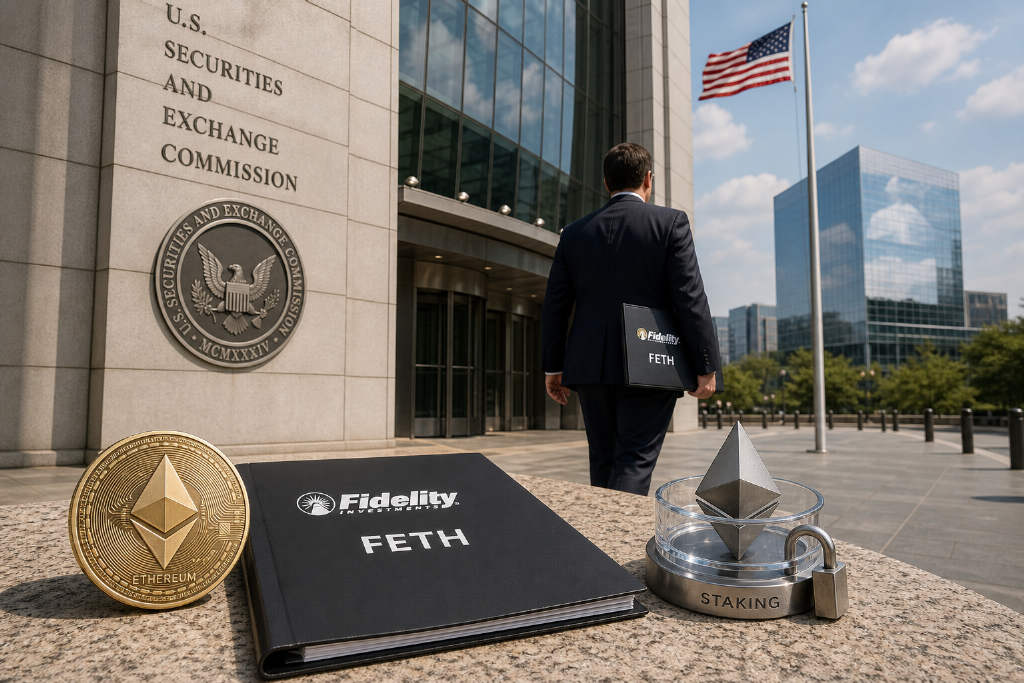
A dense 24-hour news cycle brought fresh filings, earnings, market calls and regulatory signals across crypto and adjacent tech markets. Fidelity filed an amended registration statement with the U.S. Securities and Exchange Commission on Aug. 11 to add ETH staking to its spot Ethereum ETF, the Fidelity Ethereum Fund (FETH). Under normal conditions, the fund said it could stake as much as 100% of the ETH it holds, with no minimum staking threshold, and its investment objective would change to include staking rewards if approved. Elsewhere, some existing Anthropic investors said the AI company could be valued at more than $2 trillion if it goes public as early as October, with one investor putting the upside case at $3 trillion based on a roughly 30x revenue multiple. The estimates remain investor forecasts, and several investors said Anthropic management has not set an IPO valuation target. The session also featured quarterly updates from Bullish, BitGo and Securitize, new SEC steps around tokenized fund operations and tokenized equities, ETF flow data for Bitcoin and Ethereum products, and a series of policy, infrastructure and security developments spanning Europe, the U.K., Brazil and the U.S.

650
Fidelity seeks staking for FETH as Anthropic investors float a possible $2 trillion-plus IPO valuation
Optical Chips
2026-08-14 06:02:48

Nomura says Lumentum results point to persistent optical chip shortages, opening a window for Chinese suppliers

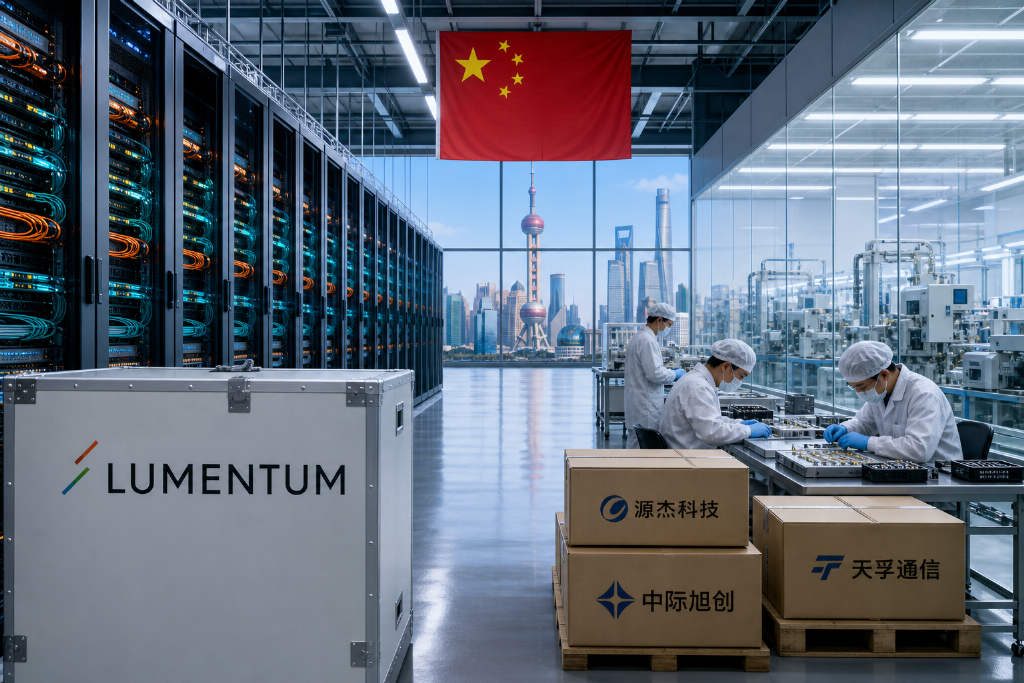
Lumentum’s latest quarter has become a key read-through for the optical communications supply chain, according to a Nomura global AI trend tracking report dated Aug. 12. The company posted June-quarter revenue of $1.01 billion, up 109% year over year, while component revenue in 4QFY26 rose 103% to $649 million. Nomura said those results, along with management guidance, show that shortages in electro-absorption modulated lasers (EML) and continuous-wave (CW) lasers are unlikely to ease through FY26 and FY27. The report highlighted several data points behind that view: narrow-linewidth laser component shipments climbed more than 130%, pump laser shipments rose 80%, and management expects pump laser volumes to grow another 4x over the next few quarters even as capacity remains largely sold out. EML also set another quarterly record, with 200G EML already accounting for more than 25% of total EML revenue and expected to exceed 50% by mid-2027. Nomura also pointed to OCS, or optical circuit switching, as a major growth driver. Lumentum said OCS shipments doubled from 3QFY26 to 4QFY26 and guided for triple-digit year-over-year OCS revenue growth in 1QFY27, while still targeting $400 million in OCS revenue in 2H26. In Nomura’s view, the tight upstream optical chip market is creating a structural share-gain opportunity for Chinese companies including Yuanjie Technology, Innolight, and Tianfu Communication.

660
Nomura says Lumentum results point to persistent optical chip shortages, opening a window for Chinese suppliers