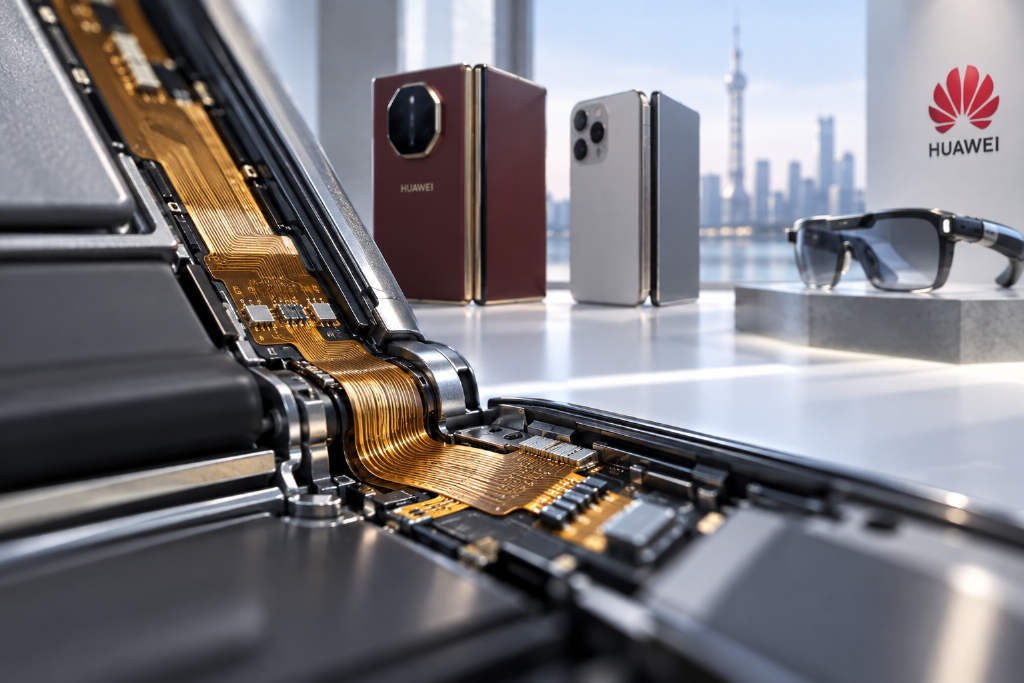
Foldable phone launches lift FPC demand, with AI glasses seen as the next volume driver
Huawei and Apple have both rolled out new foldable phones since September, and the launch cycle is reshaping demand for flexible printed circuits, or FPCs, across the handset supply chain. The biggest change is not only in unit usage, but also in specifications and value per device. Traditional flagship slab phones generally use 10 to 15 FPCs, while one forecast cited in the report says Apple’s iPhone Duo could require more than 50 due to its hinge and dual-screen structure, with tri-fold models potentially using even more. A report from Counterpoint published in September projects global foldable smartphone shipments will rise 24% year over year in 2026, and says cumulative shipments will top 100 million units by the end of this year. Interviewees cited by CLS said leading suppliers including Avary Holding and Hongxin Electronics are already shipping FPC products into mainstream foldables, while gross margins in those businesses improved in the first half. The report also says the bottleneck has shifted from simply making boards that can bend to ensuring performance does not drift after long-term bending, especially under tight bend radii and harsh temperature or humidity conditions. Higher-end ultra-thin multilayer FPC production is raising technical barriers and pushing orders toward large manufacturers. Industry participants quoted in the piece say those process capabilities are starting to extend beyond foldables, with AI glasses viewed as the most certain new hardware direction over the next 12 months.