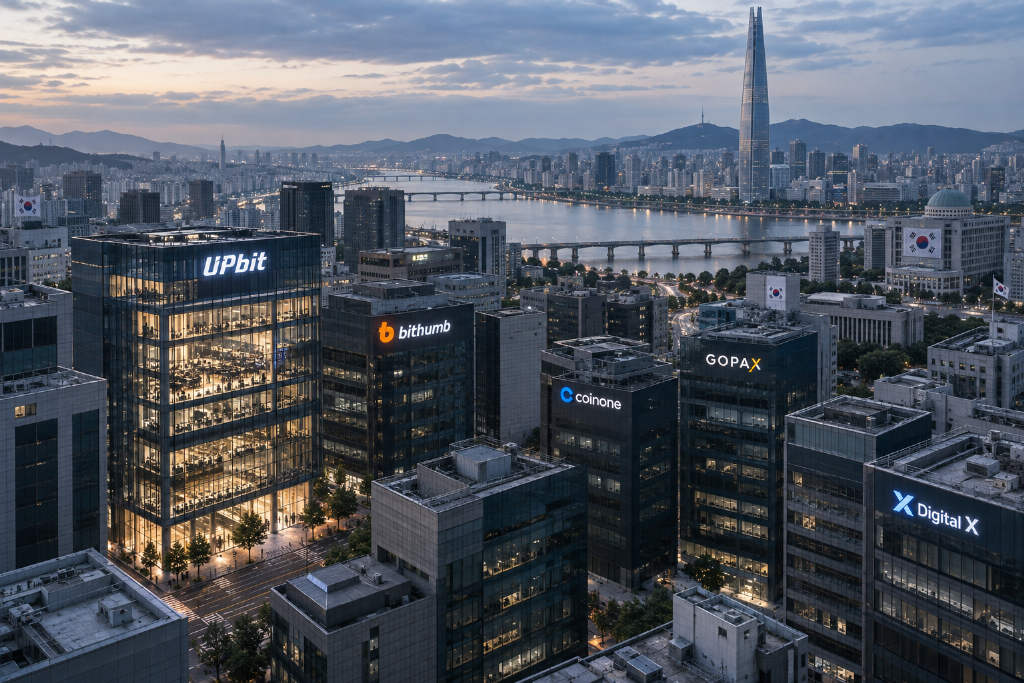
South Korea2026-09-28 03:18:45South Korea crypto trading volume fell more than 50% over the past year, with top 10% of users generating over 96% of turnoverData submitted by South Korea’s Financial Supervisory Service, or FSS, to the office of Democratic Party lawmaker Park Hong-bae showed that virtual asset trading volume in the country dropped by more than 50% over the past year. The same data also pointed to a highly concentrated market structure, with the top 10% of users accounting for more than 96% of total trading volume. For the first half of 2026, the concentration ratio among the top 10% of users at major exchanges stood at 95.6% for Upbit, 97.41% for Bithumb, 99.2% for Coinone, 99.43% for Digital X, and 97.61% for Gopax. The figures were cited by Odaily.250
FSS2026-08-21 23:41:43South Korea’s FSS launches AI system to monitor crypto market manipulation in real timeSouth Korea’s Financial Supervisory Service (FSS) launched an AI-powered real-time monitoring platform on Aug. 20 to detect unfair trading and price manipulation in crypto markets. The system uses generative AI and machine learning to identify patterns such as “racing horse” and “cage” manipulation, while also scanning YouTube, online forums and private chat groups for front-running, false information and coordinated retail-buying schemes. FSS investigators will review AI-generated reports before deciding whether to open enforcement actions. Markus Levin, co-founder of XYO, said regulatory AI may face issues including data accuracy, operational boundaries and false positives. The agency also plans to add cross-exchange fund-flow tracking and on-chain monitoring.1170
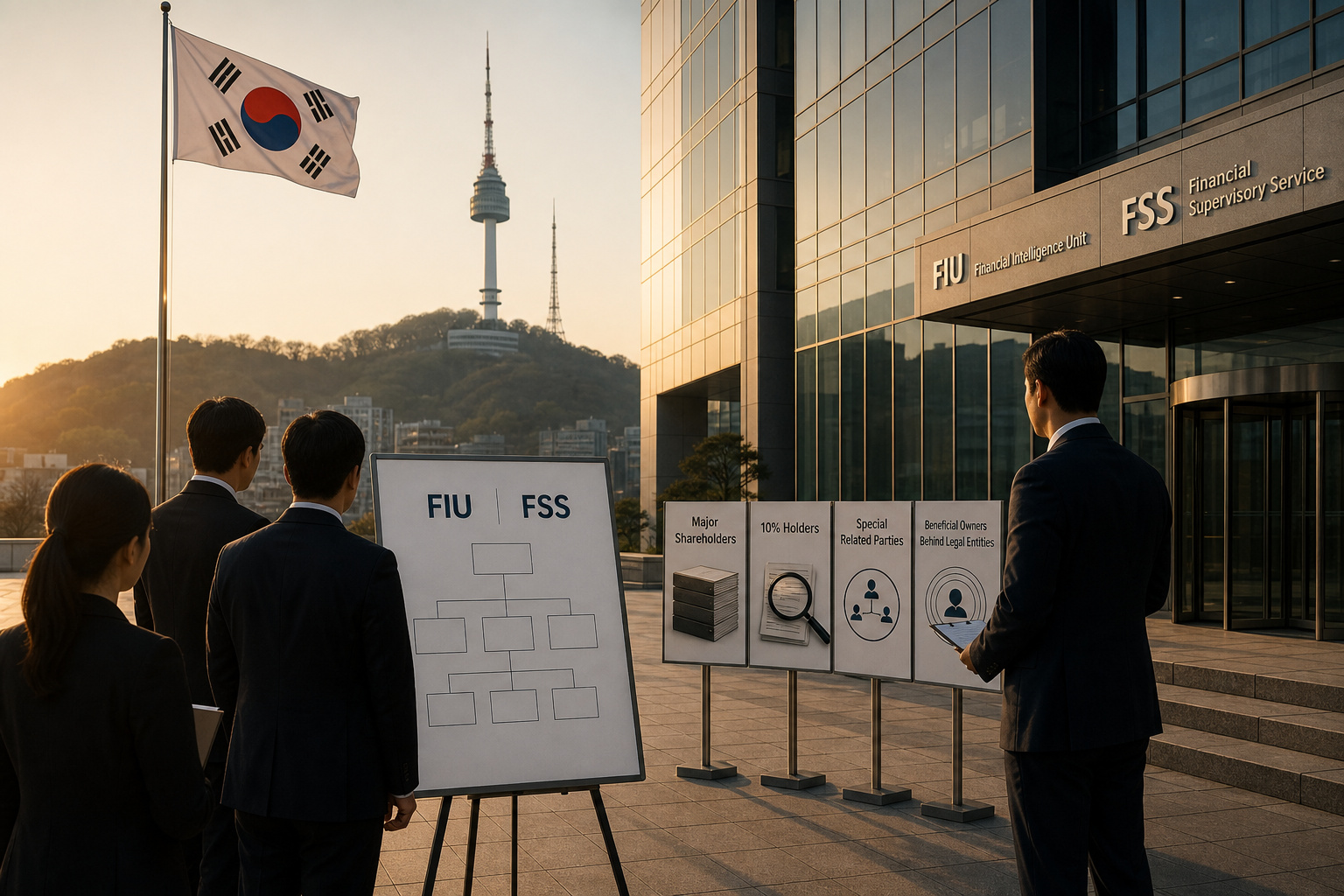
South Korea2026-08-13 06:18:04South Korea to Expand Crypto Operator Registration Review to Major Shareholders Starting Aug 20New registration review rules for virtual asset operators in South Korea will take effect from August 20, with the scope of review expanding to major shareholders. The revised procedures were outlined at an information session held in Seoul on August 13 by the Financial Intelligence Unit (FIU) and the Financial Supervisory Service (FSS), which was organized for virtual asset service providers as well as prospective operators. During the session, the two regulators unveiled the updated registration manual. Under the manual, the review scope now covers not only the largest shareholder and major shareholders with a stake of 10 percent or more, but also shareholders that have a special relationship with the largest shareholder. If the largest shareholder is a legal person, that legal person's own largest shareholder and its representatives may also be brought into the review. Additionally, operators are required to notify the financial authorities at least 30 days in advance in the event of any changes to major shareholders or to the company's legal compliance framework.1480
South Korea2026-08-13 06:17:55South Korea Expands VASP Registration Review to Major Shareholders Starting Aug. 20South Korea is set to broaden the scope of its registration review for virtual asset service providers (VASPs) to include major shareholders, with the change scheduled to take effect on August 20, according to News1. Under the updated rules, operators will be required to give financial authorities 30 days' advance notice in the event that major shareholders or the company's legal compliance framework undergo any changes. The revised registration handbook was released during a briefing in Seoul hosted by the Financial Intelligence Unit (FIU) and the Financial Supervisory Service (FSS), which was intended for VASPs and prospective operators. The review now covers the largest shareholder, shareholders with a stake of at least 10%, and shareholders with a special relationship to the largest shareholder. Where the largest shareholder is a legal entity, the entity's own largest shareholder and its representatives may also be brought under review. The details emerged from a session that brought together existing service providers and firms considering entry into the sector.1720
South Korea2026-08-11 01:18:46South Korea's FSS Rebuilds Fraud Refund System to Cover Virtual AssetsThe Financial Supervisory Service (FSS) of South Korea has started a three-month project to rebuild its fraud refund system, allocating a budget of around 119 million won. This initiative supports the revised Telecommunications Fraud Damage Compensation Act, which goes into effect on October 1 and formally includes virtual assets in the categories of "damaged property" and "refundable property." The upgraded system will be able to compute compensation based on the type and quantity of tokens, using the Korean won value at the moment funds were frozen as the reference point. It also has the functionality to unravel mixed fraudulent funds that involve multiple accounts. Consequently, major cryptocurrency exchanges—Upbit, Bithumb, Coinone, Korbit, and GOPAX—will be subject to the same anti-fraud and victim relief responsibilities as banks, which include checking transaction purposes, watching for suspicious funds, and freezing accounts suspected of fraud. The project runs for three months, aligning with the act's enforcement timeline.1890
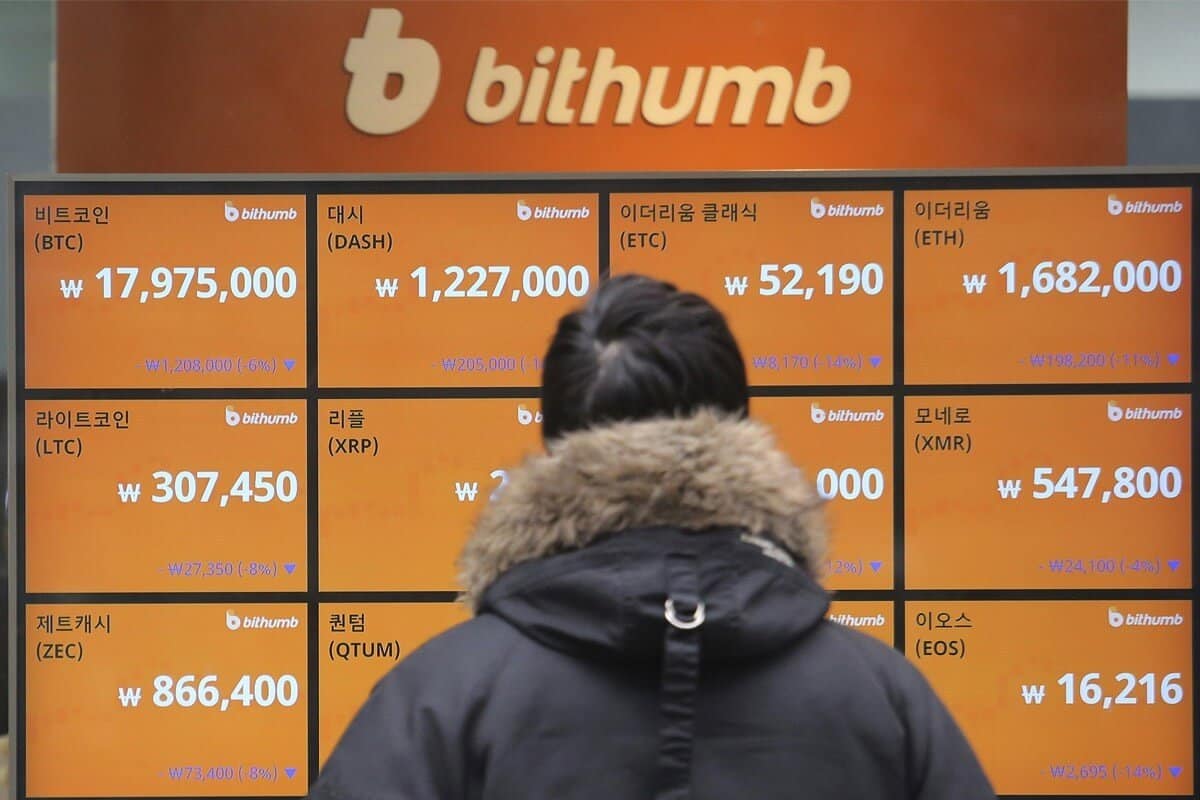
Bithumb2026-08-03 10:47:43Bithumb sets 2028 IPO target as South Korea’s No. 2 crypto exchange lays out listing roadmapBithumb, South Korea’s second-largest cryptocurrency exchange, said Thursday that it is accelerating preparations for an initial public offering and is aiming to go public in 2028. The company published a multi-year IPO roadmap on its website, marking its first full public outline of the listing plan since delaying its earlier 2025 target. Under the plan, Bithumb will focus this year on strengthening internal controls and converting its accounting standards from Korean Generally Accepted Accounting Principles, or K-GAAP, to Korean International Financial Reporting Standards, or K-IFRS, to meet disclosure requirements for listed firms. It plans to file for a preliminary listing review in 2027, with the formal IPO targeted for 2028, though the exchange said the schedule could still change depending on market conditions and the pace of regulatory review. Bithumb said the listing push is also intended to raise governance transparency and build long-term trust. The exchange has been working with a leading South Korean accounting firm on a risk management framework and has carried out organizational and business restructuring. The company had previously targeted a 2025 listing, but internal control issues became one factor behind the delay after an employee mistakenly distributed about 620,000 BTC to users during a marketing event earlier this year, an incident that drew an investigation from the Financial Supervisory Service.1920
South Korea2026-08-02 10:12:56South Korea moves to give regulators emergency market intervention powers during sharp stock swingsSouth Korea’s financial authorities are moving ahead with amendments to the Capital Markets Act that would give regulators emergency intervention powers during periods of sharp stock-market volatility, according to NATE. The Financial Services Commission and the Financial Supervisory Service have already begun work on the legal revisions, with a particular focus on single-stock leveraged exchange-traded funds that were seen as amplifying recent market declines. The planned measures include adjusting leverage ratios and setting investment caps to reduce the risks tied to concentrated trading in stressed market conditions. Regulators are also considering personal investment limits for single-stock leveraged ETFs, with the cap to be standardized at around 20% to prevent excessive concentration of capital. In addition, they are looking at introducing a real-trading simulation system to improve investor understanding of leveraged product risks. South Korean regulators said higher base margin requirements are meant to raise the entry threshold, while investment caps would effectively place a ceiling on inflows, creating a complementary risk-control framework. The country already raised the minimum margin requirement for investors in single-stock leveraged ETFs from 10 million won to 30 million won starting July 31. Data showed that on the first day of the new rule, turnover in 16 related leveraged ETFs fell to about 3 trillion won, roughly one quarter of the previous session’s 12.4 trillion won and about 80% below the 15 trillion won recorded on July 29.1960
South Korea2026-08-02 10:16:05South Korea Weighs Emergency Market Powers to Cap Leverage ETF Exposure During Extreme VolatilitySouth Korea’s financial regulators are pushing to revise the Capital Markets Act to give authorities emergency intervention powers during periods of sharp stock-market swings. The proposal would let regulators move more quickly on single-stock leveraged exchange-traded funds, which officials see as products that can amplify volatility during market sell-offs. Measures under discussion include temporarily cutting leverage ratios, imposing per-investor limits, and capping investment concentration at around 20%. The move is being reviewed by the Financial Services Commission and the Financial Supervisory Service, with regulators citing the limits of the current framework. Under existing rules, changes tied to a fund’s return structure may require approval from a meeting of fund holders, a process authorities say is too slow for extreme market conditions. Officials are also considering a real-trading simulation system to improve investor understanding of leveraged product risks. South Korea had already tightened access to these products on July 31 by raising the minimum margin requirement for investors in single-stock leveraged ETFs from 10 million won to 30 million won. On the first day of the new rule, turnover in 16 related leveraged ETFs fell to about 3 trillion won, down from 12.4 trillion won in the previous session and roughly 80% below the 15 trillion won recorded on July 29.1880