Fugu

Market Analys
2026-09-14 07:03:28

From Public Value to Token Value: Why Crypto Still Lacks the Bridge, the Metrics and the Ledger

A TechFlowPost opinion essay argues that crypto’s biggest capital problem in 2026 is not a lack of money, but a lack of shared measurement tools, reporting standards and value-capture mechanisms for public goods. The piece contrasts booming segments such as real-world assets, stablecoins, ETFs, meme tokens and prediction markets with a quieter deterioration in the funding base for open-source tools, security research, DeSci projects and other infrastructure that the industry depends on. It points to the Ethereum Foundation’s retrenchment, Gitcoin’s token collapse, Helium Mobile’s acquisition, VitaDAO’s mismatch between research cycles and token liquidity, and Friend.tech’s collapse as signs that social value is often created without finding a durable path into protocol or token value. The article reviews existing frameworks from traditional finance and impact investing, including ESG, ESGN, GRI, IRIS+, SROI and Digital Public Goods standards, and argues that crypto has failed to build a comparable disclosure and pricing language for projects whose revenue can be zero but whose ecosystem value remains substantial. It then proposes a six-layer framework that runs from economic value and public value to attribution, protocol capture, token capture and market calibration, while warning about impact washing, subjective shadow pricing, governance capture, fake transparency and lagging market recognition.

890
From Public Value to Token Value: Why Crypto Still Lacks the Bridge, the Metrics and the Ledger
Sakana AI
2026-09-11 06:32:46

Sakana AI rolls out Fugu Max and Fugu Ultra v2 with separate cost and performance tracks

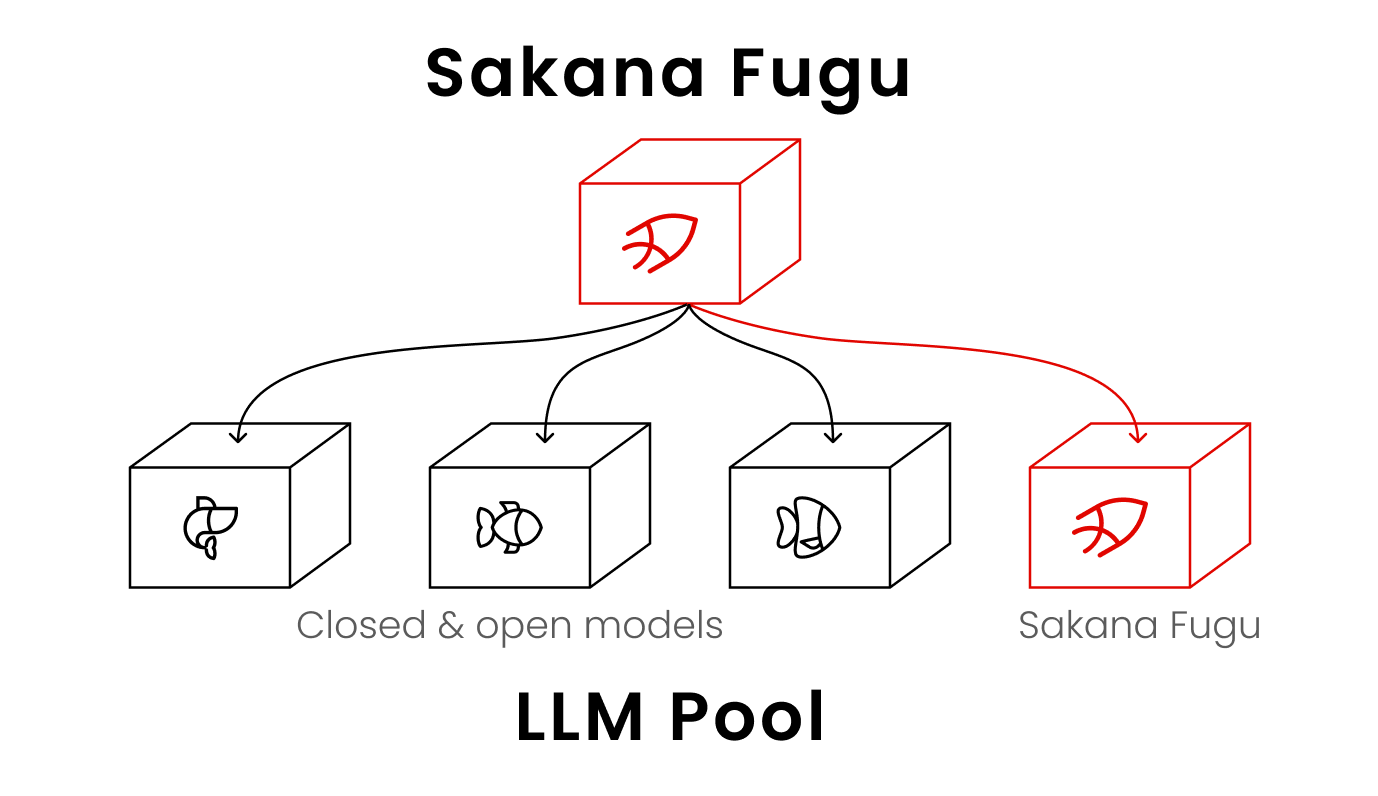
Japanese AI company Sakana AI has introduced Fugu Max and Fugu Ultra v2, two new products built around the same core idea: a model orchestrator that reviews a task, assigns different models to handle parts of it, lets them cross-check one another, and then combines the final answer. According to the brief, the first-generation Fugu used this approach to assemble teams of models including GPT, Claude, and Gemini, reaching performance close to, and in some cases above, the then-stronger Fable 5. The new lineup splits into two clear directions. Fugu Max is positioned as the lower-cost option, expanding its model pool with more open-weight and specialist models while favoring cheaper models that are still sufficient for the job. Sakana said that when performance is close to top-tier models, the cost is about 1/2 to 1/6 of those alternatives. Fugu Ultra v2, by contrast, is aimed strictly at top-end performance. Sakana said it ranked first or tied for first in 5 of 8 benchmarks, even though its agent pool does not include Fable 5, Fable 5.1, or GPT-6 Astra. The company did not disclose Max’s cache hit rate or total token cost per task.

720
Sakana AI rolls out Fugu Max and Fugu Ultra v2 with separate cost and performance tracks
GitHub Copilo
2026-09-05 04:15:04

GitHub Copilot Introduces HydraFusion: Multi-Model Orchestration Cuts Costs by Up to 67%

GitHub launches HydraFusion, a multi-model orchestration system for Copilot that selects between Single, Cascade, and Critique modes based on task complexity. Benchmarks against Claude Opus 5 show comparable performance on three coding agent tests while reducing costs by 36% to 67%. Available as a research preview for all Copilot plans.

880
GitHub Copilot Introduces HydraFusion: Multi-Model Orchestration Cuts Costs by Up to 67%
Crypto Market
2026-08-24 02:03:17

Crypto’s 2026 user shift: capital is back, active participants are not

TechFlowPost argues that 2026 has brought a sharp split to crypto: capital has returned, but many of the people who once animated the industry have not. In the third week of August alone, U.S. spot Bitcoin and Ether ETFs posted $2.61 billion in net inflows, while Bitcoin climbed from 64,000 to 78,000 after a U.S. Treasury operation pushed 30-year yields down from 5.31 to 5.18. Yet over roughly the same stretch, monthly active onchain addresses fell 18% year over year, even as passive holders rose 16%. The article frames the shift as four migrations. New entrants are moving from self-custody to brokerage-based exposure through products such as IBIT. Speculators have moved from aggressive leverage to limited-risk positioning after the October 10, 2025 liquidation shock that wiped out more than $19 billion in a day. Another group has moved from chasing price to using stablecoins as payment and dollar-access tools, especially in emerging markets. A fourth shift is from humans to machines, with automated addresses and bots accounting for most onchain activity by some measures. The piece also says the users most clearly disappearing are P2E workers, NFT collectors and parts of the airdrop-hunting crowd, while stablecoin users, veteran developers and long-horizon allocators remain. Its central claim is that crypto is turning from a community of believers into infrastructure for capital, with fewer ideological participants and more institutions, compliance officers and financial advisors shaping the field.

670
Crypto’s 2026 user shift: capital is back, active participants are not
Wavelength Op
2026-08-14 10:53:09

Wavelength Opto’s Profit Doubled in H1 as Product Mix Shift and Germanium Replacement Took Hold

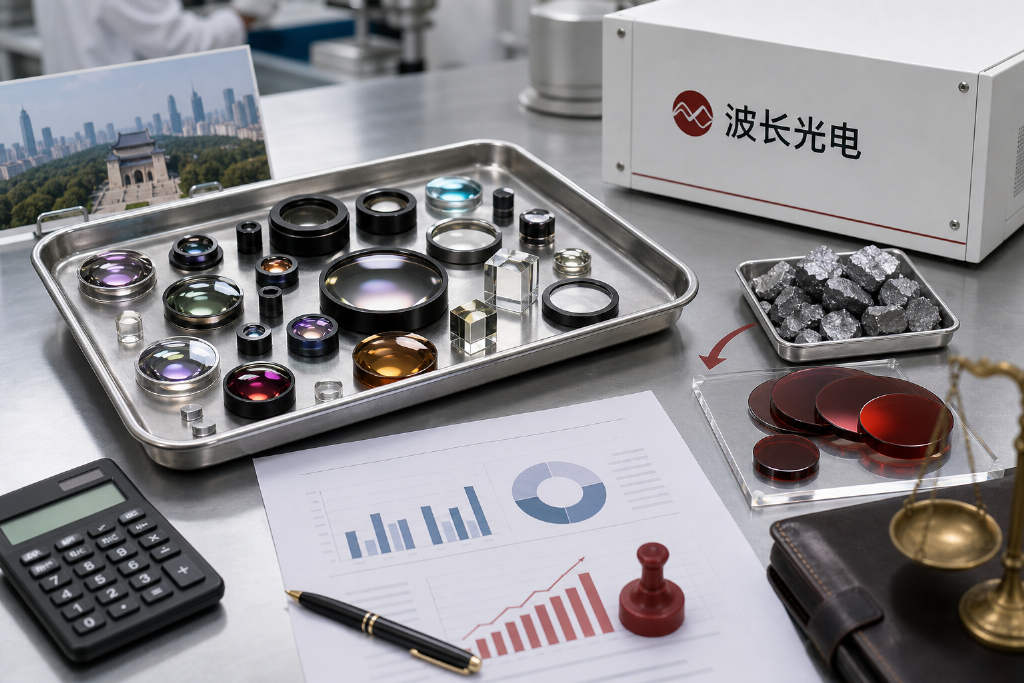
Wavelength Opto posted a sharp earnings rebound in the first half of 2026, even though revenue growth remained in single digits. The Nanjing-based company reported revenue of 243 million yuan, up 8.89% year over year, while net profit attributable to shareholders climbed 102.65% to 28.85 million yuan. Non-recurring adjusted net profit rose 127.31% to 24.26 million yuan, and operating cash flow turned positive at 28.08 million yuan from negative 2.37 million yuan a year earlier. The company also proposed a cash dividend of 1 yuan for every 10 shares. The report points to a clear driver: a major shift in product mix. Optical components, one of the higher-margin segments, expanded quickly, while optical system solutions shrank sharply. That pushed gross margin up from 30.07% to 34.64%. The article also highlights a less visible factor on the cost side: the accelerating substitution of chalcogenide glass for germanium in infrared optics, a change that Securities Times said could lower the company’s long-term cost curve. Still, risks remain. The criminal case involving controlling shareholder Huang Shengdi has not been resolved, semiconductor revenue was only about 18 million yuan despite 83% growth, and the company’s valuation already reflects strong optimism, with PE (TTM) around 184x.

1200
Wavelength Opto’s Profit Doubled in H1 as Product Mix Shift and Germanium Replacement Took Hold
BitMart
2026-07-27 02:18:10

July 27 crypto and tech roundup: BitMart exit plan, Odos shutdown, Robinhood-Crypto.com talks

A wide set of crypto, equity and AI developments shaped the July 27 news cycle. BitMart said it will wind down its exchange in phases, with new registrations, deposits and fresh orders already set to stop and all trading services ending on Aug. 26, 2026, while withdrawals remain open. Around the same time, Odos and Dango each published shutdown timetables, including read-only periods, trading cutoffs and fund withdrawal arrangements. Elsewhere, ChangXin Technology is set to list today at RMB 8.66 per share, with single-lot profit estimates ranging from roughly RMB 12,000 to RMB 20,200 based on different IPO gain benchmarks cited by Chinese media. Robinhood is also in talks with Crypto.com over a prediction-market partnership, according to The Wall Street Journal, and Binance Research said Gen Z is now the largest user group for its equity-linked products, contributing $80 billion in cumulative trading volume. The broader digest also covered Nvidia’s open-weight AI letter, OpenAI and Anthropic’s reported lobbying on open-source models, expected record earnings at SK hynix, Storj Labs’ Chapter 11 filing, a suspected security incident on WEMIX 3.0, and Fidelity’s call for the U.S. Senate to pass the CLARITY Act.

2280
July 27 crypto and tech roundup: BitMart exit plan, Odos shutdown, Robinhood-Crypto.com talks
Sakana AI
2026-07-22 09:03:37

Sakana AI launches Fugu-Cyber, says its security benchmarks are comparable to Mythos-Preview

Japan-based AI startup Sakana AI said on July 21 that it has added a cybersecurity-focused version, Fugu-Cyber, to its Sakana Fugu model family and is offering it through a separate API endpoint. In its announcement, the company said Fugu-Cyber reached an 86.9% success rate on CyberGym, a benchmark for vulnerability validation, and scored 72.1% on CTI-REALM, which measures the ability to convert threat intelligence reports into deployable detection rules. Sakana AI described those results as comparable to specialized frontier security models including OpenAI’s GPT-5.5-Cyber and Anthropic’s Mythos-Preview. The company did not say the model outperformed those systems, and the announcement did not include a ranking table. Sakana AI also stressed that Fugu-Cyber is not a newly trained foundation model. Instead, it is a cybersecurity-specific configuration built on top of the Sakana Fugu orchestration system, which routes tasks across multiple models assigned to Thinker, Worker, and Verifier roles. Access is gated through an application process, with users required to state their intended use and provide verified contact details for manual review. Pricing starts at $6 per million input tokens and $36 per million output tokens, with a higher tier applied once context exceeds 272K tokens.

1800
Sakana AI launches Fugu-Cyber, says its security benchmarks are comparable to Mythos-Preview