Gopax

BitGo
2026-08-30 09:15:00

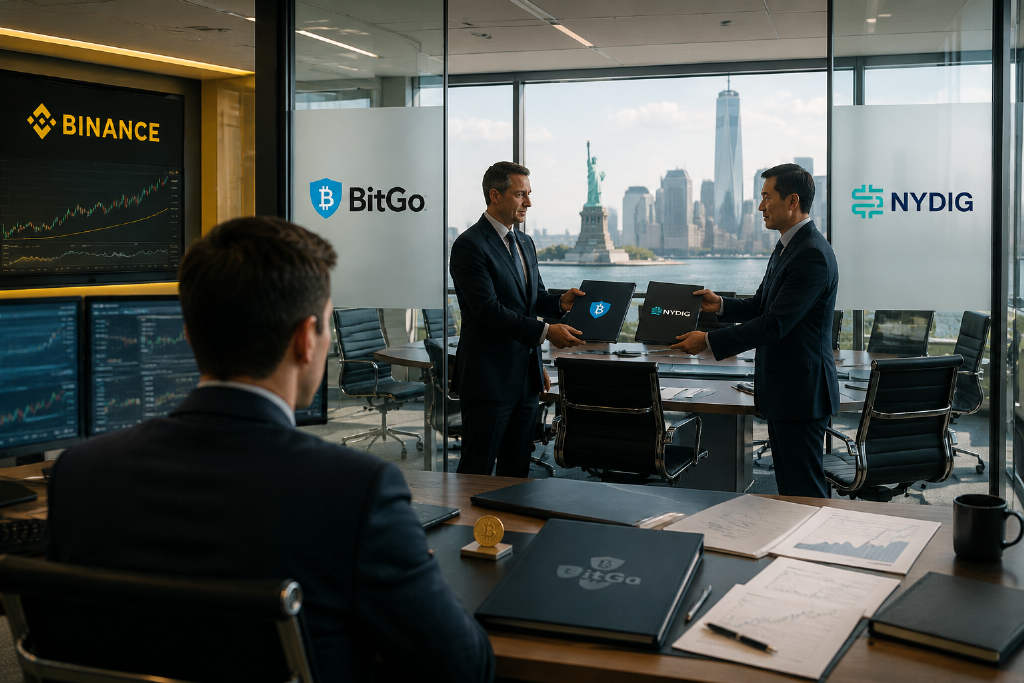
BitGo Buys NYDIG’s Institutional Trading Unit for $42.5 Million as Binance Lists NIULAI Perpetuals

BitGo said it has completed the acquisition of NYDIG’s institutional trading business in a cash-and-stock deal worth about $42.5 million, adding derivatives, structured products, and capital markets capabilities. Roughly 30 NYDIG employees and related institutional client relationships will move to BitGo. Binance, meanwhile, said it will list a NIULAI USDT perpetual contract at 19:30 on Aug. 30 Beijing time with leverage of up to 10x. The PANews daily roundup also covered a security report from Cosmos Labs on an EVM module vulnerability that affected six networks, comments from Tether CEO Paolo Ardoino pushing back on criticism from the Bank for International Settlements, and market views from CryptoQuant analyst Darkfost, Arthur Hayes, JackYi, and Jiang Zhuoer. Other items included Ajna v2’s reported exploit, Polygon’s urgent client upgrade notice after the Austin and Kyoto hard forks, SK Telecom’s plan to spin off its AI data center arm, and trading data from South Korea’s top crypto exchanges.

1210
BitGo Buys NYDIG’s Institutional Trading Unit for $42.5 Million as Binance Lists NIULAI Perpetuals
Whale Movemen
2026-08-23 09:10:00

Wintermute transfers, Wang Chun’s ETH moves and Korean corporate account growth lead PANews daily roundup

PANews’ Aug. 23 daily roundup pulled together a wide spread of developments across crypto markets, regulation, AI and trading data, with large on-chain transfers taking center stage. Market maker Wintermute moved a combined $57 million worth of SOL and BTC to Binance and Coinbase, then sent another 590.9 BTC to Binance, bringing its weekly BTC deposits there to 3,834.3 BTC. Separately, an address linked to F2Pool co-founder Wang Chun moved 12,765 ETH to Binance over more than three days and withdrew 87.68 million USDC to repay a Spark loan, in what the report described as a likely ETH deleveraging move. The roundup also highlighted institutional growth in South Korea’s crypto market. As of the end of July, the country’s five largest virtual asset exchanges had 6,590 registered corporate accounts, with Bithumb accounting for 3,280 and Upbit-linked accounts totaling 2,086. In corporate strategy news, Alibaba said it plans to place HK$80 billion in new shares, with net proceeds fully earmarked for investment in full-stack AI capabilities and infrastructure. Other items in the digest ranged from Grayscale’s views on Bitcoin’s cycle and proposed SEC crypto fundraising rules to Hong Kong’s warning on a suspicious tokenized investment product and a humanoid robot in Beijing that clocked 9.32 seconds in a 100-meter test.

1390
Wintermute transfers, Wang Chun’s ETH moves and Korean corporate account growth lead PANews daily roundup
South Korea
2026-08-23 02:55:00

Corporate Crypto Accounts at South Korea’s Top Five Exchanges Reach 6,590, With Bithumb Holding Nearly Half

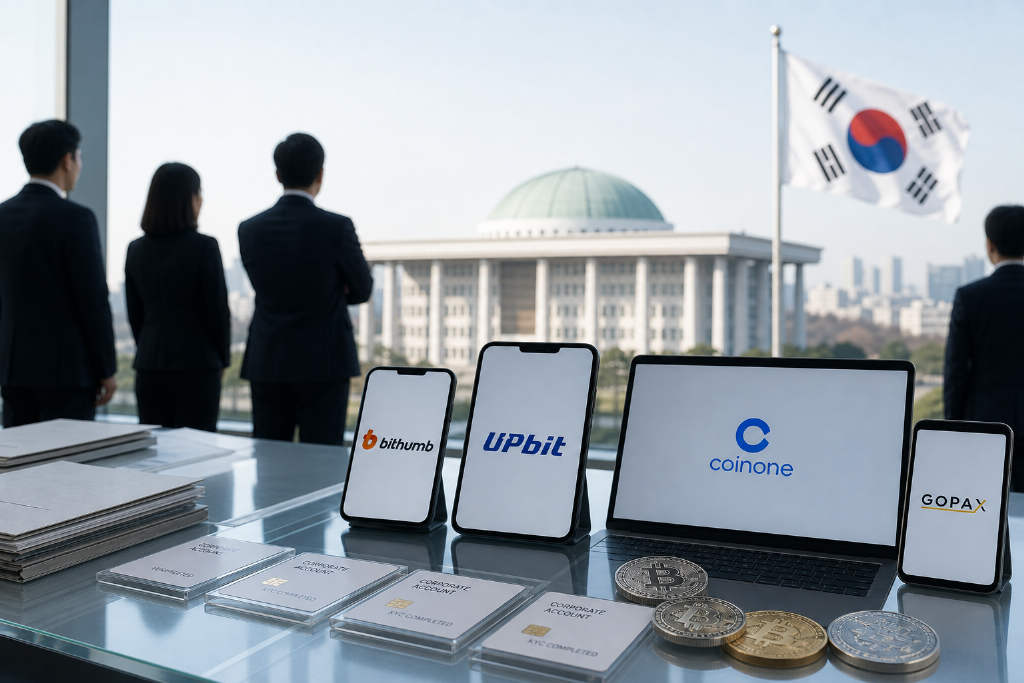
South Korea’s Financial Supervisory Service has submitted data to the National Assembly’s Political Affairs Committee showing that 6,590 corporate accounts were registered at the country’s five largest virtual asset exchanges as of the end of July. According to Yonhap News, Bithumb had the largest share with 3,280 accounts, while accounts under Dunamu, the operator of Upbit, totaled 2,086. Together, the two exchanges accounted for 5,366 corporate accounts, or 81.4% of the total. The data also showed that only 711 corporate accounts, equal to 10.8%, had completed know-your-customer checks. In asset holdings, corporate accounts held about 43.377 billion won, or roughly $31.2 million, in virtual assets, with Upbit representing the largest portion at about 27.08 billion won, or 62.4% of the total. Corporate deposits stood at about 9.13 billion won.

1150
Corporate Crypto Accounts at South Korea’s Top Five Exchanges Reach 6,590, With Bithumb Holding Nearly Half
South Korea
2026-08-23 02:55:54

South Korea’s five biggest crypto exchanges had 6,590 corporate accounts by end-July, with only 10.8% KYC-compliant

Data submitted by South Korea’s Financial Supervisory Service to the National Assembly’s Political Affairs Committee shows that the country’s five largest virtual asset exchanges had a combined 6,590 registered corporate accounts as of the end of July. Bithumb had the largest share with 3,280 accounts, while accounts under Dunamu, the operator of Upbit, totaled 2,086. Together, the two exchanges accounted for 5,366 corporate accounts, or 81.4% of the total. The data also showed that only 711 corporate accounts had completed know-your-customer, or KYC, procedures, representing 10.8% of all registered corporate accounts. Upbit had the highest number of KYC-completed corporate accounts at 290, followed by Bithumb with 199, Korbit with 184, Coinone with 33, and Gopax with 5. In terms of holdings, South Korean corporate accounts held about 43.377 billion won, or roughly $31.2 million, in virtual assets. Upbit represented the largest portion at about 27.08 billion won, equal to 62.4% of the total. Bithumb held about 6.29 billion won and Coinone held about 5.15 billion won. Corporate account deposits stood at about 9.13 billion won.

1120
South Korea’s five biggest crypto exchanges had 6,590 corporate accounts by end-July, with only 10.8% KYC-compliant
South Korea c
2026-08-19 00:44:00

South Korea’s top crypto exchanges saw revenue nearly halve in H1, with Dunamu staying profitable while Bithumb fell into the red

South Korea’s two biggest crypto exchange operators reported sharply weaker first-half results on Aug. 14, showing how closely exchange earnings still track trading activity. Dunamu, the parent company of Upbit, posted 408.1 billion won in consolidated operating revenue for the first half of 2026, down 49.1% year over year. Operating profit fell 79.7% to 111.5 billion won, while net profit dropped 74.1% to 108.4 billion won. Bithumb reported 168.8 billion won in revenue, down 48.7%, with operating profit of 14.9 billion won, down 83.4%, and a net loss of 108.7 billion won versus a net profit of 55 billion won a year earlier. The backdrop was a broad contraction in local trading activity. Combined second-quarter volume across South Korea’s five licensed KRW exchanges — Upbit, Bithumb, Coinone, Korbit and Gopax — fell 49.5% year over year to about $146.4 billion, cutting directly into fee income. The report said Dunamu benefited from better cost control, while Bithumb’s loss included digital asset impairment and administrative expenses related to regulatory penalties. It also pointed to a shift in Korean retail money toward AI and semiconductor stocks such as Samsung Electronics and SK Hynix, as well as expectations around a 22% crypto capital gains tax due to begin in January 2027. Both companies are still pushing IPO plans, but their latest numbers put fresh pressure on how public investors may value fee-driven exchange businesses.

1320
South Korea’s top crypto exchanges saw revenue nearly halve in H1, with Dunamu staying profitable while Bithumb fell into the red
South Korea c
2026-08-11 12:20:00

Upbit and Bithumb step up token listings as Korean crypto trading stays weak

South Korea’s two biggest crypto exchanges, Upbit and Bithumb, have accelerated token listings as domestic crypto activity remains subdued and stock-market trading cools from first-half highs. Over the past month, both platforms added 17 KRW trading pairs, well above their usual pace of roughly six to 10 per month in the first half of the year. The shift comes after a period in which retail attention and capital were drawn heavily into Korean equities, especially large semiconductor names such as Samsung Electronics and SK Hynix. Data cited from the Korea Exchange and CoinGecko shows the contrast clearly. KOSPI average daily turnover surged to more than KRW 50 trillion in May and June, while total second-quarter trading volume across South Korea’s five KRW-denominated crypto exchanges fell to about $146.43 billion, down 49.5% from the same period in 2025. Upbit’s volume dropped 54% year over year, while Bithumb’s fell 41.7%. As stock trading activity and retail participation faded in July and early August, the exchanges moved faster on listings. Even so, the article argues that the new listings are reshuffling volume within a shrinking market rather than bringing back a broad wave of fresh capital. It also notes that Upbit and Bithumb are increasingly listing similar assets as they compete for the same pool of Korean retail traders and transaction-fee revenue.

1960
Upbit and Bithumb step up token listings as Korean crypto trading stays weak
Upbit
2026-08-03 10:20:45

Upbit’s 67.4% share shows how tightly Korea’s crypto market is tied to retail anxiety

Upbit has tightened its grip on South Korea’s crypto market, with the article citing mid-2026 data showing the exchange holding a 67.4% share among the country’s five licensed KRW-based exchanges, far ahead of Bithumb’s roughly 27.1%. The piece argues that this dominance is not just a matter of platform design or brand recognition, but a product of South Korea’s market structure and retail psychology. According to the report, Upbit benefited from early backing tied to fintech company Dunamu, brand awareness linked to KakaoTalk, and deep banking integration with K-Bank that made KRW deposits and withdrawals easier for retail users. In a market shaped by strict real-name bank account rules and limited access to derivatives on compliant venues, liquidity has become the decisive advantage. That has left smaller exchanges such as Coinone, Korbit and Gopax with only marginal market shares. The article also connects Korea’s intense crypto participation to broader social pressure. High housing costs, youth unemployment and frustration over limited paths to upward mobility have pushed many younger investors toward volatile assets. In that setting, Upbit is portrayed as more than the largest exchange in the country: it functions as a barometer of local retail risk appetite, especially as capital rotates between stocks and crypto depending on where short-term returns appear stronger.

400
Upbit’s 67.4% share shows how tightly Korea’s crypto market is tied to retail anxiety
South Korea
2026-08-02 02:44:47

South Korea confirms 22% crypto income tax for 2027 as top five exchange volumes fall 54.6%

South Korea’s finance ministry has confirmed that its long-delayed crypto income tax will take effect on Jan. 1, 2027, even as trading activity on the country’s five largest exchanges continues to shrink. Under the current rules, gains from virtual asset transfers or lending will be treated as “other income.” Annual profits above 2.5 million won, or about $1,740, will face a 20% national tax plus local tax, bringing the total rate to 22%, while gains below that threshold will be exempt. The decision was reaffirmed by Deputy Prime Minister and Finance Minister Koo Yun-cheol during a National Assembly committee session on July 29. The first filing is expected in May 2028 and will cover income earned in 2027. The tax was originally approved in 2020, scheduled for January 2022, then pushed back to 2025 and later to 2027. The timing has drawn renewed criticism because local market activity has weakened sharply. Combined trading volume at Upbit, Bithumb, Coinone, Korbit and Gopax reached about $366.58 billion in the first half of the year, down 54.6% from a year earlier, with July volume falling another 16.9% from June. Lawmaker Kim Sang-hoon of the People Power Party argued that the current design, which does not allow losses to be carried forward and offset against future gains, could push traders toward overseas exchanges, decentralized platforms and peer-to-peer markets.

1850
South Korea confirms 22% crypto income tax for 2027 as top five exchange volumes fall 54.6%