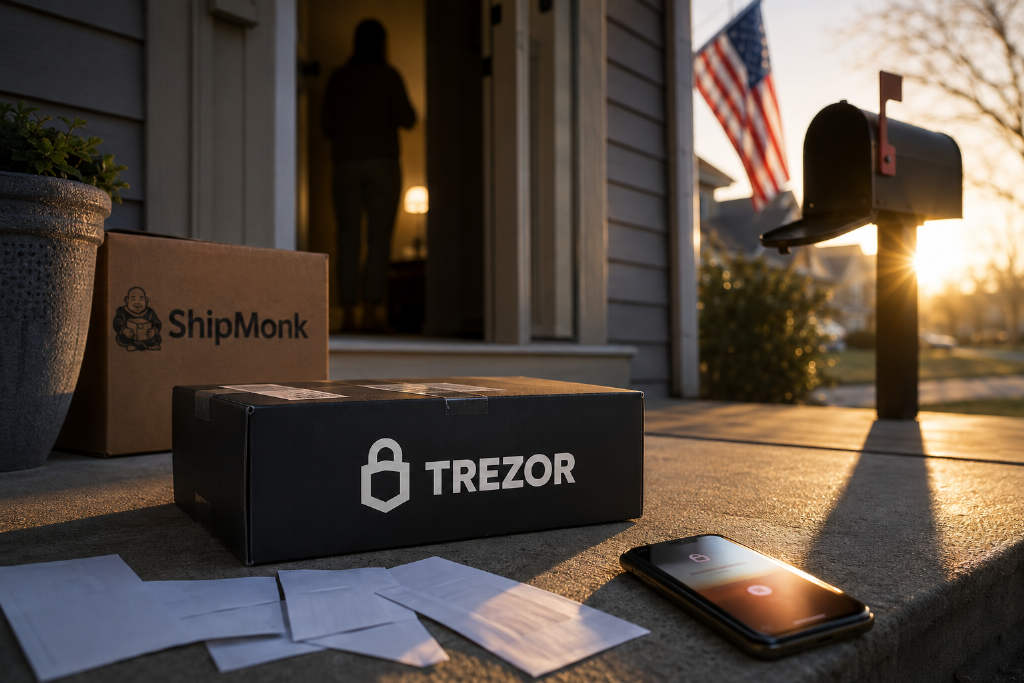
Trezor2026-09-04 13:35:39Trezor says ShipMonk breach exposed 67,000 more US users, taking total above 80,000Trezor said a data breach tied to its mailing partner ShipMonk was far larger than first disclosed, with another roughly 67,000 US users now identified as affected. That pushes the total number of impacted users to more than 80,000. The hardware wallet maker had previously said 13,689 customers were exposed after attackers infiltrated ShipMonk’s systems, and at the time pointed to a 90-day data retention policy as a factor that limited the scope. Trezor now says that policy was never actually enforced and the data was never deleted. The company said it had repeatedly requested and received written confirmation from ShipMonk that deletions had taken place in line with contractual terms and internal policy. Trezor told Protos it is still too early to say how it will respond to ShipMonk’s conduct, but said it is arranging an additional audit of the mailing partner. The company also said it is working to introduce anonymous delivery as soon as possible so customers can better protect personal information when placing orders.820
Trezor2026-09-04 10:20:39Trezor Updates ShipMonk Breach: 67,000 More US Users ExposedTrezor revealed that the data breach at its logistics partner ShipMonk was larger than initially reported, with an additional 67,000 US customers who ordered between November 2019 and August 2021 having their personal information exposed. The exposed data includes names, emails, phone numbers, shipping addresses, and order numbers. Trezor stated that its own systems remain secure and hardware wallets are safe, but affected users may face targeted phishing attacks. All impacted users have been notified individually. Trezor is accelerating the rollout of anonymous shipping services to reduce information exposure during order placement.800
Ledger2026-09-03 03:08:37Ledger Hit with Class Action Over 2023 Data Breach DisclosureAttorney Ariel Givner announced that hardware wallet manufacturer Ledger is facing a class action lawsuit in New York. The complaint alleges that a December 2023 security incident exposed customers' personally identifiable information (PII), including names, emails, and phone numbers, and that Ledger failed to disclose the breach fully and promptly. Hackers subsequently used the leaked contact details to impersonate official support, tricking customers into approving fraudulent transactions and stealing their crypto assets. The stolen data also surfaced on the dark web.810
Ledger2026-09-03 03:10:44Ledger Hit with US Class Action Over 2023 Security Breach, Customer Data Leak Led to Crypto TheftEncrypted hardware wallet maker Ledger faces a class action lawsuit in the United States over a 2023 security incident. The plaintiffs allege the breach exposed customer names, emails, and phone numbers, and that Ledger failed to timely and fully disclose the incident. Hackers used the leaked data to impersonate Ledger and trick users into approving fraudulent transactions, stealing crypto assets.860
Ledger2026-09-03 03:10:53Ledger Hit with Class Action in New York Over Incomplete Disclosure of Security BreachA class action lawsuit has been filed against Ledger in New York, alleging that the hardware wallet manufacturer failed to fully disclose a December 2023 security incident that exposed customers' personal information. Hackers used the leaked contact details to impersonate Ledger and trick customers into approving fraudulent transactions, leading to crypto asset theft, with data also appearing on the dark web.870
Coolbit Techn2026-08-31 15:37:18Coolbit Technologies withdraws $23 million Nasdaq IPO planCoolbit Technologies has withdrawn its planned $23 million initial public offering on Nasdaq, according to Techub News. The company attributed the decision to unfavorable market conditions. The move affects a firm that operates in cryptocurrency hardware wallets and mining solutions, two segments tied closely to investor appetite and broader digital-asset market cycles. Crypto Briefing said the withdrawal highlights the challenges smaller mining-related companies face when trying to attract capital during periods of market volatility and intensifying competition. No additional details on a revised listing timeline or fundraising alternative were disclosed in the provided report.820
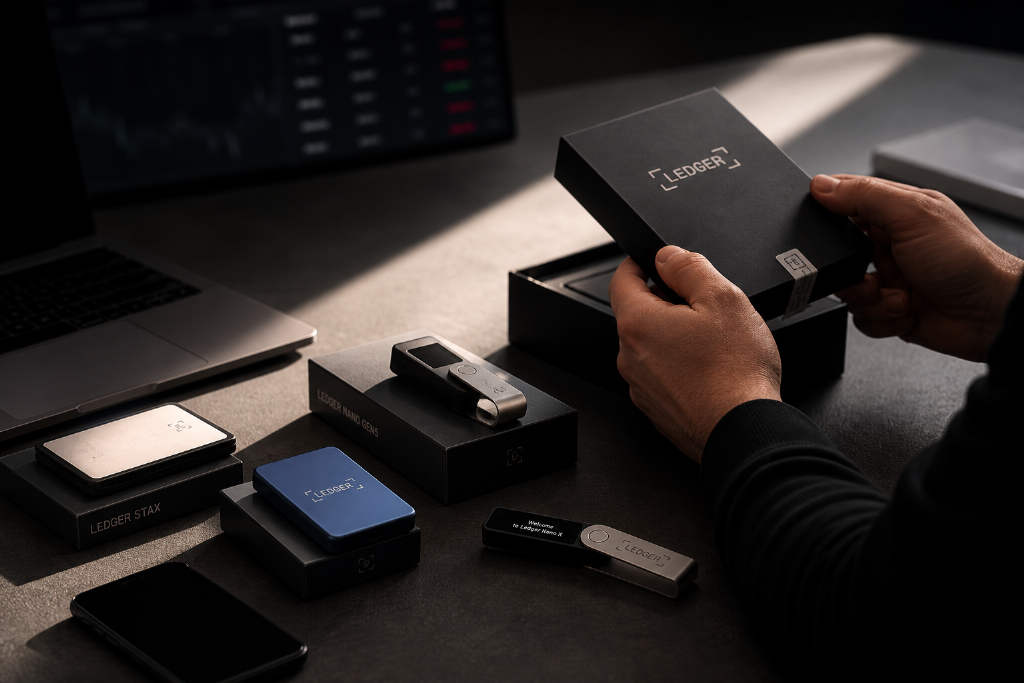
Ledger2026-08-31 09:17:53Ledger’s September wallet sale spotlights Nano X and Flex Neptune Blue at 20% offLedger’s September promotion puts two hardware wallet models at a 20% discount: the Ledger Nano X and the Neptune Blue version of Ledger Flex. The sponsored article, provided by Ledger and published by BlockTempo, walks readers through four devices in the company’s lineup — Nano X, Nano Gen5, Flex and Stax — with a focus on operating style, screen format and intended use cases. It positions Nano X as the entry-level choice for users moving assets from exchanges toward self-custody, while Flex is framed as an upgrade for those who want a larger touchscreen and clearer transaction review. The piece also presents Flex plus Nano X as a two-device backup setup, with Flex used as the main wallet and Nano X as a mobile or secondary device. Pricing listed in the article shows Nano X falling from NT$5,200 to NT$4,160 and Flex Neptune Blue dropping from NT$10,400 to NT$8,320 during the September campaign. It also urges buyers to use official authorized sales channels and to generate and store seed phrases themselves, without photos, cloud backups or sharing them with customer service or websites.910
Coldcard2026-08-31 00:12:42Coldcard entropy flaw shakes self-custody confidence, but experts still favor holding your own keysA flaw tied to entropy handling in Coldcard hardware wallets has triggered Bitcoin losses and reignited a core debate in crypto: whether users are still better off keeping assets in self-custody after a wallet failure of this scale. According to the report, the issue stemmed from a deep firmware bug that remained hidden for five years and affected private-key generation on Coldcard Mk3 devices. During a code migration from Python to C, developers unintentionally disabled the built-in secure random number generator, causing the device to fall back to a highly insecure algorithm and reducing cryptographic entropy from 256 bits to just 22 bits. Speakers at Bitcoin Asia said the incident exposed weak spots in vendor maintenance, including code review, bug bounty design, and broader management practices. Even so, they argued that centralized exchanges still carry greater counterparty risk than hardware defects. The discussion centered on multi-vendor multisig setups using devices from different manufacturers, along with passphrase protections and modern coordination tools such as Liana, Unchained, and Casa. The report also said development teams are increasingly turning to AI-assisted code auditing to scan large legacy codebases and catch logic errors earlier. In that view, the Coldcard incident has damaged trust, but it has also pushed the ecosystem toward stricter security practices rather than away from self-custody.860