BackHayden

Hayden

ChainFeeds
2026-08-19 01:56:38

ChainFeeds research digest covers Uniswap, Farcaster, Niulai meme frenzy and Hyperliquid

ChainFeeds’ Aug. 19 research digest pulls together five separate narratives shaping crypto and adjacent tech markets. The package starts with Uniswap founder hayden.eth arguing that automated market makers are still early and may gain their biggest edge in correlated trading pairs, where inventory risk is lower and liquidity can form naturally around asset clusters rather than defaulting to dollar pairs. IOSG Ventures then questions whether Model Fusion actually improves production economics, saying higher benchmark scores do not by themselves prove better ROI once token costs, latency and shared-model failure modes are counted. The digest also tracks the rapid deterioration of Farcaster’s business position. After Merkle Manufactory handed the protocol, app and Clanker over to Neynar in January and returned $180 million to investors, Neynar is now looking for yet another team to take over just seven months later. In another section, a small animated film titled Niulai became a meme phenomenon: a weak box office run turned into viral online attention, then spilled into BSC, where a same-name meme coin briefly reached a $46.79 million market cap. The final piece argues Hyperliquid is no longer just an onchain perpetuals venue, but a broader trading platform built around HyperCore, HyperEVM, HYPE and HIP-3.
50
ChainFeeds research digest covers Uniswap, Farcaster, Niulai meme frenzy and Hyperliquid
Uniswap
2026-08-18 21:55:04

Hayden Adams says correlated-pair AMMs can win major markets as former XTX trader argues they will go to zero

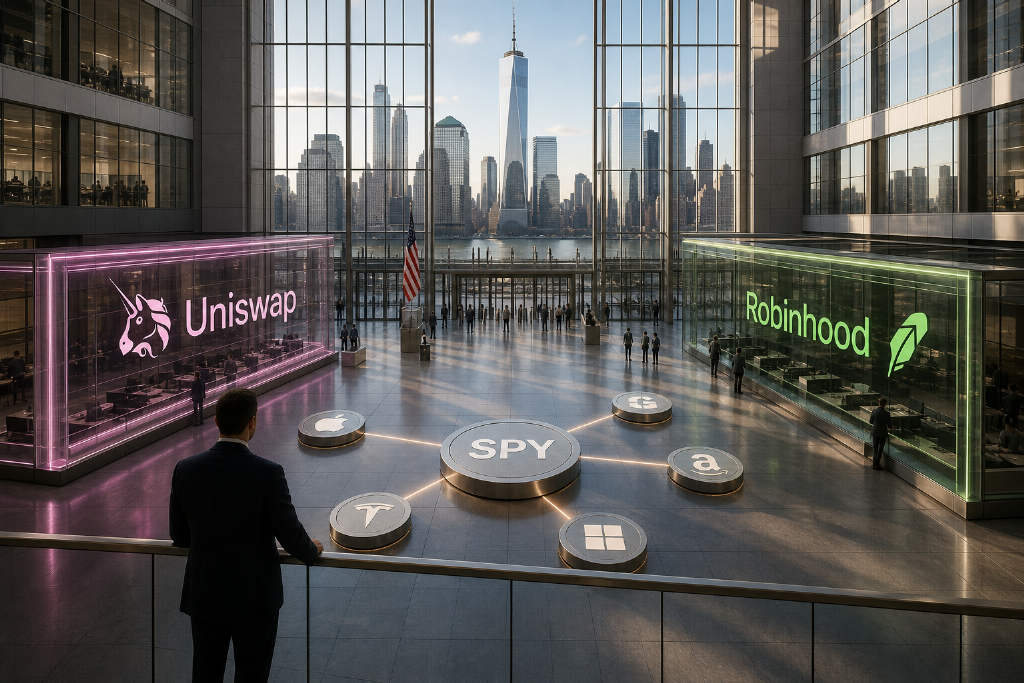
Uniswap founder Hayden Adams has reignited debate over automated market makers with his first blog post since 2019, arguing that AMMs can take over the world’s biggest markets once tokenized assets trade against each other instead of directly against dollars. His thesis centers on correlated pairs: if two assets move together, liquidity providers face less risk, making passive onchain liquidity more competitive with professional market makers. Adams compares that shift to the rise of index investing, citing the growth of passive funds and the concentration of trading power at firms such as Citadel Securities. The argument met immediate resistance. Brian Huang, co-founder of onchain portfolio app Glider and a former XTX Markets trader, said AMMs are structurally unsuited for traditional market making, pointing to execution, latency, gas costs, order-flow segmentation and impermanent loss. Other market participants pushed on different parts of the thesis. Bebop CEO Katia Banina questioned whether traders would actually want pairs like SPY/NVDA instead of dollar pairs, while InvestaX CEO Julian Kwan said regulated tokenized assets introduce issuer-controlled permissioning that limits who can provide liquidity. The debate widened to include Uniswap v4 hooks, routing economics, capital efficiency and the current share of DEX spot volume relative to centralized venues. Supporters framed AMMs as programmable market infrastructure; skeptics argued the model may remain useful in niche routing and arbitrage roles without displacing professional market makers.

110
Hayden Adams says correlated-pair AMMs can win major markets as former XTX trader argues they will go to zero
Uniswap
2026-08-18 09:43:00

Uniswap founder argues AMMs are building a path into broader financial markets

Uniswap founder Hayden Adams says tokenization should not be viewed only as an infrastructure upgrade for existing markets. In an essay translated by ChainCatcher and carried by PANews, Adams argues that putting assets onchain makes markets programmable, changing which markets can exist, who provides liquidity, and which assets can trade directly against each other. He says automated market makers, or AMMs, have already proved where they work best: first in long-tail assets that professional market makers ignored, then in stablecoin pairs where passive strategies and lower capital costs squeezed out traditional firms. Adams points to Uniswap’s own scale, saying the protocol has processed more than $4.6 trillion in cumulative volume and helped lift decentralized exchanges’ spot share from less than 1% of centralized exchanges to more than 20%. He frames the next step around “correlation pairs,” where assets that tend to move together can support deeper liquidity with lower inventory risk for liquidity providers. In his view, tokenized markets could eventually organize around pairs such as NVDA/SPY, with a smaller number of high-volume bridge pairs like SPY/USD connecting the wider system. He also cites an early example already live onchain: 10 tokenized stocks trading directly against SPY through Uniswap pools on Robinhood Chain. Those pools handled $33 million in volume in their first 12 days and drew more than 11,000 users, with much of the activity taking place outside U.S. stock market hours.

150
Uniswap founder argues AMMs are building a path into broader financial markets
Policy and Re
2026-08-16 11:43:02

Robinhood Chain leads NFT volume as ENS Foundation formalizes operations

A busy week across crypto projects brought updates in protocol design, governance, lending products, wallet security and payment infrastructure. Robinhood Chain posted $3.13 million in daily NFT volume, overtaking Ethereum, while its average daily transactions hit 11.6 million and TVL rose to $473 million. ENS token holders passed and executed the “Next Era of ENS DAO” proposal, turning ENS Foundation into a formal operating body with a full-time executive director, staff and a five-member board. On Solana, Jupiter rolled out Lend v2, a lending upgrade that lets deposited and borrowed assets also serve as trading liquidity. Other notable developments included Ethereum Foundation researcher Justin Drake saying Ethereum L1 will stop pursuing Poseidon and instead move toward SHA or BLAKE-based hashing options; Hyperliquid outlining a plan to route idle HLP USDC into its native lending pool; Uniswap redirecting creator fees tied to a test token into an automatic buyback-and-burn contract; UniSat raising the default seed phrase length for new wallets from 12 words to 24; a USENIX study finding security-rule violations across 15 x402 payment providers; MegaETH’s native stablecoin USDm dropping to roughly $18 million in supply from a peak near $600 million in May; and World Liberty Financial delaying a yield-token launch tied to a Trump-branded Maldives resort project.

120
Robinhood Chain leads NFT volume as ENS Foundation formalizes operations
Uniswap
2026-08-16 02:15:25

Hayden Adams jokes that Uniswap will "watermark" trades to comply with EU AI rules

Uniswap founder Hayden Adams made a tongue-in-cheek comment after citing Anthropic’s explanation that it would implement watermarking to comply with the European Union’s AI Act. Adams said Uniswap would also "watermark" trades by changing routing logic. In his joke, he said the protocol used to choose the best route but would now choose a different one instead. He added that this somehow would have no real impact on execution quality, "if I redefine the word ‘real’." Adams explicitly noted that the post was a joke. The remark did not announce any actual product or policy change at Uniswap; it was framed as satire tied to the EU legal compliance discussion referenced in Anthropic’s statement.

40
Hayden Adams jokes that Uniswap will "watermark" trades to comply with EU AI rules
Uniswap
2026-08-12 20:58:37

Uniswap Moves Test-Token Creator Fees to Auto Buyback-and-Burn Contract

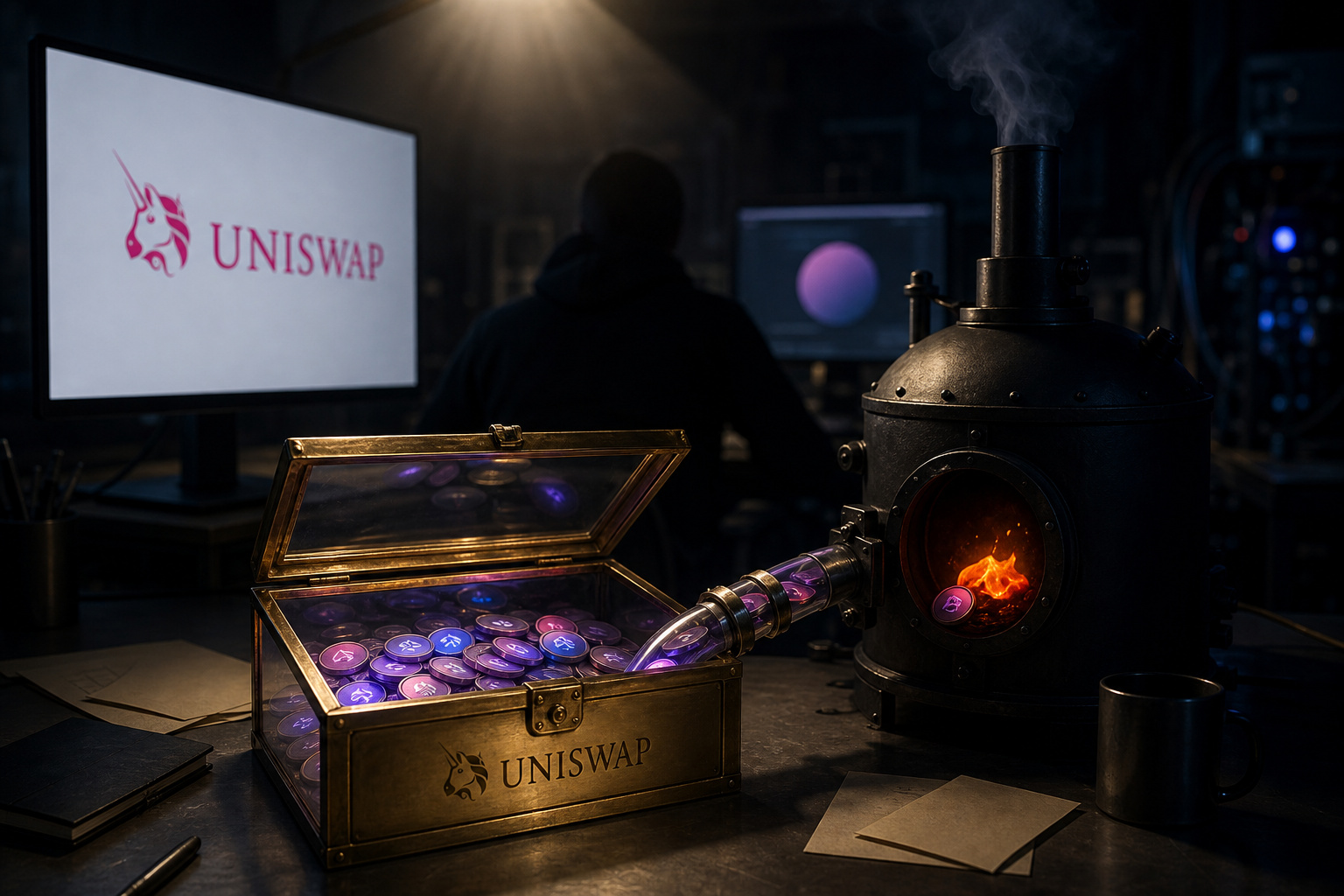
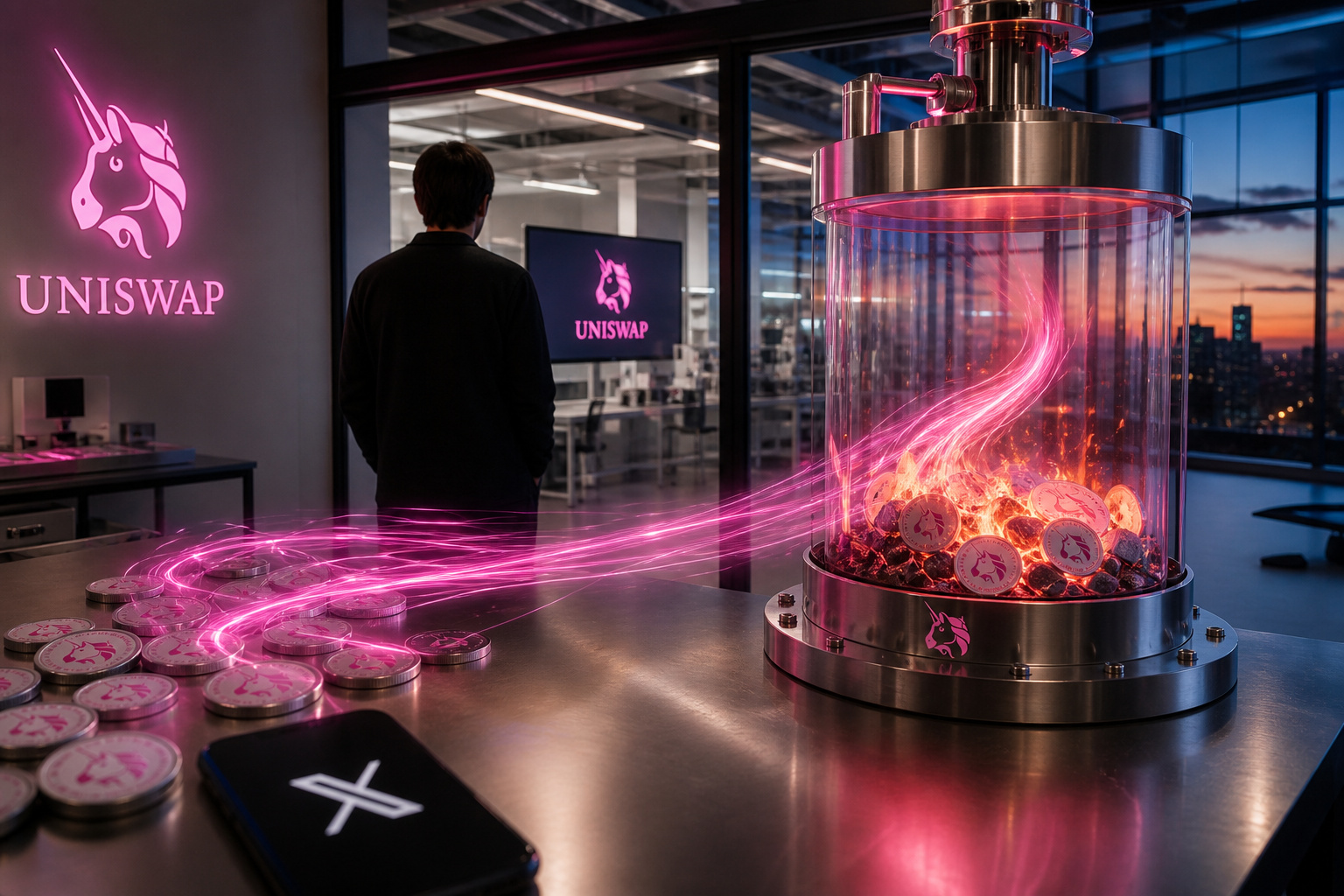
Hayden, the founder of Uniswap, said in a post on X that his team had not expected tokens created during the pools.trade test phase to be discovered. He said Uniswap has now given up all creator fees generated by employees during that testing period and has moved those fees into an automated buyback-and-burn contract. Hayden also said the team is considering turning the mechanism into a feature that other deployers can use. The post specifically refers to tokens created during the pools.trade testing period. Under the new arrangement, the creator fees from those test tokens have been redirected into the buyback-and-burn contract. Hayden did not provide additional details about the timing of the feature or how the contract is structured. The announcement came on the same day the fees were waived, according to the post, and leaves open whether the option will be offered more broadly. The development marks a shift from the earlier setup, where creator fees from employee testing had not been expected to surface. Uniswap's move shows how the project is handling unforeseen creator fees associated with test tokens. No further information about the amounts involved was disclosed in the post.

420
Uniswap Moves Test-Token Creator Fees to Auto Buyback-and-Burn Contract
Uniswap
2026-08-12 20:58:49

Uniswap Founder Says Test-Period Creator Fees Went to Buyback-Burn Contract

Uniswap founder Hayden said on X that the team had not expected tokens created during the pools.trade testing phase to be discovered. Uniswap has relinquished all creator fees generated during employee testing and moved them into an automated buyback-and-burn contract. Hayden said the team is now weighing whether to offer the mechanism as a feature for other deployers.

430
Uniswap Founder Says Test-Period Creator Fees Went to Buyback-Burn Contract
Uniswap
2026-08-08 14:30:00

Pools.trade posts heavy volume but still hasn’t produced a breakout high-cap meme coin

Uniswap Labs’ meme coin launchpad Pools.trade has drawn substantial activity on Robinhood Chain, with trading starting before its front-end officially opened. Community users found early deployed contracts during the 24-hour countdown to launch and began trading tokens directly on-chain. By the time the interface went live, those early contracts had already generated more than $150 million in volume. Dune data shows Pools.trade recorded $99.1 million in volume on Aug. 5 alone, accounting for about 54.2% of all token launchpad trading volume on Robinhood Chain that day and surpassing Pons, which had led the segment for the previous two weeks. Even so, the platform has yet to produce a meme token with sustained large-scale market value. So far, only FRONG and POOLS have crossed the $1 million market cap mark on Pools.trade. FRONG briefly reached $18 million, while POOLS at one point moved above $4 million, but both later pulled back. A key issue has been criticism around fairness, since both tokens were minted before the platform’s official front-end launch. That has weakened community enthusiasm even as the platform benefits from Uniswap’s existing distribution channels, wallet integrations, and lower trading fees than rival platforms such as Pons and Flap.

780
Pools.trade posts heavy volume but still hasn’t produced a breakout high-cap meme coin