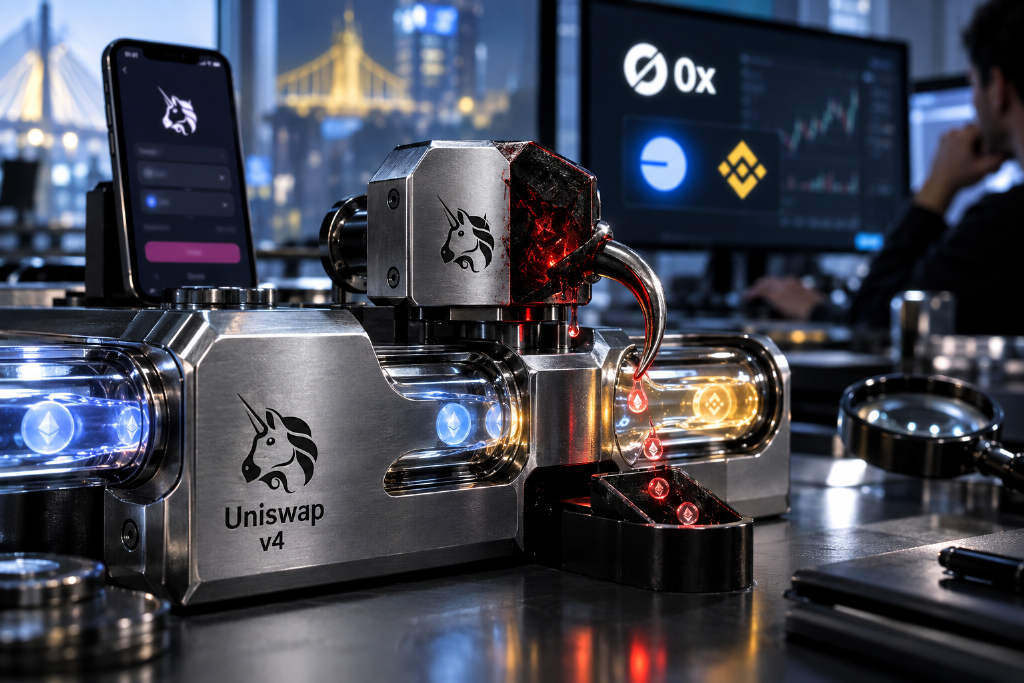
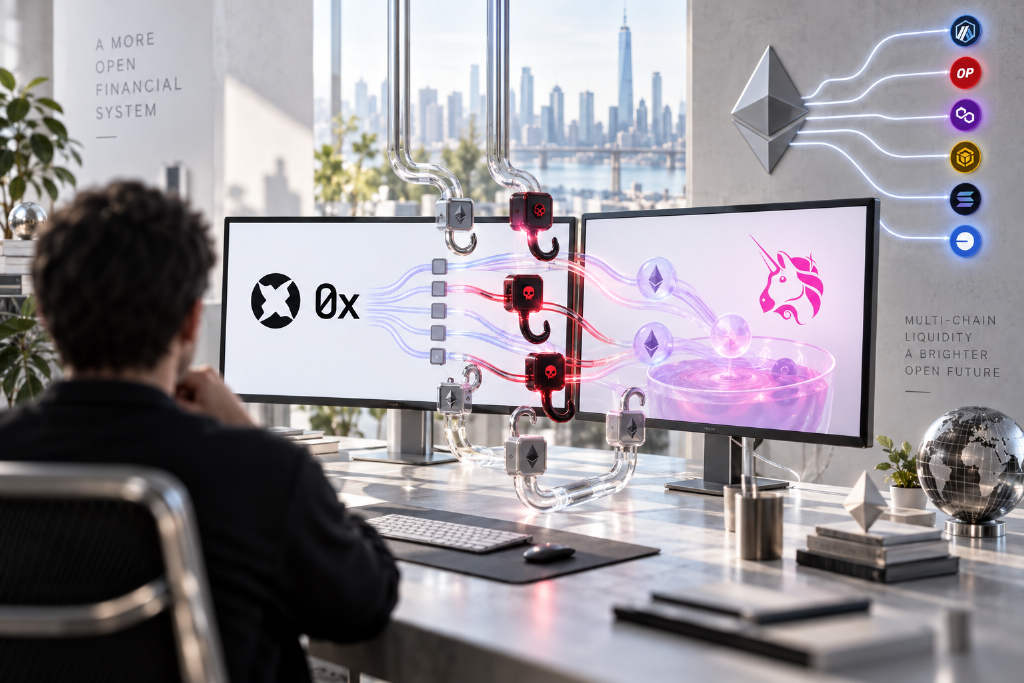
Uniswap v4 Hooks are moving trading logic into pools and reshaping who keeps the profits
Uniswap v4’s Hook architecture is opening a new layer of market design by shifting trading rules out of token contracts and into liquidity pools. The model lets developers change fee logic, route arbitrage gains, gate access, and put idle liquidity to work without forcing users to migrate to a new token or a new exchange. Claus, an Ethereum memecoin project, has become a high-profile example after swapping the code behind its fee logic while keeping the same token contract and pool in place. The article traces how Hooks work inside Uniswap v4’s PoolManager, why upgradeable proxy-based Hooks matter, and how they compare with older tax-token designs that often broke DeFi compatibility. It also looks at commercial tooling built around Hooks on Ethereum and Robinhood Chain, including programmable.market and Hookrfun, and contrasts that with Solana’s Token-2022 transfer-hook model, where rules are attached to the token itself rather than the pool. The piece argues that upgradeability may matter more than Hooks alone, especially for markets such as tokenized securities where trading rules can change over time, while also stressing the trust and control risks that come with letting an admin rewrite pool behavior after launch.