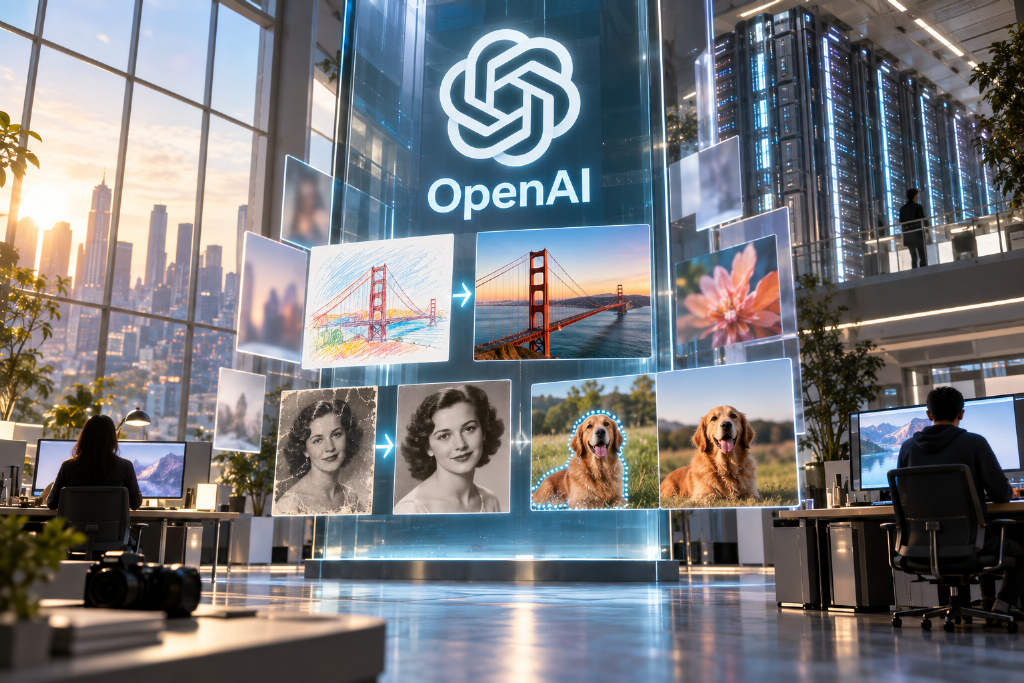
OpenAI2026-09-09 00:23:16OpenAI Launches GPT-Image-2.5 With Faster Generation and More Precise EditingOpenAI has released GPT-Image-2.5, a new image-generation model that the company says can cut generation latency by as much as 50% compared with Images 2.0. The update is available across ChatGPT, ChatGPT Work and Codex, including free-tier access. OpenAI says ChatGPT Images and the GPT-Image API now generate a combined 3 billion images per week, equivalent to roughly 430 million images per day based on the calculation cited in the article. The release adds Sketch, which lets users combine hand-drawn layouts with text instructions, along with templates for posters, product images and flyers and a Prompt-sharing feature. OpenAI has also divided its image API into two models: GPT-Image-2.5 Flare for speed and high-volume generation, and GPT-Image-2.5 Sunburst for more controlled creative work. Manus testing team member Lucky Liao said Flare generated images two to four times faster than GPT-Image-2 in their tests. Adobe has confirmed that it will integrate Images 2.5 into Firefly. The article also discusses improvements in Chinese text rendering, photo restoration, local edits and consistency across multiple editing rounds.1280
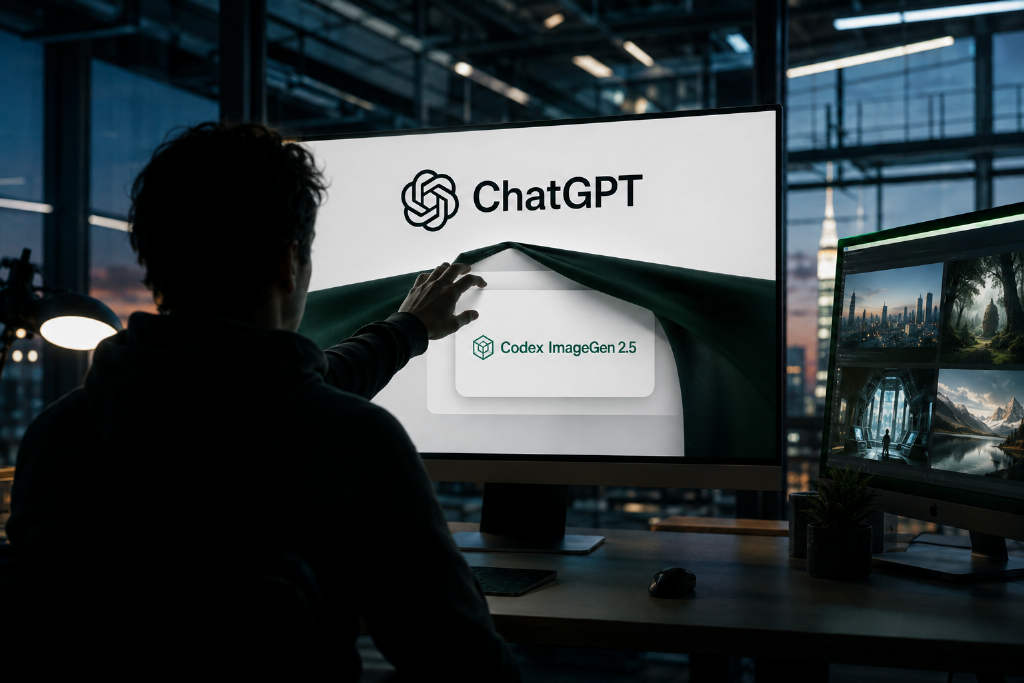
OpenAI2026-09-04 07:54:28OpenAI Image Generation Model May Get Major Upgrade: Hidden Modal Found in Codex DesktopCommunity researchers have discovered hidden strings and a modal in the latest Codex Desktop frontend, suggesting OpenAI may soon release an updated image generation model. The modal reads 'major upgrade for image creation,' promising higher quality, faster generation, and smarter tools.1060
ChatGPT2026-09-04 07:55:56User Discovers Hidden Popup in ChatGPT: Codex ImageGen 2.5 Upgrade AnnouncementX user chetaslua reported that they forced a hidden popup in ChatGPT, revealing an internal announcement for Codex ImageGen 2.5. The popup claims 'major upgrades in image creation' with 'higher quality results, faster generation speeds, and smarter creative tools.' The feature remains locked for all users, with a hero image uploaded on September 1.1260
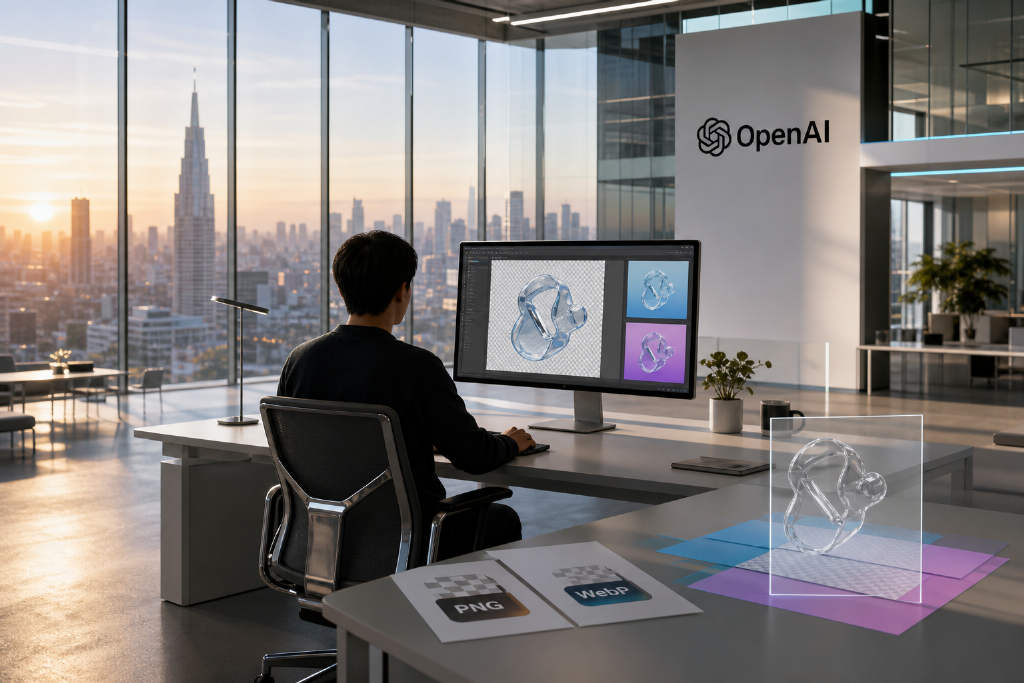
OpenAI2026-08-21 11:03:18OpenAI adds transparent background generation to GPT-Image-2 API previewOpenAI said on August 21 that GPT-Image-2 now supports transparent background generation in preview through its API, giving developers a way to return images with an alpha channel by setting the background parameter to "transparent." The update restores a feature that had been missing from GPT-Image-2 since its April 21 release and early-May developer rollout, even though the older gpt-image-1 had supported transparent output since April 2025. Before this preview, developers had to rely on workarounds. Some downgraded to older models such as gpt-image-1.5 or sora_image. Others added background-removal tools like RemBG, BiRefNet, or 851-labs' background-remover, adding 1 to 3 seconds per image. More complex methods included generating green-screen backgrounds or creating the same image twice on different backgrounds and subtracting the results, which doubled generation costs. The report also outlined GPT-Image-2 pricing at roughly $0.03 for 1K, $0.05 for 2K, and $0.08 for 4K images. For a 1024×1024 image, output can range from 272 tokens at low quality to 4,160 tokens at high quality, with output priced at $30 per million tokens. The feature remains in preview and comes with limits. Early testers said alpha values landed at 253 to 254 instead of a fully opaque 255, edge halos could appear around subjects, and the edit endpoint might not preserve transparency from source images. Transparent output is currently limited to PNG and WebP, while OpenAI has not disclosed any preview-specific pricing differences or usage caps.1580
OpenAI2026-07-24 07:55:16OpenAI Upgrades Codex With Background Mac Control, Built-In Browser, and 111 PluginsOpenAI has rolled out a major Codex update powered by GPT-5.3-Codex, adding background computer control, an in-app browser, image generation, 111 new plugins, and a memory preview.450
SenseTime2026-07-19 02:37:11SenseTime unveils SenseNova U1 Pro at WAIC 2026 with native 8K output and a delivery-focused image workflowSenseTime introduced SenseNova U1 Pro at WAIC 2026, positioning it as a system for complex multimodal delivery rather than a model built only for single-pass image generation. According to the event presentation and the original report by QbitAI cited by MarsBit, U1 Pro is designed to handle a full chain of tasks around a target outcome: understanding, planning, information organization, multimodal generation, checking, revision and final delivery. The launch demo centered on an ultra-long 8K image themed around the ninth anniversary of WAIC from 2018 to 2026. The report said the original file was 51 MB and remained legible when enlarged. It summarized U1 Pro’s core strengths in three parts: native 8K generation that preserves text, layout and detail on very large canvases; a text-and-image interleaved workflow that can move from sketching to refinement, coloring, checking and adjustment; and a product focus on deliverable outputs for use cases such as infographics, urban planning, film storyboards, academic posters and commercial design. The article also described four practical tests, including a 24 solar terms panoramic image, a laboratory-style visual poster, a glazed-texture traditional landscape with futuristic architecture, and an original movie poster intended to look ready for commercial use. SenseTime CEO Xu Li summarized the broader issue this way: “Being interactive does not mean being deliverable.”990
Google2026-07-15 02:44:36Google Images rolls out Pinterest-style discovery feed and Nano Banana image generation for its 25th anniversaryGoogle is giving Images its biggest redesign since launch as the product turns 25, shifting the experience from quick search-and-exit behavior toward longer browsing sessions inside Google’s own ecosystem. The updated interface introduces a personalized “For You” feed with infinite scrolling and collection tools that let users save and revisit images in themed folders. At the same time, Google is adding image generation directly into AI Overviews. The feature uses the Nano Banana model from the Gemini imaging family and allows users to create custom visuals from text prompts without leaving the search page. Google says the tool is meant for cases where users cannot find the exact image they want online or want to visualize ideas such as room colors or dorm decor concepts. The redesigned Google Images experience is set to begin rolling out in the coming weeks to signed-in desktop users in the U.S. with an English interface. The image-generation feature will also launch in English in all regions that already support AI Mode image creation. According to the report, the two moves show Google pushing to make Images a place users browse, save and create, rather than just search.2240
Google AI2026-07-01 06:01:49Google Unveils Gemini Omni Flash and Nano Banana 2 Lite: Video & Image Gen AI for E-commerce, Decoration and Short VideoGoogle has released two generative AI models: Gemini Omni Flash for video generation and Nano Banana 2 Lite for image generation. The former supports multimodal input and conversational video editing; the latter achieves 4-second image generation with low-cost batch production. They can be chained to create an end-to-end AIGC workflow targeting e-commerce, decoration, and short video verticals.1160