JPYSC

Hong Kong dol
2026-08-16 01:25:00

One Year After Hong Kong’s Stablecoin Licensing, the Market Still Looks Lukewarm

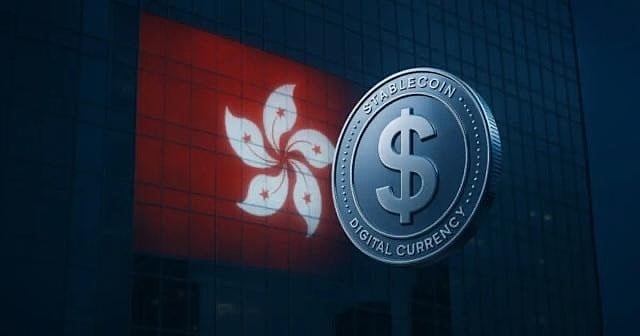
Nearly a year after Hong Kong moved ahead with its first Hong Kong dollar stablecoin licenses, industry sentiment remains cautious rather than enthusiastic. People close to the local stablecoin business told the author that Standard Chartered-backed AnchorPoint Fintech has shown a more proactive stance, while HSBC has been far less eager. Several licensed crypto exchanges in Hong Kong are also testing or participating tactically, but many do not yet see a clear path to profits. The report argues that the current setup has created a mismatch: some institutions that strongly want to explore Hong Kong dollar stablecoin use cases have not been given a leading role, while some institutions that did receive licenses or central positions are seen as lacking strong commercial motivation. That gap, in the view of market participants cited in the piece, has left the sector with licenses in hand but limited momentum. The article also places Hong Kong in a broader global context. Euro, yen and won stablecoin efforts are described as facing their own structural limits, from low market share and slow adoption to restrictive institutional design and unresolved regulatory disputes. Against a global stablecoin market of nearly $308.3 billion, with dollar stablecoins accounting for 98%, non-dollar stablecoins continue to lag.

360
One Year After Hong Kong’s Stablecoin Licensing, the Market Still Looks Lukewarm
HKD stablecoi
2026-08-14 03:10:05

Hong Kong dollar stablecoins lose momentum after licensing debut

Hong Kong’s first licensed HKD stablecoin push has cooled sharply, according to a Foresight News report that cites multiple people close to the business. The article says enthusiasm for stablecoins in general has not translated into confidence in Hong Kong dollar stablecoins specifically, even after the Hong Kong Monetary Authority issued its first two licenses in April 2026. Standard Chartered-backed Anchorpoint Fintech is described as the more proactive player, while HSBC is portrayed as far more cautious and more interested in tokenized deposits than stablecoins. The report says market participants now fall into several camps: firms that want exposure but doubt the business case, firms that joined only because regulation pushed them in, and firms with clear use cases and motivation that remain outside the core structure. Among licensed crypto exchanges, reactions range from outright pessimism to limited testing paired with strategic caution. One exchange source said HKD stablecoins do not offer a visible path to profit, especially as licensed exchanges in Hong Kong are themselves still losing money. Foresight also places Hong Kong in a broader global context, arguing that non-dollar stablecoins are struggling across major financial centers. It points to weak market share for euro stablecoins, restrictive trust-bank rules in Japan, and delayed policymaking in South Korea. With the global stablecoin market nearing $308.3 billion and dollar stablecoins accounting for 98%, the report argues Hong Kong has launched early but without strong market conviction.

260
Hong Kong dollar stablecoins lose momentum after licensing debut
Policy and Re
2026-08-07 02:35:35

WebX 2026, Ethereum censorship resistance, Bitcoin demand and crypto valuation reset in focus

ChainFeeds’ Aug. 7 research brief pulled together five strands that are shaping the digital-asset market in very different ways, but all point to the same shift: crypto is being pushed out of its old liquidity-driven phase and into a more rules-based, value-tested one. The report says Japan has become a rare market where regulators, large banks and stablecoin issuers are all building around AI agents at the same time, with FIEA amendments, tax reform expectations and licensed yen stablecoins setting the backdrop. On Ethereum, imToken Labs examined FOCIL, a proposal that would move transaction inclusion power away from a single proposer and toward a validator committee, turning censorship resistance into something enforced by protocol rules rather than participant promises. Axel Adler Jr, writing on Bitcoin, argued that the recent price rebound still lacks demand confirmation: both the 30-day apparent demand-to-issuance ratio and 30-day net age flow have recovered from July lows, but remain below zero. The brief also highlighted growing concern over HYPE’s value capture model as HIP-3 trading becomes increasingly concentrated in trade.xyz, even as Hyperliquid’s broader volumes remain large. Finally, it argued that collapsing valuations and project shutdowns do not by themselves signal industry decline, but a repricing in which revenue, users and token value capture matter more than narrative alone.

1080
WebX 2026, Ethereum censorship resistance, Bitcoin demand and crypto valuation reset in focus
EDX Markets
2026-08-02 00:18:30

EDX Markets closes $76 million Series C led by SBI Holdings

Institutional crypto exchange EDX Markets has raised $76 million in a Series C round led by Japan’s SBI Holdings, with the company saying the capital will be used to upgrade its trading, clearing, and settlement capabilities while supporting global expansion and product development. EDX said its platform is built for institutional clients and combines a spot market with a central counterparty, or CCP, structure designed to reduce bilateral counterparty risk. CEO Tony Acuña-Rohter said SBI’s strategic investment and financial-sector resources will help EDX enter markets aligned with international financial standards. SBI chairman and president Yoshitaka Kitao said EDX offers a regulated platform that meets institutional demand for digital asset infrastructure. He also pointed to SBI Group’s work on the yen stablecoin JPYSC and its handling in Japan of dollar stablecoins including RLUSD and USDC. EDX also said it has applied to the U.S. Office of the Comptroller of the Currency to establish EDX Trust as a national trust bank. If approved, the entity would add regulated digital asset custody, clearing, settlement, and risk management to the platform’s existing central clearing setup. The company separately noted it launched EDX FlowConnect, a Crypto-as-a-Service product, earlier this year.

1200
EDX Markets closes $76 million Series C led by SBI Holdings
DTCC
2026-07-27 09:34:19

Crypto shifts from challenging Wall Street to rebuilding its settlement rails

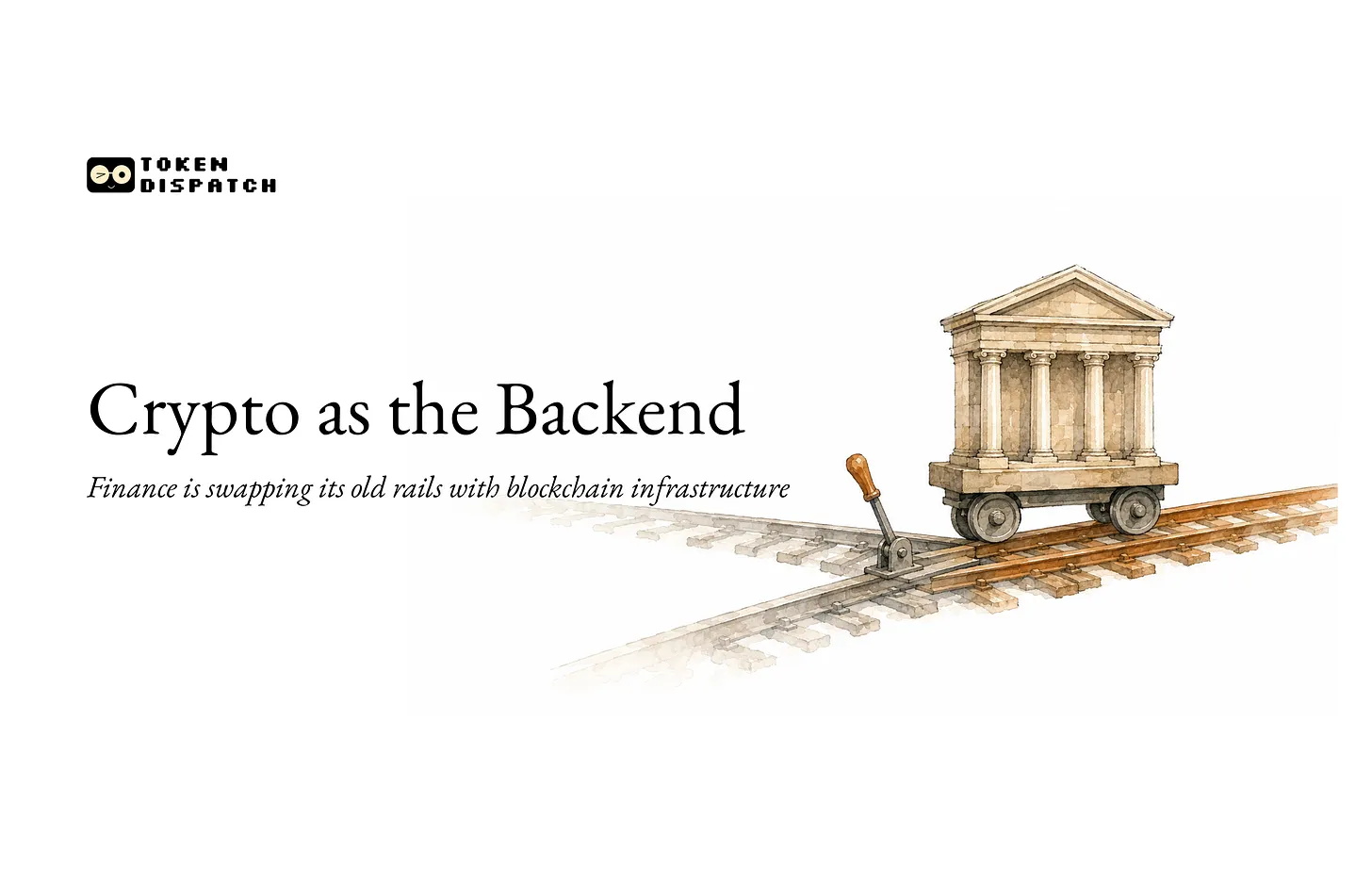
A major change is taking shape in global finance: legacy institutions are starting to use crypto infrastructure not as a consumer-facing replacement for banks and brokers, but as back-end plumbing for settlement, collateral movement and cross-border money flows. The article argues that the appeal is straightforward. Old financial rails still lock up capital for hours or days, force banks to prefund accounts across jurisdictions, and leave margin idle when markets are closed. That cost is no longer trivial. DTCC, which processed $4.7 quadrillion in securities settlement last year, has now turned on blockchain technology for related transactions and on July 15 completed its first live trades in tokenized securities, including tokenized equities, U.S. Treasuries and ETFs. JPMorgan tokenized Invesco QQQ Trust and posted it as collateral to CME, while more than 30 institutions including Goldman Sachs, BlackRock, Vanguard and the New York Stock Exchange took part in the test. The same pattern is spreading elsewhere. SWIFT is preparing a tokenized deposit pilot with 17 banks from six continents. Visa has launched a platform for banks to issue, move and redeem stablecoins inside existing treasury systems. Mastercard is expanding regulated stablecoin settlement options across multiple chains. In this model, crypto firms such as Chainlink, Digital Asset, Fireblocks, BitGo, Circle, Ondo and Securitize are no longer positioning themselves as Wall Street’s replacements. They are becoming its infrastructure vendors.

1220
Crypto shifts from challenging Wall Street to rebuilding its settlement rails
Blockchain in
2026-07-27 09:33:52

Crypto firms pivot from challenging Wall Street to selling infrastructure into it

Crypto firms are increasingly positioning themselves as infrastructure providers to traditional finance rather than as its replacement. The shift is showing up across core financial plumbing: the Depository Trust & Clearing Corporation has begun processing tokenized securities transactions, SWIFT is preparing a tokenized deposit pilot with 17 banks from six continents, and Visa has introduced a platform for banks to issue, transfer and redeem stablecoins inside existing treasury systems. The article argues that the appeal for incumbent institutions is straightforward: lower funding costs, faster settlement, fewer idle collateral balances and systems that can run outside legacy business hours. It also says the business model for many crypto companies has changed. Instead of trying to displace Wall Street, firms such as Chainlink, Digital Asset, Fireblocks, BitGo, Circle, Ondo and Securitize are increasingly supplying the rails, custody and tokenization tools that large financial institutions want to buy. In that framing, the main commercial opportunity may lie less in tokens themselves and more in the service layers built around tokenized settlement, collateral mobility and always-on capital management.

1040
Crypto firms pivot from challenging Wall Street to selling infrastructure into it
JPYSC
2026-07-23 22:05:17

Fake JPYSC Tokens Appear After SBI Launch: Community Warns Investors

Fake JPYSC tokens have surfaced on XRP Ledger after SBI Holdings launched its yen-pegged stablecoin. XRPL validators urge users to verify issuing addresses. JPYSC is currently restricted to SBI VC Trade and not yet transferable to public blockchains.

330
Fake JPYSC Tokens Appear After SBI Launch: Community Warns Investors