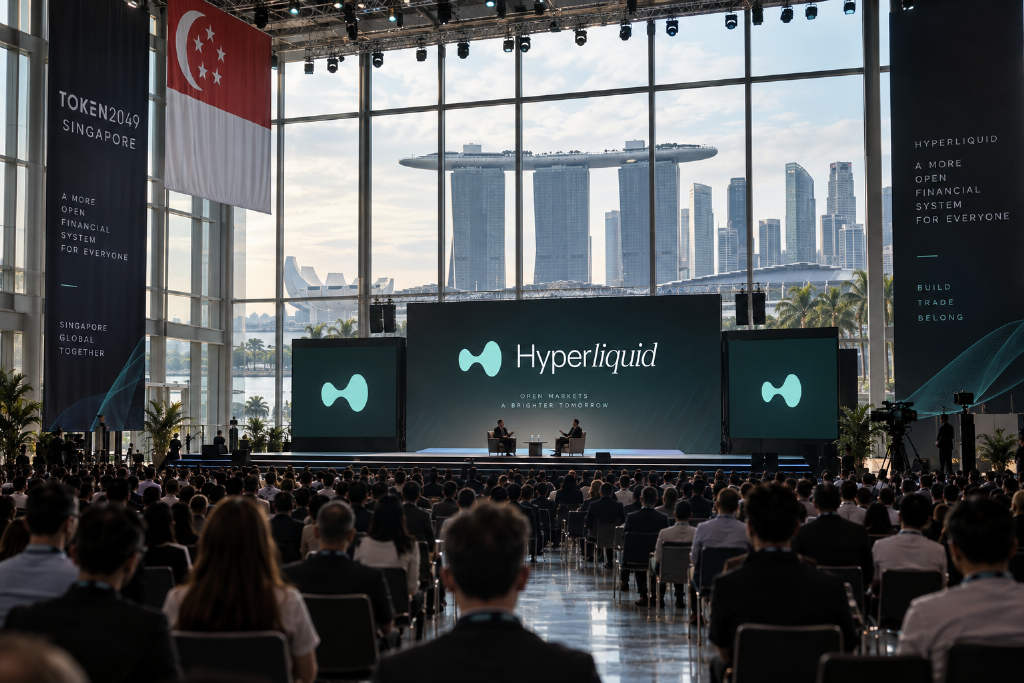
Hyperliquid2026-10-11 23:45:20Jeff Yan says Hyperliquid is closer to Linux-style public infrastructure than an exchangeAt Blockworks Digital Asset Summit Asia in Singapore on Oct. 7, 2026, Hyperliquid Labs co-founder and CEO Jeff Yan laid out a broader vision for Hyperliquid beyond perpetual futures, framing the protocol as neutral financial infrastructure rather than a direct rival to any single exchange. In a conversation with Blockworks research analyst Shaunda Devens, Yan discussed how Hyperliquid is adding a compact set of composable building blocks — including HIP-3, HIP-4, cross margin, native lending, priority fees and permission controls — to support a wider range of financial activity. Yan argued that each core component should be narrowly designed but broadly useful, so developers can combine them into products that users actually want. He pointed to HIP-4 as a possible base layer for options and options-like payoff structures, and said spot markets, options and a high-quality asset issuance layer are among the clearest next steps for the network. He also said HIP-3-related real-world-asset markets had grown into a major source of expansion, with open interest rising from about 300 million in January to 3.9 billion by the time of the interview. The discussion also covered HIP-3*, a testnet extension that adds optional permission controls, including whitelist-based access, and priority fees, which Yan described as an attempt to internalize the negative externalities of latency competition. On market transparency, he said open order flow and onchain order books can improve execution and fairness by making information broadly accessible rather than concentrating it in privileged intermediaries.60
Hyperliquid2026-10-08 09:39:39Hyperliquid founder Jeff Yan says options would be a likely focus if he started overHyperliquid founder Jeff Yan said in an interview at DAS 2026 Asia that he might study options if he were starting a company again and was no longer allowed to build infrastructure. He framed that as a hypothetical reset rather than a current product announcement. Yan also pointed to HIP-4 as an obvious route for building an options protocol. In his description, that framework could inherit spot trading, an order book, and portfolio margin, while using perpetual futures to hedge options delta. The remarks outlined how he views the structure of an options product within the Hyperliquid ecosystem, based on the components he specifically named in the interview. The comments were reported by Odaily in a brief newsflash published on Oct. 8, 2026.130
Hyperliquid2026-10-08 09:38:41Jeff Yan says options would likely be his focus if he were starting overHyperliquid founder Jeff Yan said he would likely look at options if he were starting again as a builder and could no longer work on infrastructure. Speaking on the Empire podcast at DAS 2026 Asia, Yan said he would first look for areas that have not yet been built out but still show real potential, adding that the choice depends in part on what other builders are doing. At this moment, he said, options stand out because he has heard from many people who want to trade them. Yan said perpetual futures already serve a large share of users, but some traders still feel perps do not fully express every market view they want to put on. He also pointed to HIP-4 as an obvious path for building an options protocol. In his description, such a setup could inherit spot markets, an order book and portfolio margin. On the market-making side, perpetuals could also be used to hedge an option’s delta. Yan added that the challenge is turning that missing piece into something with broad appeal, and said crypto has not yet seen options- or convexity-style products reach escape velocity in the way traditional finance has.140
Hyperliquid2026-10-08 09:51:29Hyperliquid founder Jeff Yan says options would be a focus if he were building beyond infrastructureHyperliquid founder Jeff Yan said he would likely look at options if he were building something other than infrastructure, pointing to demand he has heard from users who want to trade that product. Speaking on the Empire podcast at DAS 2026 Asia, Yan said his starting point would be to examine what has not yet been built and what still has real potential, with that decision depending in part on what other builders are already working on. He said perpetual futures already serve many users, but some traders still find that perps do not let them express every market view they want to take. Yan also described HIP-4 as an obvious route for building an options protocol because it can inherit spot markets, an order book and portfolio margin. On the market-making side, he said perpetuals could be used to hedge options delta. The harder part, in his view, is turning that missing piece into something with broad appeal. He added that he does not think options-like or convex payoff products in crypto have truly reached escape velocity, even though products in that category clearly have in traditional finance.130
Hyperliquid2026-10-07 10:31:01Hyperliquid CEO Jeff Yan says wealth creation should be opened to more investorsJeff Yan, co-founder and CEO of decentralized perpetuals trading platform Hyperliquid, said at a fireside chat during Token2049 in Singapore that traditional Wall Street wealth-creation opportunities, such as company shares, are largely unavailable to the investing public before they reach exchanges. As a result, retail investors often miss the most significant gains that occur before listing. Yan argued that in many cases, assets remain tradable only by a small group during most of their growth phase, and by the time the public can access them, much of that upside has already been captured by privileged participants. He said that model is not sustainable. Yan described Hyperliquid’s main mission as expanding access to wealth-creation opportunities and bringing more people into the financial system, with revenue as a byproduct. He also said part of Hyperliquid’s success comes from perpetual contracts having no expiry date, which reduces the number of decisions traders need to make and helps avoid liquidity fragmentation. According to DefiLlama, Hyperliquid generated $72 million in revenue over the past 30 days, ranking third among protocols. The report also cited Pantera’s July comments on the structural advantages of perpetuals and ICE CEO Jeffrey Sprecher’s call for a fair regulatory environment for 24/7 on-chain perpetuals.150
Hyperliquid2026-10-07 10:19:27Hyperliquid CEO says Wall Street’s wealth-creation model is unsustainable for most investorsHyperliquid co-founder and CEO Jeff Yan said traditional Wall Street wealth creation leaves most retail investors out of the most lucrative phase of asset growth, because many opportunities remain inaccessible until public listing. Speaking at a Token2049 Singapore fireside chat on Tuesday, Yan said assets are often tradable by only a small group for much of their growth cycle, with the public gaining access only after the largest gains have already gone to privileged participants. Yan described that pattern as a product of the broader economy, but said it is not sustainable. He said Hyperliquid’s revenue growth comes as a byproduct of expanding global access to blockchain-based wealth creation through its decentralized exchange rather than optimizing directly for revenue. He also pointed to the design of perpetual futures, which do not expire, saying that structure reduces the number of decisions traders need to make and avoids liquidity fragmentation. According to DefiLlama, Hyperliquid generated $72 million over the past 30 days, ranking it as the third-largest protocol by revenue. Pantera said in July that onchain perpetuals could become one of the dominant trading instruments in global finance, while Intercontinental Exchange CEO Jeffrey Sprecher has called for a level playing field for 24/7 onchain perpetual futures.110
Hyperliquid2026-10-07 10:25:01Hyperliquid CEO says Wall Street wealth creation model is unsustainable for most participantsHyperliquid co-founder and CEO Jeff Yan said at Token2049 Singapore that the traditional Wall Street model of wealth creation is not sustainable for most participants, arguing that retail investors are often shut out of the most meaningful upside because assets such as company shares typically become available to the public only after listing. Yan said Hyperliquid is focused on broadening access to wealth creation and participation in the financial system, with revenue treated as a byproduct of delivering user value rather than the company’s optimization target. He also pointed to perpetual contracts as a product structure that reduces the number of decisions traders need to make and avoids liquidity fragmentation because the instruments do not expire. Hyperliquid generated $72 million in revenue over the past 30 days, ranking third among DeFi protocols by revenue. The report also cited Pantera’s July view that onchain perpetuals could become a mainstream trading instrument in global finance because of structural advantages, and noted prior comments from Intercontinental Exchange CEO Jeffrey Sprecher calling for a level regulatory playing field for around-the-clock onchain perpetuals. In March, NYSE partnered with tokenization platform Securitize to develop blockchain-based stock trading infrastructure.180
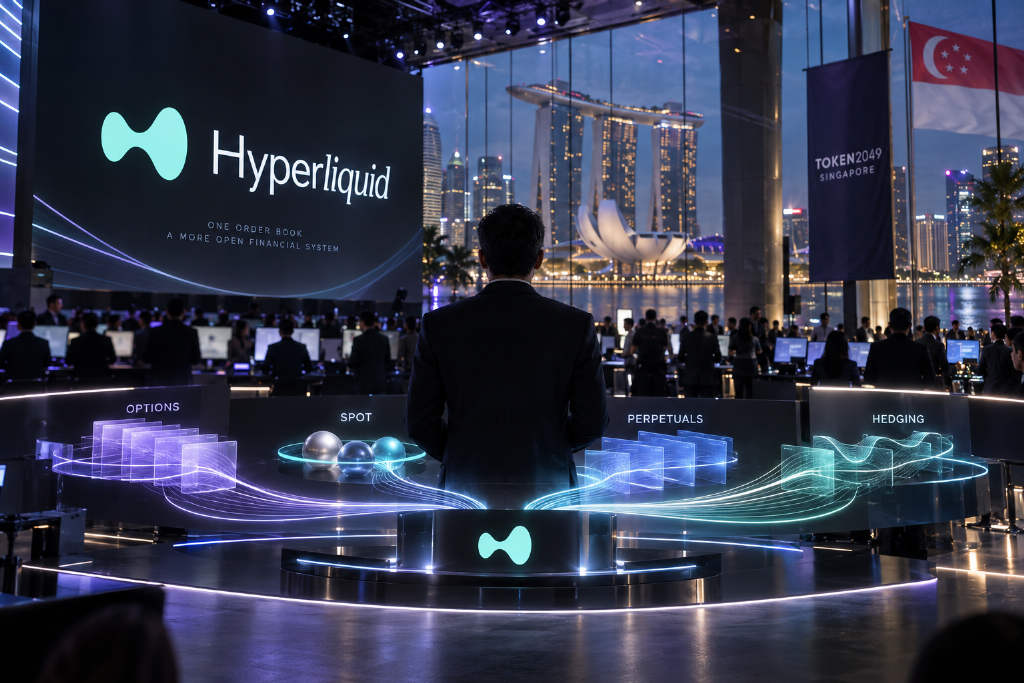
Hyperliquid2026-10-07 06:26:00Hyperliquid founder says options will be the platform’s next product focusHyperliquid founder Jeff Yan said at the TOKEN2049 event that options will be the platform’s next major product focus. He said the goal is to let traders hedge spot and perpetual positions with options on the same order book. The remarks were reported by PANews on Oct. 7. No launch date or additional rollout details were disclosed in the source material. The statement outlines the direction Hyperliquid plans to take for its next product push, with options positioned as the key area of development mentioned by Yan during the event.120