Kohn

Federal Reser
2026-08-30 10:01:59

Fed's Warsh Speech Flips Hike Logic; Kohn Eyes August CPI

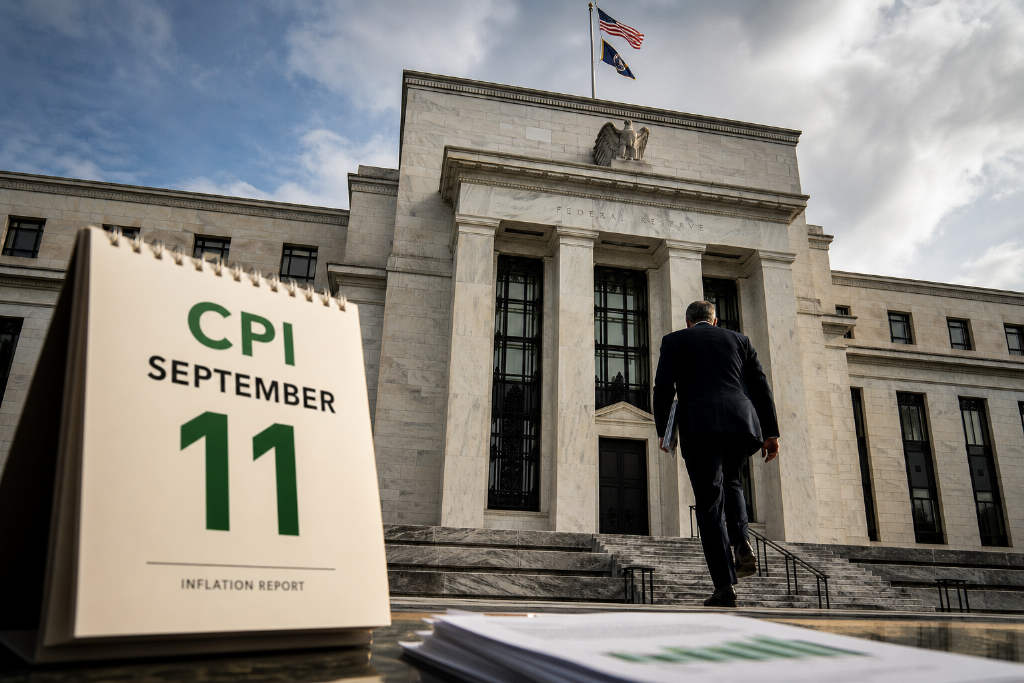
According to Nick Timiraos, the so-called 'Fed whisperer,' Fed Chair Warsh's recent remarks soothed some concerns about his inflation-fighting strategy but set up a bigger test three weeks away. If the Fed hikes rates, it could anger the White House weeks before the midterm elections; if it holds steady, it may revive the doubts his speech had put to rest. Warsh's Friday comments pointed to a possible hike next month: he struggled to call current financial conditions restrictive, and better summer inflation data did not convince him the underlying trend is improving. Before Friday, the default had been to hold unless data justified action. Former Fed Vice Chair Kohn said Warsh flipped that logic. 'He has changed the prior assumption, so now they will hike unless the data shows it isn't necessary.' The final decision will depend on developments before the September meeting, especially the August CPI due September 11. Kohn said if data don't warrant action, the Fed shouldn't hike; if they come in strong, it could weaken the case that inflation is heading back to the Fed's 2% target. (WSJ)
110
Fed's Warsh Speech Flips Hike Logic; Kohn Eyes August CPI
Federal Reser
2026-08-30 10:03:27

Warsh Remarks Calm Inflation Worries But Set Up September Test

Nick Timiraos, the journalist often described as the Fed’s mouthpiece, says Chair Warsh’s latest remarks eased some concerns about his inflation-fighting strategy while setting up a bigger test in three weeks. A rate increase now could anger the White House weeks before the midterm elections; staying put could revive the doubts the speech was meant to calm. Warsh pointed to two reasons the Fed might raise rates next month. He struggles to call current financial conditions restrictive, and the better summer inflation readings have not convinced him the underlying trend is improving. Before Friday, the Fed’s default was to hold unless data justified action. Former Fed Vice Chair Kohn says Warsh flipped that logic. “He has changed the prior assumption. Now it becomes: unless the data show no need, they will raise rates.” That makes the September meeting and the August CPI report on September 11 the deciding factors. If the data show no action is needed, the Fed should not hike. If the data come in firm, the case that inflation is returning to the Fed’s 2% target would weaken.

20
Warsh Remarks Calm Inflation Worries But Set Up September Test
Federal Reser
2026-08-29 00:14:36

Warsh signals hawkish caution at Jackson Hole, says inflation still too high and rejects routine forward guidance

Federal Reserve Chair Kevin Warsh used his Jackson Hole debut to lay out a disciplined, inflation-first policy framework and a broad critique of routine forward guidance. In a speech titled “In Our Time,” Warsh said the U.S. economy and labor market remain resilient, financial conditions are hard to describe as meaningfully restrictive, and inflation is still well above the Fed’s 2% goal. He said recent summer CPI and PCE readings came in better than expected, but not enough to show a meaningful improvement in the underlying inflation trend. A major part of the speech focused on communication strategy. Warsh argued that forward guidance was necessary during crisis periods but should be limited in normal times because it can mislead markets, constrain policymakers, and create a “hall-of-mirrors problem” in which markets trade on Fed signals while the Fed looks back at market prices for guidance. He also declined to offer a mechanical reaction function, saying the economy is too complex and changing too quickly for that approach. Warsh also spent considerable time on artificial intelligence, calling it a possible new factor of production and outlining questions the Fed is studying on productivity, labor, capital intensity, token pricing, and market structure. After the speech, CME FedWatch showed the implied probability of a September rate hike rising to nearly 60% from 35% a day earlier, while spot gold fell $50 to around $4,550 an ounce.

70
Warsh signals hawkish caution at Jackson Hole, says inflation still too high and rejects routine forward guidance
Federal Reser
2026-08-28 14:45:31

Warsh Uses Jackson Hole Debut to Push the Fed Away From Forward Guidance

Federal Reserve Chair Kevin Warsh used his first Jackson Hole address since taking office to argue that forward guidance has outlived its usefulness in normal economic conditions and that monetary policy should return to discipline, data dependence, and restraint. Speaking on Aug. 28, Warsh said the Fed should not pre-commit to future rate decisions or let financial markets rely too heavily on central bank signaling. He warned that too much disclosure can blur, rather than clarify, the policy outlook. A major section of the speech focused on artificial intelligence. Warsh said AI may become a new factor of production and could reshape productivity, labor markets, and the distribution of returns across AI labs, chipmakers, energy producers, cloud firms, businesses, and consumers. He noted that annualized token sales at two leading AI labs had reportedly topped $100 billion, up more than 500% from a year earlier, though he said those questions would not drive current policy decisions. On the economy, Warsh said the labor market remains broadly consistent with full employment, citing a 4.1% unemployment rate and low jobless claims. Inflation, however, is still too high. He said the Fed’s preferred PCE inflation gauge stood at 3.7% year over year, with the 6-month change at 4.1%, and stressed that policymakers must be confident underlying inflation is moving toward 2% at a clear and sufficiently fast pace. Otherwise, he said, the Fed still has work to do.

90
Warsh Uses Jackson Hole Debut to Push the Fed Away From Forward Guidance
Caltech
2026-08-26 12:42:10

Caltech team uses AI to cut DFT scaling near linear, runs 82,500-electron simulation on one GPU

A research team led by Anima Anandkumar at the California Institute of Technology published a paper on Aug. 24 describing an AI-assisted approach to density functional theory, or DFT, that shifts a key computational step from cubic scaling to near-linear behavior. The work targets one of the longest-running bottlenecks in quantum chemistry, where simulation costs rise sharply as molecular or material systems grow. Instead of asking a model to predict the final answer in one shot, the team trained a Fourier Neural Operator, or FNO, to learn the forward map from input conditions to electron density, then inserted that model back into the standard self-consistent DFT loop. The paper reports complexity dropping from O(N^3) to O(N log N) for that step. In tests on drug-scale molecules outside the training set, the Kohn-Sham FNO posted a density error of 2.23%, versus 9.97% for a direct-prediction baseline; at 45 heavy atoms, the gap widened to 4% versus 41%. For large-scale validation, the researchers used magnesium dislocation structures. The paper says the new method converged on a system with 8,250 atoms and 82,500 valence electrons using a single NVIDIA B300 GPU. It contrasts that with a 2019 full DFT calculation on 6,164 magnesium atoms that used about 7,800 NVIDIA V100 GPUs on the Summit supercomputer.

130
Caltech team uses AI to cut DFT scaling near linear, runs 82,500-electron simulation on one GPU
Federal Reser
2026-08-11 10:30:08

Two inflation reports are set to test Warsh as September rate decision nears

Federal Reserve Chair Warsh is heading into a critical stretch, with two inflation readings due over the next month likely to shape whether officials raise rates in September or stay on hold. Nick Timiraos, the Wall Street Journal reporter often seen as a closely watched Fed chronicler, wrote that Warsh has made lower inflation the centerpiece of his tenure, but a vague press conference after the July meeting raised fresh doubts about whether he is willing to follow tough rhetoric with action. Economists expect July core CPI to rise 0.2% month over month, a level Timiraos described as broadly consistent with the Fed’s 2% inflation goal. A hotter reading would increase pressure on Warsh, especially with core inflation in the Fed’s preferred gauge already at 3.3% in June, up from 2.8% a year earlier. The article also points to growing internal strain: several voting members have publicly signaled they could back a rate hike if inflation does not improve, and some officials moved after the July meeting to clarify policy logic that Warsh did not clearly lay out himself.

1020
Two inflation reports are set to test Warsh as September rate decision nears
Federal Reser
2026-08-01 03:31:07

Report: Fed Chair Warsh weighs cutting FOMC meeting frequency, breaking a four-decade norm

Federal Reserve Chair Warsh is considering reducing the number of scheduled Federal Open Market Committee meetings each year, according to The New York Times, which cited people familiar with the matter. The idea was raised at this week’s Fed meeting and a revised calendar could be settled before the next policy meeting in mid-September, though implementation may come later. If adopted, the move would break with the eight-meetings-a-year pattern in place since 1981, cutting the number of rate votes and changing how the central bank communicates policy to markets. The report says the shift could weaken the Fed’s ability to respond to changes in inflation and the labor market while also narrowing a key channel through which investors read the policy path. The proposal fits a broader “institutional reform” agenda Warsh has pursued since taking office in May. The report also notes the tension with his earlier Senate confirmation remarks, when he said four meetings were “not enough” and that holding more meetings was appropriate. The ultimate scale of any change remains uncertain.

1080
Report: Fed Chair Warsh weighs cutting FOMC meeting frequency, breaking a four-decade norm