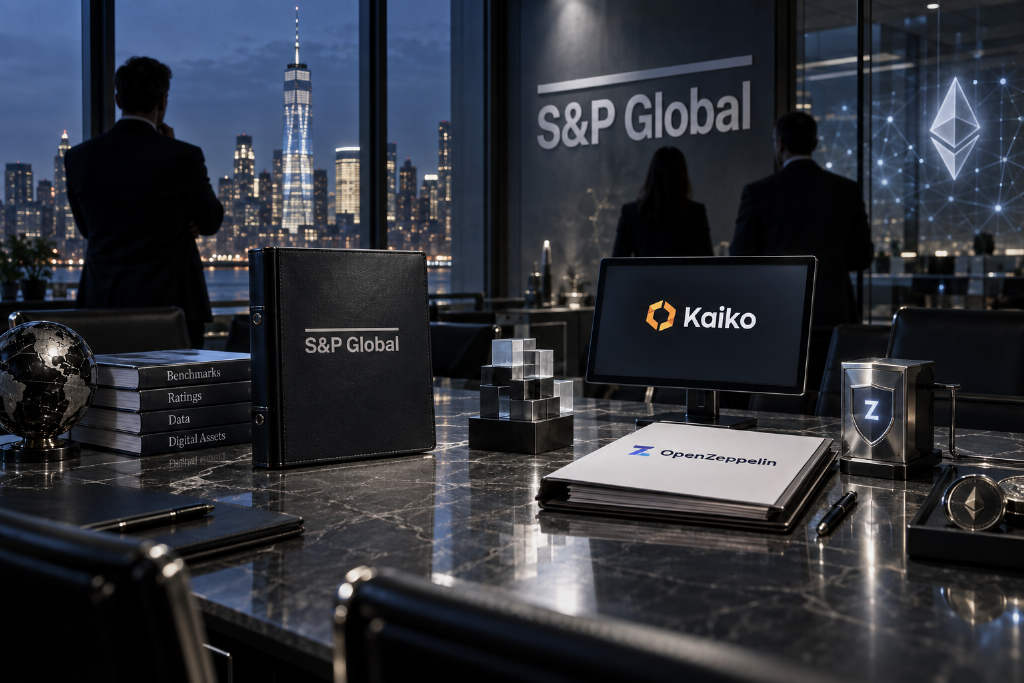
S&P Global pushes deeper into Web3 with indices, ratings, Kaiko tie-up and planned OpenZeppelin deal
S&P Global’s digital-asset strategy has moved well beyond simply tracking crypto prices. Since launching its first cryptocurrency benchmarks in May 2021, the company has steadily built out a broader framework for how on-chain markets can be measured, compared and assessed for risk. That effort has included DeFi-focused index products, a stablecoin stability assessment framework, and direct publication of those assessments on Base through Chainlink’s DataLink service so smart contracts can read them automatically. The pace picked up in 2025. S&P Global Ratings expanded coverage from traditional issuers into tokenized funds such as Delta Wellington Ultra Short Treasury On-Chain Fund, Janus Henderson Anemoy Treasury Fund and OpenEden Tokenized TBILL Fund. In August 2025, it also assigned Sky Protocol a "B-" issuer credit rating with a stable outlook, marking S&P’s first credit rating for a DeFi protocol. By 2026, S&P had added two more pieces. It combined its digital-asset index business with Kaiko to form S&P Kaiko Digital Asset Indices, a suite launched with more than 4,000 reference prices and indices, and later made a strategic investment in Kaiko without disclosing the amount. On Sept. 17, 2026, S&P Global also said it had signed an agreement to acquire smart-contract security firm OpenZeppelin. The price was not disclosed. Together, those moves point to a broader effort to assemble a stack of pricing, risk, data and security tools for on-chain finance.